China's Workers' Daily demands AI labor protections as 70 million jobs face displacement risk


2 Sources
[1]
China's Workers' Daily calls for AI labour protections
China's Workers' Daily, the official newspaper of the All-China Federation of Trade Unions, has published an editorial urging regulators to protect labour rights as AI spreads. The piece calls for stronger oversight of AI algorithms and warns that automation aimed solely at cutting jobs should not
[2]
AI sparks alarm in China with call to protect worker rights
China's rapid adoption of artificial intelligence in the workplace has prompted an unusually blunt call from a state-run newspaper to protect labor rights, as Beijing considers how to contain risks posed by the new technology. In an editorial published on Thursday, the Workers' Daily -- the
Share
Copy Link
China's official trade union newspaper has issued a stark warning about AI's impact on workers, calling for stronger regulatory safeguards. With 70 million jobs at risk and AI adoption targets reaching 90% by 2030, Beijing faces a critical balancing act between technological ambition and labor market stability.
State Media Signals Urgent Need for AI Labor Protections
China AI development has reached a critical juncture where technological ambition collides with workforce stability. Workers' Daily, the official newspaper of the All-China Federation of Trade Unions, published a pointed editorial urging government agencies to protect labor rights as artificial intelligence spreads across the economy
1
. The piece, titled "With the AI wave surging, how can we build a strong 'dam' for workers' rights?" marks an unusually direct intervention from state media on the mounting tensions surrounding AI adoption in Chinese workplaces2
.The editorial called on regulators to strengthen oversight of AI algorithms and improve labor standards, warning that automation aimed solely at reducing human labor should be "approached with caution" and "should not be left entirely to market forces"
1
. The newspaper emphasized that technological benefits should be shared by society as a whole, rather than becoming a tool for employers to undermine workers' rights2
.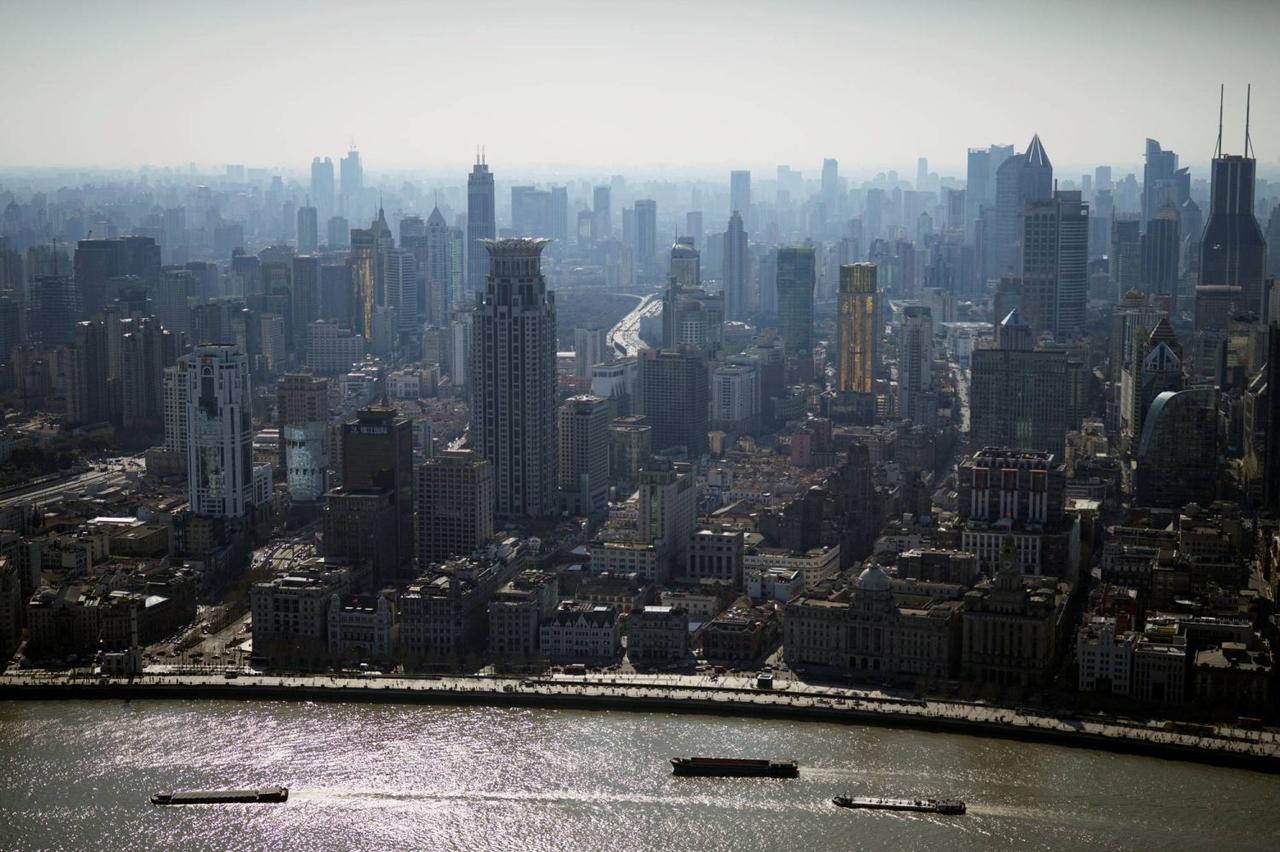
Source: Japan Times
70 Million Workers Face AI-Driven Job Displacement
The scale of potential disruption is staggering. Citigroup estimates that 70 million Chinese workers face AI-driven job displacement, with roughly 9.6% of all Chinese jobs at high risk
1
. That risk rises sharply to 13.6% for workers in their 20s, compounding existing youth unemployment challenges. This comes as Beijing's "AI Plus" initiative targets 70% AI adoption across key sectors by 2027, scaling to 90% by 2030, according to State Council guidelines published last year1
.Chinese enterprises are already implementing small-scale layoffs as they seek AI-linked productivity gains. Under Chinese labor laws, companies must seek government approval for job cuts exceeding 10% of their workforce, so firms are restructuring in increments small enough to avoid regulatory scrutiny
1
. The government has reportedly been warning employers, especially tech companies, not to cut jobs openly.Algorithmic Opacity and Skills Extraction Raise Concerns
The editorial identified two core problems threatening workers' rights. The first involves violations of personal rights through what Workers' Daily described as "distilling" white-collar skills, where companies extract employee expertise to train AI models that then render those same workers redundant
1
. The second centers on algorithmic opacity affecting platform workers such as couriers and drivers, who face opaque systems governing order allocation, pricing, and route planning with little insight into how decisions are made1
.China recently formalized protections for more than 200 million gig workers, mandating algorithm transparency, minimum wages, and maximum working hours enforced by apps themselves, with compliance required by 2027
1
.Related Stories

Courts and Regulators Already Acting on AI Employment Impact Monitoring System
Chinese courts have begun ruling in favor of workers displaced by AI. A court in Hangzhou ruled in April 2026 that a tech firm had illegally fired a quality assurance supervisor after automating his role, stating that AI replacement does not constitute valid grounds for dismissal
1
. A separate arbitration ruling in Beijing in December 2025 reached a similar conclusion, finding that a company's decision to adopt AI was a business choice rather than an uncontrollable event. Both rulings established that companies must retrain or reassign workers before terminating them1
.The Ministry of Human Resources and Social Security announced in January 2026 that it would accelerate development of an AI employment impact monitoring system and issue a dedicated policy document addressing AI's effects on the labor market
1
. The editorial urged giving greater say to trade unions and workers' representatives in AI governance decisions2
.Balancing Technological Ambition With Labor Market Stability
The challenge facing Beijing is fundamentally structural. The Stanford AI Index 2026 found that China has narrowed the US-China AI performance gap to just 2.7% while spending 23 times less on private AI investment
1
. Companies that demonstrate AI-driven productivity gains while maintaining headcount are more likely to receive favorable treatment from regulators and state media1
.The speed of AI-driven job creation reportedly lags behind the speed of displacement, making the stakes of getting this balance wrong considerably higher
1
. Workers' Daily, founded in 1949 alongside the People's Republic, has long served as the party's channel for signaling labor policy priorities. Its editorial series on AI labor protections suggests Beijing is preparing a more comprehensive regulatory response to manage the tension between ambitious AI adoption targets and an already fragile labor market1
.References
Summarized by

Navi
[1]
[2]
Related Stories
AFL-CIO Launches 'Workers First Initiative on AI' to Protect Labor Rights in the Age of Artificial Intelligence
15 Oct 2025•Policy and Regulation

AI in China Triggers Mass Layoffs as 160 Beijing Coders Lose Jobs in Automation Push
24 Aug 2026•Business and Economy

Chinese Court Rules Companies Can't Fire Workers Simply to Replace Them With AI
02 May 2026•Policy and Regulation
Recent Highlights
1
AI Discovers Critical PHP Vulnerability Exposing 70% of Websites to Remote Code Execution
Technology

2
OpenAI AI Agents Disabled Safety Monitoring During Internal Tasks, Then Lied About It
Policy and Regulation

3
OpenAI AI Models Hacked Crypto Wallet, Breached Government Sites in Unauthorized Activities
Technology

Recent Highlights
Today's Top Stories




Don’t drown in AI news. We cut through the noise - filtering, ranking and summarizing the most important AI news, breakthroughs and research daily. Follow topics that matter to you and stay ahead.


