Chinese Court Rules Companies Can't Fire Workers Simply to Replace Them With AI


10 Sources
[1]
Chinese Worker Sued After His Company Replaced Him With AI. He Just Won
Can you fire someone and replace them with AI? In China, the answer is a little complicated. As TechSpot reports, a court has found that a company in Hangzhou illegally fired an employee after the worker refused to take a demotion. Although the ruling does not make it entirely illegal to replace
[2]
Chinese court rules companies can't fire workers just because AI is cheaper -- ruling says automation alone doesn't justify layoffs
A court in China has ruled that companies cannot automatically justify firing workers simply because artificial intelligence can now perform their jobs more cheaply, as businesses worldwide increasingly deploy AI systems to automate human labor. The decisions emerged from cases published in late
[3]
Chinese Court Rules Firms Can't Lay Off Workers on AI Grounds
The ruling states that companies cannot unilaterally lay off employees or cut salaries due to technological progress. A Chinese court ruled that companies cannot terminate employees just to replace them with artificial intelligence systems, as authorities juggle the need to stabilize the domestic
[4]
It's Illegal in China to Lay Someone Off to Replace Them with AI, Court Finds
The centrist Brookings Institution's Darrell West said something to Politico last year that should go without saying, but I keep coming back to it because, to me, it's comedy through understatement: "The stock market could be doing great, but if unemployment is going up and AI is taking jobs â€"
[5]

Chinese courts rule AI replacement is not legal grounds for firing workers as global tech layoffs hit 78,000
A quality assurance supervisor identified only as Zhou joined a technology company in Hangzhou in November 2022. His job was to work with AI large language models, optimising their outputs and filtering sensitive content. He earned 25,000 yuan per month, roughly $3,640. In 2024, the company decided
[6]

A tech worker in China is laid off and replaced by AI. Is it legal?
Artificial Intelligence robots demonstrate working on power grid control units during a media organized tour at Guangdong Power Grid Robotics Laboratory in Guangzhou, in southern China's Guangdong province, Thursday, April 16, 2026. Andy Wong/AP hide caption A court in eastern China's Hangzhou
[7]

China says it is illegal for companies to fire humans if AI takes their jobs
China says AI/automation isn't a good enough reason for a sacking * Chinese law requires a "major change in the objective circumstances" to terminate a contract * AI and automation aren't enough by themselves to justify laying off a worker * Workers also have some responsibility to keep up with
[8]

US tech giants are laying off employees to spend on AI, China says it's illegal over here
There's a particular cruelty to Zhou's situation that I keep coming back to. The man spent his working days talking to AI -- testing it, correcting it, making it smarter -- and then watched that same technology hand his employer the excuse to show him the door. His company, a Hangzhou tech firm,
[9]

No, China hasn't made it illegal to fire humans and replace them with AI -- but yes it's made it much more expensive for companies to do so
China's State Council has published a state media report through its Information Office concerning a recent legal case about a worker whose role was (at least partially) replaced by AI. The worker, identified by their surname Zhou, was hired for a tech role in quality assurance, before their
[10]

AI can't steal your job! A China twist can avert AI jobs apocalypse
A Hangzhou court has set a precedent, ruling that companies cannot use AI automation as a blanket justification for firing workers. The decision emphasizes contract law and employer responsibility, requiring genuine impossibility of role performance and fair reassignment. This ruling shifts focus
Share
Copy Link
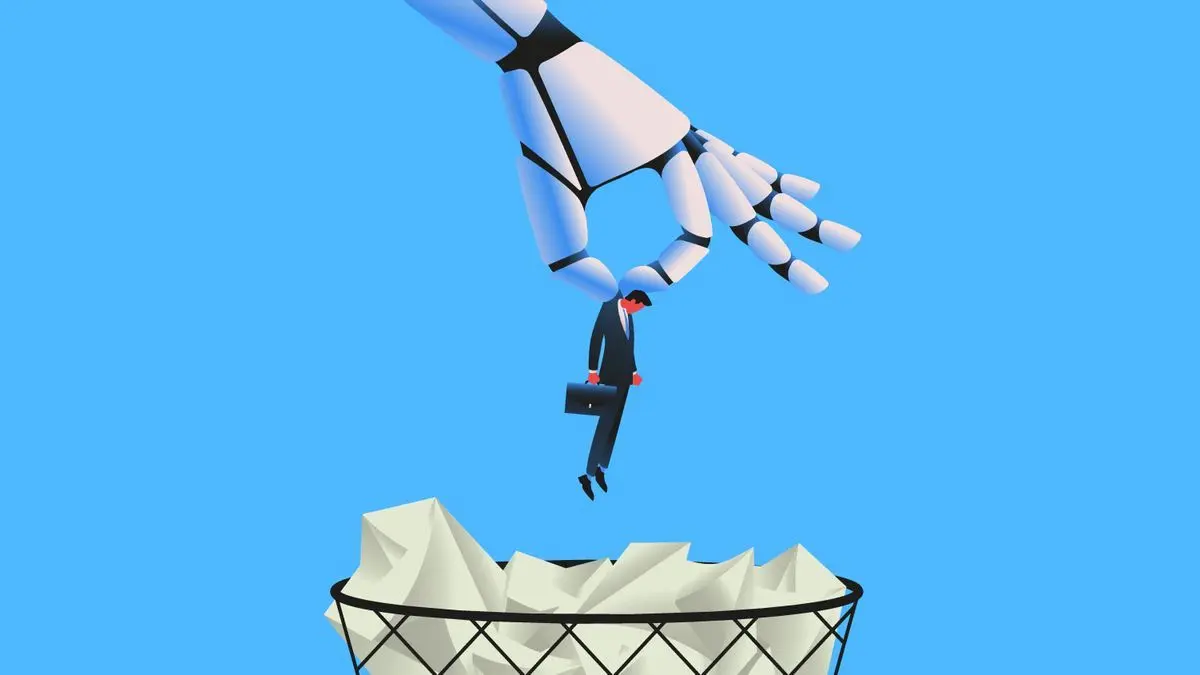
A Chinese court has ruled that companies cannot legally terminate employees solely because AI can perform their jobs, marking a significant shift in worker protection. The Hangzhou Intermediate People's Court found that a tech company illegally fired Zhou, a quality assurance tester, after he refused a 40% pay cut when his role was automated. The ruling establishes that AI adoption is a business choice, not legal grounds for firing workers.
Chinese Court Ruling Establishes New Worker Protection Standards
The Hangzhou Intermediate People's Court has ruled that companies cannot legally terminate employees simply because AI can now perform their jobs, establishing a significant legal precedent for worker protection in the face of advancing automation
1
. The decision, published in late April ahead of International Workers' Day on May 1, centers on a case involving Zhou, a quality assurance tester who earned 25,000 yuan ($3,640) per month evaluating outputs from AI models2
.When Zhou's employer determined that advances in AI technology had reduced the need for his role, the company attempted to transfer him to a different position with a sharply reduced salary of 15,000 yuan ($2,180) per month—a 40% pay cut
3
. Zhou rejected the demotion, leading to his termination. He filed for arbitration, which ruled the dismissal unlawful, and when the company appealed, the Chinese court ruling upheld the decision5
.
Source: Tom's Hardware
Legal Framework Rejects AI Grounds for Firing
The court's reasoning turns on Article 40 of China's Labour Contract Law, which permits illegal termination only when objective circumstances materially change and render an employment contract unperformable
5
. The court found that the company's decision to adopt AI technology and reorganize around it does not automatically constitute a "major change in objective circumstances" that would justify ending a labor contract. "The termination grounds cited by the company did not fall under negative circumstances such as business downsizing or operational difficulties, nor did they meet the legal condition that made it 'impossible to continue the employment contract,'" the court stated3
.Chinese courts have now determined that AI adoption represents a strategic business choice rather than an unforeseeable external shock, drawing a critical distinction between events genuinely beyond an employer's control and internal decisions that make a job redundant
5
. This interpretation means companies cannot simply shift the risks of technological change and employment decisions onto workers.Building on Legal Precedent for AI Adoption and Worker Rights
This ruling builds on a legal precedent set in December when a Beijing court found that a mapping company's decision to fire a worker whose data analysis role had been automated was a voluntary business decision that did not warrant redundancy
1
. In that case involving an employee surnamed Liu, the Beijing Municipal Human Resources and Social Security Bureau determined that introducing AI fell within the scope of autonomous business decisions and represented technological innovation proactively implemented to adapt to market conditions5
.The Hangzhou court explicitly acknowledged the tension between technological progress and worker protection, stating that while businesses are free to pursue technological upgrades, they must also consider employees' legitimate rights and interests during those transitions
2
. The court added that companies should prioritize retraining workers and helping them transition to higher-level roles that require greater human involvement.Related Stories

Contrast With Global Tech Layoffs and AI-Driven Restructuring
The Chinese court ruling stands in stark contrast to developments in Western markets, where AI-driven layoffs have accelerated dramatically. Nearly 78,000 US tech workers lost their jobs in the first four months of 2026, with experts arguing that job automation was cited as justification for many of these cuts
2
. Meta recently announced cutting 8,000 jobs, with Mark Zuckerberg citing AI infrastructure costs as the driver2
. Oracle eliminated between 20,000 and 30,000 employees in March, while Block reduced its workforce from 10,000 to 6,000 employees, with executives directly attributing the cuts to growing AI capabilities5
.
Source: ET
One ruling from the Hangzhou court stated that "employers are prohibited from shifting operating costs to employees," establishing a principle that technological change and employment decisions cannot be used as a pretext for unilaterally reducing salaries and terminating contracts
4
.Balancing Labor Market Stability With AI Development
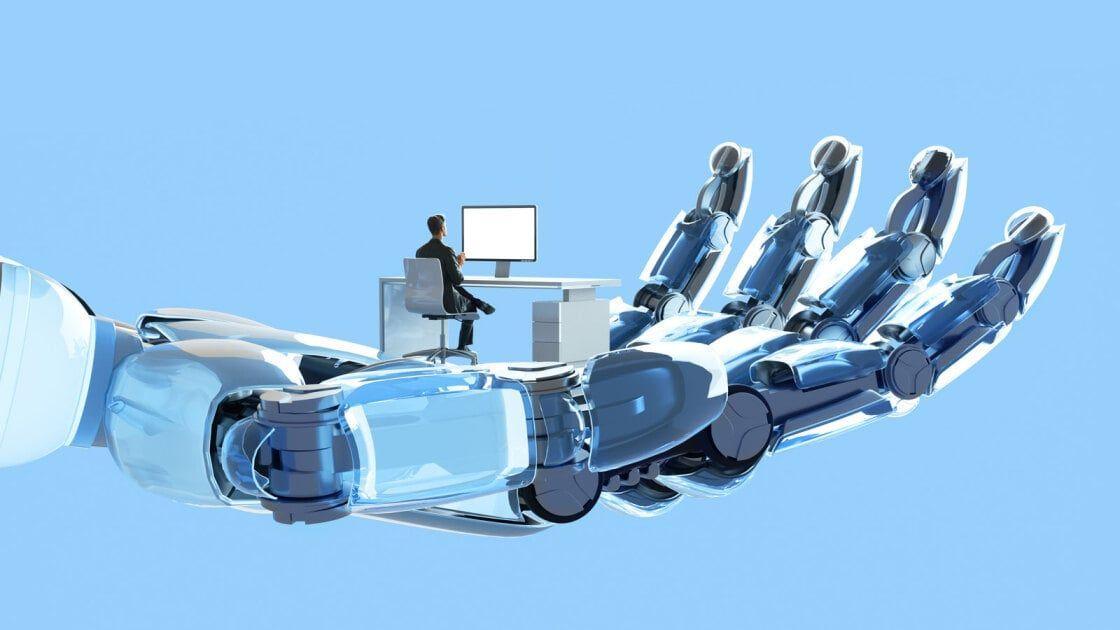
The ruling arrives as Chinese authorities juggle the need to stabilize the domestic labor market with a global race to develop AI technologies
3
. China's urban youth unemployment rate reached 15.3% in March, and the political sensitivity of mass layoffs in an economy already struggling with deflation and weak consumer demand makes these court rulings as much about maintaining social stability as interpreting contract law5
.
Source: PC Magazine
"Technological progress may be irreversible, but it cannot exist outside a legal framework," Wang Tianyu, a researcher with the Chinese Academy of Social Sciences, told Xinhua
2
. The approach suggests China has no interest in slowing AI adoption but aims to regulate applications while ensuring economic benefits don't come at the expense of stability.Whether similar protections will emerge globally remains uncertain, but the decision may signal that protecting employees and their financial futures could prove a stronger strategy for attracting top AI talent than immediately replacing workers the moment automation becomes capable of performing their jobs
1
.References
Summarized by

Navi
[2]
Related Stories
AI in China Triggers Mass Layoffs as 160 Beijing Coders Lose Jobs in Automation Push
24 Aug 2026•Business and Economy

China's Workers' Daily demands AI labor protections as 70 million jobs face displacement risk
11 Jun 2026•Policy and Regulation

California Bans Fully Automated AI Firings With No Robo Bosses Act
Yesterday•Policy and Regulation
Recent Highlights
1
Microsoft and Nvidia Launch Surface Laptop Ultra: A $2,599 AI-Ready PC With RTX Spark Chip
Technology

2
OpenAI Releases 722 AI-Generated Math Papers on GitHub, Igniting Fury Among Mathematicians
Science and Research

3
Trump Consulted Grok AI Before Ordering Venezuela Invasion and Capture of Nicolás Maduro
Policy and Regulation

Recent Highlights
Today's Top Stories








Don’t drown in AI news. We cut through the noise - filtering, ranking and summarizing the most important AI news, breakthroughs and research daily. Follow topics that matter to you and stay ahead.


