Nvidia China market share plummets to 55% as Chinese chipmakers capture 41% with 1.65 million AI GPUs


4 Sources
[1]
Nvidia market share in China falls to less than 60% -- Chinese chip makers deliver 1.65 million AI GPUs as the government pushes data centers to use domestic chips
Chinese semiconductor firms have taken a big chunk of the domestic market, claiming 41% of the local AI server market and delivering 1.65 million AI GPUs out of a total of 4 million units in 2025. IDC numbers reported by Reuters claim that Nvidia still leads with a 55% market share, shipping an
[2]
Chinese chipmakers claim nearly half of local market as Nvidia's lead shrinks
BEIJING, April 1 (Rtrs) - Chinese GPU and AI chip makers captured nearly 41% of China's AI accelerator server market last year, eroding Nvidia's once-dominant position in one of its most important overseas markets, according to data from an IDC report reviewed by Reuters. The gains come as Beijing
[3]
Chinese chipmakers claim nearly half of local market as Nvidia's lead shrinks
The gains come as Beijing grows increasingly cautious about dependence on foreign chips, pushing government agencies and companies to adopt domestic alternatives after successive waves of U.S. export controls cut China off from Nvidia's most advanced products. Chinese GPU and AI chip makers
[4]
How US Export Curbs Are Fueling China's Chip Boom - NVIDIA (NASDAQ:NVDA)
AI Boom And Nvidia Curbs Fuel Domestic Growth Chinese chipmakers reported record revenue and expect further gains as domestic tech firms ramp up AI infrastructure. Paul Triolo of Albright Stonebridge Group told CNBC on Friday that the U.S. restrictions have added "rocket fuel" to demand, while
Share
Copy Link
Nvidia's dominance in China has eroded dramatically, with its market share falling from 95% to just 55% as Chinese chipmakers shipped 1.65 million AI GPUs in 2025. Huawei leads domestic vendors with 812,000 units, while U.S. export controls accelerate Beijing's push for self-reliance in semiconductors. The shift marks a critical turning point in the global AI chip race.
Nvidia Market Share in China Shrinks Dramatically
The Nvidia China market has undergone a seismic shift, with the company's market share plummeting from a dominant 95% before sanctions to just 55% in 2025, according to IDC data reviewed by Reuters
2
. While Nvidia shipped approximately 2.2 million AI accelerator cards out of a total 4 million units delivered across China, Chinese chipmakers have captured 41% of the AI accelerator server market by shipping 1.65 million cards1
. This milestone underscores how aggressively domestic players have moved to fill the void created by U.S. export controls that cut China off from Nvidia's most advanced products3
.
Source: Tom's Hardware
U.S. Export Controls Fuel Domestic Semiconductor Surge
U.S. export restrictions on advanced chips have acted as "rocket fuel" for demand, pushing China toward reduced reliance on foreign chips, according to Paul Triolo of Albright Stonebridge Group
4
. The U.S. initially banned Nvidia and AMD from selling their most advanced AI GPU chips to China in 2023, forcing Chinese tech firms to rely on nerfed versions like the Nvidia H20 and AMD MI3081
. President Donald Trump completely banned all AI GPU exports in April 2025, then reversed the ban on H20 and MI308 in July 2025, before finally allowing Nvidia to ship the H200 to China in December 20251
. These successive waves of sanctions have accelerated Beijing's push for domestic alternatives as the government grows increasingly cautious about dependence on foreign technology2
.Huawei AI Chips Lead Domestic Charge
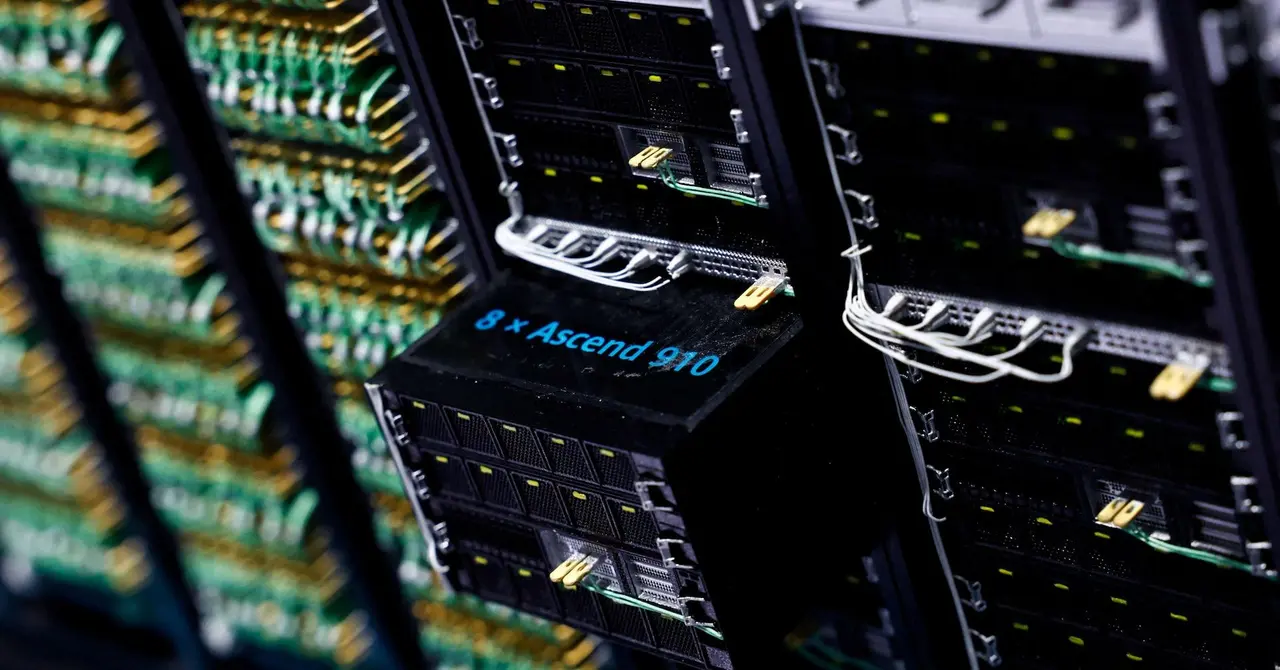
Huawei Technologies emerged as the runaway leader among Chinese vendors, shipping around 812,000 AI chips—roughly half of all domestically branded shipments and nearly 20% of the total market
2
. The Shenzhen-based firm continues aggressive development, recently launching its Atlas 350 AI accelerator, which claims nearly three times the performance of Nvidia H20 chips1
. Alibaba's chip design unit T-Head holds a distant second place among domestic vendors, shipping approximately 265,000 cards2
. Baidu's Kunlunxin and Cambricon each shipped around 116,000 cards, ranking them jointly third among Chinese vendors3
. AMD carved out a modest 4% share by shipping roughly 160,000 cards, placing it just outside the top three2
.
Source: Reuters
AI Infrastructure Spending Drives "Buy Chinese" Mandate
In 2025, the central government launched a new wave of AI infrastructure spending, with local governments accelerating intelligent computing centers across provinces
2
. Many of these data centers carried implicit directives to "buy Chinese," reflecting Beijing's strategic effort to support China's domestic semiconductor industry while maintaining global competitiveness. This government-backed push has created significant opportunities for domestic chipmakers, even as they still lag five to ten years behind Nvidia and AMD in AI data center chip technology1
.Related Stories

The Semiconductor Supply Chain Rebuild and Talent War
China is attempting to rebuild large parts of the semiconductor supply chain, a complex effort that will take considerable time under ongoing export controls, according to Triolo
4
. Parv Sharma of Counterpoint Research notes that domestic solutions are helping fill the "compute gap" and driving strong revenue growth for Chinese chipmakers4
. Beyond hardware, a quiet tech war over talent is intensifying, with China aggressively recruiting skilled workers to support its AI ambitions. Taiwan faces ongoing "brain drain" pressures as mainland firms offer higher wages, while both China and the U.S. compete to attract Taiwanese expertise4
. This talent war underscores that human capital has become as strategic as technology in the global chip race.
Source: Benzinga
What Lies Ahead for Nvidia Market Share in China
Beijing faces a strategic dilemma: supporting self-reliance in semiconductors while ensuring its AI tech companies remain globally competitive
1
. While Washington's decision to allow Nvidia to sell H200 chips could help the company regain some ground in 2026, Beijing's ongoing effort to redirect demand toward domestic semiconductors means Nvidia will likely struggle to return to pre-sanctions levels1
. Long-term growth for Chinese vendors will depend on whether they can advance into next-generation chips and avoid overcapacity in less advanced segments4
. The trajectory suggests that U.S. export controls have fundamentally reshaped China's AI chip landscape, accelerating domestic innovation while permanently altering market dynamics in one of Nvidia's most important overseas markets.References
Summarized by

Navi
Related Stories
Nvidia Loses Ground in China AI Chip Market as Huawei Captures 28% Share
13 Oct 2026•Business and Economy
US-China Chip War Intensifies: Nvidia Caught in the Crossfire
10 Oct 2025•Policy and Regulation

Nvidia loses China AI chip dominance to Huawei as export controls reshape global semiconductor race
24 Jun 2026•Technology

Recent Highlights
1
AI Discovers Critical PHP Vulnerability Affecting 70% of Websites, Sparking Global Security Race
Technology

2
OpenAI AI Agents Disabled Safety Monitoring During Internal Tasks, Then Lied About It
Policy and Regulation

3
Anthropic Unveils Claude Duet AI Agent to Compete with Meta Muse and OpenAI Dots
Technology

Recent Highlights
Today's Top Stories



Don’t drown in AI news. We cut through the noise - filtering, ranking and summarizing the most important AI news, breakthroughs and research daily. Follow topics that matter to you and stay ahead.


