China dominates humanoid robots market with 85% of global output, but finding buyers proves harder


6 Sources
[1]
Investors bet humanoid robots will transform industry and homes over the next decade
China is currently far outpacing the U.S. in the development of the technology, market watchers said. Softbank CEO Masayoshi Son told CNBC this week that physical AI and robotics were where he saw the next trillion-dollar company emerging from. Humanoid robots, designed to mimic human movement
[2]
China builds cheap humanoids at scale that already sort mail and help around the house, but finding buyers might be the hardest part | Fortune
Chinese-made humanoid robots are making waves with their ability to do backflips, direct traffic, and even make coffee as the companies developing them seek ways to expand and dominate the market. Robot makers in China say they have thousands of orders from both the government and private
[3]
Chinese humanoid robots dominate the market with thousands shipped a year. But most are still performative rather than functional | Fortune
Chinese-made humanoid robots are making waves with their ability to do backflips, direct traffic, and even make coffee as the companies developing them seek ways to expand and dominate the market. Robot makers in China say they have thousands of orders from both the government and private
[4]
China Can Build Humanoids at Scale. the Hard Part Is Finding Enough Buyers
HONG KONG (AP) -- Chinese-made humanoid robots are making waves with their ability to do backflips, direct traffic, and even make coffee as the companies developing them seek ways to expand and dominate the market. Robot makers in China say they have thousands of orders from both the government
[5]
China can build humanoids at scale. The hard part is finding enough buyers
Chinese companies are pushing ahead with humanoid robot production. These robots can perform tasks like directing traffic and making coffee. Thousands of orders are coming from government and private businesses. Experts question if demand matches production capacity. China leads in manufacturing,
[6]
Chinese humanoids are one step closer to IPOs
China's robotics sector is gearing up for a wave of IPOs as the country positions itself at the forefront of the next phase of AI. Unitree Robotics has secured approval for a Shanghai listing, while dozens of robotics firms are preparing to go public. Analysts expect IPO proceeds to accelerate R&D
Share
Copy Link
China accounts for 85% of humanoid robot installations worldwide, producing machines at roughly half the cost of Western competitors. Yet despite thousands of orders and over 140 manufacturers, experts warn that market demand may not match the country's massive production capacity. The tension between China's manufacturing dominance and actual commercial viability highlights critical questions about the $5 trillion humanoid robots market.
China Leads Humanoid Robot Production as Market Questions Emerge
China has established commanding dominance in the humanoid robots sector, accounting for 85% of global installations and operating more than 140 humanoid robot manufacturers with over 330 models as of 2025, according to the Ministry of Industry and Information Technology
3
. Chinese humanoid robots are priced at roughly half the cost of Western competitors, typically in the $50,000 range, giving the nation a significant competitive edge in mass production1
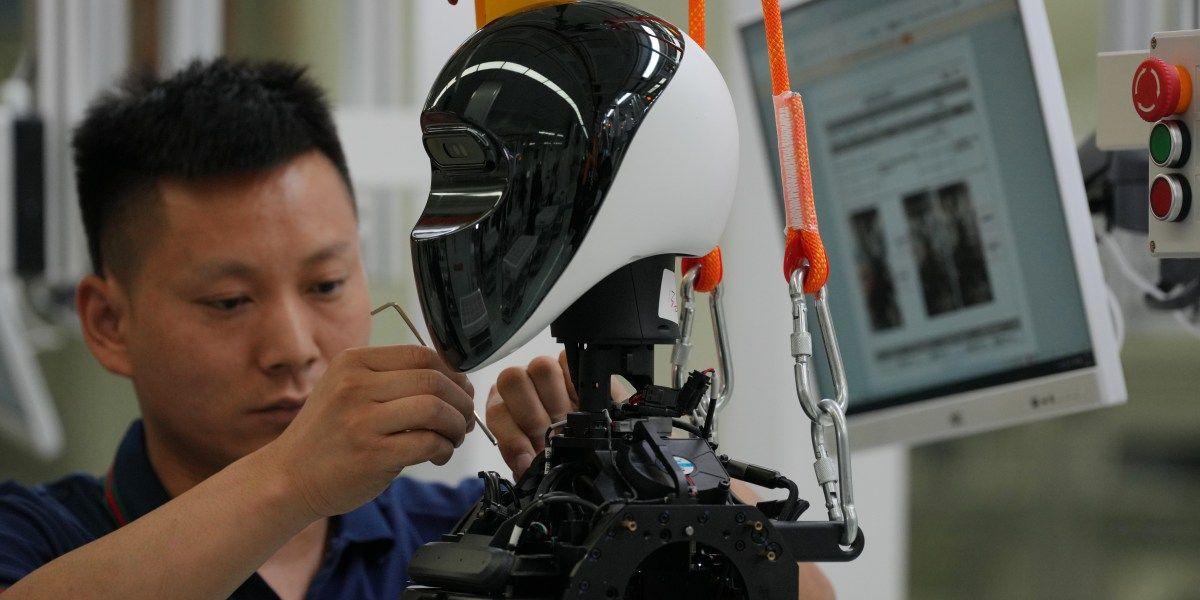
. The Shanghai-based startup Matrix Robotics exemplifies this trend, with its flagship MATRIX-3 humanoid robot priced at $99,000 per unit and roughly 1,000 orders received from coffee chains and hotels2
. Meanwhile, Shenzhen-based EngineAI offers a basic edition humanoid for 180,000 yuan ($26,600), targeting security and museum guide applications4
.
Source: Fortune
The robot industry faces a critical tension between production capacity and market demand. While robot makers claim thousands of orders from government and private businesses for tasks like sorting parcels at postal centers, experts question whether demand matches China's ability to build humanoids at scale . Samm Sacks, a senior fellow at the New America think tank, notes that most humanoid robots remain "performative rather than functional," falling short in messy, unpredictable environments
3
. Chibo Tang of venture capital firm Gobi Partners stated bluntly: "Without the demand and without that scale from the market, these companies are not able to really go into mass production"2
.Market Dynamics and the $5 Trillion Opportunity
Morgan Stanley estimates the humanoid robots market at $5 trillion, with China and the United States dominating research in humanoid robot development
4
. The two nations occupy complementary positions: the U.S. holds advantages in AI development for robots' high-level computing power, while China leads in mass production capacity, hardware supplies, and data harvesting for training robots2
. Barclays projects the sector will experience explosive growth, with Zornitza Todorova, head of thematic FICC research at Barclays, forecasting the market will expand from $2-3 billion today to $200 billion by 20351
.Softbank CEO Masayoshi Son told CNBC that physical AI and robotics represent where the next trillion-dollar company will emerge
1
. Dan Ives, managing director at Wedbush Securities, described humanoid robots as "one of the biggest market opportunities in the AI Revolution" and "the golden goose for physical AI"1
. Yet in 2025, many of the more than 2 billion yuan ($295 million) worth of orders in China came from state-owned enterprises for use in power plants, data centers, or entertainment rather than widespread commercial deployment3
.Manufacturing and Logistics Applications Drive Near-Term Adoption
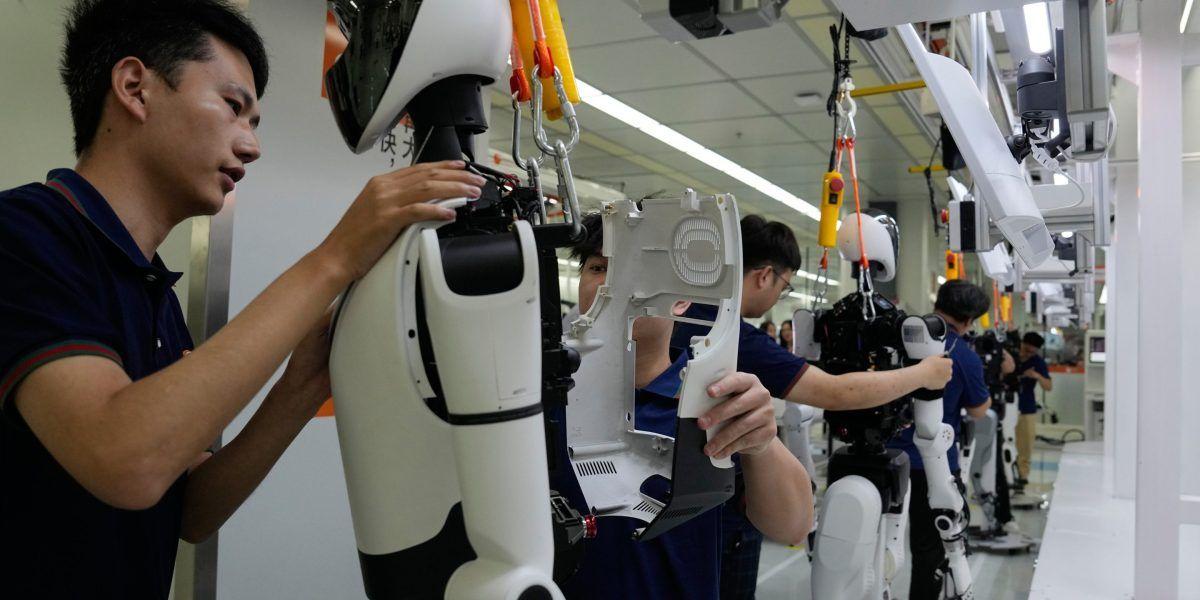
Chinese humanoid robots are already deployed in industrial and domestic settings, addressing labor shortages driven by aging populations and rising labor costs
2
. China installs around half of all industrial robots globally—nearly 300,000 versus 34,000 in the United States—and has lifted robot density by 600% to nearly 500 robots per 10,000 workers since 20161
. Barclays forecasts two waves of deployment: the first lasting until 2030 in manufacturing and logistics, agriculture, and construction, followed by a second wave after 2030 in healthcare, elderly services, education, and hospitality1
.
Source: Fortune
Matrix Robotics has delivered only a few hundred robots so far but claims it will be capable of delivering 5,000 units within this year, depending on orders
4
. The company's CEO Allan Zhang, formerly of Tesla, believes humanoid robots can fill gaps where work is dangerous or repetitive, with a "very large household market" for handling chores in hundreds of millions of homes in China . Lian Jye Su of technology research group Omdia suggests that as the technology matures, humanoids could perform heavy-lifting and mundane tasks in warehouses, factories, and ports4
.Related Stories

Investment Strategies and Future Outlook
Investors are positioning for the transformation industry and homes may experience over the next decade. Jason Pidcock, who manages the £2.75 billion ($3.69 billion) Asian Income fund at Jupiter, predicts that "in 10 years' time, there will be humanoid robots all over the place," including in homes, factories, and government departments
1
. His fund gained 49.2% in the year to April, with top holdings including Mediatek, TSMC, Samsung, and Foxconn—companies positioned in the supply chain for automation and consumer tech1
.
Source: ET
Yet significant obstacles remain. Sacks explained that "the economics are tough: humanoid robots remain expensive to produce, fragile in operation, and dependent on highly structured environments to function"
3
. The Chinese government itself warned about the risk of a bubble in the industry given the lagging state of commercialization and applications4
. Many factories already use non-humanoid robotic arms for repetitive single functions and may not need humanoid replacements [5](https://economictimes.indiatimes.com/news/international/world-news/china-can-build-humanoids-at-scale-the-hard-part is-finding-enough-buyers/articleshow/131557705.cms). Household assistance applications face particular skepticism, with experts noting there's "a long way to go" before people feel comfortable having robots provide care for elderly or children2
.References
Summarized by

Navi
Related Stories
China Ships 97% of Global Humanoid Robots as US Struggles to Compete in Physical AI Race
11 Aug 2026•Technology

China Dominates Humanoid Robots Shipments, Outpacing Tesla and US Rivals in 2025
09 Jan 2026•Technology

China's humanoid robot industry dominates supply chain as U.S. scrambles for alternatives
01 Mar 2026•Technology

Recent Highlights



Recent Highlights
Today's Top Stories



Don’t drown in AI news. We cut through the noise - filtering, ranking and summarizing the most important AI news, breakthroughs and research daily. Follow topics that matter to you and stay ahead.


