Cisco and NVIDIA Unveil USFP Module to Scale AI Networks to 12.8Tb/s Capacity


8 Sources
[1]
Cisco and NVIDIA Announce USFP: Expanding the Path to AI Connectivity
The Ultra-Dense Small Form-Factor Pluggable (USFP) is industry's first pluggable form factor designed to help customers scale AI networks, providing a path to up to 12.8T of aggregate capacity while preserving proven deployment and serviceability models As AI evolves from answering prompts to
[2]
NVIDIA and Cisco Introduce New Pluggable Optics Form Factor to Scale AI Factories
New Transceivers Enable AI Builders to Scale Compute Within the Same Network Footprint While Reducing Networking's Share of the Power Budget * Ultra-Dense Small Form Factor Pluggable (USFP) is designed to be the first module to support 400Gb/s-per-lane electrical signals, enabling capacity up to
[3]
Cisco Systems scales programmable AI network capacity with new silicon and repluggable optics innovations
Cisco Systems scales programmable AI network capacity with new silicon and repluggable optics innovations Cisco Systems Inc. took to the stage at the annual Open Compute Project Global Summit today, unveiling a new suite of open silicon and optical networking systems as it delivered one of the
[4]
NVIDIA And Cisco Cram 4x OSFP's Bandwidth Density Into An OSFP-Sized Module, Pushing AI Fabrics To 12.8 Tb/s With USFP
NVIDIA & Cisco have partnered to create USFP, an ultra-dense and compact form factor that drives up to 400 Gb/s speeds. NVIDIA's USFP Is A Compact & Pluggable Switch That Harnesses Optics To Drive Up To 400 Gb/s Per Lane & 12.8 Tb/s Capacity The need for advanced fabric, networking, and
[5]

Nvidia and Cisco announce new optical module for AI data centers By Investing.com
SAN FRANCISCO - Nvidia (NASDAQ:NVDA) and Cisco (NASDAQ:CSCO) announced today plans for Ultra-Dense Small Form Factor Pluggable (USFP), a high-density optical module designed for AI data center networks, according to a press release statement. The USFP module supports 400Gb/s-per-lane electrical
[6]
Cisco unveils AI networking silicon and optics with NVIDIA By Investing.com
SAN JOSE, Calif. - Cisco Systems Inc. (NASDAQ:CSCO) announced new networking silicon and a collaboration with NVIDIA to develop a high-density optical module specification at the Open Compute Project Global Summit on Monday. The company said its Silicon One P200-powered 51.2T systems are now
[7]

Cisco, Nvidia Tackle AI's Growing Data Center Bottleneck
Cisco is partnering with Nvidia on a new generation of optical networking technology designed to handle the exploding amount of data moving through AI data centers. Cisco President and Chief Product Officer Jeetu Patel explains why increasingly powerful AI agents could consume far more network
[8]
Nvidia, Cisco Release New Optical Module With Higher Capacity
Nvidia and Cisco are introducing a new optical module designed to support the networking needs of growing artificial-intelligence infrastructure. The two companies on Monday announced the Ultra-Dense Small Form Factor Pluggable, a product they described as the first optical module to support
Share
Copy Link
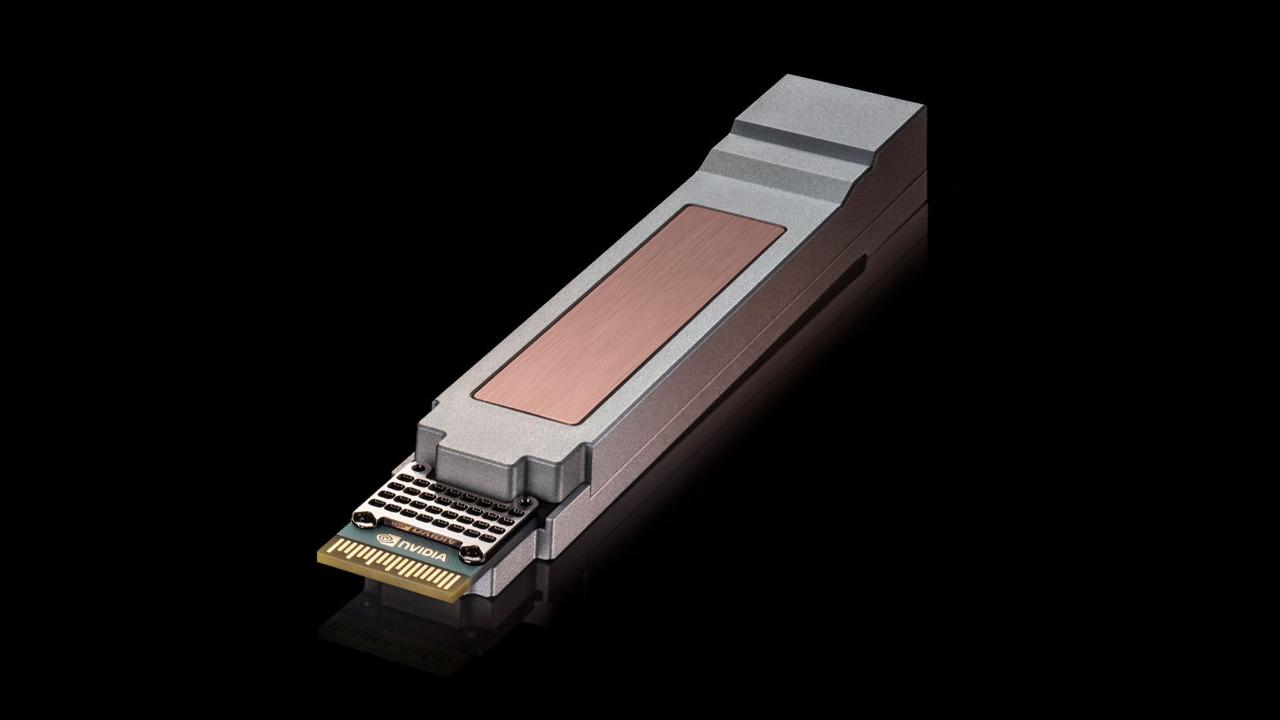
Cisco and NVIDIA announced USFP, the industry's first 400G-per-lane pluggable optical module designed to scale AI networks to 12.8Tb/s capacity. The Ultra-Dense Small Form-Factor Pluggable delivers 4x bandwidth density and 1.3x power efficiency over existing modules while maintaining familiar deployment models for AI infrastructure.
Cisco and NVIDIA Introduce USFP for Next-Generation AI Networks
Cisco and NVIDIA announced plans for the Ultra-Dense Small Form-Factor Pluggable (USFP), a high-density optical module designed to address the escalating connectivity demands of AI infrastructure
1
2
. The collaboration was unveiled at the Open Compute Project Global Summit, where Cisco delivered one of the event's most anticipated keynotes3
. USFP represents the industry's first pluggable form factor capable of supporting 400G-per-lane electrical signals, enabling AI data centers to scale from today's 1.6T fabrics to achieve 12.8Tb/s capacity1
5
.
Source: Wccftech
Addressing Critical Bandwidth and Power Challenges in AI Factories
As AI models expand and inference demand grows, AI factories must connect more computing systems while managing network complexity, power consumption, and costs
2
. Modern AI workloads depend on continuous communication across accelerators, applications, storage, and services, driving unprecedented requirements for bandwidth, responsiveness, and scale1
. When switches reach capacity, further network expansion typically requires additional switch layers and optical links, increasing latency, power consumption, and costs2
. USFP delivers 4x the bandwidth density and approximately 1.3x the power efficiency compared to 200Gb/s-per-lane pluggable modules, allowing AI factories to increase compute scale within the same network footprint while decreasing networking's share of the overall power budget2
4
.Technical Specifications and Design Innovation
The first planned USFP-based transceivers will pack 16 full-duplex lanes in an OSFP-sized footprint supporting both switches and SuperNICs, with the ability to expand to 32 lanes and more in the future
2
5
. By doubling both the lane count and bandwidth per lane, USFP enables AI networks to connect more 1.6Tb/s endpoints without adding network tiers2
. The module uses a two-dimensional array connector with a two-step insertion design that engages high-speed contacts after insertion, reducing contact wear, improving signal integrity, and making insertion force more predictable2
5
. USFP supports power dissipation of up to 100 watts without needing a separate, dedicated embedded cooling circuit within the transceiver, reducing switch design complexity and improving reliability2
5
.Preserving Operational Simplicity While Advancing Performance
Cisco and NVIDIA designed USFP to deliver next-generation optical technology without requiring customers to overhaul their AI data centers or abandon established operational models
1
2
. Organizations continue to value independently field-replaceable modules, mature supply chains, interoperability across suppliers, and familiar serviceability models that become even more critical as AI workloads grow in scale and complexity1
. "AI builders need an interconnect architecture that can scale performance without locking them into a more complex operating model," said Bill Gartner, senior vice president and general manager of optical systems and optics at Cisco2
. The connector technology is designed for 400Gb/s performance while offering improved performance at 200Gb/s per lane, providing a migration path for existing deployments2
.
Source: SiliconANGLE
Related Stories

Building an Open Ecosystem for AI Infrastructure
Cisco and NVIDIA are collaborating with TE Connectivity and Amphenol to build a multi-source hardware ecosystem around USFP and develop cages, connectors, and modules
2
5
. The companies plan to create an open industry specification for USFP through an upcoming community-led multi-source project5
. This approach aligns with Cisco's commitment to open infrastructure that can be deployed by hyperscalers, neoclouds, and enterprises alike3
. "Building the world's largest AI factories starts with rethinking the smallest of connections," said Gilad Shainer, senior vice president at NVIDIA2
5
. This collaboration builds upon the existing commitment to NVIDIA Spectrum-X Ethernet networking and Cisco's Silicon One-based Ethernet networks working together seamlessly4
.Strategic Implications for Distributed AI Computing
The introduction of pluggable optics and pluggable transceivers through USFP arrives as networking has become a major bottleneck in AI data centers
3
. Frontier models require enormous clusters made up of thousands of graphics processing units and AI accelerators that must act as one giant processor3
. Kevin Wollenweber, Cisco's senior vice president and general manager of data center and internet infrastructure, emphasized that AI requires a new approach to scaling that incorporates the reality that many AI workloads are now distributed across multiple physical sites3
. The 12.8Tb/s capacity enabled by USFP positions AI infrastructure operators to handle growing data movement requirements without proportional increases in hardware costs or power consumption, addressing critical concerns as AI adoption accelerates across industries.References
Summarized by

Navi
[3]
Related Stories
Cisco unveils Silicon One G300 chip to challenge Broadcom and Nvidia in AI networking race
10 Feb 2026•Technology

Cisco Unveils New Silicon One G200-Powered Switches for AI/ML Infrastructure
16 Oct 2024•Technology

Cisco and NVIDIA Expand Partnership to Accelerate AI Adoption in Enterprises
25 Feb 2025•Technology

Recent Highlights
1
Microsoft and Nvidia Launch Surface Laptop Ultra: A $2,599 AI-Ready PC With RTX Spark Chip
Technology

2
Meta Muse AI Agent Surges to 6.6M Downloads Despite Privacy and Security Controversies
Technology

3
Scientists Build AI Model That Reconstructs Images From Brain Scans in Record Time
Science and Research
Recent Highlights
Today's Top Stories












Don’t drown in AI news. We cut through the noise - filtering, ranking and summarizing the most important AI news, breakthroughs and research daily. Follow topics that matter to you and stay ahead.


