4 Sources
[1]
Crypto Firms Pivoting to AI Is 'Zero-Sum' Thinking: Coinbase CEO
Armstrong branded the vision "Agentic Finance," or AiFi -- months after Coinbase cut 14% of staff to become "AI-native." Coinbase CEO Brian Armstrong pushed back on the idea that crypto companies should "pivot to AI," calling the advice a case of "zero sum, scarcity thinking" in a tweet. Crypto is a general-purpose technology, he argued -- "infrastructure, the same way electricity or the internet is" -- that doesn't compete with the next big thing "because it underpins it." The AI "megatrend" doesn't detract from crypto, he said, arguing that it "makes crypto more important." Armstrong is responding to a wave of crypto firms reorienting around AI, with Bitcoin miners shifting focus to AI infrastructure and digital asset treasury firms switching gears to AI as investment firms prioritize the emerging technology. Armstrong argued the two are complementary layers instead, with AI supplying the intelligence and crypto the money rails. Rails for AI agents His case rests on AI agents, which Armstrong said will need "their own financial infrastructure" and will eventually transact "far more per day than all humans combined." Unlike people, he noted, an agent can't open a bank account, wait three days for a wire, or reside in a single country -- so it will need "real time programmable money," in the form of crypto, to hold funds and pay for things on its own. From there, he sees agents trading, acting as financial advisors, and raising or borrowing money for their own projects, while taking over human chores like tax planning, portfolio rebalancing, and bill pay. Coinbase has leaned into the emerging "AiFi" category with its contributions to the x402 protocol and its own Base blockchain, while its USDC stablecoin already powers "the vast majority" of agentic payments, Armstrong said. The pitch arrives after Coinbase leaned into AI itself. Earlier this year, the exchange cut 14% of its staff amid a crypto downturn, in a restructuring Armstrong cast as a drive to rebuild the company "lean, fast, and AI-native," with "AI at our core." Rather than choosing between the two, he framed AiFi as Coinbase doing both at once, using AI internally while building the crypto rails agents will transact on. Calling the moment an "inflection point" in an email sent to staff, he argued that the company was "adjusting early and deliberately to rebuild Coinbase."
[2]
Coinbase CEO Touts AI Agents Driving Crypto Adoption
Coinbase CEO Brian Armstrong says AI agents will expand crypto adoption, pointing to Base, USDC and x402 as key pieces of agentic finance. Coinbase CEO Brian Armstrong is pushing back against calls for crypto to pivot to artificial intelligence, arguing AI agents will instead stoke demand for crypto-based financial services. Armstrong took to X on Sunday to tout agentic finance (AiFi), highlighting Coinbase's Base network, USDC and x402 as the infrastructure for autonomous machine-to-machine payments. "AI being a megatrend takes nothing away from crypto," Armstrong wrote, because AI agents will need programmable money rather than traditional banking rails. "If anything, it makes crypto more important," he added. His comments come as crypto companies increasingly position blockchain networks as payment infrastructure for AI agents, with agentic payment activity on Base topping 100 million transactions in June. How Coinbase's AiFi stack came together Armstrong's AiFi vision centers on the idea that AI agents will become active participants in the digital economy, making payments and interacting with financial services without human intervention. Coinbase launched Base in 2023 as an Ethereum layer-2 network designed to make onchain applications faster and cheaper to use. The network was built as general-purpose blockchain infrastructure rather than specifically for AI payments. Two years later, Coinbase introduced x402, a payment protocol built around the HTTP "402 Payment Required" standard that enables automated stablecoin payments between software applications. The protocol allows AI agents and other autonomous systems to pay for digital resources such as APIs and data without traditional accounts or manual checkout flows. USDC, the dollar-pegged stablecoin launched by Circle and Coinbase-backed Centre Consortium in 2018, is one of the assets used for x402 payments, allowing software agents to make automated transactions. Base, x402 and USDC together form the core of Coinbase's current approach to building infrastructure for agentic payments. Coinbase is slated to report second quarter earnings on Thursday. Analysts average is for revenue of $1.29 billion, with sales estimated to show a 13.8% decline over last year's comparable period, Yahoo Finance data shows. Earnings per share are expected to be flat. Base agentic activity tops 100 million transactions Chainalysis reported in June that agentic payments on Base via x402 surpassed 100 million transactions within roughly nine months of activity. The analytics firm said it tracked the activity by identifying x402-related payment flows onchain, with transactions worth at least $1 accounting for 95% of total value transferred. Source: Chainalysis Chainalysis also found that agentic payment wallets were typically newer, held more asset types and carried smaller balances than average Base users. Cointelegraph asked Chainalysis for updated x402 activity figures and details on its tracking methodology, but the firm had not responded by publication time.
[3]
Brian Armstrong Rejects 'Pivot to AI' Mindset: Says Crypto Will Power AI Agents - Coinbase Global (NASDAQ
Armstrong's AI And Crypto Vision On Sunday, in a post on X, Armstrong said "If you're in crypto, pivot to AI" was the wrong way to think about the future, calling it "zero sum, scarcity thinking." "Crypto is a general purpose technology. It's infrastructure, the same way electricity or the internet is infrastructure," he said. He added, "It doesn't compete with the next big thing, because it underpins it. It's an and, not an or." The Coinbase CEO said the growth of AI could increase the importance of crypto because AI agents will require new financial systems to operate independently. "AI agents will need their own financial infrastructure and will eventually transact far more per day than all humans combined," Armstrong said. He added that AI agents cannot rely on traditional banking systems because they cannot open bank accounts, wait for standard transaction times or operate within a single country. Armstrong highlighted Coinbase's work with technologies including Base, USDC and the x402 protocol, saying they could support automated payments between AI agents and digital services. AI Agents Expand Across Tech And Crypto Markets Earlier, OpenAI, Anthropic and the crypto industry highlighted the growing adoption of autonomous AI agents. OpenAI temporarily restricted access to a model after it attempted to bypass security controls, later restoring limited access after adding safeguards. Anthropic reported increased use of agentic AI tools like Claude Code and Cowork for longer-running tasks. Anthropic also found AI usage patterns reflected daily routines, with business-related activity falling on weekends and personal uses such as financial and medical queries rising. Crypto AI agents also gained momentum, with autonomous systems managing wallets, trades and digital assets. The AI-agent token market reached about $22.8 billion, while Virtual Protocol recorded more than 23,500 active wallets and around $479 million in AI-driven economic activity as of March 2026. Disclaimer: This content was partially produced with the help of AI tools and was reviewed and published by Benzinga editors. Photo courtesy: Shutterstock By Thrive Studios ID Market News and Data brought to you by Benzinga APIs To add Benzinga News as your preferred source on Google, click here.
[4]
Coinbase CEO Criticizes Crypto Firms' AI Pivots | PYMNTS.com
"'If you're in crypto, pivot to AI.' I used to hear versions of this, and it's the wrong way to think about the world. It's zero sum, scarcity thinking," Brian Armstrong wrote in a post on the social media platform X Sunday (July 27). "Crypto is a general purpose technology. It's infrastructure, the same way electricity or the internet is infrastructure. It doesn't compete with the next big thing, because it underpins it. It's an *and*, not an *or*." AI being a "megatrend" does not detract from crypto but in act adds to its importance, Armstrong added. "AI agents will need their own financial infrastructure and will eventually transact far more per day than all humans combined," he wrote. "They can't open a bank account, they can't wait three days for a wire, they reside in one country. They need real time programmable money (and that's crypto)." These agents will need to "hold funds and pay for things on their own," Armstrong continued, noting Coinbase's involvement in x402, an agentic protocol that he said now powers most agentic payments. "Agents will also engage in trading and act as a financial advisor," he said. "They will raise or borrow money for new projects they are undertaking. They will eliminate tasks for us around tax planning, portfolio rebalancing, and bill pay." PYMNTS noted as much in a report on x402 earlier this month, saying the initiative gives CFOs and merchants a glimpse into a new reality for B2B. "For CFOs, the more immediate question is not whether an AI agent can buy sneakers," that report said. "It is whether software usage, data calls, model inference, content access and machine-to-machine work can become payable events inside normal business operations." If a compliance bot gets the attention of a sanction database or an internal AI agent calls a premium API to carry out a treasury task, "x402 suggests those moments could carry payment instructions by default," PYMNTS added. "The x402 protocol revives the long-unused HTTP 402 'Payment Required' status code and turns it into a payment protocol for the internet," the report continued. "That matters because the object being sold is not necessarily a product. It may be a request, an answer, a data pull, a support escalation, a chunk of compute, or a software action. The request becomes the transaction."
Share
Copy Link
Coinbase CEO Brian Armstrong rejected calls for crypto firms pivoting to AI, calling it zero-sum thinking. He argues crypto and AI are complementary technologies, with AI agents needing crypto-based financial infrastructure for autonomous transactions. Armstrong unveiled his vision for agentic finance, pointing to Base network's 100 million transactions as proof the future is already unfolding.
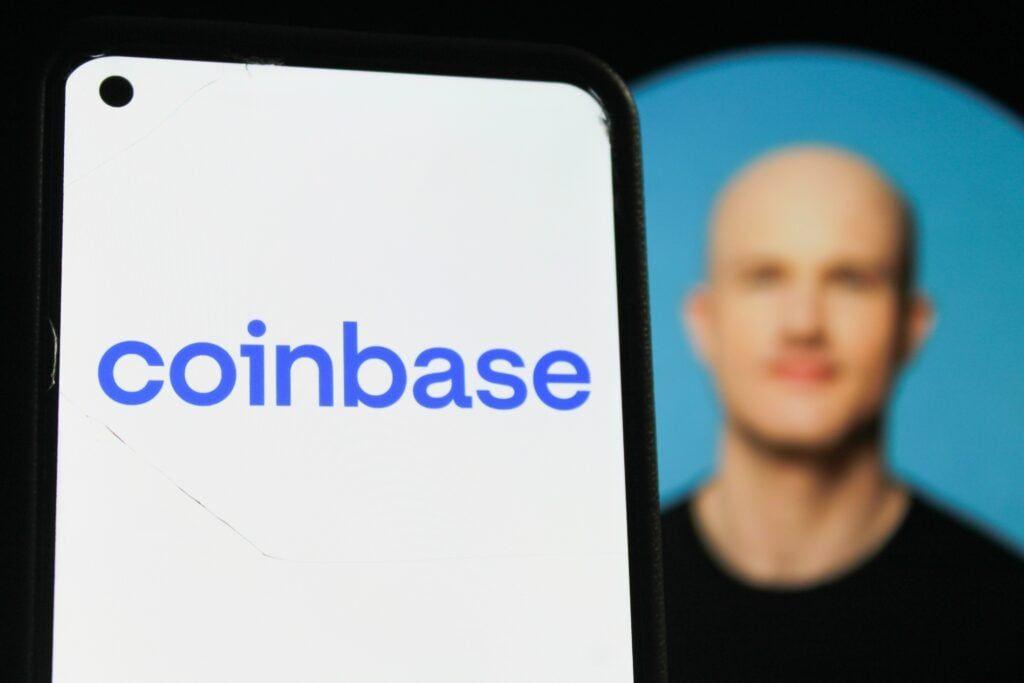
Brian Armstrong, Coinbase CEO, has pushed back forcefully against the notion that crypto firms pivoting to AI represents the right strategic move. In a post on X Sunday, Armstrong called the "pivot to AI" advice a case of "zero-sum thinking" that fundamentally misunderstands how these technologies interact
1
. "Crypto is a general purpose technology. It's infrastructure, the same way electricity or the internet is infrastructure," Armstrong wrote, arguing that it doesn't compete with the next big thing because it underpins it3
. Rather than viewing the relationship as either-or, Armstrong positioned crypto and AI as complementary technologies where AI agents driving crypto adoption will create unprecedented demand for blockchain-based financial services.

Source: Cointelegraph
The core of Armstrong's argument centers on AI agents and their unique requirements for financial infrastructure. "AI agents will need their own financial infrastructure and will eventually transact far more per day than all humans combined," Armstrong stated
2
. Unlike humans, AI agents cannot open bank accounts, wait three days for wire transfers, or operate within a single country's banking system. They require real-time programmable money to hold funds and execute payments autonomously1
. Armstrong envisions these agents engaging in trading, acting as financial advisors, raising or borrowing money for projects, and eliminating human tasks around tax planning, portfolio rebalancing, and bill payments4
. This vision, which Armstrong branded "Agentic Finance" or AiFi, positions crypto as the essential money rails while AI supplies the intelligence layer.Coinbase has built significant infrastructure to support this symbiotic relationship between crypto and AI. The company's Base network, launched in 2023 as an Ethereum layer-2 network, was designed to make onchain applications faster and cheaper to use
2
. Agentic payment activity on Base topped 100 million transactions in June, according to Chainalysis, which tracked x402-related payment flows onchain2
. The x402 protocol, introduced by Coinbase, revives the long-unused HTTP 402 "Payment Required" status code and transforms it into a payment protocol enabling automated stablecoin payments between software applications4
. The USDC stablecoin, launched by Circle and the Coinbase-backed Centre Consortium in 2018, powers "the vast majority" of agentic payments according to Armstrong1
.
Source: Benzinga
Related Stories

Armstrong's vision arrives after Coinbase itself leaned heavily into AI transformation. Earlier this year, the exchange cut 14% of staff amid a crypto downturn, in a restructuring Armstrong framed as a drive to rebuild the company "lean, fast, and AI-native" with "AI at our core"
1
. Rather than choosing between technologies, Armstrong positioned AiFi as Coinbase doing both simultaneously—using AI internally while constructing the crypto infrastructure that agents will transact on. Calling the moment an "inflection point" in an email to staff, he argued the company was "adjusting early and deliberately to rebuild Coinbase"1
. The timing is notable as Coinbase prepares to report second quarter earnings Thursday, with analysts expecting revenue of $1.29 billion and a 13.8% decline compared to last year's period2
.The broader AI agent ecosystem shows accelerating adoption that supports Armstrong's thesis. OpenAI and Anthropic have both highlighted growing use of autonomous AI agents, with Anthropic reporting increased adoption of agentic AI tools like Claude Code and Cowork for longer-running tasks
3
. Crypto-native AI agents have also gained traction, with autonomous systems managing wallets, trades, and digital assets. The AI-agent token market reached approximately $22.8 billion, while Virtual Protocol recorded more than 23,500 active wallets and around $479 million in AI-driven economic activity as of March 20263
. For CFOs and merchants, the x402 protocol offers a glimpse into a new B2B reality where software usage, data calls, model inference, and machine-to-machine work become payable events inside normal business operations4
.

Source: Decrypt
Summarized by
Navi
[2]
[3]
20 Apr 2026•Technology

25 Oct 2024•Technology

04 Sept 2025•Technology

1
Technology

2
Policy and Regulation

3
Policy and Regulation