Coldplay Kiss Cam Incident Sparks Debate on Privacy in the Digital Age


2 Sources
[1]
Can you ever expect privacy in public? Coldplay kiss camera saga tells us a lot about the answer
NEW YORK -- When the "KissCam" at a Coldplay concert landed on a couple who tried (but failed) to duck out of the spotlight, the internet immediately got to work. In hours, the clip was just about everywhere. Endless memes, parody videos and photos of the pair's shocked faces filled social media
[2]
Can You Ever Expect Privacy in Public? Coldplay Kiss Camera Saga Tells Us a Lot About the Answer
NEW YORK (AP) -- When the "KissCam" at a Coldplay concert landed on a couple who tried (but failed) to duck out of the spotlight, the internet immediately got to work. In hours, the clip was just about everywhere. Endless memes, parody videos and photos of the pair's shocked faces filled social
Share
Copy Link
A viral moment at a Coldplay concert leads to the resignation of a tech CEO and raises questions about privacy expectations in public spaces and the role of AI in social media surveillance.
The Viral Moment That Sparked a Privacy Debate
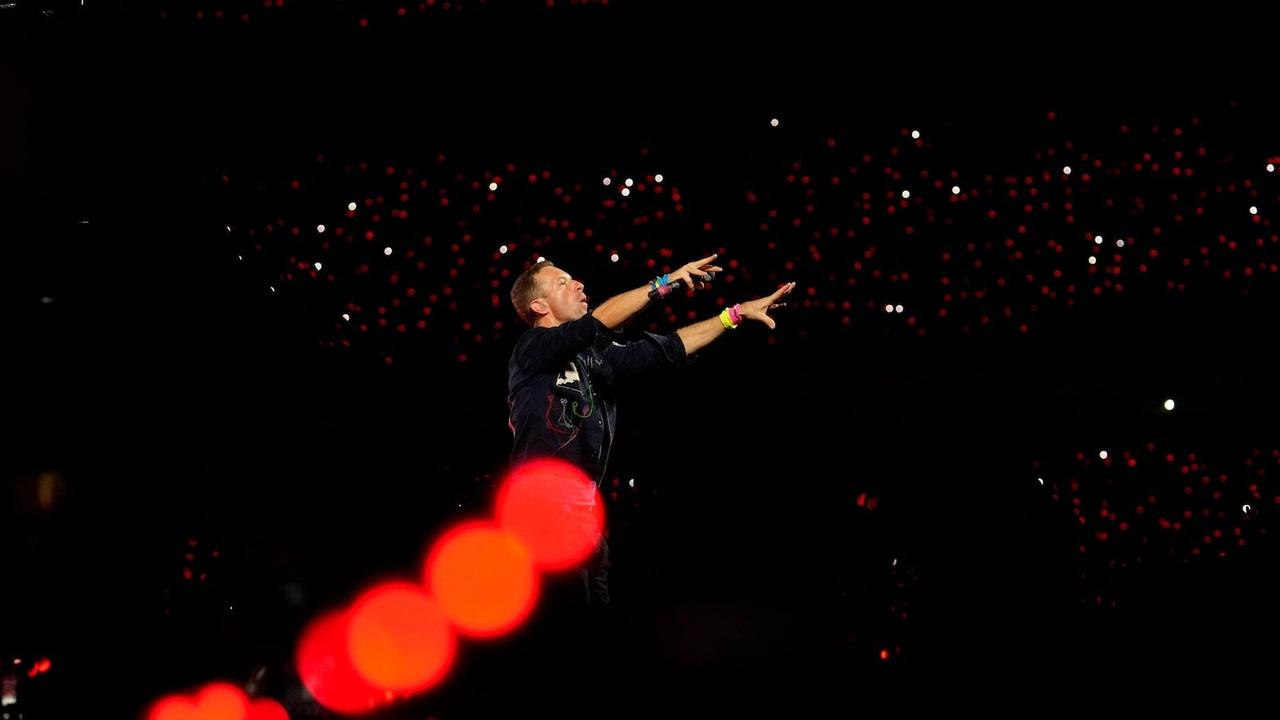
A recent Coldplay concert became the epicenter of a privacy controversy when the "KissCam" captured a couple attempting to avoid the spotlight. Within hours, the clip went viral, spreading across social media platforms and sparking a frenzy of memes and parody videos
1
. The incident took an unexpected turn when artificial intelligence and software company Astronomer confirmed that the couple in the video were its CEO and chief people officer, leading to the CEO's resignation2
.
Source: ABC News
The Ubiquity of Cameras in Modern Life
The incident has brought to light the pervasive nature of cameras in our daily lives. From CCTV systems to smartphones, our actions in public spaces are increasingly subject to recording and potential distribution. Ellis Cashmore, author of "Celebrity Culture," suggests that this incident answers a long-standing question about privacy: "Is the private life still what it was? And the answer is, of course, there's no such thing as the private life anymore"
1
.The Role of Social Media and AI in Surveillance
The rapid spread of the Coldplay incident highlights the power of social media as a distribution system. Mary Angela Bock, an associate professor at the University of Texas at Austin, notes, "It's not just the camera. It's the distribution system that is wild and new"
2
. This incident underscores how moments intended to be private or limited to a specific venue can quickly become global spectacles.The Rise of Doxing and Online Harassment
In the aftermath of viral moments, there's often a rush to identify those involved. This phenomenon, known as doxing, has become increasingly common and problematic. In the Coldplay case, not only were the CEO and chief people officer identified, but innocent bystanders were also mistakenly targeted
1
. Alison Taylor, a clinical associate professor at NYU's Stern School of Business, emphasizes the human cost of such incidents, stating, "There are real human beings behind this"2
.AI's Role in Identification and Privacy Concerns
The incident has also highlighted the role of AI in facilitating rapid identification of individuals in online posts. Bock describes the internet as having evolved into "a gigantic surveillance system," where social media platforms track users in exchange for entertainment
2
. This raises significant concerns about privacy and the potential for misuse of personal information.Related Stories

Legal and Ethical Implications
The Coldplay incident has sparked discussions about business ethics, corporate accountability, and the repercussions of conflicts of interest among leadership. However, it also raises broader questions about privacy rights in public spaces and the ethical use of technology for surveillance and identification
1
.The Future of Privacy in Public Spaces
As cameras become increasingly ubiquitous and AI technology advances, the expectation of privacy in public spaces is rapidly diminishing. Bock suggests, "We can't assume privacy on the street anymore"
2
. This new reality poses significant challenges for individuals, businesses, and policymakers as they grapple with the implications of constant surveillance and the potential for any moment to become a global spectacle.References
Summarized by

Navi
[1]
Related Stories
Tech Giants Redefine 'Recording' With AI Hardware, Sparking Privacy Debate
06 Oct 2026•Policy and Regulation

Ray-Ban Smart Glasses Face Privacy Backlash Over AI Training and Recording Without Consent
16 Mar 2026•Policy and Regulation
AI surveillance tools enable government to analyze millions of Americans' data at scale
22 Apr 2026•Policy and Regulation

Recent Highlights



Recent Highlights
Today's Top Stories



Don’t drown in AI news. We cut through the noise - filtering, ranking and summarizing the most important AI news, breakthroughs and research daily. Follow topics that matter to you and stay ahead.


