2 Sources
[1]
College Students Consumed by "Resignation and Despair" as They're Relentlessly Pressured to Use AI
Can't-miss innovations from the bleeding edge of science and tech We hear a lot about how college students are happy to use AI to help with their studies, if not churn out entire assignments. But is this too one-sided a narrative? Many appear to be having the opposite experience with the tech. Jeff Sharlet, a writing professor at Dartmouth College, said that his students are consumed by "resignation" and "despair" as they find themselves in an "arms race" to adopt AI or fall behind in their studies, facing relentless pressure from peers and instructors alike. "Many say they hate it, don't want to use it, but they feel like now it's submit or fail," Sharlet wrote in a lengthy and sobering Bluesky thread. "They feel like there's no escaping it," he later added. "And they don't like it." AI has made rapid inroads into education. Students quickly started AI for classwork after the launch of ChatGPT, and universities have encouraged the practice by signing deals with tech companies like OpenAI to provide students access to their AI tools. The discourse around all this tends to focus on cheating and plunging reading and math skills, treating students as a monolith of underachievers who eagerly embrace the tech. On the ground, the reality is more complicated. To gauge the situation, Sharlet asked his students to submit their anonymous thoughts on AI -- and none of them "really described it as improving their education," he said. At best they were ambivalent, trying to wean themselves off but finding themselves coming back for more -- a galling testament to the deliberately addictive design of popular chatbots. "I wish I could tell you the responses thrummed with defiance," Sharlet reflected. "Instead, some read like substance abuse testimonies." One student's use of AI grew until it wrote all their assignments. Then they "got caught. Crushed by shame. Swore it off. But it's creeping back, and they don't know how to stop." Others felt strongly against AI, with one student writing with "deep fury about AI taking over their education and wrecking mental health." Some who refuse to use AI for ethical reasons "feel abandoned," Sharlet reported. The pressure is coming from all sides. Some professors require students to use AI, and the institutions themselves allow and encourage it; Sharlet notes that Dartmouth's president cut a deal with Anthropic, a company that "stole the books of 133 faculty" without consulting the school's educators. "Several students wrote of the moral confusion implicit in a college that promotes AI and says don't cheat but makes it really, really easy to cheat," he wrote, likening it to how oil companies coined the term "carbon footprint" to "offload responsibility" onto the individual. AI also bred resentment among peers. Students reported "their disdain for friends who use it to do all their work," while saying they "only" use it to summarize or do research. This is the other consequence of AI in education. Its mere introduction sows mistrust, while the institutions pushing it are unwilling to take ownership of its myriad flaws -- pushing its use despite its incredible temptation as a tool for cheating, not to mention its less tangible but more nefarious cognitive effects that emerging research has shown such as impairing critical thinking. In all, it's being left up to students to figure out how AI is supposed to transform their learning, to serve as unwitting test subjects who will also be the ones to take the fall if they use AI in a manner that's "wrong," while AI companies and the school administrators they partner with get to brag they're providing them with all the cutting-edge tools they need to succeed.
[2]
UW students need more from human beings, not AI
When students use artificial intelligence, they're accused of cheating, sanctioned under academic integrity codes and warned that AI will erode their ability to think. But when universities use artificial intelligence, they call it "innovation." The University of Washington's new Purple AI tool is the latest example of this double standard. Students are told that AI threatens their learning. The institution, meanwhile, is pouring money into building its own tool. In a promotional video, "Three Things to Know About Purple," UW's Vice President for IT and Chief Information Officer Andreas Bohman says the tool "aligns with our shared values and university values." But how could an AI system ever represent human values? And why should students trust a university that punishes them for using the very technology it is now celebrating? UW is not alone. Universities across the country are racing to build proprietary AI tools, often with lofty language about equity, access and innovation. The University of Michigan has U‑M GPT. Harvard, UC Irvine, UC San Diego and Washington University have launched similar systems. According to a recent EDUCAUSE survey, 37% of colleges and universities provide institutionwide licenses for chatbots, and 14% developed their own chatbots, typically trained on the institution's information. At commencements across the country this spring, graduates booed speakers who praised AI. When former Google CEO Eric Schmidt told University of Arizona students that AI would define their futures, the stadium erupted in jeers. At the University of Central Florida, a speaker was booed for calling AI the "next Industrial Revolution." Students are not rejecting technology; they are rejecting the hypocrisy of institutions that warn them about AI's dangers while embracing it for themselves. Institutions continue to frame AI as a partner in learning, a phrase that sounds progressive but collapses under scrutiny. Critical thinking, ethical reasoning and intellectual independence are not skills that can be outsourced to a predictive text generator. When universities encourage students to use AI for "brainstorming," "idea generation" or "drafting," they are not promoting innovation. They are promoting intellectual laziness -- the very thing they accuse students of when they use ChatGPT on their own. Purple AI is marketed as a safer, more equitable alternative to commercial AI tools. But what students really need are more academic advisers, more mental health counselors, more writing tutors, more faculty time. Instead, the university has built a tool that mimics human thinking while insisting that students must not rely on tools that mimic human thinking. This is not innovation. It is institutional convenience. Universities are adopting AI not because it improves learning, but because it allows them to appear technologically sophisticated without addressing the structural problems students face. AI tools are cheaper than hiring more staff. They are easier than redesigning curricula. They allow administrators to claim progress without making the difficult investments that genuine educational improvement requires. And students know it. They know that AI detectors are unreliable. They know that faculty are confused about what counts as "allowed" AI use. They know that the rules change from class to class, and sometimes from week to week. They know that universities are building AI tools while simultaneously warning students that AI will destroy their ability to think. The result is a culture of fear and resentment. Students are told to avoid AI because it will harm their learning, but also told to embrace AI because it will define their careers. They are punished for using AI to draft an essay, but encouraged to use AI to navigate university bureaucracy. They are warned that AI will replace their jobs, but expected to applaud when administrators celebrate the same technology. Students deserve clarity. They deserve consistency. And they deserve institutions that invest in their learning, not in tools that imitate it. Purple AI is not a symbol of innovation. It is a symbol of a university that has lost sight of its purpose. Higher education is supposed to cultivate thinkers, not outsource thinking. If universities want to prepare students for a world shaped by AI, they should start by modeling the values they claim to uphold: transparency, intellectual rigor and respect for human judgment. Until then, students will keep booing -- and they will be right to.
Share
Copy Link
Students at Dartmouth and other universities describe feeling trapped in an AI arms race, consumed by moral confusion as institutions promote the same technology they punish students for using. A Dartmouth professor's survey reveals students comparing AI use to substance abuse, while universities like UW roll out proprietary tools amid growing student resistance.
College students are experiencing what Jeff Sharlet, a writing professor at Dartmouth, describes as "resignation and despair" as they navigate relentless pressure to use AI in education
1
. When Sharlet asked his students to submit anonymous thoughts on AI adoption, none described it as improving their education. Instead, responses read "like substance abuse testimonies," he reported in a detailed Bluesky thread1
. One student's AI use escalated until it wrote all their assignments, leading to getting caught and being "crushed by shame." Despite swearing off the technology, they found it "creeping back" without knowing how to stop1
. The psychological toll of AI extends beyond individual struggles, with students reporting deep fury about AI taking over their education and wrecking mental health.

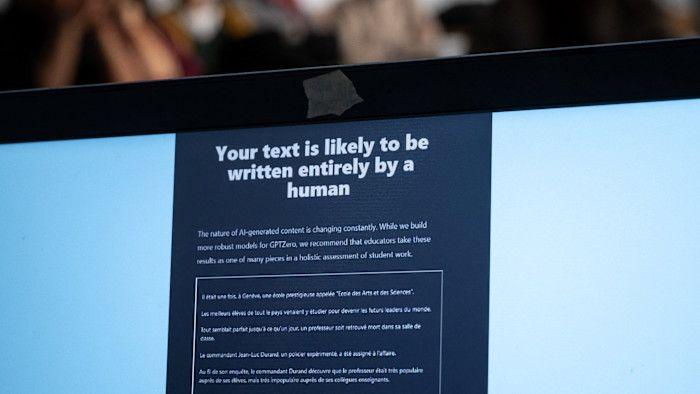
Source: Futurism
The moral confusion intensifies as universities promote AI while simultaneously warning about its dangers. The University of Washington recently launched Purple AI, a proprietary tool that Vice President for IT Andreas Bohman claims "aligns with our shared values," even as students face punishment for using similar technology
2
. According to an EDUCAUSE survey, 37% of colleges and universities now provide institutionwide licenses for chatbots, and 14% developed their own systems2
. Universities including the University of Michigan, Harvard, UC Irvine, UC San Diego, and Washington University have launched similar platforms. At Dartmouth, the president signed a deal with Anthropic, a company that "stole the books of 133 faculty" without consulting educators1
. Students wrote about this double standard, noting the moral confusion implicit in colleges that promote AI while telling students not to cheat.Student well-being concerns have manifested in public protests. At commencements across the country this spring, graduates booed speakers who praised AI's impact on education
2
. When former Google CEO Eric Schmidt told University of Arizona students that AI would define their futures, the stadium erupted in jeers. At the University of Central Florida, a speaker faced similar backlash for calling AI the "next Industrial Revolution"2
. This student resistance to AI reflects deeper frustration with institutions that appear technologically sophisticated without addressing structural problems like inadequate academic advisers, mental health counselors, and faculty time.Related Stories
"Many say they hate it, don't want to use it, but they feel like now it's submit or fail," Sharlet wrote, describing an arms race where students face pressure from peers and instructors alike
1
. Some professors now require students to use AI, while OpenAI partnerships provide widespread access to tools like ChatGPT. Students who refuse AI for ethical reasons "feel abandoned," and those who do use it report disdain for friends who rely on it completely, while justifying their own use for summaries or research1
. The introduction of AI sows mistrust among peers while institutions refuse to take ownership of its flaws, instead leaving students as unwitting test subjects who face consequences for "wrong" usage.
Source: Seattle Times
Critics argue universities adopt AI not because it improves learning, but because it allows them to appear innovative without making difficult investments in genuine educational improvement
2
. AI tools cost less than hiring more staff and prove easier than redesigning curricula. Students recognize this institutional convenience, noting that AI detectors remain unreliable, faculty confusion about allowed AI use persists, and rules change inconsistently. The result creates a culture of fear where students face punishment for using AI to draft essays while being encouraged to use it for navigating university bureaucracy, all while emerging research shows AI's impact on education includes impairing critical thinking and eroding human judgment.Summarized by
Navi
[1]
[2]
1
Startups

2
Policy and Regulation

3
Technology