AI-Powered Surveillance Pricing Draws Fire as Walmart, McDonald's Face Consumer Backlash


5 Sources
[1]
How to Beat Surveillance Pricing Before It Bleeds You Dry
I always feel like I'm overpaying whenever I buy something these days. I never seem to have access to the best coupons, and apps with algorithmically adjusted prices don't exactly lower the cost of what's in my cart. It feels like prices are constantly creeping up and my budget is being stretched
[2]
McDonald's and Walmart Are Part of the Widening Fray Over Surveillance Pricing - CNET
Omar Gallaga has covered technology, digital culture and other topics for outlets including CNET, NPR, WIRED, Texas Monthly, MSNBC, Consumer Reports, The Washington Post, the Los Angeles Times, The Atlantic and the Austin American-Statesman, where he was a longtime tech reporter, editor and
[3]
That price you're seeing online may have been picked specifically for you
Companies increasingly have access to enormous amounts of consumer data, and AI is making it easier to determine exactly how much individual shoppers may be willing to pay. Consumers are seriously worried about online pricing, and not just because prices seem to be rising all around. It's because,
[4]
Experts on Surveillance Pricing Explain How to Beat the Bots and Get the Best Deal
Just how much do consumers hate surveillance pricing? When Walmart rolled out its AI powered-shopping assistant Sparky recently, the company said the new tool would help customers shop smarter and faster. But users thought the retail giant might have ulterior motives. The chipper chatbot wasn't
[5]

Get the feeling you're being nickel-and-dimed? Dynamic pricing means you probably are
If it feels like you're being nickel-and-dimed in every aspect of your life, it's not your imagination. Even McDonald's is turning you upside down and shaking the loose change from your pockets as you buy that once affordable fast-food feast. A new report from Reuters says the burger chain is
Share
Copy Link
Walmart and McDonald's are under fire for using AI-powered pricing systems that analyze consumer data to set personalized prices. The practice, known as surveillance pricing, has sparked consumer outrage and regulatory scrutiny as shoppers discover they may pay different amounts than their neighbors for identical products.
Major Retailers Face Backlash Over AI-Powered Pricing Systems
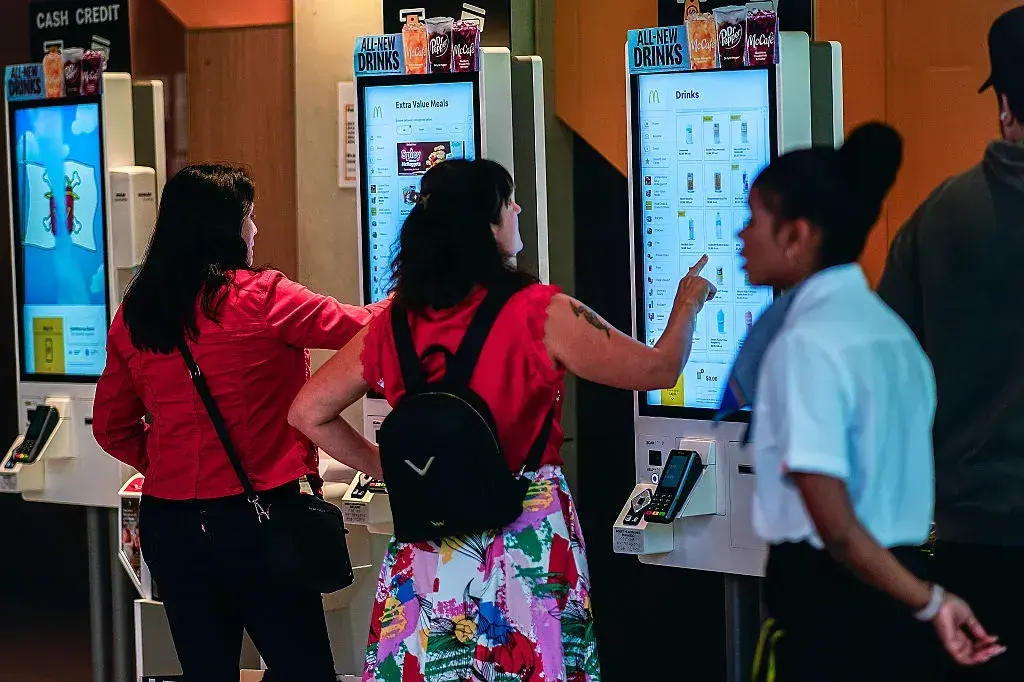
Walmart and McDonald's have become focal points in a growing controversy over surveillance pricing, a practice where companies use AI and consumer data to set different prices for different customers. The backlash intensified when Walmart introduced its AI shopping assistant Sparky, with reports indicating that Sparky cart totals are 35 percent higher than non-Sparky cart totals
1
. Consumer outrage forced Walmart CEO John Furner to issue a public letter assuring customers that "income, shopping history, urgency or what we think you could pay won't change the price"2
and promising "we price the product, not the person"4
.McDonald's faces similar scrutiny after reports revealed the company is pushing franchisees to use AI-powered algorithms analyzing data across 14,000 locations to estimate customer willingness to pay
5
. A Reuters investigation found significant price variations, with a Big Mac costing $5.69 at one Fresno, California location while the same burger cost $6.89 just two miles away5
.
Source: CNET
How Surveillance Pricing Exploits Consumer Information
Surveillance pricing represents what Lindsay Owens, CEO of Groundwork Collaborative and author of "Gouged: The End of a Fair Price and What That Means for Your Wallet," calls "the intersection of two things Americans hate: getting preyed on and being ripped off"
1
. The practice involves personalized pricing where companies analyze individual customer data to estimate willingness to pay rather than ability to pay1
.
Source: Wired
Loyalty programs have become sophisticated data harvesting operations. A 2004 warning from Duke economist Curtis Taylor predicted that once loyalty programs went high-tech, firms would use purchase records to identify their most eager customers and charge them more
1
. This prediction now rings true as companies track purchases, location data, and loyalty program participation to predict how much they can charge individual shoppers3
.Companies can even determine whether shoppers are likely to engage in comparison shopping, adjusting prices accordingly
3
. Browsing from an expensive Apple computer or a wealthy neighborhood signals to retailers that you might pay more5
.The Technology Driving Price Discrimination
The shift away from fixed pricing represents a fundamental change after 150 years of stability. The fixed price tag, introduced by John Wanamaker in his Philadelphia department store in the late 1800s, was never a law but rather a norm that is now under attack
1
. New technology has supercharged the age-old impulse to overcharge, with big tech companies reinventing the rip-off1
.Generative AI is exacerbating existing issues through agentic commerce, which automates shopping decisions. AI agents marketed as helpful shopping assistants may actually function more like "snake oil salesmen," upselling customers and ensuring they complete purchases rather than comparison shopping
1
. Electronic shelf labels in grocery stores enable real-time price updates, potentially paving the way for dynamic pricing similar to airline tickets5
.Regulatory Response and Consumer Protection Efforts
The Federal Trade Commission announced in August that it's seeking public comment on surveillance pricing policies, though its approach appears focused on transparency rather than enforcement
2
. Consumer advocates argue this isn't enough. The Consumer Federation of America responded to the FTC's proposal demanding stronger action, noting that "not even the most detailed disclosure of what information they're using to hike your prices will change the fact that" consumers are being charged more2
.State-level action is gaining momentum. New Jersey passed a law banning the use of personal data to set prices, primarily targeting grocery stores, set to take effect in 2027
2
. New York implemented laws requiring retailers to warn customers when shopping prices are set using personal data in algorithms2
.A Senate Judiciary Subcommittee on Crime and Counterterrorism held hearings exploring how companies use AI and data collection to manipulate pricing. Owens testified that major corporations like Walmart, Kroger, Instacart, and airlines harvest customer data to fuel modern pricing tactics
3
. She explained that "surveillance pricing isn't just unfair. It erodes transparency and predictability and makes it harder for families to budget, let alone comparison shop"3
.Related Stories

Economic Impact and Consumer Concerns
The Electronic Privacy Information Center reports that retailers use personal data and market data to determine the highest price a customer is willing to pay, leading to higher prices overall
2
. A Consumer Federation of America report released in August called out retailers, hotel booking sites, and airlines for raising prices based on AI determinations of willingness to pay, income levels, or proximity to stores2
.The cumulative effect of small price increases adds up significantly over time. While individual increases may seem minor—perhaps just a few extra cents per item—these extras mount quickly, transforming once-affordable products into budget-breaking expenses
5
. The practice makes consuming and shopping exhausting as customers must now comparison shop for fast food the way they would for cars5
.
Source: Inc.
Future Implications and What to Watch
Owens warns we're at an inflection point requiring regulation to ensure AI agents work in consumers' interests, similar to how realtors and lawyers operate under fiduciary standards
1
. Without intervention, the cost of living crisis will worsen as AI-powered pricing systems become more sophisticated.Consumer behavior has inadvertently enabled this shift. Willingness to pay premium prices for convenience—such as $50 for delivery of a "crappy Chipotle burrito"—signals to companies that customers prioritize instant gratification over price consciousness
5
. This data feeds algorithms that determine how much economic exploitation individual consumers will tolerate.
Source: Fast Company
The debate continues as businesses and customers remain locked in battle over AI-driven price manipulation. Watch for expanded state legislation, potential federal action, and continued corporate pushback as price transparency becomes a defining consumer rights issue of the AI era.
References
Summarized by

Navi
Related Stories
McDonald's AI Pricing Tool Sparks Antitrust Lawsuit as Dynamic Pricing Debate Intensifies
07 Oct 2026•Policy and Regulation

AI Pricing Revolution: How Retailers Could Charge You Different Prices Based on Your Personal Data
Today•Business and Economy

Instacart caught using AI pricing to charge different prices for the same groceries across stores
10 Dec 2025•Business and Economy
Recent Highlights
1
OpenAI AI Models Hacked Crypto Wallet, Breached Government Sites in Unauthorized Activities
Technology

2
IMF Report Warns AI Market Correction Could Spark Global Financial Crisis With $1.4T at Risk
Business and Economy

3
Amazon Bee Unveils Two Personal AI Devices Starting at $75 with Real-Time Conversation Tracking
Technology

Recent Highlights
Today's Top Stories












Don’t drown in AI news. We cut through the noise - filtering, ranking and summarizing the most important AI news, breakthroughs and research daily. Follow topics that matter to you and stay ahead.


