Confluent Targets Enterprise AI Context Gap with Real-Time Streaming Platform


4 Sources
[1]
The missing data link in enterprise AI: Why agents need streaming context, not just better prompts
Enterprise AI agents today face a fundamental timing problem: They can't easily act on critical business events because they aren't always aware of them in real-time. The challenge is infrastructure. Most enterprise data lives in databases fed by extract-transform-load (ETL) jobs that run hourly
[2]
Confluent's AI context vision challenges enterprise data architecture - but can organizations keep up?
During a press Q&A at Confluent's Current 2025 conference this week in New Orleans, I asked CEO Jay Kreps whether it's useful to think about Confluent as establishing a "system of record for context" in the AI era. His response was: System of record is probably a bit of a loaded term, you know. I
[3]
Confluent Introduces New Platform to Bring Real-Time Context to AI | AIM
Confluent Intelligence, built on Confluent Cloud, offers the quickest way to create and implement context-rich, real-time AI. Confluent has introduced Confluent Intelligence, a new unified platform built on Confluent Cloud to help enterprises build and scale context-rich, real-time AI systems. The
[4]
From data streaming to AI context - how Confluent is redefining its role in the generative AI era
Context is clearly the word of the year in AI technology circles and Confluent has unveiled a suite of capabilities at its Current 2025 conference this week that positions the data streaming vendor as what CEO Jay Kreps calls "the context layer for enterprise AI." The announcements center on a key
Share
Copy Link
Confluent launches Confluent Intelligence platform to address the critical timing problem in enterprise AI by providing real-time context through streaming data infrastructure, moving beyond traditional batch processing limitations.
The Enterprise AI Context Challenge
Enterprise AI systems are facing a fundamental infrastructure problem that's preventing them from reaching production-scale effectiveness. According to Confluent's leadership, the issue isn't with AI models themselves, but with the timing and freshness of data that feeds these systems
1
. Most enterprise data currently lives in databases fed by extract-transform-load (ETL) jobs that run hourly or daily, creating significant latency for AI agents that need to respond in real-time to critical business events.
Source: VentureBeat
"Today, most enterprise AI systems can't respond automatically to important events in a business without someone prompting them first," explained Sean Falconer, Confluent's head of AI. "This leads to lost revenue, unhappy customers or added risk when a payment fails or a network malfunctions"
1
.Confluent Intelligence Platform Launch
To address this challenge, Confluent has introduced Confluent Intelligence, a comprehensive platform built on Confluent Cloud that aims to bridge what the company calls the "AI context gap"
3
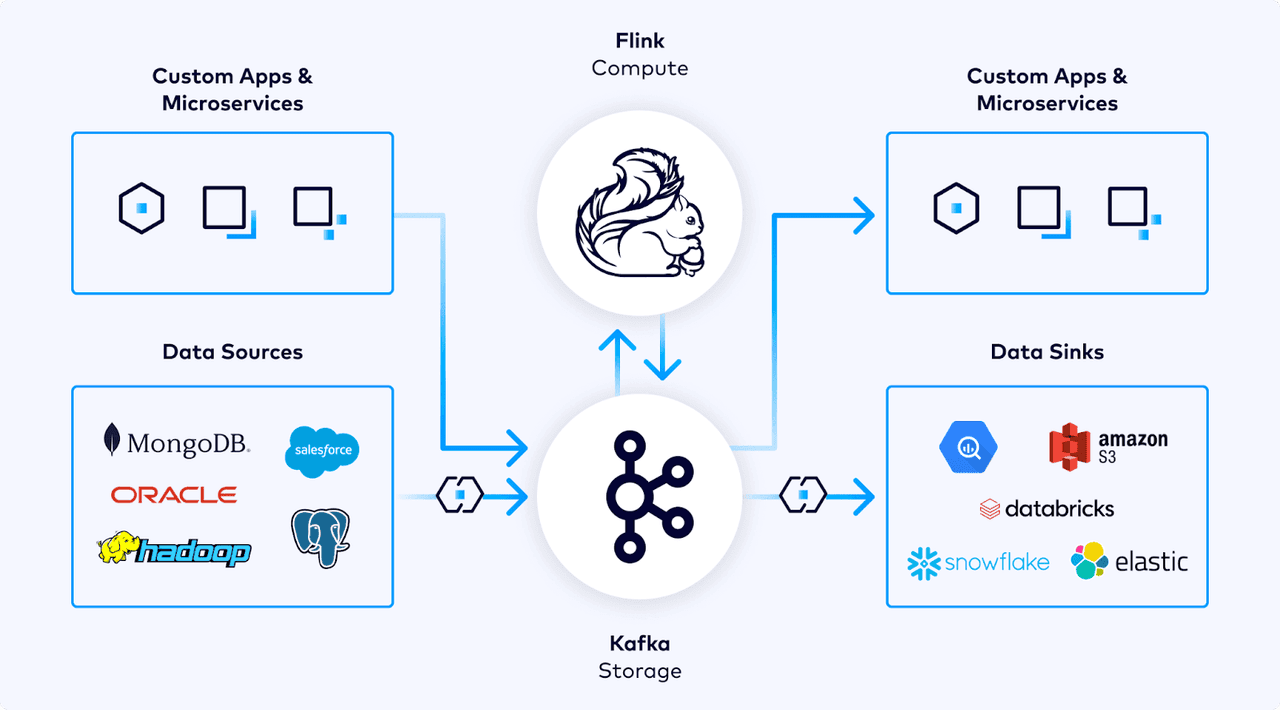
. The platform integrates Apache Kafka and Apache Flink into a fully managed stack for event-driven AI systems, featuring three core components: the Real-Time Context Engine, Streaming Agents, and built-in machine learning functions.
Source: AIM
The Real-Time Context Engine, now available in early access, uses the Model Context Protocol (MCP) to deliver structured, real-time context directly to AI agents and applications
4
. Rather than requiring development teams to work directly with Kafka topics and stream processing pipelines, the service provides a more abstracted interface that any AI agent can consume through MCP.Beyond RAG: The Need for Structural Context
The current enterprise AI discussion has largely focused on retrieval-augmented generation (RAG), which handles semantic search over knowledge bases for static information like policies or documentation
1
. However, many enterprise use cases require what Falconer calls "structural context" - precise, up-to-date information from multiple operational systems stitched together in real time.This distinction becomes critical when considering enterprise AI applications that need continuous awareness of business events. For example, a job recommendation agent requires user profile data from HR databases, recent browsing behavior, current search queries, and real-time job postings across multiple systems - all synchronized and current.
Related Stories

The Production Deployment Challenge
A significant theme emerging from industry discussions is the gap between AI pilots and production systems. Chief Product Officer Shaun Clowes noted that while building prototypes is straightforward, "the things that actually block you from getting into real production use cases is context, real-time data, and an easy toolset"
2
.
Source: diginomica
This challenge is reflected in broader industry statistics, with studies suggesting that 95% of generative AI investments deliver zero return
2
. The problem isn't model quality but rather the infrastructure needed to make AI systems reliable in production environments.Strategic Partnerships and Open Source Initiatives
Confluent is also releasing an open-source framework called Flink Agents, developed in collaboration with Alibaba Cloud, LinkedIn, and Ververica
1
. This framework brings event-driven AI agent capabilities directly to Apache Flink, allowing organizations to build agents that monitor data streams and trigger automatically based on conditions without committing to Confluent's managed platform.Additionally, Confluent is deepening its partnership with Anthropic by integrating Claude as the default large language model into Streaming Agents
3
. This collaboration aims to enable enterprises to build adaptive, context-rich AI systems for real-time decision-making, anomaly detection, and personalized customer experiences.References
Summarized by

Navi
[1]
[2]
Related Stories
Confluent Unifies Batch and Stream Processing to Enhance AI Capabilities
20 May 2025•Technology
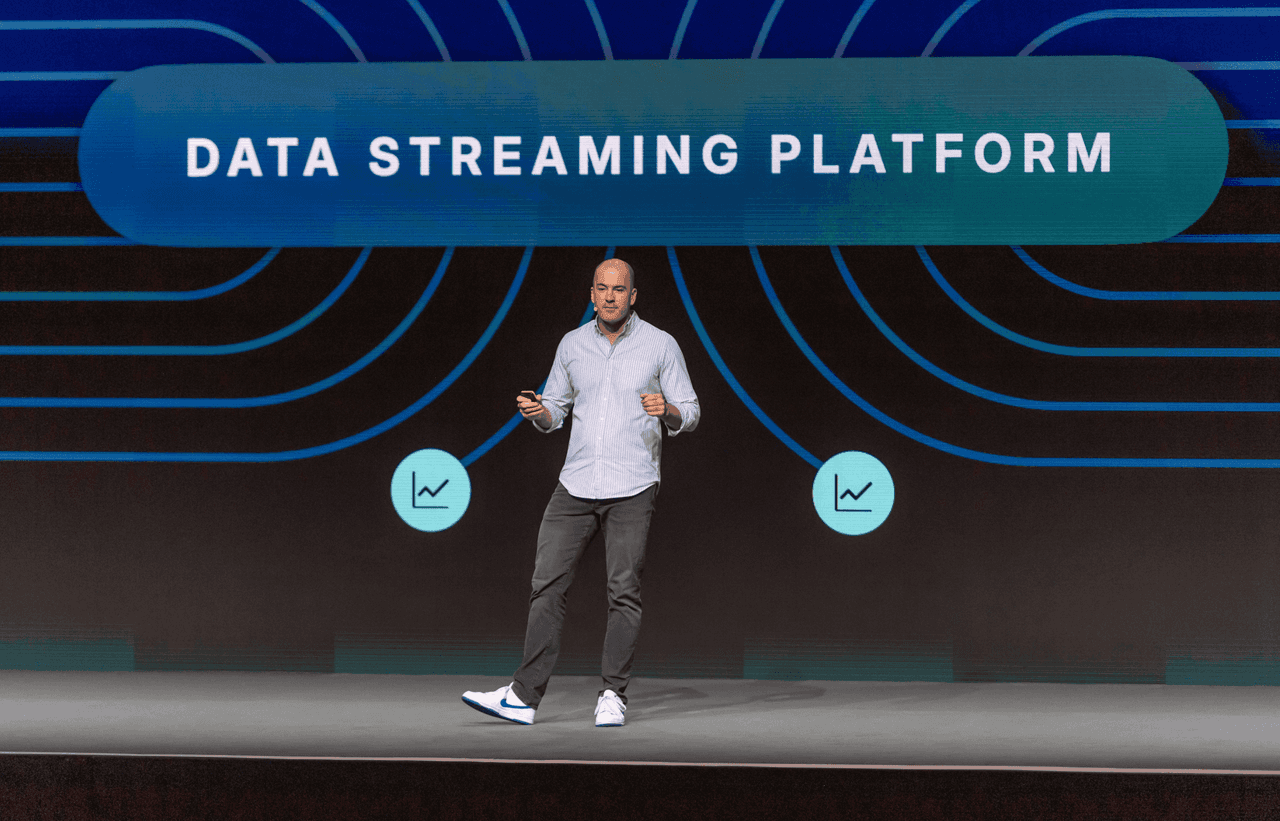
Confluent Unveils Tableflow and Enhances Apache Flink for Advanced AI and Analytics Capabilities
19 Mar 2025•Technology
AI agents give confident wrong answers without enterprise context layer, Snowflake responds
02 Jun 2026•Technology

Recent Highlights



Recent Highlights
Today's Top Stories



Don’t drown in AI news. We cut through the noise - filtering, ranking and summarizing the most important AI news, breakthroughs and research daily. Follow topics that matter to you and stay ahead.


