CoreWeave Stock Performance Plunges 56% as CEO Defends AI Infrastructure Strategy Amid Bubble Fears


3 Sources
[1]
Coreweave CEO defends AI circular deals as 'working together' | TechCrunch
It's been quite the year for Coreweave. In March, the AI cloud infrastructure provider went public in one of the biggest and most anticipated IPOs of the year that didn't live up to its hype. Another setback took place in October, when a planned acquisition of the cloud provider's business
[2]
CoreWeave Has Lost a Staggering Amount of Stock Value Over the Past Six Months
AI cloud computing company CoreWave exploded onto the scene in March with the biggest tech IPO since 2021. The company's stock soared by more than 40 percent in the following days, riding on the coattails of immense hype surrounding generative AI. The hype was driven by insatiable AI companies
[3]
CoreWeave CEO: Despite see-sawing stock, IPO was 'incredibly successful' after challenges of Liberation Day tariff timing | Fortune
"When you introduce new models, introduce a new way of doing business, disrupt what has been a static environment, it's going to take some people some time," Intrator said Tuesday at Fortune's Brainstorm AI conference in San Francisco. But, he added, more people are beginning to understand the
Share
Copy Link
CoreWeave has lost 56% of its stock value since its March IPO, with shares dropping from over $150 to around $90. CEO Michael Intrator defends the company's debt-heavy expansion strategy and circular business deals, calling them necessary for disrupting traditional cloud providers. The AI cloud infrastructure provider faces scrutiny over high-interest debt and delays in data center construction.
CoreWeave Stock Performance Shows Extreme Volatility Since March IPO
CoreWeave launched one of the biggest tech IPOs since 2021 in March, debuting at $40 per share amid enormous hype surrounding the AI infrastructure boom
1
. The AI cloud computing company initially soared by more than 40 percent in the following days, driven by insatiable demand from tech giants like Microsoft, OpenAI, and Meta leasing hundreds of megawatts of compute capacity2
. However, the stock performance has been anything but stable. After climbing to well over $150, shares have plunged dramatically, hovering at around $90 as of Tuesday—representing a staggering 56 percent loss in stock value over just six months1
2
. In just six weeks alone, the company shed $33 billion in market value, with shares dropping 46 percent during that period2
. Critics have compared the volatility to a meme stock due to its penchant for severe up-and-down price swings1
.CEO Michael Intrator Defends Debt-Heavy Expansion Strategy and New Business Model
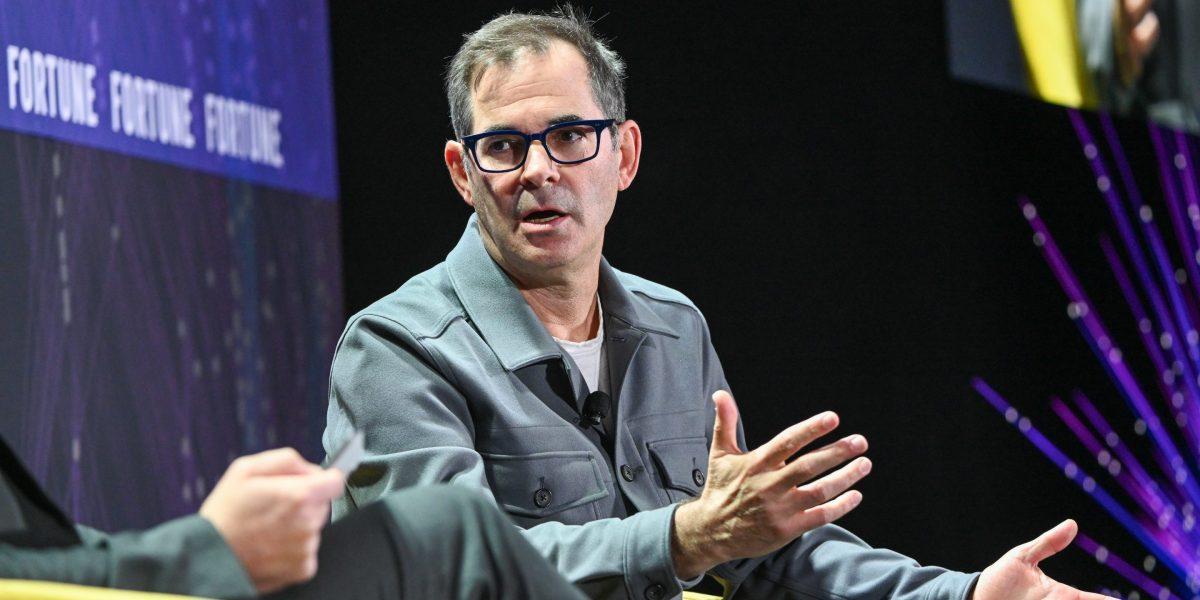
Speaking at Fortune's AI Brainstorm summit in San Francisco on Tuesday, CoreWeave co-founder and CEO Michael Intrator defended his company's performance against mounting criticism
1
. He characterized the AI cloud infrastructure provider as creating a "new business model" for how cloud computing can be built and run, one that challenges established cloud providers like AWS, Microsoft Azure, and Google Cloud3
. "When you introduce a new model, when you introduce a new way of doing business, when you disrupt what has been a static environment, it's going to take some people some time," Intrator said during his appearance1
. The executive also defended the timing of the IPO, noting that it launched "not long before President Trump's tariffs went into effect" around Liberation Day in April—a notably uncertain moment for the overall economy1
. "We came out into one of the most challenging environments, right around Liberation Day and, in spite of the incredible headwinds, were able to launch a successful IPO," he told Fortune editorial director Andrew Nusca1
.
Source: Fortune
High-Interest Debt and Data Center Delays Fuel Investor Concerns
Much of the uncertainty around CoreWeave centers on the company's hefty level of high-interest debt taken on to finance its aggressive data center buildout
1
. Not long after CoreWeave announced a deal on Monday to issue even more debt, its stock dropped approximately 8 percent1
. The debt-heavy expansion strategy leaves the firm with considerable risk, potentially putting it first on the chopping block if fears of an AI bubble materialize2
. Operations have also encountered significant headwinds, with rainstorms in Texas forcing delays in pouring the foundation for an AI data center complex, pushing back completion dates by months2
. During a quarterly earnings call, Intrator initially downplayed concerns about the Texas delays, stating "there are 32 data centers in our portfolio," but CFO Nitin Agrawal was forced to intervene and clarify that delays were affecting several data centers for a single provider2
.Circular Business Deals and Nvidia Relationship Draw Scrutiny
Investors have also raised concerns about circular financing arrangements within the AI sector
2
. Nvidia owns six percent of CoreWeave's shares while CoreWeave has signed an exclusivity contract with the AI chipmaker to only use its GPUs2
. Additionally, Microsoft represented 62 percent of CoreWeave's 2024 revenue and is also a major shareholder of CoreWeave's top customer, OpenAI2
. When questioned about circularity Tuesday, Intrator dismissed the concerns, stating that "companies are trying to address a violent change in supply and demand. You do that by working together"1
. The company's collection of Nvidia GPUs is so valuable that CoreWeave borrows against it to help finance their business1
.Related Stories

Revenue Backlog Growth Signals Strong Demand Despite Challenges
Despite the turbulence, CoreWeave reported some positive metrics in its third-quarter results released in November
3
. The company's revenue backlog nearly doubled in a single quarter—surging to $55.6 billion from $30 billion—reflecting long-term commitments from marquee clients including Meta, OpenAI, and French AI startup Poolside3
. Both earnings and revenue came in ahead of Wall Street expectations3
. However, the company also disclosed a further increase in debt and revised its full-year revenue outlook downward, suggesting challenges in converting pipeline demand into immediate revenue3
.Strategic Acquisitions Target High-Performance Computing Infrastructure
Since the IPO, CoreWeave has pursued multiple acquisitions to expand its capabilities and move "up the stack" in AI infrastructure
3
. The company acquired Weights and Biases, an AI developer platform, in March, followed by OpenPipe, a startup that helps companies create and deploy AI agents through reinforcement learning1
. In October, CoreWeave also made deals to acquire Marimo, the creator of an open-source notebook, and Monolith, another AI company1
. The company recently announced an expansion of its cloud partnership with OpenAI and revealed plans to move into the federal market, where it aims to provide cloud computing infrastructure to U.S. government agencies and the defense industrial base1
. CoreWeave actually started its corporate life as a crypto-miner before pivoting to become a pivotal provider of AI infrastructure to major tech players1
.
Source: TechCrunch
References
Summarized by

Navi
Related Stories
CoreWeave Aims for $2.7 Billion IPO, Highlighting AI Cloud Computing Boom
20 Mar 2025•Business and Economy

CoreWeave's $1.5B IPO: From Crypto Mining to AI Infrastructure Giant
28 Mar 2025•Business and Economy

CoreWeave's Meteoric Rise in AI Infrastructure: Opportunities and Challenges
25 Sept 2025•Technology
Recent Highlights



Recent Highlights
Today's Top Stories








Don’t drown in AI news. We cut through the noise - filtering, ranking and summarizing the most important AI news, breakthroughs and research daily. Follow topics that matter to you and stay ahead.


