Jeff Bezos Says AI Could Enable 3 Day Work Week as Productivity Soars


3 Sources
[1]
Jeff Bezos says AI could bring a 3 day work week, so why is Amazon cutting jobs?
The Amazon founder believes rising productivity could make shorter workweeks possible. Some people may eventually earn enough to support their families while working just three days a week. Others might find that one income is enough to run their household. A shorter working week comes with a
[2]
Jeff Bezos reveals AI vision that could transform the American workweek
Amazon founder Jeff Bezos laid out a sweeping vision for America's future Wednesday, telling Fox News the U.S. must beat China to the moon, artificial intelligence (AI) could help families get by with less work and data centers could one day operate in space. In an exclusive interview with chief
[3]
AI may let people work just 3 days a week, says Amazon founder Jeff Bezos
Bezos also says the US must stay ahead of China in Moon missions, with a return to the Moon possible by 2028. Amazon founder Jeff Bezos believes that the rapid advances in the field of AI could drive productivity high enough for some people to maintain their lifestyles while working fewer hours.
Share
Copy Link
Amazon founder Jeff Bezos predicts artificial intelligence will drive productivity high enough for some families to support themselves working just three days weekly. Speaking at Blue Origin's Florida facility, Bezos outlined an optimistic AI vision even as Amazon cut roughly 30,000 corporate jobs since late last year.
Jeff Bezos Predicts AI-Driven Productivity Could Enable Shorter Workweeks
Amazon founder Jeff Bezos believes artificial intelligence could transform labor economics by boosting productivity enough that some families can support themselves while working just three days weekly
1
2
3
. Speaking with Fox News anchor Bret Baier at Blue Origin's Cape Canaveral facility on Wednesday, Bezos outlined an optimistic AI vision where increased productivity gives workers greater freedom over their schedules1
2
. "Some people will also decide, you know what? I can support my family by working three days a week," Bezos said, describing how AI-driven productivity gains might allow households to rely on one income or choose shorter working weeks2
. The prediction centers on the idea that workers completing tasks faster would earn enough without putting in extended hours, fundamentally changing calculations around how much people need to work1
3
.Amazon Layoffs Create Tension With Bezos's Optimistic Forecast
Baier challenged Bezos's forecast by pointing to roughly 30,000 corporate job cuts at Amazon since late last year, creating a stark contrast with predictions of labor shortages
1
2
. Reuters reported in January that Amazon was cutting 16,000 positions, following an earlier round affecting 14,000 roles1
. Bezos attributed the reductions to workforce expansion during the pandemic, saying Amazon was in a "very special position" after substantially increasing hiring during COVID-191
2
. The layoffs highlight concerns about job displacement and job security that accompany discussions of automation1
3
. While Bezos acknowledged public fears about AI's impact on employment, he disagreed with predictions of widespread job losses, instead arguing that productivity gains could create hiring challenges as Americans choose to work less2
3
.Bezos's Prometheus Aims to Democratize Engineering Through AI
At Prometheus, where Bezos serves as co-founder and co-CEO, the goal is developing an "artificial general engineer" that helps people turn ideas into physical products
2
3
. "We're going to make the tools so easy to use that anyone will be able to be an engineer," Bezos explained, describing how the system would democratize product development2
. This vision extends beyond simple automation to fundamentally reshape how people interact with technology and manufacturing. Bezos predicted AI could generate double-digit productivity gains across the economy, though he stopped short of announcing any 3 day work week policy at Amazon or providing implementation timelines1
2
. The missing detail remains how increased productivity would translate into household income, as completing tasks faster does not automatically guarantee higher wages or fewer required hours1
.Related Stories

Investment Bubble Concerns and Technology's Long-Term Value
When asked whether the AI industry is experiencing an investment bubble, Bezos said it was "very hard to know" but argued that useful inventions survive even when investments collapse
1
2
. "The inventions don't disappear when the bubble pops," he said, pointing to lifesaving drugs developed during the biotechnology boom and fiber-optic cables laid during the internet boom2
. This perspective suggests that even if current AI investments prove excessive, the underlying technology could still deliver meaningful benefits. Bezos urged a light regulatory approach while the technology develops, with rules focused on harmful uses rather than broad restrictions2
. "In the beginning stages, when technologies are new, a light hand is appropriate," he stated2
.
Source: New York Post
Blue Origin Investments Signal Bezos's Broader Technology Vision
Bezos revealed he has personally invested $28 billion in Blue Origin, with the space exploration company recently raising $10 billion from outside investors for the first time
2
. An initial public offering could come several years from now, he indicated2
. The company is preparing to return its New Glenn rocket to flight in December after an explosion during an engine test in May2
. Bezos expressed confidence that the US could beat China to the moon, with American astronauts potentially returning in 20282
3
. He described lunar resources including soil for manufacturing solar cells and oxygen for rocket propellant as critical for establishing a sustainable lunar base2
3
. "We'll go to Mars. We'll do all the other things. But we need to go to the moon first," Bezos said2
3
. His long-term goal for Blue Origin is ambitious: flying rockets every minute, though he acknowledged his team "think I'm crazy"2
. For workers watching these predictions unfold, the question remains whether they will experience AI through shorter schedules and improved living standards, or primarily through continued restructuring and job cuts as companies pursue efficiency gains.References
Summarized by

Navi
Related Stories
Jeff Bezos dismisses AI job fears, predicts labor shortage as tech reshapes work
21 May 2026•Business and Economy
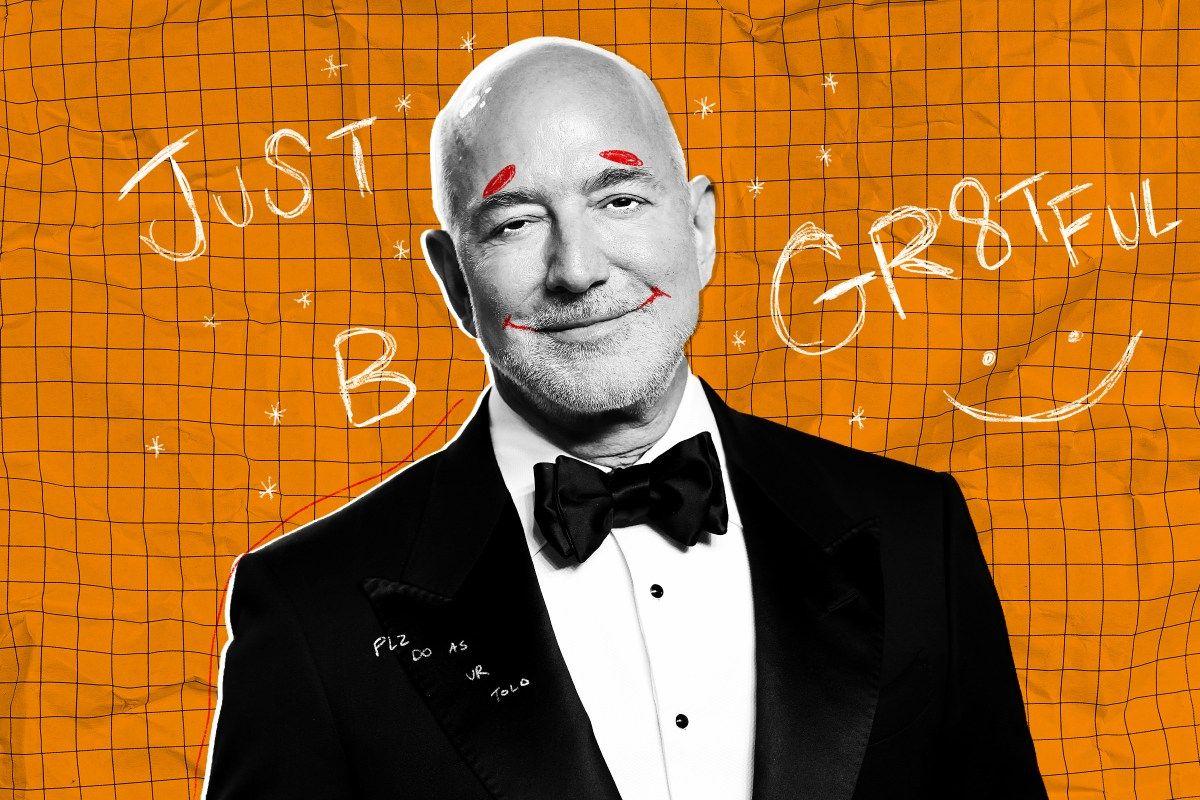
Jeff Bezos predicts AI will create labor shortage, contradicting widespread job displacement fears
17 Jun 2026•Business and Economy
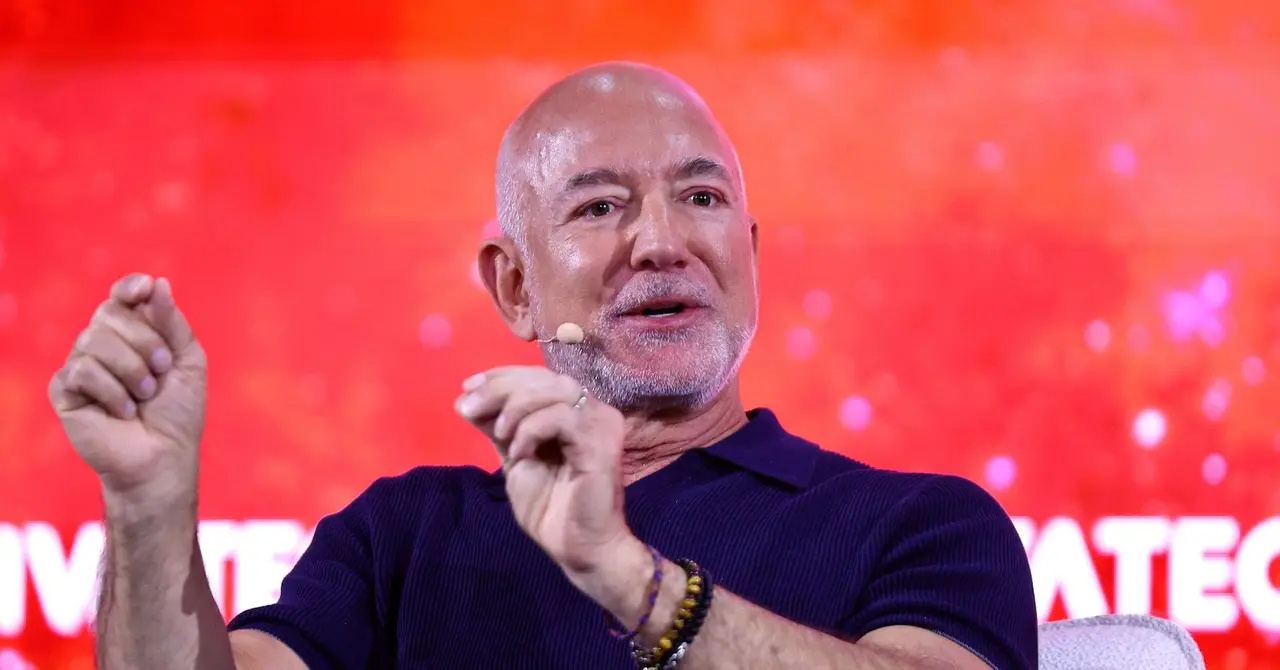
Jeff Bezos: AI in 'Industrial Bubble', but Promises Gigantic Benefits for Society
03 Oct 2025•Business and Economy

Recent Highlights
1
Microsoft and Nvidia Launch Surface Laptop Ultra: A $2,599 AI-Ready PC With RTX Spark Chip
Technology

2
Google Unveils Gemini 4 Argon AI Model, Restricts Access to Trusted Cyber Defenders
Technology

3
OpenAI Releases 722 AI-Generated Math Papers on GitHub, Igniting Fury Among Mathematicians
Science and Research

Recent Highlights
Today's Top Stories








Don’t drown in AI news. We cut through the noise - filtering, ranking and summarizing the most important AI news, breakthroughs and research daily. Follow topics that matter to you and stay ahead.


