AI Debt Market Faces Reckoning as CoreWeave Bond Yield Hits 16% and Lenders Grow Cautious


5 Sources
[1]
Focus: Banks, investors grow wary of AI debt, spooked by market selloff
NEW YORK, Nov 9 (Reuters) - Banks and credit investors are upping their scrutiny of AI-related debt deals while showing reluctance to increase exposure to borrowers, jolted by the recent market selloff and changing sentiment toward the technology's growth trajectory. Some banks, which just a few
[2]
The AI 'credit card' is getting costlier as CoreWeave bond yield tops 16%
* CoreWeave's bond yield has climbed above 16%, highlighting investor concern about financing the AI infrastructure boom. * Default protection costs have risen across AI-linked companies, including Nvidia, Broadcom and Oracle. * Wall Street expects substantial borrowing to fund further AI
[3]
CoreWeave bond yield tops 16% as AI credit stress spreads
CoreWeave's credit default swaps spiked above 1,289 basis points on Thursday, higher than their October peak CoreWeave saw the yield on its 9.625% bond due in 2032 climb above 16%, according to CNBC, as investors demand more protection against default across AI-linked borrowers. The company's
[4]
Big Tech Faces Tougher Scrutiny of AI Spending After Selloff | PYMNTS.com
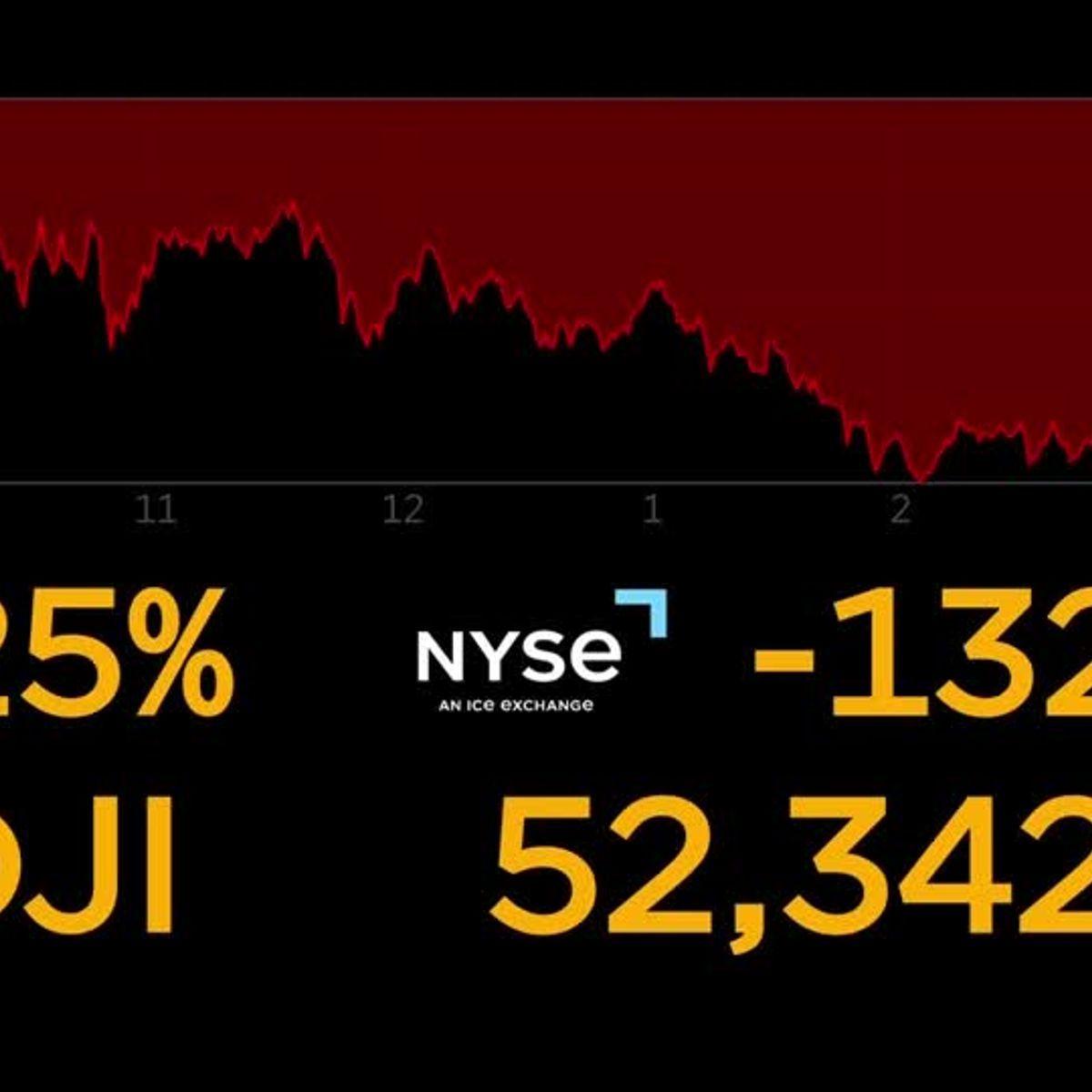
The past week's technology selloff increased pressure on the companies financing artificial intelligence's expansion. Their latest spending plans, however, offer little evidence of an immediate retreat. The Nasdaq fell 5.5% Thursday, Nov. 5, as borrowing costs and the prospect of restrictions on
[5]

Why AI investors may favor established data-center owners
Investors in artificial intelligence may see the same sell-off across a wide group of stocks and assume the risk is evenly shared. James Demmert, who has worked in the investment industry for more than 35 years, argues that the data-center debate creates a more useful divide: Companies that already
Share
Copy Link
Banks and investors are reassessing AI infrastructure financing after a market selloff erased $2.5 trillion from the Nasdaq 100. CoreWeave's bond yield has climbed above 16%, while credit default swaps have spiked across AI-linked companies including Nvidia and Broadcom. Lenders now scrutinize deals even when backed by tech giants like Google and Anthropic.
Banks Pull Back on AI Infrastructure Financing
Banks and credit investors are sharply increasing scrutiny of AI-related debt deals following a market selloff that erased $2.5 trillion in value from the Nasdaq 100
1
. Some lenders now express reluctance to finance additional AI infrastructure investments even when deals include guarantees from marquee technology companies like Anthropic and Google1
. This shift represents a dramatic reversal from just weeks ago when banks were competing to fund AI spending initiatives."Over the past year there was unbridled enthusiasm to provide debt to neoclouds, anyone who was building data centers or some sort of AI asset," said Chris Poggi, finance partner at Ropes & Gray
1
. He noted that debt investors' portfolios have become saturated, forcing them to assess whether they've extended themselves beyond prudent limits.
Source: PYMNTS
CoreWeave Emerges as Poster Child for AI Credit Stress
CoreWeave has become the most visible example of mounting AI-linked credit stress. The yield on the company's 2032 bond with a 9.625% coupon has climbed above 16%
2
3
. The company's five-year credit default swaps spiked above 1,289 basis points on Thursday, exceeding their October peak, before easing to around 1,155 basis points2
3
. CoreWeave's stock has fallen 35% year to date, with bond prices dropping sharply on secondary markets1
.The company's borrowing costs were already rising in October when its 2032 bond carried a yield to maturity of 14.8%
3
. CoreWeave reported net interest expense of $640 million in the second quarter, more than double the $267 million from a year earlier3
. Investment professionals have flagged CoreWeave as particularly vulnerable due to its need for substantial new capacity combined with balance sheet concerns5
.Credit Default Swaps Rise Across AI Sector
Default protection costs have surged across AI-linked companies, extending beyond struggling neoclouds to include even the sector's strongest players. Credit default swaps on Nvidia debt rose 76% in the last month, while Broadcom's CDS increased 49% and Amazon's gained 44%
2
3
. These contracts remain low in absolute terms—Nvidia's spread stood at roughly 139 basis points compared to about 298 basis points for Oracle and approximately 1,100 for CoreWeave2
3
.The spread on 10-year hyperscaler debt has widened by about 50 basis points year to date, versus roughly 20 basis points for high-quality industrial companies not tied to AI capital expenditure, according to Bank of America credit analyst Yuri Seliger
1
. Bond prices of Meta issued earlier this year and SpaceX are trading below par1
.Data Center Moratoriums Add Political Uncertainty
Political developments have compounded financial concerns about AI infrastructure investments. Democratic governors-elect in Ohio, Texas, and Georgia have advocated for slowing data center construction, with Texas governor-elect Gina Hinojosa pressing for a moratorium until the state legislature passes community protections
2
3
. These three states account for much of the planned capacity in the nationwide pipeline.Goldman Sachs estimates that data center moratoriums could impact 45% of planned capacity in the United States, with Texas holding a particularly large share
2
3
. A potential slowdown in AI-driven data-center growth could curb loan growth and reduce investment banking fees from the loans, bond sales, and stock offerings that have financed the sector's rapid expansion1
.Massive Borrowing Needs Collide With Tighter Credit
Despite growing caution, AI spending requirements remain enormous. Goldman Sachs Research projects global hyperscaler debt issuance will reach $420 billion in 2027, more than 60% above its estimate of $250 billion for fiscal 2026
1
. Goldman counts five AI bond deals totaling $67 billion since October 29, pushing total hyperscaler debt issuance this year to $296 billion2
. The firm forecasts $440 billion of hyperscaler debt issuance next year, plus an additional $300 billion of project-level issuance across investment-grade and high-yield categories2
.Bank of America estimates that AI-related debt issuance will rise 31% from 2026 to 2027, hitting $685 billion including public and private debt, before falling 23% to $531 billion in 2028
2
. Christopher Wood, Jefferies global head of equity strategy, warned that "the most plausible way the AI capex arms race will end is that the credit card will be taken away"2
.Related Stories
Banks Reassess Commercial Real Estate Exposure
At JPMorgan Chase, loans backed by other income-producing properties, which includes data centers, reached $29 billion outstanding at the end of the third quarter
1
. These loans represent the bank's second-largest commercial real estate exposure at 12%, following apartment buildings. This marks a significant increase from 8% of the bank's CRE loans three years ago, when the data center category ranked fourth after apartments, industrial properties, and office buildings1
.Investors and lenders are now stress-testing cash flows for economic downturns and scrutinizing contractual details underpinning AI infrastructure projects, including service obligations, operational deadlines, and conditions under which large technology customers could reduce or terminate commitments
1
. Singapore's OCBC Group CEO Tan Teck Long emphasized during an earnings briefing that his bank structures deals to ensure cash flow is present1
.Tech Giants Maintain Capital Expenditure Despite Pressure
Major technology companies have maintained their AI capital expenditure commitments despite market turbulence. Alphabet sustained its 2026 forecast of $195 billion to $205 billion, with CFO Anat Ashkenazi indicating spending would "increase significantly in 2027"
4
. However, Alphabet also reported negative quarterly free cash flow of $9.1 billion4
.Microsoft reported $45.2 billion in quarterly capital expenditures while generating $18.6 billion in free cash flow
4
. Meta's latest forecast called for $135 billion to $145 billion in annual AI spending, though its quarterly free cash flow was negative $2.1 billion4
. Goldman Sachs analysts noted that hyperscalers collectively reported negative free cash flow in the third quarter as AI chips and infrastructure spending exceeded operating cash flow2
.Market Divides Between Established and Emerging Players
Investment professionals are drawing distinctions between companies that already operate major data-center networks and businesses whose growth depends on building substantially more capacity. James Demmert, chief investment officer at Main Street Research, favors Alphabet and Amazon because their stocks have lagged despite healthy cloud results and because each already has substantial existing infrastructure
5
.Demmert's framework prioritizes financial durability over potential upside, noting that companies needing substantial new capacity must also finance that expansion. A weak balance sheet can transform a favorable industry trend into a difficult company-specific situation
5
. Tim Nyland, co-chief investment officer at Synergy Asset Management, anticipated "a gradual slowdown in the AI CapEx commitment and actual spend" before the recent market turbulence4
. Watch how quickly AI spending generates enough cash for hyperscalers to keep investors comfortable with future plans, as delayed monetization poses key risks to continued debt issuance.References
Summarized by

Navi
[5]
Related Stories
Big Tech's AI ambitions fuel $300 billion borrowing boom as Wall Street shows investor fatigue
24 Apr 2026•Business and Economy

AI Financing Under Scrutiny as $8 Trillion Investment Boom Raises Systemic Credit Risks
30 Sept 2026•Business and Economy

AI Industry's $10 Trillion Financing Spree Raises Systemic Risks as Borrowing Costs Surge
21 Sept 2026•Business and Economy

Recent Highlights
1
Anthropic AI Development Doubles Speed as Self-Improving Systems Near Breakthrough
Technology

2
Google's AI Policy Forces Schools to Accept AI Overviews or Lose Search Access Entirely
Technology

3
Nvidia Opens Investigation as Jensen Huang Faces Chinese Spy Allegations Linked to $2B Chip Smuggling
Policy and Regulation
Recent Highlights
Today's Top Stories






Don’t drown in AI news. We cut through the noise - filtering, ranking and summarizing the most important AI news, breakthroughs and research daily. Follow topics that matter to you and stay ahead.


