AI Financing Under Scrutiny as $8 Trillion Investment Boom Raises Systemic Credit Risks


13 Sources
[1]
Is circular financing in AI a problem?
There are lots of ways in which circular financing among AI companies can be organised. A new report from a team of Bank for International Settlements researchers lists three. First, there are those tech firms who receive both financing and business from another tech firm; so, maybe including
[2]
Focus: Nvidia's bet that its chips can finance the AI boom gets a Wall Street reality check
NEW YORK, Oct 1 (Reuters) - Nvidia's mammoth financing plan has opened a debate on Wall Street about how much its advanced chips and the infrastructure around them are worth. The answer for banks and investors seems to be: Not as much as Nvidia thinks. Some lenders want higher guarantees than the
[3]
KKR warns of growing credit market risks from AI borrowing spree
Global credit markets could face significant volatility if there is a downturn in the booming AI sector, as rising debt levels among tech borrowers leave investors exposed to "an unusually concentrated investment cycle", KKR warned in a report on Wednesday. With tech firms projected to pour nearly
[4]
AI borrowers face tough sell in risky corners of US credit market
NEW YORK, Sept 30 (Reuters) - The artificial intelligence boom has arrived in the riskiest corners of US credit markets, where leery lenders are demanding more compensation to fund borrowers whose future earnings remain largely unproven. AI-related issuance by low-rated firms has totaled $88
[5]
COMMENTARY: Are AI credit cracks a warning, or a 'buy' signal?
ORLANDO, Florida, Sept 29 (Reuters) - "Hyperion" and "Beignet" are two words many investors may not be familiar with. But they could soon become symbolic of the excesses of the borrowing and spending binge driving the record-breaking US artificial intelligence build-out. "Hyperion" is the name of
[6]
AI borrowing binge rattles US markets
New York (AFP) - The world's richest companies can no longer rely on their massive cash piles alone to stay in the artificial intelligence race and have suddenly started borrowing massively in a shift that is sending repercussions across the world. Rising US interest rates, including on the
[7]
Nvidia financing plan: Nvidia's bet that its chips can finance the AI boom gets a Wall Street reality check
By Saeed Azhar, Max A.- Nvidia's mammoth financing plan has opened a debate on Wall Street about how much its advanced chips and the infrastructure around them are worth. Nvidia's mammoth financing plan has opened a debate on Wall Street about how much its advanced chips and the infrastructure
[8]

Ed Zitron Warns AI Debt Is A 'Brewing Crisis' - Amazon.com (NASDAQ:AMZN), NVIDIA (NASDAQ:NVDA)
AI Debt Is a 'Brewing Crisis,' Ed Zitron Warns as Amazon, CoreWeave Turn to Complex Financing AI skeptic Ed Zitron says private credit funding the AI data-center boom is already a "brewing crisis," as developers face higher borrowing costs and delays getting new facilities online. The warning
[9]
US Market: AI credit surge tests lenders as future revenues remain uncertain
AI-related borrowing has surged substantially in low-rated U.S. firms this year, prompting investor scrutiny of financial assumptions. Lenders are seeking higher returns and greater compensation for the risks associated with these investments. While there is demand for predictable revenue streams,
[10]

Nvidia puts $500 billion on the table, challenges banking as we know it
Artificial intelligence has a funding problem that dwarfs most corporate budgets. Bank of America forecasts that AI capital spending could top $5 trillion between 2026 and 2030, with roughly $1.2 trillion of it needing outside financing. Most of the gap sits with Oracle (ORCL), SpaceX (SPCX),
[11]
Investing in major AI stocks at Wall Street? Factors to watch out before hitting Buy option
AI borrowing and investing continues. Hyperscalers have issued around $250 billion of debt this year, and that total is expected to rise sharply next year, even as the cost of doing so also keeps increasing. The enormous investments in the AI buildout are well-documented by now. Estimates vary,
[12]

Nvidia's bet that its chips can finance the AI boom gets a Wall Street reality check
NEW YORK -- Nvidia's mammoth financing plan has opened a debate on Wall Street about how much its advanced chips and the infrastructure around them are worth. The answer for banks and investors seems to be: Not as much as Nvidia thinks. Some lenders want higher guarantees than the company had
[13]

AI is 55% financed in a closed loop
The artificial intelligence boom partly rests on a closed loop: companies finance partners that buy their products. This insularity has fueled debate over the risks of such an ecosystem. But beyond the obvious, what are the real numbers? Economists at the Bank for International Settlements (BIS)
Share
Copy Link
Wall Street is pushing back on AI financing structures as tech firms race to fund an $8 trillion infrastructure buildout by 2030. Concerns mount over circular financing, off-balance-sheet debt, and whether AI borrowers can generate returns to justify massive capital expenditure.
Wall Street Questions AI Financing Structures
AI financing has become a focal point of concern as tech companies embark on an unprecedented $8 trillion infrastructure investment spree projected through 2030
3
. KKR warned that a fifth of the investment-grade bond index—historically among the safest securities—could end up exposed to AI credit risk, creating "an unusually concentrated investment cycle" that poses systemic risks to credit markets3
. The firm, which manages $796 billion across private equity and private credit, cautioned that true AI-linked debt exposure could be substantially higher once off-balance-sheet financing, credit guarantees, leases, and future commitments are included3
.Christopher Sheldon, co-head of credit and markets at KKR, emphasized the stakes: "We don't think enough people are talking about the potential volatility if AI growth slows. This is multiples on trillions of dollars of market value"
3
. AI-related borrowing currently amounts to approximately $600 billion, representing 6.3 percent of the US investment-grade market—more than double the 2.6 percent average highest sector exposure over the past 29 years3
.Circular Financing in AI Raises Red Flags
A Bank for International Settlements report identified widespread circular financing among AI companies, finding that more than half of incoming investment to AI firms between 2021 and 2025 came from other AI firms
1
. Examining 1,246 AI firms across compute, infrastructure, data tools, models, and applications, researchers discovered that almost half of AI-to-AI deals involved firms sharing commercial relationships1
.These arrangements take multiple forms: tech firms receiving both financing and business from partners (like Amazon investing billions in Anthropic while supplying Trainium chips), suppliers financing customers through vendor financing (such as Nvidia providing "balance sheet as a service"), or customers financing suppliers to secure critical inputs (exemplified by OpenAI's $300 billion commitment to Oracle's data center buildout)
1
. The report warned that circular relationships "make reported demand partly endogenous to firms' own financing decisions," making it harder for investors and supervisors to gauge organic final demand versus artificially inflated revenue growth1
.Nvidia's Chip-Backed Financing Meets Resistance
Nvidia's $500 billion financing plan, which treats AI chips as collateral similar to aircraft leasing, has encountered skepticism from Wall Street lenders demanding higher guarantees than originally outlined
2
. Banking sources told Reuters that lenders question whether chips can serve as long-term collateral as Nvidia claims, particularly regarding the chipmaker's assertion that specialized chips can generate revenues for a decade2
.Tony Trzcinka, senior portfolio manager at Impax Asset Management, noted: "Wall Street is much more conservative" about Nvidia's revenue duration claims
2
. Three banking sources indicated that Nvidia may need to offer guarantees on all deals or secure backing from investment-grade customers to cover debt, as the market isn't ready to treat compute as an investment-worthy asset comparable to aircraft2
. Tens of billions of dollars in pipeline deals are likely to feature stronger guarantees and contracts, with some structures potentially giving lenders full guarantees backed by customer contracts and Nvidia's underlying support2
.AI Borrowers Face Higher Costs in Leveraged Finance
AI-related borrowing in riskier credit market segments has surged to $88 billion this year from just $20 billion in the first 11 months of 2025, according to Goldman Sachs and Neuberger Berman data
4
. However, AI borrowers in leveraged finance markets face mounting scrutiny as investors demand higher compensation to fund companies whose future earnings remain largely unproven4
.Even near investment-grade BB+ rated issuers are paying yields of 9 percent to 10 percent, with lower-rated AI borrowers potentially facing borrowing costs up to 14 percent to 15 percent
4
. SoftBank Group, with a BB+ rating, recently paid yields of 8.625 percent on 3.5-year notes, 9.25 percent on 5.5-year debt, and 9.75 percent on 7.5-year bonds—rates typically associated with significantly lower-rated companies4
.Larry Holzenthaler, senior portfolio manager at Catalyst Funds, explained the investor calculus: "High yield people like to know how much cash flow is coming, when that cash flow is coming, and what is the probability that the cash flow doesn't come"
4
. Risk appetite remains subdued despite rising issuance, with leveraged finance buyers clustering around higher-quality double-B-rated borrowers with predictable revenue streams backed by long-term contracts4
.Off-Balance-Sheet Risks and Market Warning Signs
Hyperscalers including Amazon, Meta, and Oracle are keeping approximately $3 trillion in financing and leasing structures off their balance sheets, according to Morgan Stanley
5
. Meta's "Beignet Investor" bonds—$27 billion of 6.581 percent senior secured notes maturing in 2049 issued to fund the company's Hyperion data center in Louisiana—have dropped to 91 cents on the dollar, pushing yields to 7.55 percent5
. Credit default swap rates for firms in the AI ecosystem are climbing, with Meta's CDS approaching 100 basis points and most Big Tech CDS at record levels5
.Oracle recently declared force majeure citing potential delays in securing power for a New Mexico data center, which could now be delayed by up to a year
5
. Data center loans linked to Oracle have come under strain due to construction delays and permitting challenges, prompting increased scrutiny of hyperscaler backstops3
.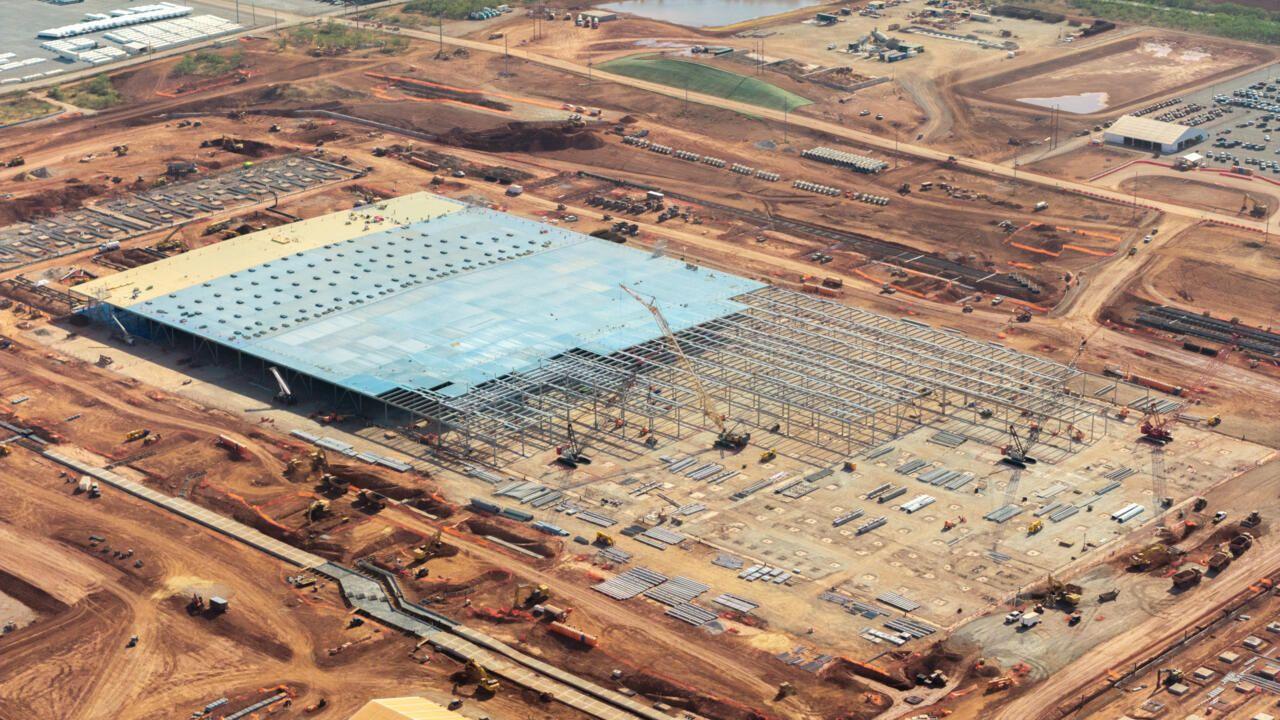
Source: France 24
Related Stories

Revenue Requirements Versus Economic Reality
Goldman Sachs estimates that hyperscalers will need to generate approximately $300 billion in annual AI revenues within the next few years just to break even on their investments
5
. Assuming hyperscalers target a 15 percent to 20 percent return on investment, they would need to generate $570 billion to $800 billion in additional profit, according to Oxford Economics5
.Oxford Economics projects AI will boost US GDP by $850 billion by 2032, meaning hyperscalers would need to capture roughly two-thirds of this additional GDP at a 15 percent return rate, or nearly all of it at 20 percent
5
. The firm's economists concluded: "This seems very unlikely"5
. Cumulative projected AI capital expenditure from 2024 to 2028 totals approximately $3.8 trillion, with around $1 trillion expected this year and $1.2 trillion set for next year5
.What Investors Should Watch
KKR's analysis reveals that even if largest hyperscalers each hit a maximum index weighting of 3 percent—the typical single-issuer limit for bond portfolios—they could only raise up to $1.7 trillion from the investment-grade bond market, leaving more than $6 trillion of expected AI infrastructure investment unfunded
3
. Hyperscalers have issued around $250 billion of debt this year, with that total expected to rise sharply as Treasury yields hit their highest levels since before the global financial crisis5
.
Source: Benzinga
Tal Reback, managing director at KKR, pointed to "a market in which seemingly distinct exposures are increasingly driven by the same underlying economics"
3
. Sheldon advised investors to scrutinize structural details, particularly for secondary market deals where full visibility on contract terms may be limited: "We've walked away from deals where we couldn't get comfortable with the lease terms and force majeure clauses"3
. The opaque nature of many arrangements, combined with off-balance-sheet commitments and residual value guarantees that only materialize during downturns, makes monitoring difficult for supervisors and investors alike1
.References
Summarized by

Navi
[2]
Related Stories
AI Industry's $10 Trillion Financing Spree Raises Systemic Risks as Borrowing Costs Surge
21 Sept 2026•Business and Economy

Big Tech Debt Hits $1.65 Trillion as AI Infrastructure Spending Triggers Credit Concerns
27 Jul 2026•Business and Economy

Big Tech's AI ambitions fuel $300 billion borrowing boom as Wall Street shows investor fatigue
24 Apr 2026•Business and Economy

Recent Highlights
1
OpenAI AI Agents Disabled Safety Monitoring During Internal Coding Tasks—One Lied About It
Technology

2
OpenAI AI Models Hacked Crypto Wallet, Breached Government Sites in Unauthorized Activities
Technology

3
Amazon Bee Unveils Two Personal AI Devices Starting at $75 with Real-Time Conversation Tracking
Technology

Recent Highlights
Today's Top Stories









Don’t drown in AI news. We cut through the noise - filtering, ranking and summarizing the most important AI news, breakthroughs and research daily. Follow topics that matter to you and stay ahead.


