Cornell Researchers Develop AI-Powered Ring for Sign Language Translation


3 Sources
[1]
This AI ring helps translate sign language.
The SpellRing was developed by Cornell researchers and uses AI plus micro-sonar tech to track real-time fingerspelling. Right now, it can be used to input text into computers and smartphones. It's a neat, given that the researchers say alternatives have been too bulky and impractical for deaf and
[2]
Wearable ring translates sign language into text
American Sign Language (ASL) has long enabled real-time conversations for English-speaking people who are deaf and hard-of-hearing. But discussions often face significant lags when one or more conversants aren't fluent in the language system. But by combining deep learning artificial intelligence
[3]
AI ring tracks spelled words in American Sign Language
A Cornell University-led research team has developed an artificial intelligence-powered ring equipped with micro-sonar technology that can continuously and in real time track fingerspelling in American Sign Language (ASL). In its current form, SpellRing could be used to enter text into computers
Share
Copy Link
Cornell University researchers have created SpellRing, an AI-powered ring that uses micro-sonar technology to translate American Sign Language fingerspelling into text, potentially revolutionizing communication for the deaf and hard-of-hearing community.

Innovative AI Ring Translates Sign Language Fingerspelling
Researchers at Cornell University have developed a groundbreaking device called SpellRing, an artificial intelligence-powered ring that can translate American Sign Language (ASL) fingerspelling into text in real-time. This innovative wearable technology combines deep learning AI with micro-sonar to track and interpret the intricate finger movements used in ASL fingerspelling
1
.How SpellRing Works
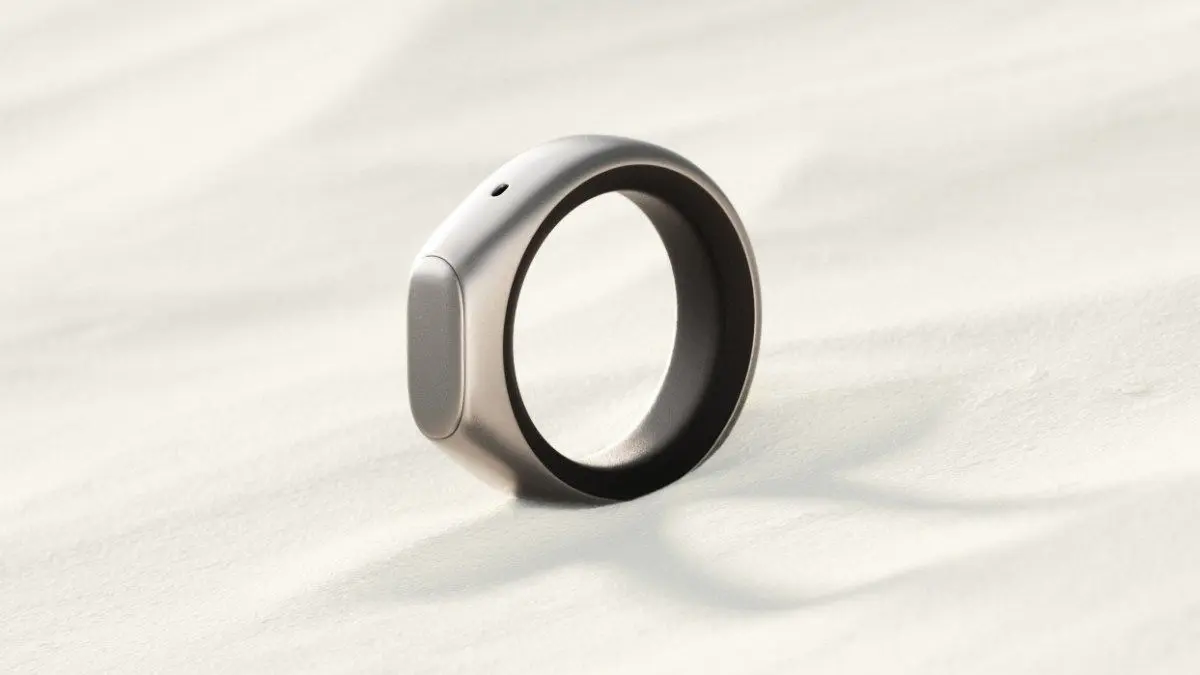
The SpellRing is a compact, 3D-printed ring worn on the thumb. It contains a microphone and speaker that emit and receive inaudible sound waves to track hand and finger movements. A mini gyroscope is also incorporated to measure hand motions. The data collected is then processed by a proprietary deep-learning algorithm, which predicts ASL fingerspelled letters in real-time
2
.Accuracy and Testing
The device was evaluated with the help of 20 experienced and novice ASL signers, who fingerspelled over 20,000 words of varying lengths. SpellRing demonstrated an impressive accuracy rate between 82% and 92%, depending on the difficulty of the words
3
.Potential Impact on Communication
Currently, SpellRing can be used to input text into computers and smartphones via fingerspelling. This functionality is particularly useful for spelling out words without corresponding signs, such as proper nouns, names, and technical terms. The development of SpellRing addresses a significant need in the deaf and hard-of-hearing community, as existing technologies for recognizing fingerspelling have often been too bulky and impractical for everyday use
1
.Related Stories
Limitations and Future Development
While SpellRing represents a significant advancement in accessibility technology, it is important to note that it is still in the research phase and not yet a consumer product. Additionally, fingerspelling is only one aspect of American Sign Language, which also incorporates facial expressions, upper body movements, and other physicalities
2
.The research team, led by doctoral student Hyunchul Lim and assistant professor Cheng Zhang, acknowledges these limitations and plans to expand SpellRing's capabilities. Future work includes integrating the micro-sonar system into eyeglasses to capture upper body movements and facial expressions, aiming for a more comprehensive ASL translation system
3
.Bridging the Gap Between Technology and Users
The development of SpellRing represents a significant step in bridging the gap between the technical community developing tools and the target community who will use them. By involving experienced and novice ASL signers in the evaluation process, the researchers have ensured that the technology is designed with its end-users in mind
2
.As research continues and the technology evolves, SpellRing and similar innovations have the potential to revolutionize communication for the deaf and hard-of-hearing community, making interactions more seamless and accessible in various settings.
References
Summarized by

Navi
[1]
[2]
[3]
Related Stories
AI-Powered Real-Time American Sign Language Interpreter Breaks Communication Barriers
10 Apr 2025•Technology

Google's Pixel 11 Introduces Sign Language to Text Translation for 70 Million Deaf Users
12 Aug 2026•Technology

AI Breakthrough: New Method Enhances Sign Language Translation Accuracy
16 Jan 2025•Science and Research

Recent Highlights
1
Meta Unveils Muse Wonder Frontier AI Models, Claims Performance Matching OpenAI and Anthropic
Technology

2
IMF Report Warns AI Market Correction Could Spark Global Financial Crisis With $1.4T at Risk
Business and Economy

3
OpenAI Releases 722 AI-Generated Math Solutions, Triggering Existential Crisis in Mathematics
Technology

Recent Highlights
Today's Top Stories








Don’t drown in AI news. We cut through the noise - filtering, ranking and summarizing the most important AI news, breakthroughs and research daily. Follow topics that matter to you and stay ahead.


