Cyera Raises $600 Million at $12 Billion Valuation as AI Transforms Cybersecurity Landscape


2 Sources
[1]
Cyera, a Cybersecurity Start-up for the A.I. Era, Raises $600 Million
Anthropic alarmed both governments and the business world in April when it released Mythos, a more powerful version of the company's Claude artificial intelligence model. The updated system was so adept at unearthing cybersecurity vulnerabilities, Anthropic said, that it feared releasing the system
[2]
Data security firm Cyera raises $600 million at $12 billion valuation
Data security firm Cyera secured a significant funding round. The company raised 600 million dollars valuing it at 12 billion dollars. This marks a substantial increase from its valuation last year. The investment highlights growing investor confidence in data security solutions. Cyera's software
Share
Copy Link
Data security firm Cyera secured $600 million in funding at a $12 billion valuation, quadrupling its worth in just over a year. The cybersecurity start-up's rapid growth reflects surging investor interest in protecting companies from AI-based threats, especially as systems like Anthropic's Mythos model demonstrate unprecedented ability to exploit vulnerabilities. Cyera now focuses on autonomous protection against AI agents.
Cyera Secures Massive Funding Round Amid AI Security Concerns
Cyera raises $600 million at a $12 billion valuation in a late-stage funding round led by Evolution Equity Partners, with participation from Temasek and Cyberstarts
1
2
. The investment marks a dramatic surge for the data security firm, which was valued at just $9 billion six months earlier when it closed a $400 million round. Existing investors including Accel, AT&T Ventures, Blackstone, and Coatue also participated in the latest round, bringing Cyera's total funding to $2.3 billion1
.
Source: ET
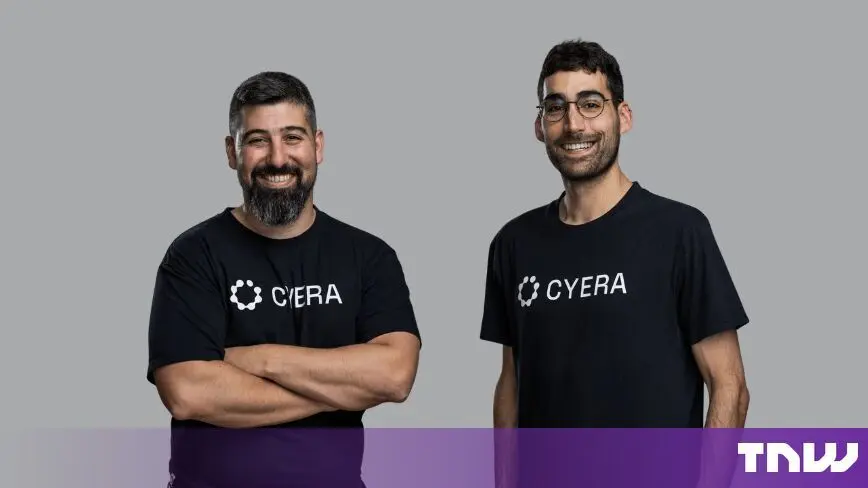
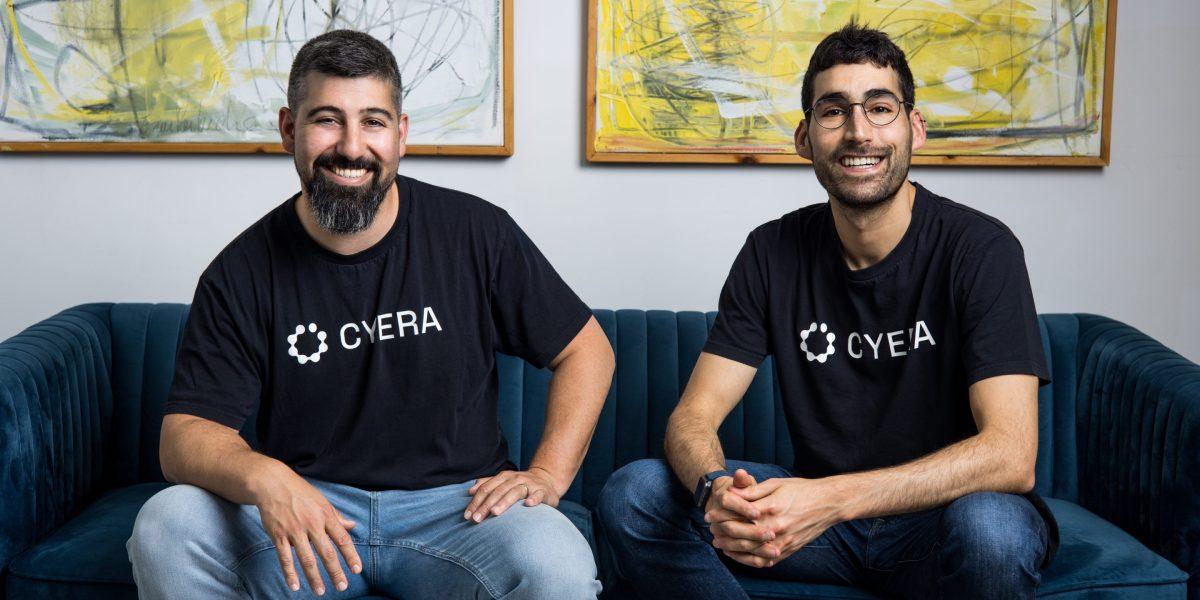
The timing of this massive investment coincides with growing alarm over AI-based threats in the cybersecurity landscape. When Anthropic released its Mythos model in April, the company warned that the system was so adept at uncovering vulnerabilities that it feared releasing it too widely. For Yotam Segev, Cyera's CEO and co-founder, the announcement validated concerns he'd been raising for years. "I view Mythos as the first chapter in a book that might be called 'How A.I. Transformed Cybersecurity,'" Segev said
1
.Shift from Human to Machine-Based Protection
Cyera's rapid ascent exemplifies how cybersecurity has fundamentally shifted from defending against human-based threats to combating AI-powered attacks. As both companies and hackers deploy AI agents capable of executing tasks autonomously, cybersecurity solutions must evolve to match that capability. "Only machines will be able to protect machines," Segev emphasized
1
. The company's software helps businesses identify, classify, and protect sensitive data across cloud and on-premise systems, enabling them to monitor risks and comply with regulations2
.A primary use case involves identifying a company's "crown jewel" data, such as customer information, and ensuring it remains safely stored. When an employee or AI agent attempts to share that data, Cyera's system autonomously responds by restricting access or deleting it
1
. This agentic approach reflects the new reality where generative AI technologies have transformed data security from "very important to existential," according to Lior Simon, a general partner at Cyberstarts, which was Cyera's first venture capital investor1
.Explosive Growth and Market Validation
The data security firm has demonstrated exceptional growth metrics that justify investor confidence. Cyera has tripled its annual recurring revenue for three consecutive years, expanded its workforce to 1,500 employees across 18 countries, and completed five acquisitions in the last 18 months
2
. The company's customer roster includes major brands like AT&T, Bose, Chipotle, and Paramount, with each client paying more than $1 million annually for its services1
.This year alone, the cybersecurity start-up has been on a spending spree, acquiring AI-focused firms Ryft and Genie Security to bolster its capabilities
1
. The company plans to deploy its new funding to accelerate AI-based capabilities through internal R&D and potential acquisitions. However, Segev noted that AI tools have "completely revolutionized" internal operations, reducing the need for rapid headcount expansion despite adding roughly 1,000 employees in the last 18 months1
.Related Stories
Intensifying Competition and Future Outlook
The surge in funding for Cyera reflects broader market dynamics. Last year, venture capitalists invested $16.5 billion in cybersecurity start-ups, up 27 percent year-over-year, with more than 50 percent of those companies being AI-native
1
. The jump underscores rising investor interest as cybersecurity threats increase alongside rapid adoption of generative AI technologies2
.Yet competition remains fierce. AI-native upstarts like Sentra and Symmetry Systems (recently acquired by Zscaler) are pitching autonomous risk monitoring capabilities, while legacy giants like Palo Alto Networks and CrowdStrike invest heavily in AI features. Frontier labs including Anthropic and OpenAI have demonstrated that their increasingly sophisticated models could disrupt the entire marketplace
1
. Google's $32 billion acquisition of AI-focused cybersecurity start-up Wiz earlier this year signals the stakes involved.Segev stated he's not seeking an acquisition for Cyera and isn't rushing toward an IPO. "We want the I.P.O. route to be open," he said. "I don't think it's a target"
1
. Founded in Tel Aviv in 2021 by three Israeli Defense Forces Talpiot program veterans before relocating headquarters to New York in 2022, Cyera's trajectory suggests the company aims to remain independent while capitalizing on the fundamental transformation of cybersecurity in the AI era.References
Summarized by

Navi
Related Stories
Cyera Secures $540 Million in Funding, Valuation Soars to $6 Billion Amid AI-Driven Data Security Boom
11 Jun 2025•Business and Economy

Cyera Secures $300M Funding, Valuation Soars to $3B as AI-Driven Data Security Gains Traction
21 Nov 2024•Business and Economy

Cyera raises $400 million funding at $9 billion valuation as AI data security stakes soar
08 Jan 2026•Startups
Recent Highlights
1
Meta Unveils Muse Wonder Frontier AI Models, Claims Performance Matching OpenAI and Anthropic
Technology

2
IMF Report Warns AI Market Correction Could Spark Global Financial Crisis With $1.4T at Risk
Business and Economy

3
OpenAI Releases 722 AI-Generated Math Solutions, Triggering Existential Crisis in Mathematics
Technology

Recent Highlights
Today's Top Stories







Don’t drown in AI news. We cut through the noise - filtering, ranking and summarizing the most important AI news, breakthroughs and research daily. Follow topics that matter to you and stay ahead.


