Datadog veterans launch Niteshift with $7M to build AI coding cloud platform against vendor lock-in


2 Sources
[1]
Datadog veterans launch AI coding startup Niteshift on a bet against Big AI lock-in
AI coding agent startup Niteshift has raised a $7 million seed round led by Greylock's Jerry Chen. That's a modest sum by AI standards, but the startup, founded by two former early Datadog engineers, has attracted some big-name angels like Reid Hoffman, Datadog's Olivier Pomel and Alexis Lê-Quôc,
[2]
Niteshift Raises $7 Million Seed Round to Power the Cloud Platform for AI Coding Agents
In a round led by Greylock, Niteshift launches general availability of its full-stack cloud platform, giving coding agents a real environment to verify their work and enabling teams to ship production-ready software at scale. NEW YORK, June 10, 2026 (Newswire.com) - Niteshift, the full-stack cloud
Share
Copy Link
Former Datadog engineers Sajid Mehmood and Conor Branagan have launched Niteshift, an AI coding startup that raised $7 million in seed funding led by Greylock. The cloud platform addresses a critical concern: helping companies avoid vendor lock-in with AI giants like OpenAI and Anthropic. Niteshift provides infrastructure for AI coding agents to run, test, and verify code across multiple models without depending on a single provider.
Datadog Veterans Launch AI Coding Startup With $7 Million Seed Funding
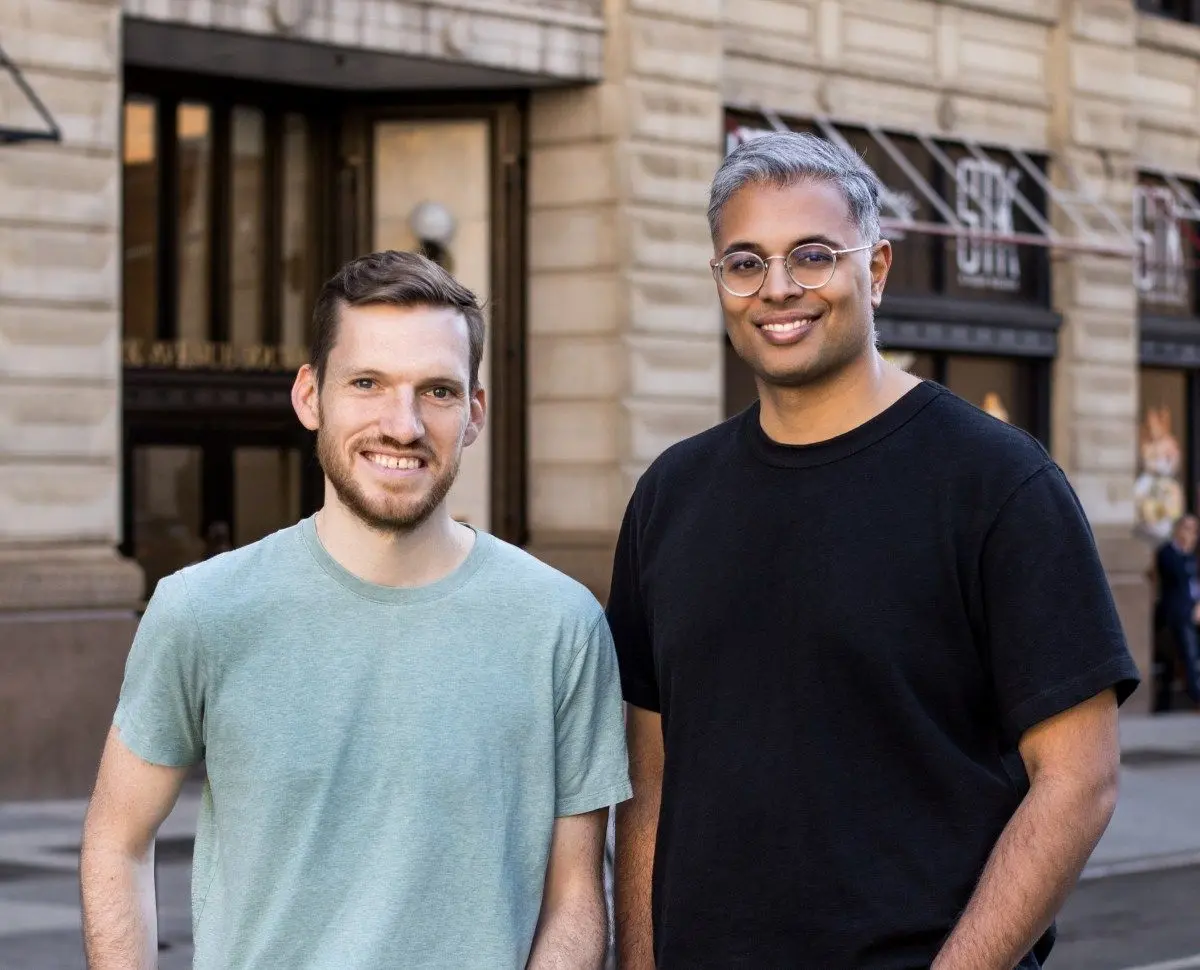
Niteshift, an AI coding startup founded by former Datadog engineers Sajid Mehmood and Conor Branagan, has secured $7 million in seed funding led by Greylock's Jerry Chen
1
. The round attracted notable angels including Reid Hoffman, Datadog's Olivier Pomel and Alexis Lê-Quôc, Ankur Goyal of Braintrust, and Misha Laskin of Reflection AI, with additional participation from Amplify Partners, BoxGroup, and SV Angel2
. The Datadog veterans bring nearly a decade of experience building infrastructure and developer tooling for cloud-native software teams, having helped scale Datadog from its early days to a multi-billion dollar valuation1
.
Source: TechCrunch
Niteshift Cloud Platform Tackles Vendor Lock-In Concerns
The full-stack cloud platform addresses a pressing question for engineering teams: why would companies trust their most sensitive code assets directly to model makers like OpenAI and Anthropic when these giants are increasingly launching competing applications?
1
Mehmood, who serves as CEO, draws parallels to Datadog's early growth when the monitoring company won e-commerce customers who refused to build on Amazon Web Services while Amazon simultaneously disrupted retail businesses. "At Datadog we saw this clearly," Mehmood explained. "A big part of our multicloud business came from e-commerce businesses who did not want to run on Amazon"1
. The AI equivalent is already unfolding as Anthropic, OpenAI, and others move into vertical software markets in what some call the "SaaSocalypse."How AI Coding Agents Work on Niteshift's Infrastructure
Niteshift provides a full-stack cloud platform where AI coding agents can run, test, and verify software autonomously in real development environments
2
. The platform handles runtime, services, authentication, testing, and verification workflows required for agents to build and validate software across complex application stacks. Teams can run dozens of agent sessions concurrently without local hardware constraints and trigger agents from tools they already use, including Slack, Linear, and GitHub2
. The platform is agent-agnostic, routing between Claude Code, Codex, open-source models, and others based on project needs1
. "Being able to switch between GPT and cloud models is important," Mehmood said. "Everybody's worried about getting stepped on by these giants"1
.Selling Infrastructure, Not Token-Based Labor Replacement
Unlike competitors, Niteshift charges like a cloud provider with per-minute usage rates rather than selling tokens. "Everybody else is selling labor replacement intelligence," Mehmood noted. "We're selling software to agents, as opposed to humans -- but we're still out here selling software"
1
. This approach positions Niteshift as infrastructure that reduces dependence on specific coding agents rather than replacing them. Greylock's Chen explained the investment thesis: "As the frontier labs move up the stack, there's an opportunity to offer customers an alternate path: unbundling their agents from the infrastructure they run on. Niteshift is building the platform that enables this for AI coding agents, letting customers invest deeply in their developer tooling without locking themselves into a single model or agent vendor"1
.Related Stories

Production-Ready Software Through Autonomous Testing
While coding agents can generate code, they often lack the runtime context, dependencies, and verification workflows required to confirm software actually works before shipping
2
. Much of the process still falls back to manual setup, testing, and engineering review. Niteshift addresses this gap by providing scalable development environments where agents can close the verification loop themselves. "Agents are tackling problems in hours that would have taken teams of senior engineers weeks, but the tooling needed to get that code into production hasn't kept up," Mehmood said. "At minimum, agents need a real environment to close the verification loop themselves - and that's just the starting point"2
. Engineers, product managers, and designers can collaborate directly without maintaining local development setups, with the platform generating pull requests with attached verification artifacts2
.Competing in a Crowded Market With Depth of Experience
Niteshift enters a competitive landscape that includes Cursor, Cognition (which raised $1 billion at a $26 billion valuation), Amazon Bedrock, and OpenRouter (which raised $113 million at a $1.3 billion valuation)
1
. Mehmood's response centers on the founding team's experience scaling Datadog through the exact growing pains that large engineering organizations now face with AI-generated code. Teams need to run, test, and verify software autonomously in real production environments, requiring infrastructure built by people who've done it at scale1
. Jerry Chen of Greylock emphasized this point: "Sajid and Conor have been at the forefront of developer tools their entire careers from cloud, mobile, and now AI. Their knowledge of AI combined with their obsession for shipping fast make them the right leaders to navigate this new world of agentic engineering"2
. The platform has now launched general availability following an earlier waitlist period2
.References
Summarized by

Navi
Related Stories
SRE.ai Launches with $7.2M Seed Funding to Revolutionize DevOps with AI-Powered Automation
21 Aug 2025•Technology
NeuBird raises $19.3M for AI agents that predict and prevent incidents before they happen
07 Apr 2026•Technology

Lightsage Raises $4M to Build Growth Stack for Software's Newest Customer: AI Agents
08 Sept 2026•Technology
Recent Highlights


Recent Highlights
Today's Top Stories









Don’t drown in AI news. We cut through the noise - filtering, ranking and summarizing the most important AI news, breakthroughs and research daily. Follow topics that matter to you and stay ahead.


