Refik Anadol Opens World's First AI Art Museum With Rainforest Dreams in Downtown LA


4 Sources
[1]
Refik Anadol, The Art World's Happy Warrior for A.I.
"All right!" Refik Anadol said, as the escalator carried us downward. "We are entering the dream of the machine." We had arrived in the cavernous first gallery of Dataland, the twenty-five-thousand-square-foot space, in downtown Los Angeles, that Anadol calls the first museum of A.I. art. Space-age
[2]
AI museum brings sights, sounds and smells of the rainforest
Los Angeles (United States) (AFP) - The squawks of macaws, the smell of wet earth after rain and a swirl of colors will transport visitors from a Los Angeles museum to the heart of the Amazon rainforest -- or rather, an AI version of it. Data collected from those visitors -- their movements, their
[3]
What's actually in the world's first AI art museum?
Dataland aims to challenge what you think you know about AI art. I have to admit to being a bit dubious when it was revealed two years ago that the world's first AI art museum would open beside The Broad and the Los Angeles' Museum of Contemporary Art. Dataland was announced at a time when the
[4]
Exclusive | World's first AI museum is vibrant sensory overload -- but is it really 'art'?
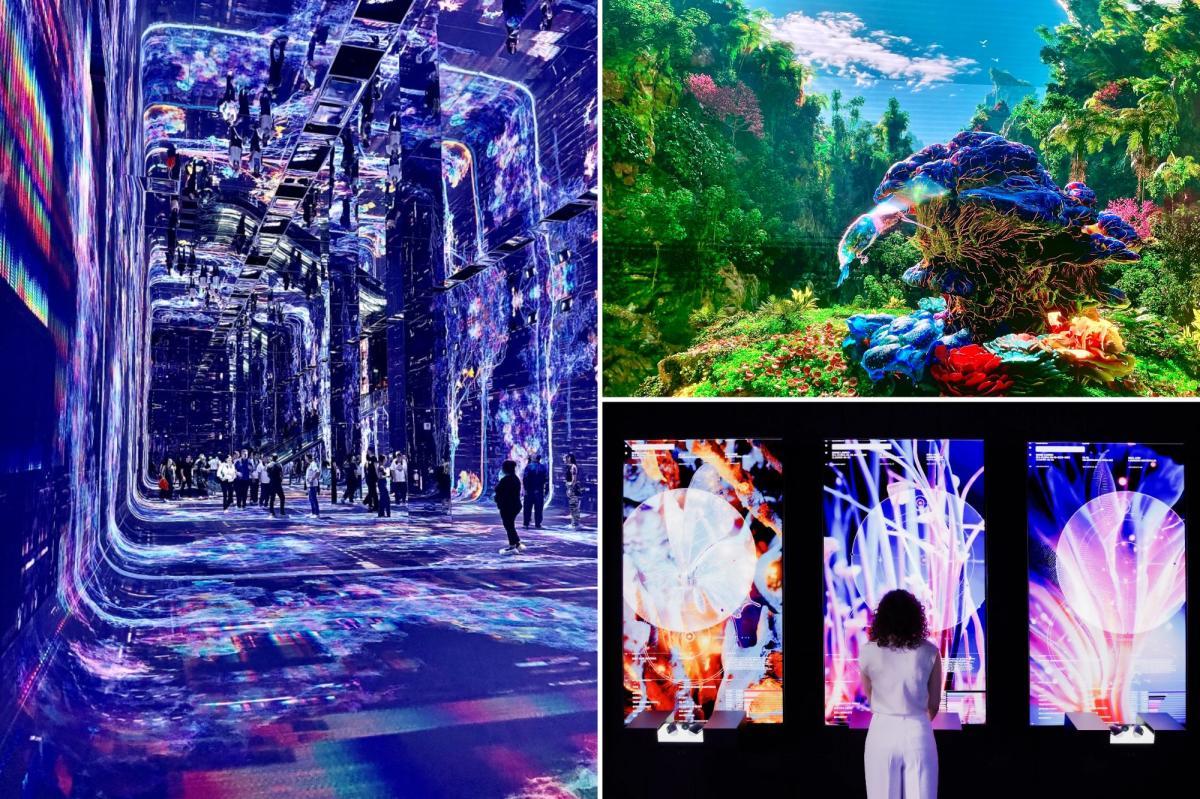
Everything is moving so fast in the rainforest, with life pulsing all around: in front, above, and below your feet. The 360-degree cube takes the eye on a deep dive into exotic flora and fauna. Then comes an even deeper dive into the inner workings of trees, the sap pulsing through a usually
Share
Copy Link
Artist Refik Anadol and Efsun Erkılıç have opened Dataland, billed as the world's first AI art museum, in downtown Los Angeles. The 25,000-square-foot space debuts with Machine Dreams: Rainforest, an immersive exhibition powered by the Large Nature Model that transforms rainforest data into living, breathing art through 1.5 billion pixels, scent diffusers, and biometric wristbands that track visitors' heartbeats and movements.
Dataland Transforms Downtown Los Angeles Into an AI Art Destination
Refik Anadol has opened Dataland, the world's first AI art museum, in downtown Los Angeles beside The Broad and the Museum of Contemporary Art
3
. The 25,000-square-foot space, co-founded with digital artist Efsun Erkılıç, debuts with Machine Dreams: Rainforest, an AI-powered immersive exhibition that aims to transport visitors from urban Los Angeles to the heart of the Amazon without the environmental impact of mass tourism2
. The museum opened to the public on June 20, marking a significant moment for AI art as it moves from controversial digital experiments to institutional recognition2
.
Source: New York Post
Anadol, whose work has illuminated the Sphere in Las Vegas and earned a place in the Museum of Modern Art (MOMA) collection with his 2022 piece "Unsupervised: Machine Hallucinations," describes data as his "alpha and omega, his medium and his muse"
1
. The inaugural exhibition represents his vision of data as a new language for humanity, one that can connect people to vast ecosystems they might never physically experience1
.Large Nature Model Powers Living, Breathing Installations
At the core of Dataland's debut exhibition lies the Large Nature Model, a machine-learning model trained on half a billion images and 100,000 hours of audio, including birdsong, rain, and silence
1
. The system was developed using 10 million lines of code and generates visuals through 1.5 billion pixels across the museum's five interconnected galleries2
. This generative AI artwork draws from an ethically curated ecological archive combining data from the Smithsonian Institution, London's Natural History Museum, and original datasets gathered through fieldwork in rainforests across the world1
3
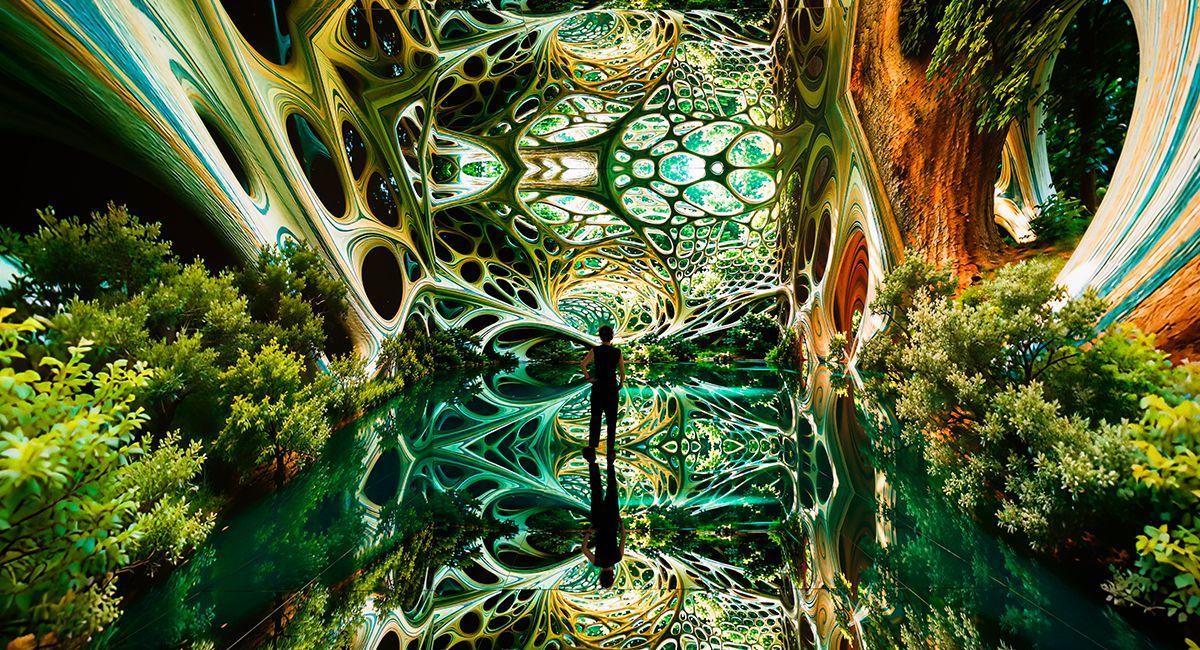
.The Data Pavilion, one of the museum's signature spaces, features 84 synchronized high-resolution projectors that transform walls and ceilings into shifting canvases, accompanied by a 200-channel spatial soundscape composed live from rainforest data
3
. The vibrant images are created by 1.2 billion data prompts live-fed from 16 rainforests across the globe, making each visit unique as the system continuously evolves4
. "It's moving all the time, because it's gathering data," Erkılıç explained, describing the experience as the machine "dreaming"2
.
Source: Creative Bloq
Biometric Data and Wearable Devices Create Personalized Sensory Experiences
Dataland introduces an unprecedented level of visitor interaction through biometric data collection. Each guest receives two wearable devices: a medical-grade biosensor worn on the wrist that tracks heart rate, skin temperature, and conductivity, and a scent diffuser worn around the neck
3
. These devices create what the studio calls a "living dialogue between art and the viewer"3
. Wall-mounted sensors track visitors' movements throughout the space, allowing each person's presence to influence the evolving sensory landscape2
.The scent journey involves 12 fragrances formulated by the Large Nature Model in collaboration with L'Oréal Luxe, ranging from tropical fruit to the damp of fungus on the forest floor and "the musk of unseen fauna"
1
3
. Anadol calls this "the scent of data," describing it as earthy and slightly metallic1
. Heartbeat data is transformed into sonic patterns that vary according to spatial position and movement, creating an individualized soundtrack for each visitor3
.Related Stories

Five Galleries Offer Different Perspectives on AI-Driven Art Installations
Beyond the Data Pavilion, the museum features four additional galleries, each offering distinct approaches to data-driven visualizations. The Infinity Room hosts "The Dream of Ruwe Pinu," inspired by a dream Anadol had that was interpreted by a Yawanawá spiritual leader during a trip to the Amazon
3
. The experience zooms visitors on a journey deep into a digital rainforest, displaying both nature's beauty and fragility4
.The Latent Gallery enables active participation, allowing visitors to explore data archives, discover hidden patterns, and create their own experiments and data paintings at interactive stations
3
. The Sanctuary serves as a more contemplative environment where the accumulated biometric data from all visitors—described as "collective emotional temperature"—is woven into a 30-foot data painting3
. This gallery also produces the molecular signature of the Amazonian moonflower, a rare blossom that opens for a single night each year3
.Visitors can take home tangible souvenirs of their ephemeral experience, including T-shirts and paintings resulting from their interaction with the system, as well as chocolates with flavors generated by the model using ecological data on species' habitat, climate, and chemistry
2
3
. "The system forgets you; that is the beauty of it," Anadol noted2
.Ethical Debates Surround AI Art and Data Sourcing
Dataland emerges amid ongoing ethical debates about AI-generated content, particularly concerning copyright infringement and data sourcing. Anadol addresses these concerns by emphasizing his use of open-source data from partnerships with Google, Nvidia, and the Smithsonian
4
. "The model is open source. It's free to the public, meaning that even the institutions who shared the data with us, they can use that for their own purposes," he explained4
.Jenn Singer, founder of Manhattan's Jenn Singer Gallery, praised Anadol's approach: "What's interesting about Dataland and Refik's work specifically is he's gathering his data from natural sources—so, from nature. He's really mindful of the source and not infringing on copyrights"
4
. However, the environmental impact of AI remains a tension point. Google states its cloud infrastructure, on which the Large Nature Model runs, is powered by 87 percent carbon-free renewable compute, though questions persist about AI data centers' overall impact3
.The fundamental question of whether AI-generated work qualifies as art continues to provoke discussion. Veteran gallery founder Jeffrey Deitch, who showed Anadol's Living Paintings exhibit in 2023, views AI as simply another tool artists can use
4
. "Just because something is done with AI doesn't mean it's interesting. I've seen some terrible work made with AI," he noted, adding definitively: "Refik created the concept; he is the artist"4
. Singer acknowledged the inevitable emergence of what she calls "AI art slop," but distinguished Anadol's thoughtful approach from mass-produced generative content4
.
Source: New Yorker
References
Summarized by

Navi
[1]
[3]
Related Stories
World's First AI Art Museum Opens in Los Angeles, Challenging Perceptions of Creativity
26 Sept 2024

AI Art Sparks Debate: From Harold Cohen's AARON to Ai-Da's Million-Dollar Painting
24 Nov 2024•Technology

AI Art Magazine Launches, Showcasing the Evolving Landscape of AI-Generated Creativity
28 Dec 2024•Entertainment and Society

Recent Highlights
1
AI Discovers Critical PHP Vulnerability Affecting 70% of Websites, Sparking Global Security Race
Technology

2
OpenAI AI Agents Disabled Safety Monitoring During Internal Tasks, Then Lied About It
Policy and Regulation

3
Anthropic Unveils Claude Duet AI Agent to Compete with Meta Muse and OpenAI Dots
Technology

Recent Highlights
Today's Top Stories



Don’t drown in AI news. We cut through the noise - filtering, ranking and summarizing the most important AI news, breakthroughs and research daily. Follow topics that matter to you and stay ahead.


