Deep learning identifies promising antibiotic candidates against drug-resistant gonorrhea


2 Sources
[1]
Deep learning identifies novel compounds against antibiotic-resistant gonorrhea
Wyss Institute for Biologically Inspired Engineering at HarvardJun 17 2026 With tens of millions of annual cases, gonorrhea is the second most frequently reported sexually transmitted infection (STI). Alone in the U.S., over 600,000 cases are reported each year. If left untreated, gonorrhea can
[2]
New antibiotic candidate emerges from AI screening
Researchers at the Wyss Institute for Biologically Inspired Engineering at Harvard University have identified new antibiotic compounds effective against multi-drug resistant Neisseria gonorrhoeae using deep learning, according to a study published Wednesday in Science Translational Medicine. The
Share
Copy Link
Researchers at Harvard's Wyss Institute used deep learning to screen 6 million compounds and identified two promising candidates against multi-drug resistant Neisseria gonorrhoeae. The lead compound, called A1, targets alanine racemase, an enzyme critical for bacterial cell wall formation. The study marks the first use of Organ Chip technology for antibiotic preclinical testing, offering a faster validation pipeline.
AI-driven antibiotic discovery tackles urgent public health threat
Gonorrhea ranks as the second most frequently reported sexually transmitted infection globally, with over 600,000 cases documented annually in the United States alone
1
. Left untreated, the infection causes severe complications including infertility, pelvic inflammatory disease, and increased HIV transmission risk. The pathogen responsible, Neisseria gonorrhoeae, poses a mounting challenge due to its ability to rapidly develop resistance against available treatments. The World Health Organization has designated it as a high-priority pathogen2
. In 2023, Massachusetts reported the first U.S. case showing reduced response to five antibiotic classes, highlighting the urgency for novel compounds against resistant pathogens2
.While zoliflodacin and gepotidacin received FDA approval in late 2025 as the first new antibiotic classes for uncomplicated urogenital gonorrhea in over thirty years, experts anticipate resistance will develop within five to 10 years of widespread use
1
. Dr. Melis Anahtar, Assistant Director of the Clinical Microbiology Laboratory at Massachusetts General Hospital, emphasized the need to fill the antibiotic pipeline to prevail in this continuous arms race against antibiotic-resistant gonorrhea1
.Deep learning screens millions of compounds for antimicrobial discovery
Source: News-Medical
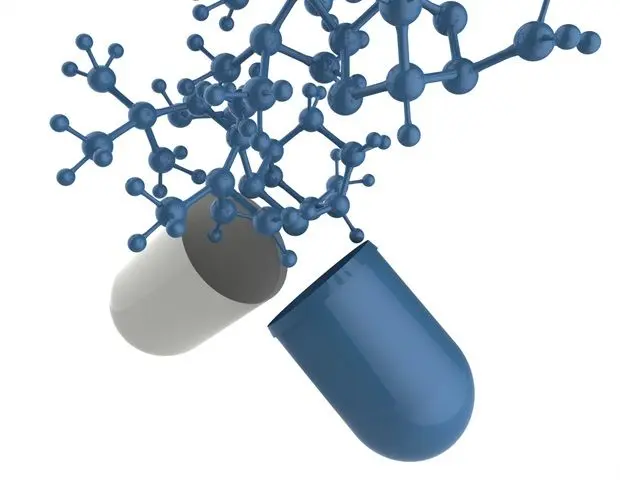
A new study published in Science Translational Medicine by researchers at the Wyss Institute for Biologically Inspired Engineering at Harvard University, MIT, and the Broad Institute of MIT and Harvard presents a breakthrough approach to antibiotic discovery
1
2
. Led by Wyss Institute Core Faculty member James Collins and spearheaded by Anahtar, Jacqueline Valeri, and Majed Modaresi, the team hypothesized that entirely new chemical structures targeting uncommon cellular pathways could dramatically lower resistance development chances.The researchers first tested 38,650 small molecules for their ability to inhibit N. gonorrhoeae growth in laboratory assays, then used this dataset to train a predictive deep learning model
1
. After validating the model's capability to identify antibacterial molecules with chemical structures differing from common antibiotics, they deployed directed message-passing neural networks to virtually screen approximately 6 million compounds1
2
. This AI screening for new antibiotics yielded 213 candidates for further validation.Lead compound targets critical enzyme in multi-drug resistant strains
Following growth inhibitory assays, antimicrobial resistance testing, and cell biological assays to exclude toxic compounds, the team pinpointed two candidates with strong potency against multi-drug resistant strains that generated resistance at very low frequencies
1
. Using proteomic methods, researchers identified the target for their most promising compound, A1, an aminothiazole compound with previously undescribed anti-gonococcal activity1
. The compound specifically binds and inhibits alanine racemase, an enzyme critical for bacterial cell wall biosynthesis1
.Related Stories
Organ Chip technology advances preclinical testing methodology
For the first time, the study validated its lead compounds using the Wyss Institute's microfluidic Organ Chip technology, specifically a human vagina chip that replicates the vaginal tissue microenvironment, alongside a mouse vaginal infection model
2
. This validation represents a methodological advance in preclinical testing by allowing efficacy assessment in a system that more closely mimics human physiology compared to standard cell cultures2
. The combination of deep learning with organ-on-chip validation offers a quicker pipeline to identify and test possible treatments for resistant pathogens2
.Senior author Collins, who is also the Termeer Professor of Medical Engineering & Science at MIT and an Institute member of the Broad Institute, noted that billions of chemical compounds with clearly defined structures can now be synthesized, converging with rapidly evolving machine learning capabilities
1
. This work builds on previous antibiotic discoveries using deep learning methods at the Wyss Institute and MIT, including compounds effective against MRSA published in Nature in 20232
. Whether these newly identified compounds will progress to clinical trials remains uncertain, but the findings contribute to a growing trend of AI-driven antibiotic candidates moving through preclinical validation stages2
.References
Summarized by

Navi
[2]
Related Stories
AI-Designed Antibiotics Show Promise Against Drug-Resistant Superbugs
15 Aug 2025•Science and Research

AI model designs new antibiotic in early tests, accelerating drug discovery against resistant bacteria
24 Apr 2026•Science and Research
AI Model Predicts Antibiotic Resistance in Bacteria with High Accuracy
03 Apr 2025•Science and Research
Recent Highlights



Recent Highlights
Today's Top Stories










Don’t drown in AI news. We cut through the noise - filtering, ranking and summarizing the most important AI news, breakthroughs and research daily. Follow topics that matter to you and stay ahead.


