Deezer opens AI detection tool to rival platforms to combat fraudulent music streams


6 Sources
[1]
Deezer makes it easier for rival platforms to take a stance against AI-generated music
Last year, Deezer introduced an AI detection tool that automatically tags fully AI-generated music for listeners and removes it from algorithmic and editorial recommendations. The company announced on Thursday that it's now making the tool available to other streaming platforms in an effort to
[2]
Deezer opens its AI music detection tool to other platforms
"We know that the majority of AI-music is uploaded to Deezer with the purpose of committing fraud, and we continue to take action," Deezer CEO Alexis Lanternier says in the press release. "Every fraudulent stream that we detect is demonetized so that the royalties of human artists, songwriters and
[3]
Deezer licenses AI music detection tool to French royalty agency Sacem, plans wider rollout
Jan 29 (Reuters) - Music streaming platform Deezer (DEEZR.PA), opens new tab has licensed its artificial intelligence-detection technology to France's royalty agency Sacem in a landmark commercial deal to combat music fraud, as the company pursues wider industry adoption for the tool. The deal,
[4]
Deezer just gave Spotify a great opportunity to combat the AI music wave -- here's why the platform is making its AI-detection tool available to rivals
While it's great for flagging unwanted AI slop, it's run into one setback that Spotify has addressed previously Deezer is one of the few among the best music streaming services that's actively combatting AI-generated music by clearly tagging songs in the app for user visibility - and now it's
[5]

Music streaming giant Deezer opens AI detection tool to external platforms
Deezer announced on Thursday that it will offer its AI detection tool, launched last year, to other streaming platforms to combat AI-generated music, fraudulent streams, and promote industry transparency. The tool automatically identifies and tags fully AI-generated music tracks, preventing their
[6]

Deezer Signs Groundbreaking Agreement with Sacem to Detect AI-Generated Music
Deezer has announced the signing of a commercial agreement with Sacem for the licensing of its technology designed to detect music generated by artificial intelligence. This first-of-its-kind collaboration aims to combat copyright fraud, which is on the rise with the increasing power of music
Share
Copy Link
Deezer is making its AI detection tool commercially available to rival streaming platforms including Spotify, aiming to combat the flood of AI-generated music. The company reports receiving 60,000 fully AI-generated tracks daily, with 85% of streams from such content deemed fraudulent. The tool achieves 99.8% accuracy and has already been licensed to French royalty agency Sacem.
Deezer Makes AI Detection Tool Available to Industry
Deezer announced it will make its AI detection tool commercially available to rival streaming platforms, marking a significant shift in how the music industry addresses AI-generated music
1
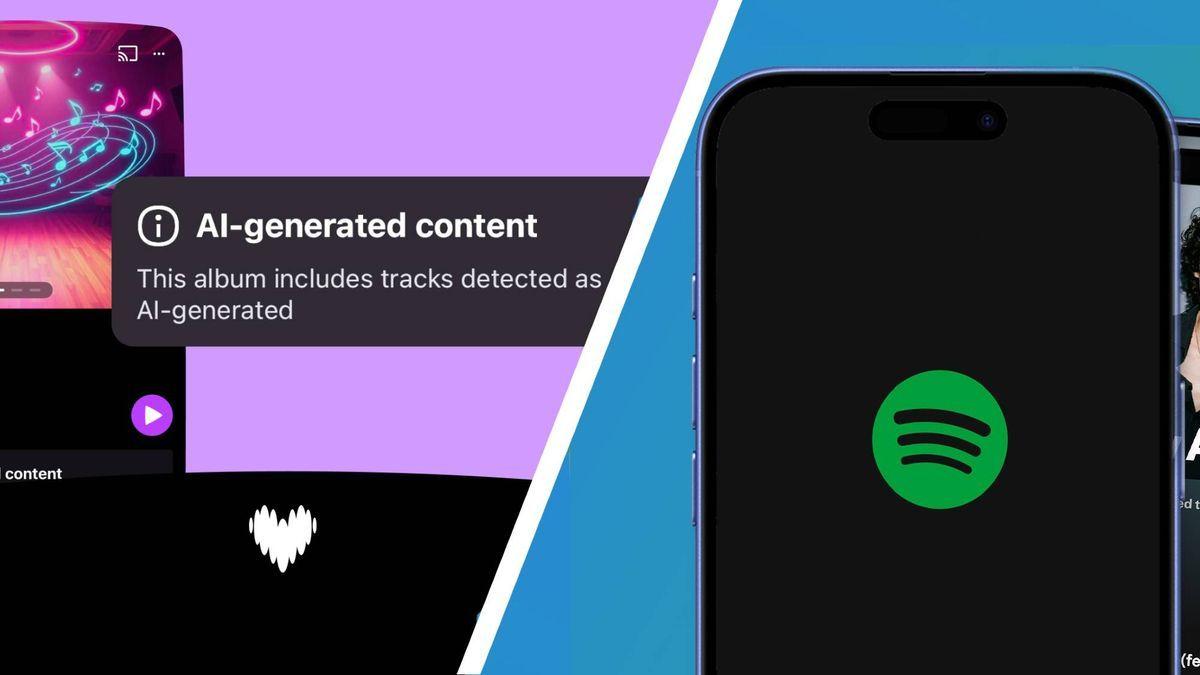
. The French music streaming service introduced the tool last year to automatically tag fully AI-generated tracks and remove them from algorithmic recommendations. Now, Deezer aims to extend this capability across the industry to combat fraudulent streams and promote music industry transparency5
.
Source: TechRadar
Deezer CEO Alexis Lanternier revealed there has been "great interest" in the tool, with several companies having already performed successful tests
1
. One notable adopter is Sacem, the French royalty agency representing over 300,000 music creators and publishers, including David Guetta and DJ Snake3
. While Deezer hasn't disclosed pricing details, a spokesperson confirmed costs vary based on deal type1
.Alarming Scale of AI Music and Fraudulent Streams
The platform now receives 60,000 fully AI-generated tracks per day, totaling 13.4 million AI-detected songs in its database
1
. This represents roughly 39% of total daily uploads, a dramatic increase from 10% in January last year and 18% in June3
. More concerning, Deezer reports that 85% of streams from fully AI-generated tracks are deemed fraudulent1
.
Source: TechCrunch
The AI detection tool analyzes audio signals for patterns created by AI music generators such as Suno and Udio, identifying subtle anomalies inaudible to human ears
3
. Deezer claims the tool achieves 99.8% accuracy and can identify every AI-generated track from major generative models1
. The company trained the system on 94 million songs and filed two patents for the technology in 20243
.Protecting Human Artists' Royalties Through Demonetization
Beyond detection, Deezer takes active steps to protect human artists by excluding AI-generated tracks from recommendations and removing them from the royalty pool
1
. The platform demonetizes AI music entirely, ensuring payments flow solely to human musicians and songwriters based on verified streams5
. "We know that the majority of AI-music is uploaded to Deezer with the purpose of committing fraud, and we continue to take action," Lanternier stated. "Every fraudulent stream that we detect is demonetized so that the royalties of human artists, songwriters and other rights owners are not affected"2
.Deezer successfully identified and removed up to 85% of fraudulent AI-generated music streams from its royalty pool in 2025
3
. The royalty pool comprises 70% of subscriber revenue, making this protection critical for artist compensation3
.Related Stories

Growing Concerns About Music Streaming Fraud
The music industry faces mounting concerns about copyright infringement and manipulation of streaming systems. In 2024, the U.S. Department of Justice charged a North Carolina musician with creating AI-generated songs and using bots to stream them billions of times, resulting in more than $10 million in stolen streaming royalties
1
. AI bands like The Velvet Sundown have gained millions of streams, blending into regular catalogs without disclosure5
.Rival streaming platforms are responding differently to this challenge. Bandcamp implemented a total ban on AI-generated music uploads
1
. Spotify began rolling out new policies to address AI music and impersonation, working on a new metadata standard for disclosing AI use while explicitly prohibiting unauthorized voice clones2
.Industry Debates Over Licensing and Training Data
Not everyone agrees that detection tools alone solve the problem. Swedish royalty society Stim told Reuters that "copyright and technology can go hand in hand," believing mandatory licensing and full transparency for training data would prevent fraud at its source
3
. Stim launched its own license in 2025 allowing AI companies to legally use copyrighted songs for training models.Meanwhile, major record labels have taken a different approach. Universal Music Group and Warner Music Group resolved lawsuits with Suno and Udio last fall, striking licensing agreements that permit use of their music catalogs for model training with compensation flowing to artists and songwriters
1
.Deezer continues expanding its reach, holding discussions with other European collective societies and planning engagement with organizations in Los Angeles during Grammy Week
3
. In 2024, Deezer became the first music streaming platform to sign the global statement on AI training, joining actors Kate McKinnon, Kevin Bacon, Kit Harington, and Rosie O'Donnell1
.
Source: Market Screener
References
Summarized by

Navi
[1]
[3]
Related Stories
Deezer Tackles AI-Generated Music Fraud with New Labeling System
19 Jun 2025•Technology

Deezer reports over 50% of daily uploads are AI-generated music, takes action against fraud
21 Jul 2026•Technology

Deezer launches free AI music detector to scan Spotify, Apple Music, and 18 other platforms
11 Jun 2026•Technology

Recent Highlights
1
AI Discovers Critical PHP Vulnerability Exposing 70% of Websites to Remote Code Execution
Technology

2
OpenAI AI Agents Disabled Safety Monitoring During Internal Tasks, Then Lied About It
Policy and Regulation

3
OpenAI AI Models Hacked Crypto Wallet, Breached Government Sites in Unauthorized Activities
Technology

Recent Highlights
Today's Top Stories




Don’t drown in AI news. We cut through the noise - filtering, ranking and summarizing the most important AI news, breakthroughs and research daily. Follow topics that matter to you and stay ahead.


