AI Cybersecurity Summit Exposes Critical Gaps in Enterprise AI Agent Recovery Plans


9 Sources
[1]
Cyber resiliency frameworks for enterprise AI infrastructure
Enterprises racing to deploy AI at scale are discovering that models depend on the infrastructure beneath them. As cyber resiliency becomes central to AI deployment, organizations must address foundational issues such as data quality, access controls and recovery. That work is particularly
[2]
Operational resilience: InfoScale on protecting live operations
Running servers and restored data don't guarantee that a business can safely operate after a disruption. That gap is pushing enterprises to rethink operational resilience as attackers use AI to scale their campaigns and companies embed automation deep into critical processes. Many organizations
[3]
Cyber recovery planning must include storage in the AI era
Cyber recovery planning depends on the ability to restore critical data after an attack. As enterprises adopt agentic AI, the systems and information they need to protect are expanding. That expansion is reshaping how enterprises approach AI trust and cyber resilience. AI models, agents and the
[4]
Human in the loop is not yet an AI agent recovery plan
Keeping a human in the loop is one way enterprises can govern AI agents' actions. As those agents take on more work, security teams also need to consider how they would detect problems and recover from their effects. The relationship between AI trust and cyber resilience is becoming more complex
[5]
Security infrastructure helps Ascend unlock its data for AI
Manufacturers depend on security infrastructure to protect data and keep operations running when disruptions occur. For companies with complex facilities and decades of operational records, the ability to recover that data is an important part of business continuity. At Ascend Performance
[6]
Dell connects AI trust to proving data recovery
AI trust is becoming as much a recovery problem as a security one. As agents touch more enterprise data and attackers use frontier models to find weak spots faster, simply holding a copy of the data no longer proves a business can bounce back. That shift is pulling data protection out of the back
[7]
Dell Technologies Expands Cybersecurity and Resilience Portfolio Across Ai Environments, Identity Systems and Infrastructure
Dell Technologies expanded its cybersecurity and resilience portfolio across the AI environments, identity systems and infrastructure that attackers increasingly target and organizations cannot run without. The announcement included new AI services and PowerProtect capabilities, identity resilience
[8]
Dell adds identity resilience to cyber recovery tools
Restoring data after a cyberattack isn't enough if the identity systems that control access are compromised. Dell Technologies Inc. is extending its cyber recovery tools to cover those systems, putting identity resilience alongside data protection. That gap is widening as AI ties data, identity,
[9]
Dell extends cyber resilience to identity, AI environments and quantum-safe storage
Dell Technologies Inc. today extended its cyber resilience portfolio into identity systems with PowerProtect software that can restore a compromised identity platform to a clean, trusted state after an attack. Identity is one of three fronts in the release. Two new services and added capabilities
Share
Copy Link
The AI Cybersecurity and Resilience Summit revealed that enterprises deploying autonomous AI agents lack tested recovery plans, despite agents executing thousands of actions per minute. Industry leaders shared cyber resiliency frameworks and operational resilience strategies to address expanding attack surfaces and the need for AI-specific recovery goals in data-intensive environments.
Enterprise AI Deployment Outpaces Cyber Resilience Planning
Enterprises racing to deploy AI infrastructure at scale are discovering a critical gap between adoption speed and cyber resilience preparedness. Research presented at the AI Cybersecurity and Resilience Summit
4
examined 25 enterprise technology and security leaders and found that of 19 respondents with AI agents in production, none allowed them to execute high-risk actions without human involvement. More alarmingly, only four of the 25 organizations had tested an AI agent recovery plan or incident scenario, exposing a fundamental weakness in securing AI infrastructure.The challenge extends beyond traditional disaster recovery. Rodrigo Rodrigues, group chief technology officer at Experian, explained that speed creates risk when foundations are weak. "Many teams add AI on top of existing systems that were never designed for it," Rodrigues said during the AI Cybersecurity and Resilience Summit
1
. Data comes from multiple systems with different rules, logs are incomplete, backups are slow, and access policies remain unclear—everything works until it doesn't.
Source: SiliconANGLE
AI Agents Amplify Attack Surface and Recovery Complexity
AI-driven cyber threats are expanding the attack surface in ways traditional security frameworks weren't designed to handle. Eric Herzog, chief marketing officer at Infinidat, a Lenovo company, argued that anything related to AI dramatically expands the attack surface
3
. The large language models, small language models, and entire AI software stack become targets for cyber criminals, effectively increasing rather than shrinking the attack surface.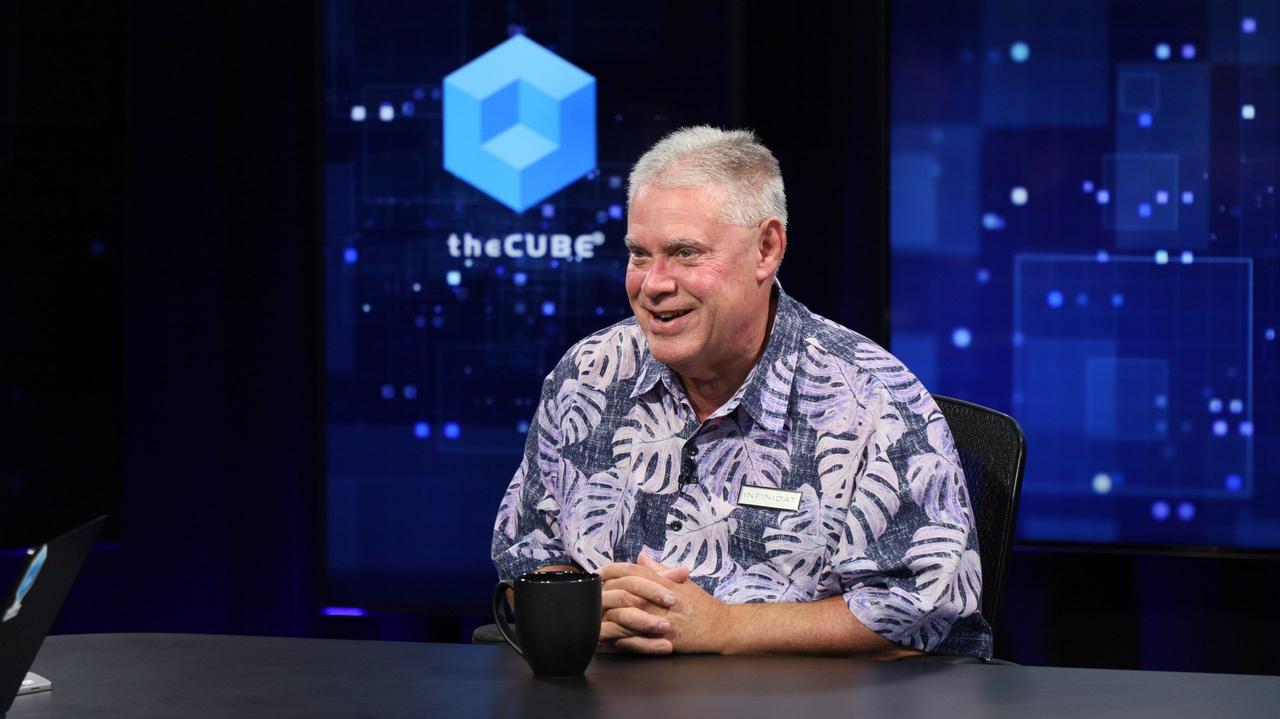
Source: SiliconANGLE
The speed at which AI agents operate compounds the problem. Krista Case, principal analyst at theCUBE Research, noted that AI agents can take hundreds or thousands of actions per minute
4
. Restoring an agent doesn't reverse the records, transactions, and downstream workflows it already touched. Cyber recovery planning must account for reconstructing the sequence of actions agents took across systems—a capability that 11 of the 25 practitioners acknowledged as a gap in their programs.Cyber Resiliency Frameworks Must Address AI-Specific Recovery Goals
Experian has embedded the NIST AI Risk Management Framework directly into its AI infrastructure pipelines, providing structural backbone for making governance real rather than theoretical
1
. Before any model can deploy, data sources are checked automatically, quality rules are enforced, and security policies are validated. If any control fails, the pipeline stops with no manual override. "Policy enforcement happens at machine speed," Rodrigues explained. "We have AI-specific recovery goals—not just for applications, but for data models and pipelines."Experian tests AI recovery the same way it tests disaster recovery through scheduled drills, clear recovery objectives, and measured results. The company built an internal AI agent marketplace—an internal registry where product and engineering teams can discover, sandbox, and reuse governed agents backed by quality controls. This approach treats agents as versioned assets with defined owners, lifecycle policies, and sunset criteria, drawing from lessons learned in managing microservices and APIs.
Operational Resilience Shifts from Recovery to Runtime Protection
Bhooshan Thakar, senior vice president and general manager of InfoScale at Cloud Software Group, argued that operational resilience has fundamentally shifted from recovery to runtime
2
. Running servers and restored data don't guarantee that a business can safely operate after a disruption. "The infrastructure survived, but the operational state did not," Thakar said. "Ultimately, resilience is about maintaining the trust in the operational state."
Source: SiliconANGLE
The pace of change accelerates the challenge. Enterprises that once ran a planned failover every six months now patch business-critical applications daily or weekly against security threats. In response to AI-driven cyber threats, Cloud Software Group joined Anthropic's Project Glasswing in June to use the Claude Mythos Preview model for security work
2
. Thakar noted that disruption has moved from "if, not when" to "always"—organizations must always plan for disruption, whether planned or unplanned.Zero-Trust and Bounded Autonomy Emerge as Governance Models
The interconnected risks of bad data, compromised backups, and over-permissioned AI agents form a triad of failure modes that require zero-trust principles. "AI does not leak data," Rodrigues explained
1
. "Access leaks data. AI only reflects the permissions we give it. Identity must be designed for AI, not just for humans—that means applying least privilege to AI services just like users, rotating credentials frequently, and monitoring access in real time with automated alerts."Research from the AI Cybersecurity and Resilience Summit revealed that organizations allowing agents to execute low-risk actions independently were more likely to invest in logging, monitoring, and recovery infrastructure and to have tested agent incident scenarios
4
. This bounded autonomy may indicate a more mature program. However, human in the loop governance alone doesn't constitute an AI agent recovery plan, as twelve of 25 respondents had not addressed detecting anomalous agent behavior.Related Stories



Storage Layer Becomes Critical Defense Point in Cyber Recovery Planning
Infinidat's approach to cyber recovery planning positions storage as a logical defense layer, given that approximately 90% of the most valuable data at global Fortune 500 companies sits on enterprise storage
3
. The company's InfiniSafe capabilities include immutable snapshots, logical air-gapping that separates the management plane from the data plane, and a fenced forensic environment for examining suspect data.InfiniSafe Cyber Detection uses AI and machine learning to scan block data, file data, and VMware data stores for anomalies, rating each snapshot's risk as high, medium, or low. Infinidat offers a recovery time guarantee of one minute or less for immutable snapshots on its InfiniBox platforms. Herzog noted that in July, the company demonstrated recovering 9.8 petabytes in 5 seconds
3
.Manufacturers Test Resilience Against Real-World Disruptions
Ascend Performance Materials demonstrated how proven data recovery capabilities enable AI adoption. When a hurricane recently approached one of its major Florida plants, the company verified that local systems were backed up and recoverable at its recovery site
5
. Xiong Xiong, vice president of information technology at Ascend, explained that this capability helps him assure executive leadership and the board that resilience is in place.
Source: SiliconANGLE
Before expanding its relationship with Dell Technologies, Ascend struggled to complete nightly backups, verify them, and move them to its recovery site. The company needed localization capability but couldn't achieve it without thorough backup and recovery ability. Dell racked, configured, and validated hardware before handover, allowing Ascend's team to test deployments and watch backups complete locally, move to the recovery site, and come up in isolation. With operational resilience working, Ascend is now focused on making its data-rich environment information-rich to support AI strategy
5
.References
Summarized by

Navi
[1]
[2]
[3]
[4]
[5]
Related Stories
Recent Highlights



Recent Highlights
Today's Top Stories









Don’t drown in AI news. We cut through the noise - filtering, ranking and summarizing the most important AI news, breakthroughs and research daily. Follow topics that matter to you and stay ahead.


