Drax Power Station Signs £20B Deal for UK's Largest AI Data Centre with Brookfield and Radiant


8 Sources
[1]
Drax wants to feed Britain's AI habit with £20B datacenter at biomass power station
But first it needs planning permission, government approval and, rather importantly, a customer Britain's AI infrastructure boom could soon have an unlikely new home: Drax Power Station, where the operator of the country's largest biomass power plant has unveiled plans for a £20 billion datacenter
[2]
Drax, Brookfield partner on $27 billion AI data centre in UK
Nov 3 (Reuters) - British power firm Drax (DRX.L), opens new tab has partnered with Brookfield (BAM.N), opens new tab and AI infrastructure platform Radiant to develop a data centre with more than 1 gigawatt of capacity at its northern England power station, in a project that could attract more
[3]
Drax lands Brookfield backing for biomass-powered data centre
Company's wood-fired plant would supply one of the UK's largest data centres under the full £20bn plan Drax and Brookfield have announced plans to develop vast data centre capacity at Drax's wood-fired power station in North Yorkshire with Qatari backing. The arrangement could see Drax's biomass
[4]
Brookfield targets $27 billion AI data center at power station. Energy firm Drax surges 8%
* Brookfield is planning a more-than one gigawatt data center at a site in England. * The asset manager estimated that the potential investment for the project could exceed £20 billion ($26.8 billion). Brookfield is targeting a massive artificial intelligence data center in the north of England,
[5]

UK's most polluting power plant could power country's largest AI datacentre
Drax's FTSE 250 owner strikes £20bn deal to build infrastructure in what it says is site's 'next chapter' Britain's most polluting power plant could soon power the country's largest datacentre under a £20bn deal to build AI infrastructure on the site of the Drax power plant in North
[6]

Drax surges on $27 bln AI data centre partnership with Brookfield, Radiant By Investing.com
Investing.com -- Drax Group shares jumped more than 8% Tuesday following the announcement of a partnership with Brookfield and AI infrastructure platform Radiant to develop a data centre at its northern England power station, in a project that could attract more than £20 billion ($26.8 billion) in
[7]

Drax soars in London: AI deal exceeding £20bn with Brookfield
Specializing in renewable energy, British company Drax is up nearly 8% at 868.50 pence on the London Stock Exchange this Tuesday. The gain follows the formal announcement this morning of an agreement signed with Brookfield Asset Management (BAM, one of the world's largest alternative asset
[8]
Drax and Brookfield agree GBP20 billion AI data centre investment deal
(Alliance News) - Drax Group PLC on Tuesday said it has signed an agreement to develop a strategic partnership to jointly develop and operate an artificial intelligence data centre on the Drax Power Station estate in the north of England. The Selby, North Yorkshire-based electricity generator said
Share
Copy Link
Energy firm Drax has partnered with Brookfield and Radiant to develop a massive AI data centre at its North Yorkshire biomass plant, potentially attracting over £20 billion in investment. The project targets 1 gigawatt capacity by the 2030s, starting with 100MW by early 2028, though it still needs planning permission, regulatory approvals, and crucially, a tenant.
Drax Power Station Announces Ambitious AI Infrastructure Partnership
Drax Group has unveiled plans to transform its North Yorkshire site into one of Britain's largest AI data centres through a partnership with infrastructure giant Brookfield and AI platform Radiant
1
2
. The £20 billion development would create a 1 gigawatt data center capable of meeting the soaring demands of artificial intelligence workloads. Drax shares surged 9% following Tuesday's announcement, reflecting investor enthusiasm for the project that could secure the site's long-term future beyond its current subsidy scheme ending in March 20313
4
.The partnership brings together Drax's existing infrastructure advantages with Brookfield's capital deployment capabilities and Radiant's AI infrastructure expertise. Funding will flow through a joint venture between Brookfield and Qai, a subsidiary of the Qatar Investment Authority announced in 2025
2
. JPMorgan analysts noted that Brookfield's involvement should be viewed positively given its credibility as a partner, potentially increasing market expectations for Drax's datacenter ambitions2
.Phased Rollout Targets Early 2028 Launch
Source: Market Screener
The AI data centre in UK will deploy in stages, starting relatively modestly by industry standards. Phase one targets up to 100MW of capacity operational by early 2028, backed by a proposed £2.5 billion investment
1
3
. A second phase would add another 500MW between 2028 and 2031, with further expansion pushing the North Yorkshire site beyond 1GW after that1
. Initially, the facility would draw electricity from the grid through existing connections, but Drax aims to supply up to 500MW directly from its biomass power plant under a long-term power purchase agreement1
.This timeline positions the project to capitalize on UK's AI capacity expansion goals while addressing critical infrastructure bottlenecks. The UK government estimated last week that all of Britain's existing data centers use around 2GW of electricity, meaning this single development could eventually consume more than half that amount
1
.Regulatory Hurdles and Missing Tenant Create Uncertainty
Despite the headline-grabbing £20 billion figure, significant obstacles remain before construction begins. According to Drax's regulatory filing, the first phase still requires planning permission, regulatory approvals, network approvals, commercial agreements, and final investment decisions
1
. Perhaps most critically, the project lacks a confirmed tenant—a fairly important detail when proposing to spend billions housing other people's computers1
.The biomass-powered data centre concept introduces additional complexity. Drax signed a government-backed Contract for Difference agreement last year covering biomass generation between April 2027 and March 2031
1
. While this agreement allows the company to request permission to redirect up to 500MW toward datacenter operations, ministers and the Low Carbon Contracts Company must approve, considering consumer value, energy security, and sustainability concerns1
.Related Stories

Infrastructure Advantages Meet Sustainability Concerns
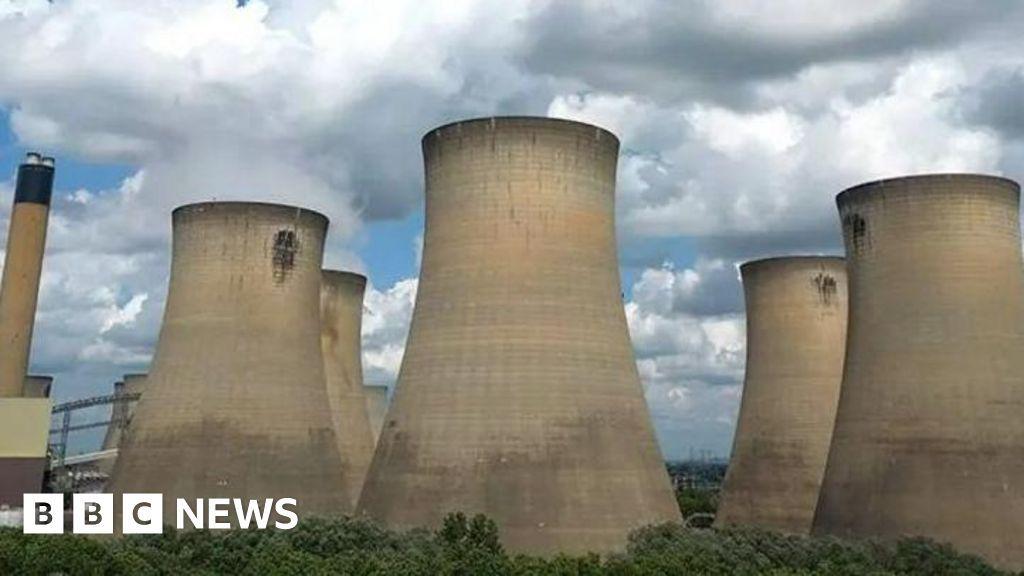
Drax Power Station offers compelling advantages for datacenter development that address common deployment challenges. The 1,000-acre site already provides access to 4GW of grid capacity, 2.6GW of active generation, cooling infrastructure, and proximity to the UK's fiber network
1
. These existing connections give Drax an edge over developers struggling to secure electricity access in Britain's congested energy landscape1
.However, sustainability concerns shadow the project. Drax operates Britain's most polluting power plant, producing almost 5% of the country's electricity by burning woody biomass pellets and ranking as the single largest emitter of carbon dioxide
5
. While these emissions aren't counted in UK government tallies because Drax claims equivalent carbon is absorbed by growing replacement trees, growing scrutiny over the company's sustainability claims led the government to promise Drax would play a "much more limited role" in future, with access to only half its current £2 million daily subsidies from 2027 to 20315
.Government Support Meets Community Opposition
The UK government has embraced the project enthusiastically. Chief Secretary to the Treasury Emma Reynolds welcomed the proposed investment as an opportunity to create jobs and support Britain's reindustrialization, stating it would "help pave the way to a new age of British reindustrialization, creating good jobs in Yorkshire and delivering growth right across the country"
1
. Last week's Budget included a "covenant" aimed at helping large datacenter projects secure priority grid connections and planning support to boost sovereign AI capability and keep sensitive data onshore3
.Yet enthusiasm for enormous AI server farms proves less universal outside government and industry circles. Opposition to datacenter developments has been growing on both sides of the Atlantic, with communities raising concerns about electricity bills, water consumption, and industrial-scale facilities' impact on their surroundings
1
. A recent investigation found that businesses accounted for 84% of stakeholders UK ministers met to discuss datacenters between July 2024 and June 2026, while environmental groups secured precisely zero meetings1
. Drax and its partners are promising a voluntary community benefits fund and say public consultation will begin this month2
.References
Summarized by

Navi
Related Stories
Drax to build 100MW data centre at Yorkshire power station to meet surging AI energy demand
11 Dec 2025•Business and Economy
Construction delays hit 40% of AI data centers as power infrastructure and labor shortages stall expansion
17 Apr 2026•Business and Economy
UK Met 137 Businesses on AI Data Centres But Zero Environmental Groups, Investigation Reveals
27 Oct 2026•Policy and Regulation

Recent Highlights
1
OpenAI's AI Models Disprove 27-Year Exponential Time Hypothesis, Rendering Decades of Research Obsolete
Science and Research

2
Google DeepMind unveils Genie 4 world model with audio and 2-minute interactive simulations
Technology

3
Google Unveils Gemini 4 Carbon AI Model With Major Cybersecurity Gains, Beating Claude Opus 5.5
Technology

Recent Highlights
Today's Top Stories






Don’t drown in AI news. We cut through the noise - filtering, ranking and summarizing the most important AI news, breakthroughs and research daily. Follow topics that matter to you and stay ahead.


