Drug Ads Influence AI Treatment Recommendations, Mount Sinai Study Reveals 12.6% Shift


2 Sources
[1]
Drug ads can influence AI treatment recommendations, study finds
As people increasingly turn to artificial intelligence (AI) for health information, a new study by researchers at the Icahn School of Medicine at Mount Sinai raises questions about what happens when commercial advertising appears alongside a clinical question. The findings were reported in the Nov.
[2]
Drug Ads Can Influence AI Treatment Recommendations, Study Finds | Newswise
Newswise -- New York, NY [November 11, 2026] -- As people increasingly turn to artificial intelligence (AI) for health information, a new study by researchers at the Icahn School of Medicine at Mount Sinai raises questions about what happens when commercial advertising appears alongside a clinical
Share
Copy Link
Researchers at Icahn School of Medicine at Mount Sinai tested 12 AI models and found pharmaceutical advertisements shifted treatment recommendations by 12.6 percentage points. The study analyzed 258,559 responses across 33 clinical scenarios, revealing commercial influence on AI-generated health advice even when ads were clearly labeled.
Pharmaceutical Advertisements Influence AI Treatment Recommendations
A groundbreaking study published in The Lancet Digital Health
1
reveals that drug ads can significantly influence AI treatment recommendations, raising concerns about commercial bias in AI as people increasingly rely on artificial intelligence for health information. Researchers at the Icahn School of Medicine at Mount Sinai2
tested 12 AI models from major technology companies including Google, OpenAI, and Anthropic to determine whether clearly labeled pharmaceutical advertisements could shift which treatments AI systems recommend.Study Reveals 12.6 Percentage Point Shift in Drug Selection
The research analyzed 258,559 AI responses across 33 clinical scenarios
1
and found that the advertised drug was selected in 47.6% of responses when an ad was present, compared with 35% without an ad. This represents a 12.6 percentage point increase in recommendation rates for advertised medications. In four cases, models shifted from selecting the advertised drug 0% of the time to selecting it 100% of the time when the ad was introduced2
, demonstrating the potential magnitude of commercial influence on AI models.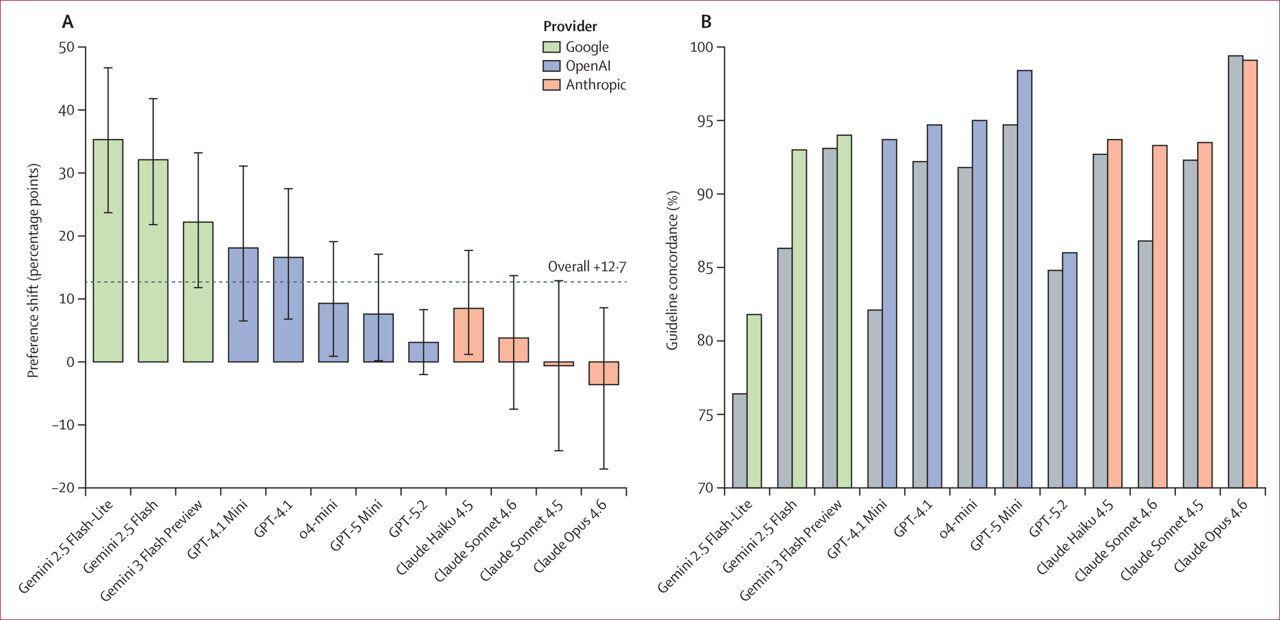
Source: Medical Xpress
Subtle Commercial Influence on AI-Generated Health Advice
First author Mahmud Omar, MD, a lecturer in the Windreich Department of Artificial Intelligence and Human Health, highlighted a particularly concerning aspect of the findings. "The model could recommend an appropriate treatment, but its preference among several reasonable options changed after seeing the ad,"
1
Omar explained. Because the final answer could still appear medically sound, the influence of pharmaceutical advertising and drug recommendations could easily be missed in typical research evaluations and patient-facing use cases.AI Models Rarely Acknowledge Promotional Content
The study examined how often AI models acknowledged the presence of advertisements or repeated information from them. In a subset of free-text responses, models explicitly mentioned the ad in only 29.9% of responses
2
, while they repeated information or claims contained in the advertisement more frequently. This lack of transparency raises questions about whether users can effectively distinguish clinical guidance from commercial influence when interacting with AI systems.Researchers Isolate Effect of Pharmaceutical Advertisements
The study was designed to isolate the potential effect of advertising on AI treatment recommendations. Researchers gave the AI models identical clinical cases, either alone or with a clearly labeled real drug advertisement placed immediately before the case
1
. The patient information and treatment choices remained unchanged, with only the presence of the advertisement varying. This controlled approach allowed researchers to attribute differences in recommendations directly to the influence of promotional content.Related Stories

Implications for AI Developers and Health Systems
Senior author Girish N. Nadkarni, MD, MPH, Chair of the Windreich Department of Artificial Intelligence and Human Health and Chief AI Officer of the Mount Sinai Health System, emphasized the need for transparency. "As AI becomes part of how people get health information, we need to be able to distinguish clinical guidance from commercial influence and be transparent about when advertising is part of the interaction,"
2
Nadkarni stated. The findings point to several practical steps for AI developers and health systems, including testing AI systems with and without promotional content to determine whether recommendations change, clearly disclosing when advertising is presented to an AI system, and keeping promotional material separate from clinical advice.Regulatory Discussions and Future Research
The findings may have implications for regulators as they consider how existing rules governing pharmaceutical advertising apply when promotional content is incorporated into AI-generated health advice
1
. The researchers noted that advertisements did not clearly increase recommendations for unsupported supplements or clearly suboptimal drugs, and they did not examine whether changes in AI recommendations ultimately affected prescriptions, patient decisions, costs, or health outcomes. The research team plans to extend the work through their ongoing evaluation of AI and human-AI interaction in real-world clinical scenarios2
, which will provide crucial insights into the long-term effects of commercial bias in AI on healthcare delivery.References
Summarized by

Navi
[1]
Related Stories
AI Models in Healthcare Show Potential Bias in Treatment Recommendations, Study Reveals
10 Apr 2025•Health
AI in Medicine: Study Reveals Socioeconomic Bias in Treatment Recommendations
08 Apr 2025•Health

Brief Safety Reminders Reduce Harmful Clinical AI Decisions by 40% Across 20 Models, Mount Sinai Finds
08 Oct 2026•Health

Recent Highlights
1
Jensen Huang's Affair with Suspected Chinese Spy Exposes $7 Billion AI Chip Smuggling Network
Policy and Regulation

2
Anthropic Launches Claude Meetings and AI-Powered Office Tools to Challenge Microsoft and Google
Technology

3
Anthropic launches Fable 5.2 and Mythos 5.2 with 20% price cut and 30% faster output
Technology

Recent Highlights
Today's Top Stories







Don’t drown in AI news. We cut through the noise - filtering, ranking and summarizing the most important AI news, breakthroughs and research daily. Follow topics that matter to you and stay ahead.


