OpenAI's AI Tackles Yang-Mills Problem, A Million-Dollar Physics Challenge


2 Sources
[1]
AI rivals tackle one of physics' deepest mathematical challenges
OpenAI and an Anthropic-associated research team have made progress on the Yang-Mills existence problem One by one, artificial intelligence (AI) is felling some of the biggest trees in the mathematical forest. In September, OpenAI announced it had cracked the notoriously difficult Navier-Stokes
[2]
OpenAI's 'shepherds' affirm blockbuster physics result
The company's appointed team of experts has verified and released the groundbreaking AI-generated proof, which validates bedrock assumptions of the Standard Model of particle physics OpenAI's progress on another million-dollar problem is finally public. Experts appointed by the company to vet the
Share
Copy Link
OpenAI announced a major AI breakthrough on the Yang-Mills existence problem, one of mathematics' seven Millennium Prize Problems. A committee led by Nobel laureate David Gross verified the AI-generated proof using Lean formal verification, though the complete 1147-page proof remains unreleased and not fully understood.

OpenAI Achieves Breakthrough on Yang-Mills Problem
OpenAI announced on 28 October that its AI has made significant progress on the Yang-Mills existence problem, one of the five remaining Millennium Prize Problems that come with a $1-million prize. The company revealed an AI-generated proof addressing the first part of this decades-old mathematical challenge that underpins the standard model of particle physics
1
2
. This development follows OpenAI's September announcement of cracking the Navier-Stokes fluid dynamics problem and its October release of more than 700 math papers, including advances on the Riemann hypothesis1
.The Yang-Mills problem has two components: proving the quantum Yang-Mills theory exists mathematically and demonstrating a property called the mass gap. OpenAI's work addresses only the existence portion, leaving the mass gap unresolved
1
2
.Expert Committee Validates AI-Generated Proof Using Lean
Rather than immediately releasing the 1147-page proof, OpenAI appointed a committee headed by Nobel laureate David Gross to shepherd the result. On 10 November, the group released their validation of a formalized version using Lean, a theorem-proving language that checks mathematical arguments against axioms
1
. The committee confirmed that OpenAI's result "proves the existence of pure Yang-Mills theory according to the problem statements which are standard in physics and mathematics"2
.However, this formal verification in Lean doesn't guarantee the still-unreleased proof is correct—it only signals logical consistency
1
. Gross and his four colleagues admitted in their assessment that they "do not claim to fully understand the proof yet" and used OpenAI's Astra model to assist with digesting the Lean code2
.Controversy Over Transparency and Release Strategy
The shepherding approach has sparked debate within the mathematical community. Some mathematicians view it as unnecessary gatekeeping that contradicts transparency recommendations from an OpenAI-affiliated advisory group. Scott Armstrong, a mathematician at New York University, stated: "I'm happy the shepherds are releasing the Lean proof, finally, so we can see what the result is. And I hope, in the future, the AI labs will share their results widely with the community. This review can be done more efficiently and quickly in the open"
2
.OpenAI's announcement also cut ahead of ongoing public work by mathematician Ethan Sussman at Northwestern University and Anthropic's Levent Alpöge, who independently disclosed AI-assisted progress on the Yang-Mills problem last month
1
2
.Why the Yang-Mills Theory Matters for Physics
Developed by physicists Chen Ning Yang and Robert Mills in 1954, the Yang-Mills theory provides a framework for describing the weak nuclear force responsible for certain radioactive decay and the strong nuclear force binding quarks inside protons and neutrons. It forms a central component of the standard model of particle physics
1
2
.As a quantum field theory, it describes particles as excitations of fields permeating space. At small scales, quantum fluctuations can involve arbitrarily high energies, causing calculations to spiral toward infinity—a mathematical impossibility. While physicists developed techniques to manage these infinities and make reliable predictions, they haven't proven these calculations approximate a mathematically consistent theory, according to Martin Hairer, a mathematician at the Swiss Federal Institute of Technology Lausanne
1
.Understanding the Mass Gap Challenge
The mass gap portion of the Millennium Prize Problem remains unsolved. The Yang-Mills theory describes force-carrying particles called gluons, which have no intrinsic mass. Yet the strong force binds them into composite particles called glueballs that appear heavy in experiments. "They seemingly somehow conjure a mass out of nothing," says David Tong, a physicist at the University of Cambridge
1
. Quantum fields interact with themselves, producing excitations with mass even though underlying particles are massless, but this explanation lacks mathematical foundation1
.Related Stories

Building on Decades of Mathematical Work
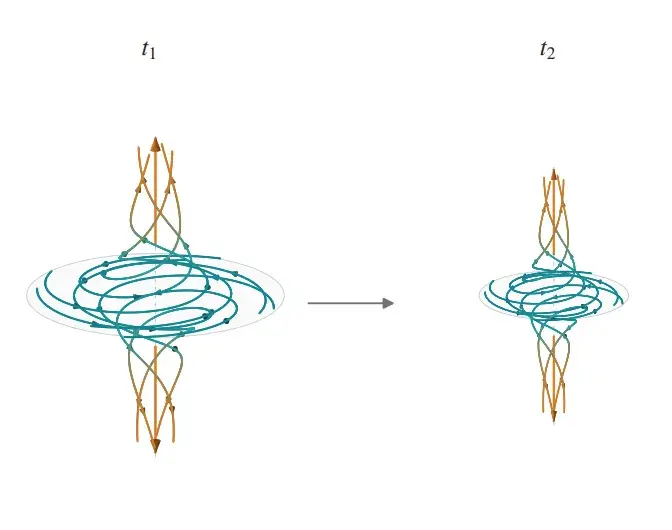
Both OpenAI and the Alpöge-Sussman collaboration built on work by mathematician Tadeusz Bałaban, who came close to solving the existence problem in the 1980s. His approach divided space-time into a grid, making calculations manageable. The challenge was showing the Yang-Mills theory remained mathematically consistent as the grid became finer, approaching continuous space-time. Bałaban rigorously constructed the theory in one and two dimensions, but the 4D case remained unsolved
1
.Implications for Physics and AI-Assisted Mathematics
For physicists, this result likely won't change day-to-day work since the Yang-Mills theory already successfully explains particle behavior at accelerators like the Large Hadron Collider. Important mysteries remain, including how most proton and neutron mass arises and why quarks can never be found alone. A rigorous proof could offer fresh insights. "Maybe there's something we're missing," Tong suggests
1
.For mathematicians, this work represents a landmark achievement, demonstrating AI's usefulness in tackling mathematical challenges that languished because required calculations were prohibitively laborious. "If you can find a problem where you think there's a plausible strategy, but the obstruction has been the amount of work involved, that's a pretty decent thing to try to send the [AI model] towards," says Sussman
1
. With the proof now released for deeper scrutiny, experts can use their own agents to reverse-engineer and parse it2
.References
Summarized by

Navi
[2]
Related Stories
OpenAI Releases 722 AI-Generated Math Solutions, Triggering Existential Crisis in Mathematics
08 Oct 2026•Technology
OpenAI Releases 722 AI-Generated Math Papers on GitHub, Igniting Fury Among Mathematicians
01 Oct 2026•Science and Research

OpenAI Forms Math Advisory Group After AI Resolves More Than 100 Open Problems
22 Sept 2026•Policy and Regulation

Recent Highlights
1
Jensen Huang's Affair with Suspected Chinese Spy Exposes $7 Billion AI Chip Smuggling Network
Policy and Regulation

2
Anthropic Launches Claude Meetings and AI-Powered Office Tools to Challenge Microsoft and Google
Technology

3
Anthropic launches Fable 5.2 and Mythos 5.2 with 20% price cut and 30% faster output
Technology

Recent Highlights
Today's Top Stories








Don’t drown in AI news. We cut through the noise - filtering, ranking and summarizing the most important AI news, breakthroughs and research daily. Follow topics that matter to you and stay ahead.


