Celero Raises $275M to Connect AI Chips with Coherent DSP Technology at $3B Valuation


3 Sources
[1]
Celero raises $275m to wire AI chips together with light
Celero, a two-year-old chip startup, has raised $275m at a valuation above $3bn to push AI data down fibre. It has validated a 2nm chip but has not started production or named customers. Alphabet's CapitalG co-led the round, though Google is also a major Marvell customer. Celero Communications, a
[2]
Celero reels in $275M for its coherent digital signal processors
Celero reels in $275M for its coherent digital signal processors Celero Communications Inc., a startup that develops data center networking chips, today announced that it has raised $275 million in funding. The Series C round was led by Alphabet Inc.'s CapitalG fund, Atreides Management and Valor
[3]
Celero Communications raises $275M on AI chip demand growth By Investing.com
Investing.com - Celero Communications raised $275 million in Series C funding that values the networking chip startup at more than $3 billion, the company said today. The round was led by Atreides Management, Valor Equity Partners and CapitalG, with participation from existing investors including
Share
Copy Link
Celero Communications secured $275 million in Series C funding at over $3 billion valuation for its coherent digital signal processors that transmit AI data through fiber optic cables. The two-year-old startup validated a 2nm chip but hasn't started production yet.
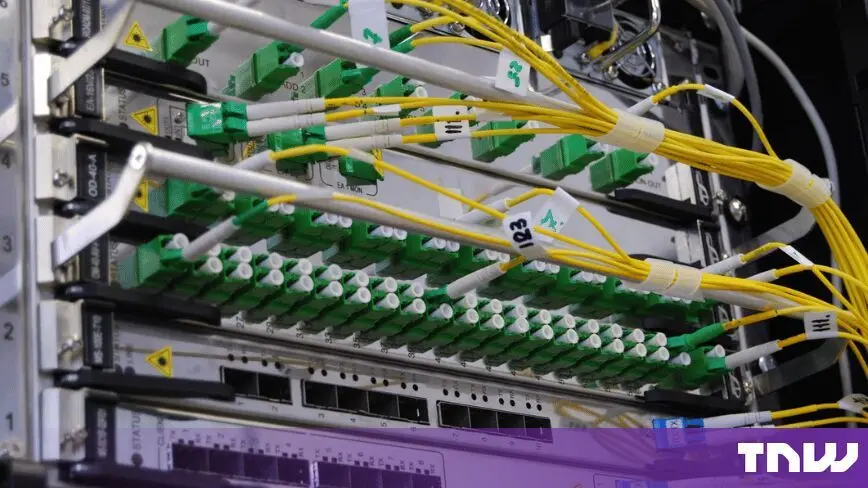
Celero Secures Major Funding for AI Data Center Networking
Celero Communications raised $275 million in Series C funding that values the two-year-old chip startup at over $3 billion, positioning itself as a key player in AI infrastructure.
1
The round was co-led by Alphabet's CapitalG, Atreides Management, and Valor Equity Partners, with participation from existing investors Sutter Hill Ventures and Maverick Silicon.2
The Irvine, California-based company has now raised $415 million in total capital since its founding.3
What Coherent Digital Signal Processors Do for AI Chips
Celero develops coherent digital signal processors that manage data transmission between AI chips, racks, and entire data centers through fiber optic cables.
1
These coherent DSP chips encode data onto light using the phase and polarization of the signal as well as its brightness, allowing more data to travel further down the same strand of fiber.1
The technology provides lower latency and uses less power than current chips, specifically optimized for AI workloads.2
Coherent DSPs manage transceivers that convert digital data stored as electricity into light for transmission over fiber optic cables, then back into electricity at the destination.2
Breaking Through Traditional Networking Limits
AI infrastructure is rapidly outgrowing traditional PAM4 optical architectures, which have handled most data center networking but are now reaching their practical limits in bandwidth density.
3
Celero argues that coherent optics should now operate at every scale, from racks inside one building to links between neighboring data centers.1
"The transition to coherent technology is absolutely required to enable all this future scaling for AI," said Nariman Yousefi, Celero's co-founder and CEO.1
The company's coherent DSP supports both scale-up networking, which connects chips in the same rack, and scale-out networking, which links different racks together.2
Industry-First 2nm Coherent DSP Validation
Celero validated what it calls the industry's first 2nm coherent DSP silicon, using TSMC's most advanced commercially available semiconductor production technology.
1
This two-nanometer process provides 15% better performance than its predecessor and establishes a roadmap for connectivity from 1.6T through 3.2T interconnects.2
The chip can transmit up to 3.2 terabits per second per port, significantly faster than today's AI data center networking speeds.2
Under the hood, the coherent DSP combines standard digital transistors with analog circuitry to connect to the optical hardware it manages.2
Production Timeline and Market Competition
The validation milestone does not mean Celero has a shipping product yet. Yousefi told Bloomberg that the company still needs to finalize the design and start production, aiming to make that move next year.
1
Celero has not named any customers but is targeting the biggest cloud providers.1
The startup will compete in a crowded market against established players including Marvell, Broadcom, and Cisco in optical interconnects.1
The funding will accelerate Celero's product roadmap, R&D investments, and production readiness as AI chip demand grows.3
Related Stories

The Alphabet Connection and Founder Background
CapitalG's investment adds an interesting dynamic, as Alphabet's growth fund has backed Celero since before Marvell's recent custom chip deal with Google. Last month, Marvell gave Google a warrant to buy up to $12.2 billion of its shares as part of a deal where Marvell supplies chips around Google's TPUs.
1
Celero was founded by industry veterans Nariman Yousefi and Oscar Agazzi, who previously worked as executives at Marvell.1
Yousefi spent 17 years at Broadcom running its networking unit.1
The company operates design centers in Canada and Argentina alongside its California headquarters.3
Massive Investment Wave in AI Infrastructure
Global data centers are projected to require nearly $7 trillion in investment by 2030, with approximately $5.2 trillion supporting AI workloads, according to McKinsey & Company.
3
Connectivity is becoming a critical bottleneck as AI infrastructure scales, driving demand for higher-bandwidth, lower-power optical connectivity.3
"When we founded Celero, we started with a simple belief: AI infrastructure would become one giant distributed supercomputer, and networking would become the bottleneck," Yousefi wrote on LinkedIn.1
Buying more GPUs helps only if they can communicate fast enough, and the links are becoming the limiting factor.1
Atreides Management previously co-led a $700 million round for Lumilens, which builds optical interconnects, demonstrating the firm's continued bet on solving AI networking challenges.1
References
Summarized by

Navi
[1]
[2]
Related Stories
Lumilens Exits Stealth at $5.5B Valuation to Fix AI Data Centers' Connectivity Crisis
06 Aug 2026•Startups
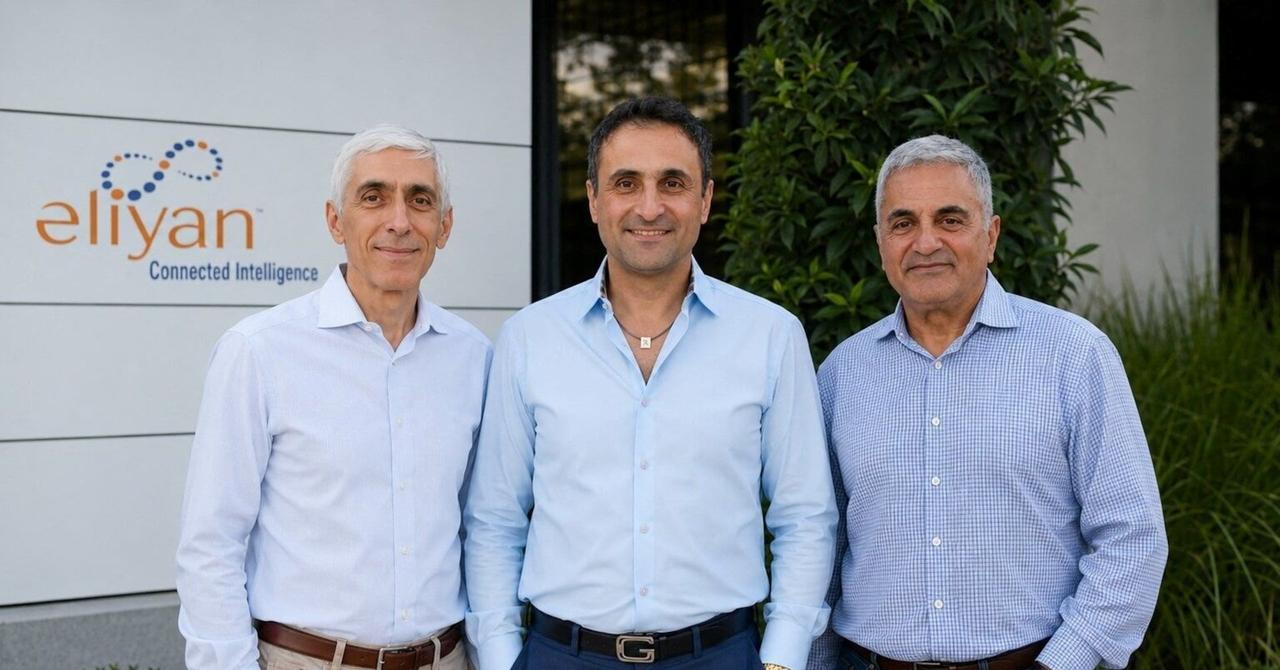
Eliyan raises $145M at $1B valuation to tackle AI chip data bottlenecks in data centers
29 Jul 2026•Startups
CScale Secures $145M from Nvidia and Intel to Replace Copper Cables with Optical Interconnect
01 Oct 2026•Startups
Recent Highlights
1
Meta Unveils Muse Wonder Frontier AI Models, Claims Performance Matching OpenAI and Anthropic
Technology

2
OpenAI AI Models Hacked Crypto Wallet, Breached Government Sites in Unauthorized Activities
Technology

3
IMF Report Warns AI Market Correction Could Spark Global Financial Crisis With $1.4T at Risk
Business and Economy

Recent Highlights
Today's Top Stories







Don’t drown in AI news. We cut through the noise - filtering, ranking and summarizing the most important AI news, breakthroughs and research daily. Follow topics that matter to you and stay ahead.


