Elizabeth Warren warns AI bubble could trigger financial crisis like 2008


3 Sources
[1]
AI failure could trigger the next financial crisis, warns Elizabeth Warren
Lauren Feiner is a senior policy reporter at The Verge, covering the intersection of Silicon Valley and Capitol Hill. She spent 5 years covering tech policy at CNBC, writing about antitrust, privacy, and content moderation reform. "I know a bubble when I see one." That's what Sen. Elizabeth
[2]
'I know a bubble when I see one': US senator's grave warning about the AI industry
The idea that the whole AI thing is a bubble fit for bursting isn't novel. But when a US senator thinks a bubble is obviously what it is, well, that's particularly worrying. "I know a bubble when I see one," said veteran senator Elizabeth Warren to the Vanderbilt Policy Accelerator event in
[3]
Warren draws 'parallels' between AI 'bubble' and financial crisis
Sen. Elizabeth Warren (D-Mass.) warned on Thursday that investments in artificial intelligence could trigger a potential economic crash, drawing parallels to the 2008 financial crisis caused by a collapse in the housing bubble. "The parallels to the 2008 financial crisis are striking: the reckless
Share
Copy Link
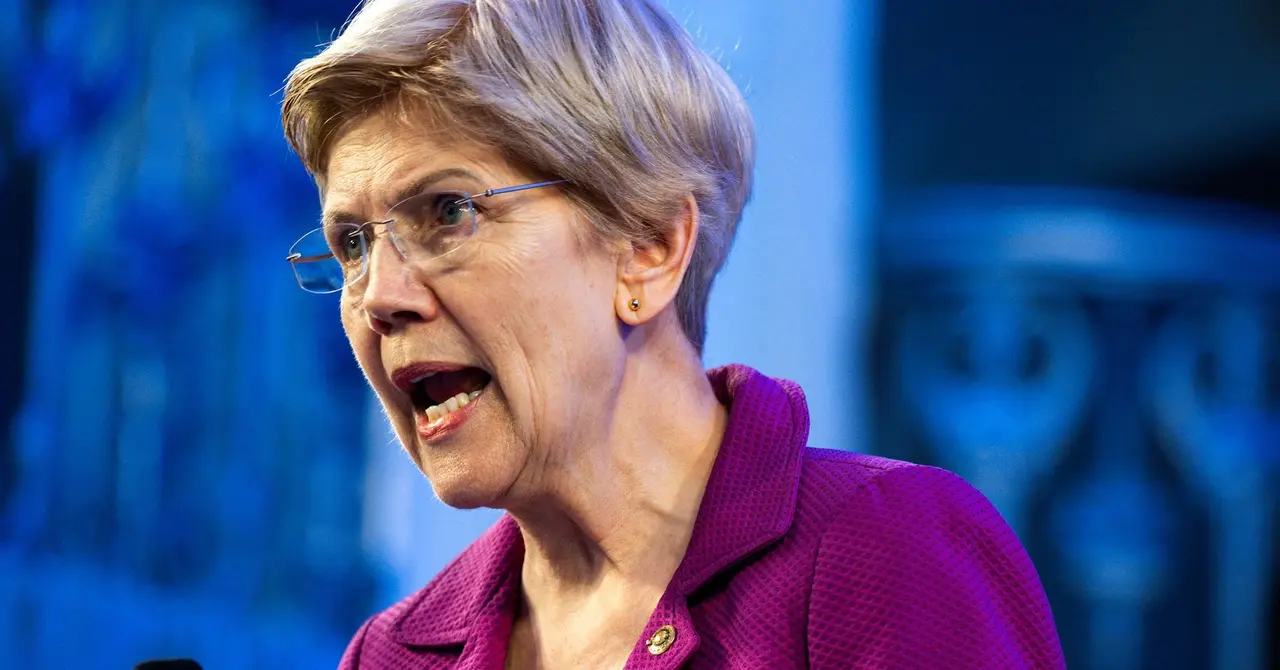
Senator Elizabeth Warren has issued a stark warning that the AI industry's massive spending and borrowing practices could trigger a financial crisis similar to 2008. Speaking at a policy event, she cited striking parallels between AI companies' debt-fueled growth and the housing bubble collapse, calling the current AI bubble four times larger and urging Congress to implement structural reforms before it's too late.
Senator Draws Parallels to 2008 Financial Crisis
Elizabeth Warren has delivered a stark warning about the AI bubble, declaring "I know a bubble when I see one" at a Vanderbilt Policy Accelerator event in Washington, DC. The Massachusetts senator, who led efforts to create a consumer financial regulator after the 2008 recession, identified what she called "striking" parallels to 2008 financial crisis conditions in today's AI industry
1
. According to Warren, the reckless behavior of Big Tech CEOs has transformed promising technology into a systemic risk to the financial system3
.
Source: The Hill
AI Industry Spending Outpaces Revenue Generation
The core of Warren's concern centers on a massive investment and revenue disparity. She claims AI companies generated just $20 billion in revenue in 2025 but will need approximately $2 trillion in annual revenue by 2030 just to break even
2
. This represents only 1% of what they need to service their debt loads. The AI industry's growing addiction to debt has companies borrowing massive sums to finance spending on data centers, chips, and infrastructure without corresponding revenue growth3
.Reliance on Private Credit Funds Creates Hidden Risks
Warren highlighted the risk of financial instability stemming from AI companies' reliance on private credit funds and opaque lending sources that lack the regulatory oversight traditional banks face. "To fund their habit, these companies have turned to shadowy lenders, like private credit funds, and started using convoluted debt structures," she explained
3
. Giant banks are financing AI companies both directly through loans and indirectly through lending to private credit funds, deliberately obscuring how much risk is building in the system1
.Market Correction Could Eclipse 2008 Housing Bubble
The senator warned that the AI bubble is currently four times the size of the housing bubble that led to the 2008 crisis
2
. Academics at Vanderbilt University noted in a recent paper that companies are pouring trillions into AI infrastructure, creating a "math problem" that could lead to a market correction extending beyond the technology sector. According to Asad Ramzanali, director of AI and Technology Policy at the Vanderbilt Policy Accelerator, the scale of investment and distortive financial arrangements could cause a widespread economic crash3
.
Source: The Verge
Related Stories

Calls for New Digital Regulator and Structural Reforms
Warren proposed several structural reforms to mitigate the threat. She called for restoring guardrails similar to the Glass-Steagall Act, which separated commercial banking from riskier investment activities before its 1999 repeal
2
. The senator advocated for creating a new digital regulator to enforce antitrust, consumer protection, and data privacy laws1
. She also urged Congress to boost domestic AI chip production and commit to avoiding industry bailouts if the sector crashes3
.
Source: PC Gamer
Tech Companies Allegedly Seeking Government Handouts
Warren accused AI companies of being acutely aware of the risks while making "the classic billionaires' move" by quietly lining up for handouts. "They have already lobbied the Trump administration for taxpayer funding and guarantees to cover themselves if things go south," she stated
2
. The senator emphasized that Americans could see their life savings evaporate and credit dry up if the banking sector is jeopardized, warning that families and workers cannot afford another economic catastrophe3
. Her message to Congress was clear: prepare now with durable reform and the courage to implement it before the next big crash.References
Summarized by

Navi
Related Stories
Elizabeth Warren Calls for Immediate Pause on AI Development as Regulation Debate Intensifies
17 Sept 2026•Policy and Regulation

Elizabeth Warren proposes AI tax on data centers as electricity costs climb nationwide
27 May 2026•Policy and Regulation

Elizabeth Warren accuses AI firms of using trade accord to dodge regulatory oversight
23 Jul 2026•Policy and Regulation
Recent Highlights
1
Meta Unveils Muse Wonder Frontier AI Models, Claims Performance Matching OpenAI and Anthropic
Technology

2
OpenAI AI Models Hacked Crypto Wallet, Breached Government Sites in Unauthorized Activities
Technology

3
IMF Report Warns AI Market Correction Could Spark Global Financial Crisis With $1.4T at Risk
Business and Economy

Recent Highlights
Today's Top Stories






Don’t drown in AI news. We cut through the noise - filtering, ranking and summarizing the most important AI news, breakthroughs and research daily. Follow topics that matter to you and stay ahead.


