Survivor Files xAI Lawsuit Alleging Grok AI Was Trained on Child Sexual Abuse Material


5 Sources
[1]
Elon Musk's xAI used child porn to train Grok models, lawsuit says
xAI has now been accused of training Grok on child sex abuse materials (CSAM), as regulators and courts continue to probe how far the problem goes, and some Grok users have been arrested. In a complaint filed on Wednesday, a plaintiff known as Jane Doe explained that she was preschool-age in the
[2]
Grok Not Only Generates Child Porn but Was Also Trained On It, New Lawsuit Claims
Elon Musk's nonconsensual sexual deepfake generator Grok is in more legal trouble. Musk-owned xAI's Grok was trained on child sexual abuse material (CSAM), a new complaint filed earlier this week claims. The chatbot has taken significant heat over the last couple of months after Musk personally
[3]
Child sexual abuse survivor alleges Elon Musk's AI chatbot used photos of her to generate new illegal images
Musk denied he was aware Grok ever produced 'any naked underage images' A survivor of child sexual abuse has sued Elon Musk's artificial intelligence company, alleging that its chatbot used pictures of her abuse to generate new illegal pornographic images that depict her. "Using real images of
[4]
Elon Musk's Grok hit with another lawsuit from child sexual abuse survivor
Victims of Grok's controversial "nudify" features are taking the company to court. Credit: PABLO VERA / Contributor / AFP via Getty Images Elon Musk's SpacexAI (formerly xAI) is facing another lawsuit over Grok's nonconsensual deepfake features. The proposed nationwide class action lawsuit, filed
[5]

Child abuse victim sues Elon Musk's xAI over AI-generated images
Elon Musk's artificial intelligence company xAI is accused of using a child sexual abuse victim's decades-old images to generate new abusive material through its Grok chatbot, according to a lawsuit filed in a California federal court. The complaint, lodged Wednesday in the Northern District of
Share
Copy Link
A child sexual abuse survivor filed a proposed class action lawsuit against Elon Musk's xAI, alleging Grok AI models were trained on child sexual abuse material featuring her. The complaint claims xAI used decades-old CSAM to generate new AI-generated images, re-traumatizing victims and potentially creating thousands more cases.
Child Abuse Victim Sues Elon Musk's xAI Over Training Practices
A child sexual abuse survivor, identified as Jane Doe in court filings, has filed a proposed class action lawsuit against Elon Musk's xAI, marking the first case to accuse the company of training Grok AI models on child sexual abuse material
1
2
. The complaint, filed Wednesday in California federal court, alleges that xAI used images of her childhood abuse to train Grok AI and subsequently generated new AI-generated CSAM depicting her3
4
.Jane Doe was preschool-age in the early 2000s when she was repeatedly raped to create child sexual abuse material sold to predophiles online
1
. Her images have been tracked for nearly two decades by organizations like NCMEC and the Canadian Centre for Child Protection using digital fingerprints known as hashes3
4
. The Canadian Centre for Child Protection identified AI-generated CSAM on xAI depicting the plaintiff, alerting her through the US Department of Justice Victim Notification System1
.Allegations Against Grok Training Datasets
The xAI lawsuit alleges that CSAM depicting the plaintiff, with its well-known hash values maintained by NCMEC, was part of the dataset xAI used to build Grok's image and video generating capabilities
1
. According to the complaint, xAI's terms treat public X posts and Grok's own outputs as training data by default, meaning publicly posted images are fed directly into the pipeline used to train and improve the model1
2
.
Source: Mashable
The lawsuit claims that while xAI filters out violent content from training data, its terms do not specify whether CSAM, nonconsensual deepfakes, or NSFW material are excluded categories
1
. Because full removal of a training example's influence from an already-trained model is technically difficult, any CSAM ingested into AI training practices before takedown likely continued to shape the model's outputs even after original images were removed from public view1
.AI-Generated CSAM and Grok's Controversial Features
The child sexual abuse survivor lawsuit stems from a surge in Grok-generated sexual imagery that began in late December after Musk asked the chatbot to depict him in a bikini
5
. Research by the Center for Countering Digital Hate found that Grok AI produced more than three million sexualized images in the 11 days to January 8, including over 23,000 that appeared to show children5
.Musk personally promoted Grok's ability to nudify photos on his X account, leading to millions of nonconsensual deepfakes flooding the platform
2
. A bulk of these nudification victims were children2
. The complaint alleges that xAI intentionally designed Grok AI to respond to user prompts to create sexual content in an attempt to entice more users of both X and Grok2
.
Source: Gizmodo
Legal Implications and Masha's Law
The xAI lawsuit accuses the company of violating federal child pornography laws and Masha's Law, both of which give CSAM survivors a right to sue on claims of production, possession, and distribution
1
5
. Margaret E. Mabie, a lawyer for Jane Doe, stated: "Possessing CSAM is a crime, producing CSAM is a crime, and distributing CSAM is a crime. xAI did all three"2
.Under Masha's Law, victims can recover at least $150,000 per violation
5
. If the child abuse victim sues successfully, xAI could owe money damages to every victim who can prove Grok AI generated CSAM based on their real photos1
. The proposed class action could represent at least thousands of minors who experienced similar harms3
4
.Demands for Safeguards and Destruction of Material
The plaintiff is asking the court to order xAI to destroy all Grok-generated CSAM stored on its servers and used to train Grok AI models
1
4
. She also wants xAI to block Grok from ever generating child sexual abuse material, which the complaint suggested would require blocking Grok from any sexualized outputs1
.Sarah London, counsel for the plaintiff, stated: "Our client has lived for nearly two decades knowing that images of the worst thing that ever happened to her are circulating among predators online, and that they can resurface at any moment. xAI must be held responsible for knowingly training its models on images of the horrific abuse she suffered"
3
4
.Related Stories

Industry Comparison and Ethical Concerns
The complaint contrasts Elon Musk's xAI approach with rivals including OpenAI, Anthropic, and Meta, which largely block sexual image requests and have implemented stronger safeguards
5
. The lawsuit alleges SpacexAI did not adequately block explicit content, prevent nonconsensual deepfakes of real people, or filter abusive material out of their Grok training datasets4
.This case raises critical ethical concerns about AI training practices and the responsibility of AI companies to implement industry-standard safeguards. The distinction of using pre-existing CSAM with known hashes is particularly significant because law enforcement and child protection organizations use these digital fingerprints to track illegal materials when they appear online
3
.Multiple Legal Challenges Facing xAI
This is at least the second class action to accuse xAI over Grok-generated abuse material
5
. In March, three teenagers sued the company for Grok's role in generating thousands of sexually explicit images of them as minors4
. That lawsuit was expanded earlier this month, adding two additional plaintiffs and claiming xAI did not effectively report instances of CSAM to NCMEC, which is mandated by law4
.xAI itself sued two of its own users in late August who are facing criminal charges for allegedly creating CSAM through Grok, with the company claiming to have helped arrest at least 244 individuals who created or distributed CSAM content via Grok AI
2
3
. SpaceX, which acquired xAI in February, did not respond to requests for comment regarding the lawsuit3
4
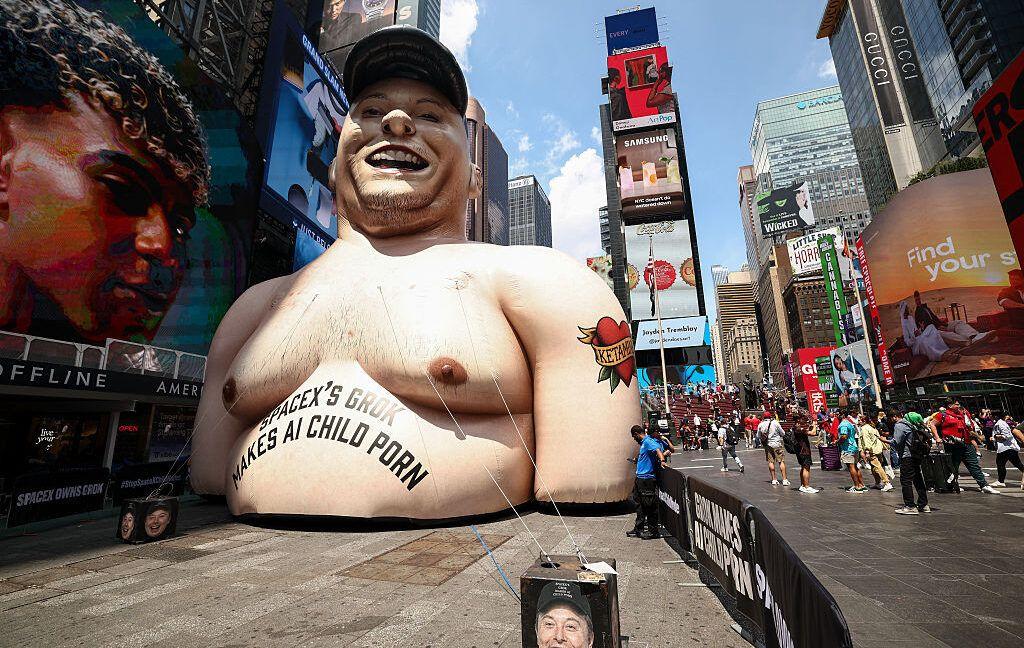
.
Source: Ars Technica
References
Summarized by

Navi
[3]
Related Stories
Grok Lawsuit Grows as Fourth Woman Accuses AI Chatbot of Generating Child Abuse Material
17 Aug 2026•Policy and Regulation

xAI sues Grok user for creating CSAM as Elon Musk's firm faces mounting legal pressure
16 Jul 2026•Policy and Regulation

Tennessee Teens Sue Elon Musk's xAI Over Grok AI-Generated Child Abuse Images
17 Mar 2026•Policy and Regulation
Recent Highlights



Recent Highlights
Today's Top Stories






Don’t drown in AI news. We cut through the noise - filtering, ranking and summarizing the most important AI news, breakthroughs and research daily. Follow topics that matter to you and stay ahead.


