Engineer Develops Real-World Ad-Blocking App Using AR Glasses and AI


3 Sources
[1]
Engineer creates ad-block for the real world with augmented reality glasses -- no more products or branding in your everyday life
Say what you will about going outside, but there isn't an AdBlock program for real-life billboards and ads. At least, there didn't use to be. A software engineer on X (formerly Twitter) has built an augmented reality app to identify and block out advertisements, billboards, and product branding in
[2]
Software engineer creates a real-life ad block using Snapchat's AR smart glasses, but ultimately ends up making something far more distracting than ads
I utterly despise Google's AI summaries. I dislike how they're placed right at the top of the page, I dislike how prone to hallucinating the answers I'm searching for are, and I dislike that when it does offer something vaguely helpful, it's almost definitely scraped from another human that
[3]
Someone Made an App That Blocks Ads in Real Life
Ads are everywhere: on your phone, your TV, your inbox, and even on the sidewalk, trying to sell you something or the other. While there are ways to avoid the digital stuff, what about real life? But one developer has done the unthinkable and created an app to block ads in real life using Snapchat
Share
Copy Link
A Belgian software engineer has created an augmented reality app that uses Snap's AR Spectacles and Google's Gemini AI to identify and block advertisements in the real world, raising questions about the future of ad-blocking technology and its implications.
Innovative Ad-Blocking Technology for the Real World
Belgian software engineer Stijn Spanhove has developed a groundbreaking augmented reality (AR) application that brings ad-blocking capabilities to the physical world. Using Snap's fifth-generation AR Spectacles and Google's Gemini AI, the app identifies and blocks advertisements, billboards, and product branding in real-time
1
.How It Works
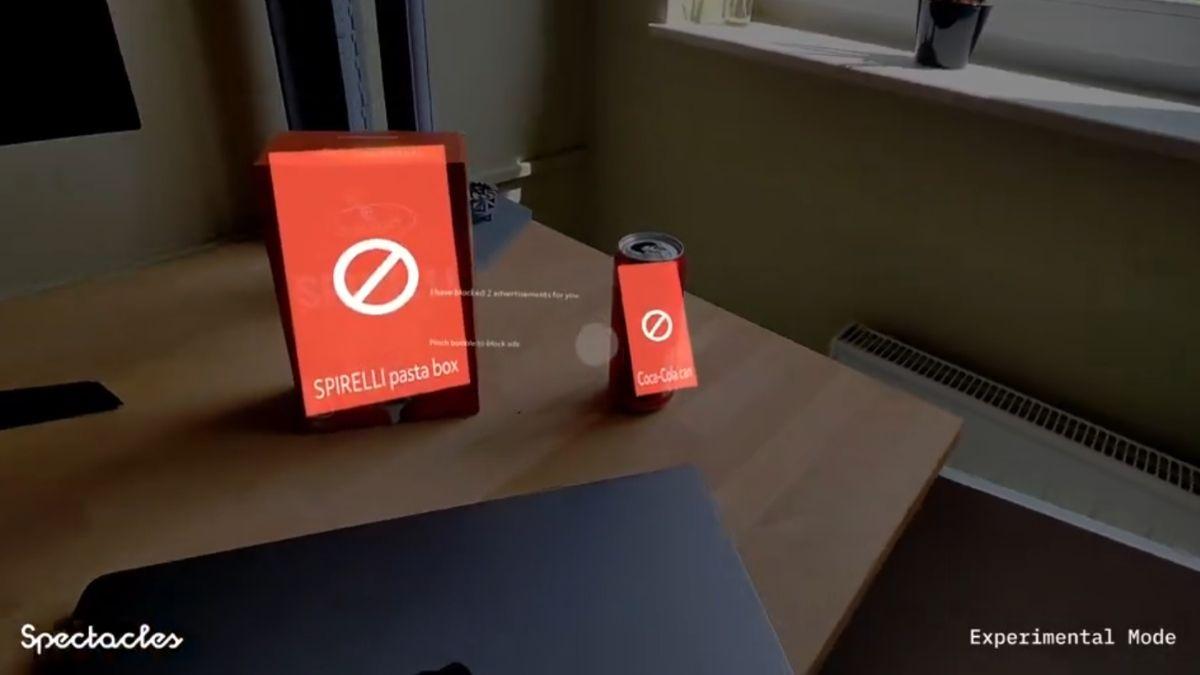
The app leverages the AR capabilities of Snap's Spectacles to scan the user's environment. Google's Gemini AI then processes the visual input to identify advertisements and branded content. Once detected, the app replaces these elements with red squares, effectively blocking them from the user's view
2
.
Source: Beebom
Technical Implementation
Spanhove's creation is built using libraries and APIs shared by Snap on its Github repository, specifically utilizing the Depth Cache development tools. This makes the app currently exclusive to Snap Spectacles, with potential adaptations for other AR platforms like Apple Vision Pro and Meta Quest yet to be developed
1
.Current Limitations and Future Possibilities
While the app successfully identifies and blocks various forms of advertising, including posters, pedestrian billboards, newspaper ads, and even food packaging, it is still in its early stages of development. The current version replaces ads with conspicuous red squares, which some users find more distracting than the original advertisements
2
.Spanhove has hinted at potential future features, such as allowing users to replace blocked content with custom photos or personal notes. Some observers have suggested more natural replacements like plants or foliage to create a less jarring visual experience
3
.Related Stories

Implications and Ethical Considerations

Source: Tom's Hardware
This innovative application raises important questions about the future of augmented reality and user control over visual content in physical spaces. As Spanhove notes, "It's exciting to imagine a future where you control the physical content you see"
1
.However, the technology also prompts discussions about the ethical implications of selectively altering one's perception of reality. Questions arise about the potential impact on businesses relying on physical advertising and the broader consequences of allowing individuals to curate their visual environment to this extent.
The Future of AR Wearables
This project comes at a time when major tech companies are reassessing their strategies in the AR wearables market. While Microsoft and Meta have scaled back their AR initiatives, Snap continues to push forward with its Spectacles, offering them to developers for $99 per month
1
.As AR technology continues to evolve, applications like Spanhove's ad-blocker may play a crucial role in shaping the future of how we interact with and perceive our surroundings. The development of such tools could potentially influence the direction of AR wearable design and functionality in the coming years.
References
Summarized by

Navi
[1]
Related Stories
Apple Smart Glasses Face WWDC 2027 Delay as Privacy Concerns Force Camera Rethink
26 Jul 2026•Technology
New app detects smart glasses nearby as privacy concerns mount over hidden cameras
25 Feb 2026•Technology
Snap Specs AR Glasses Launch With Specs Intelligence AI to Combat 'Brain Fry'
17 Sept 2026•Technology

Recent Highlights



Recent Highlights
Today's Top Stories



Don’t drown in AI news. We cut through the noise - filtering, ranking and summarizing the most important AI news, breakthroughs and research daily. Follow topics that matter to you and stay ahead.


