Harvard Students Demonstrate Privacy Risks of Smart Glasses with AI-Powered Surveillance Tool


18 Sources
[1]
Smart Glasses Sound Great, but There Are So Many Privacy Issues
Quick LinksWarped Speed Doxxing Weak Built-in Privacy Features Bystanders Have Not Opted-in Meta Has Suffered a Series of Hacks Key Takeaways Smart glasses allow for easy doxxing, making it a serious privacy concern. Meta's privacy features mainly benefit the wearer, not bystanders. User reports
[2]
Two Students Used Ray-Ban Meta Smart Glasses With A Facial Recognition System To Dox Strangers' Personal Information
Meta smart glasses have harnessed quite the attention for the blend of fashion and functionality they offer, and the built-in cameras and hands-free interaction users can have with the wearable make it an attraction for many, especially among the younger generation. Recently, two Harvard students
[3]
Harvard Students Expose How Meta Glasses Can be Transformed Into AI-Powered Surveillance Tool
They demonstrated how smart glasses combined with facial recognition can pose a significant threat to individual privacy. Two Harvard students turned Meta's smart glasses into a powerful artificial intelligence (AI)-powered surveillance tool to demonstrate how the line between innovation and
[4]
Are my Ray-Ban Meta smart glasses spying on me? No, but college students are
In 2013, Google set off a firestorm of privacy objections when it strapped a camera to people's faces with the release of Google Glass. In 2024, much of the scopophobia surrounding camera lenses has been evaporated from society as we became more used to the presence of smartphones and our social
[5]

Students used Meta's smart glasses to automatically dox strangers via Instagram streams
They blended facial recognition tech, a large language model and publicly available data. An unsettling report from has shed light on some ways that the could be used to violate people's privacy. Two Harvard students used facial recognition tech and a large language model to unearth a subject's
[6]

Harvard Students Develop App to Identify Anyone Using Meta Smart Glasses
Meta refused to confirm if video data collected by glasses is private Ray-Ban Meta smart glasses were used by two Harvard engineering students to build an app that can reveal sensitive information about people without them realising it. The students posted a demo of the video on X (formerly known
[7]

Facial recognition Meta Ray-ban glasses knows who you are in real time
This shows how the I-Xray software works, from capturing the image to aggregating the data In what might be described as a real-life Black Mirror episode, a Harvard student uses facial recognition with $379 Meta Ray-Ban 2 smart sunglasses - to dig up personal data on every face it sees in real
[8]

Harvard students create smart glasses that instantly dox strangers
Serving tech enthusiasts for over 25 years. TechSpot means tech analysis and advice you can trust. WTF?! Technology's invasive reach is expanding at an alarming rate. Two enterprising students have demonstrated how easily off-the-shelf programs can be used to create smart glasses capable of
[9]

Terrifying new app shows how Meta smart glasses can help you identify...
This pernicious program is every stalker's dream. Two Harvard students have created a new tool to highlight how easily Ray-Ban's Meta smart glasses can be used to identify an individual and obtain access to their personal information, including a home address. AnhPhu Nguyen and Caine Ardayfio,
[10]

Harvard students make utterly dystopic smart glasses that can instantly dox anyone they see
Cyberpunk dystopia and sci fi fashion moment all in one sleek wearable. My father was fond of telling me, "On the internet, no one knows you're a dog." Unfortunately, dear old Dad, times have moved on a bit since the era of online anonymity; a sufficiently motivated individual can easily uncover
[11]

These Meta Smart Glasses Reveal a Person's Private Details By Simply Looking at Them
Harvard students have demonstrated the terrifying power of AI smart glasses by making a pair that reveals anyone's personal information by just looking at them. AnhPhu Nguyen and Caine Ardayifo created "I-XRAY" by taking a pair of Ray-Ban Meta smart glasses which can livestream video to Instagram.
[12]

Dark Side of 'Smart' Glasses: Students Show How They Can Instantly Find Strangers' Names, Addresses
When a match is identified, an AI system retrieves personal details like names and addresses. Pushing the boundaries of privacy, two Harvard University students have developed a modified version of Meta's "smart glasses" called I-XRAY. The system employs artificial intelligence and facial
[13]

Harvard duo modifies Meta glasses to grab strangers' info
'You can build this in a few days - even as a very naïve developer' A pair of inventive Harvard undergraduates have created what they believe could be one of the most intrusive devices ever built - a wake-up call, they tell The Register, for the world to take privacy seriously in the AI
[14]

Students adapt Meta's smart glasses to dox strangers in real time
Two students have made a pair of smart glasses with facial recognition technology to discover the private information of strangers. In a video demonstration, one of the Harvard students is shown using the technology to quickly discover details about the woman sitting near him at a train station in
[15]

Turns out Meta's smart glasses were actually holding back on their spying potential
Review: The Tile Pro is still the only worthwhile tracker for most Android users Key Takeaways Meta Ray-Ban smart glasses make it easier to document things that happen in your life. A new project by two students called I-XRAY showcases what can be done with custom software and a pair of Meta
[16]

Students Add Facial Recognition to Meta Smart Glasses to Identify Strangers in Real-Time
Two students at Harvard University modified a set of Meta Ray-Ban Smart Glasses to add AI-based facial recognition technology, and the result is a wearable that is able to identify people in real time, according to a report from 404 Media. The modified Meta Glasses are able to use the camera to
[17]

Meta smart glasses can be used to secretly identify people's faces
Meta's smart glasses have been converted into a facial recognition device that enables the user to identify random people in real time. The conversion of Meta's smart glasses into a facial recognition device came from two Harvard students who called the glasses I-XRAY. Here's how it works. The
[18]

College students used Meta's smart glasses to doxx people in real time
AnhPhu Nguyen, one of the two students, posted a video showcasing the tech in action that was then picked up by 404 Media. Dubbed I-XRAY, the tech works by using the Meta smart glasses' ability to livestream video to Instagram. A computer program then monitors that stream and uses AI to identify
Share
Copy Link
Two Harvard students created a system using Meta's smart glasses and AI to instantly reveal personal information about strangers, raising significant privacy concerns.

Harvard Students Develop AI-Powered Surveillance Tool Using Smart Glasses
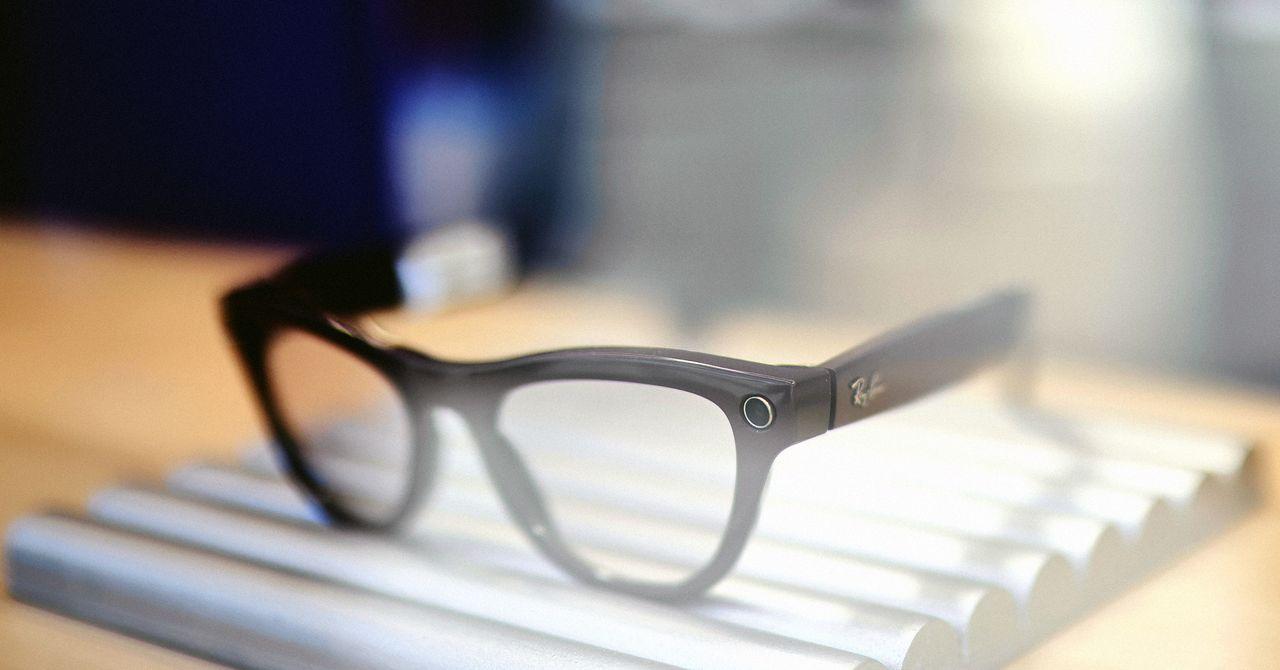
Two Harvard students, AnhPhu Nguyen and Caine Ardayfio, have created a system called I-XRAY that combines Meta's Ray-Ban smart glasses with facial recognition technology to instantly reveal personal information about strangers. This project has raised significant concerns about privacy and the potential misuse of wearable technology
1
2
3
.How I-XRAY Works
The I-XRAY system operates by:
- Streaming video from the smart glasses to Instagram
- Using AI to detect faces in the footage
- Employing facial recognition software like PimEyes to find matching images online
- Utilizing a large language model to scrape websites for additional information
- Searching public databases and people search websites for personal details
- Displaying the gathered information on a connected phone app
The entire process happens automatically and can reveal names, phone numbers, addresses, and even partial Social Security Numbers within minutes
2
3
4
.Privacy Implications
The demonstration by Nguyen and Ardayfio highlights several privacy concerns:
- Ease of doxxing: The system makes it simple to gather personal information about strangers without their knowledge or consent
1
2
. - Covert nature: Meta's smart glasses look like regular eyewear, making it difficult for bystanders to know they're being recorded
4
5
. - Weak privacy features: The LED indicator on the glasses can be easily covered, bypassing the primary privacy safeguard
1
. - Non-consensual data collection: Bystanders have not opted in to have their information gathered and processed
1
3
.
Intended Purpose and Availability
The students emphasize that their project aims to raise awareness about privacy risks rather than create a harmful tool. They do not plan to release the I-XRAY code publicly
3
5
.Protecting Personal Information
To mitigate the risks associated with such technology, the researchers suggest several steps:
- Remove your face from reverse image search engines like PimEyes and Facecheck.id
- Opt-out of people search websites such as FastPeopleSearch and CheckThem
- Enable two-factor authentication on your accounts
- Freeze your credit to prevent unauthorized access
3
4
Related Stories

Meta's Response and Privacy Policies
Meta has stated that their smart glasses are not designed for this type of use and pointed out that their terms of service prohibit such applications. The company also allows users to disable data sharing and remove activities through the Meta View partner app
4
5
.Broader Implications
This project reignites the debate about privacy in the age of wearable technology, echoing concerns raised a decade ago with Google Glass. It demonstrates how readily available technology can be combined to create powerful surveillance tools, potentially outpacing current privacy protections and regulations
1
3
5
.References
Summarized by

Navi
[3]
Related Stories
Ray-Ban Smart Glasses Face Privacy Backlash Over AI Training and Recording Without Consent
16 Mar 2026•Policy and Regulation
Meta plans facial recognition for smart glasses amid privacy uproar over political timing
13 Feb 2026•Technology

Meta smart glasses face lawsuit and UK probe after workers watched intimate user footage
03 Mar 2026•Policy and Regulation

Recent Highlights



Recent Highlights
Today's Top Stories






Don’t drown in AI news. We cut through the noise - filtering, ranking and summarizing the most important AI news, breakthroughs and research daily. Follow topics that matter to you and stay ahead.


