Ent Security raises $100M to bring AI-driven cybersecurity prevention back to the workplace


3 Sources
[1]
Ent Security raises $100M to bring prevention back to cyber
Ent, founded by the duo behind RiskIQ and Microsoft Security Copilot, has emerged from stealth with a $100M seed and a contrarian bet: that small AI models running on the device can finally make breach prevention work, in the era of AI-driven attacks and autonomous agents. For most of the past
[2]
RiskIQ founders launch Ent Security with $100M to rethink endpoint defense
RiskIQ founders launch Ent Security with $100M to rethink endpoint defense Intent-aware endpoint security startup Ent Security launched today with $100 million in funding to build what it calls a new layer of workspace security that reads the intent behind what users and artificial intelligence
[3]
Ent Gets $100 Million in Seed Funding for Workplace Security Company | PYMNTS.com
In announcing the financing Tuesday (June 16), Ent said its approach to cybersecurity is based on the belief that artificial intelligence (AI) "compresses the time between compromise and impact," which means "prevention must once again become the primary objective of security." The company says
Share
Copy Link
Founded by the RiskIQ duo behind Microsoft Security Copilot, Ent Security emerged from stealth with $100 million seed funding to challenge a decade of reactive cybersecurity. The startup uses small AI models running on devices to analyze intent and stop AI-powered attacks before they happen, marking one of the largest seed rounds in cybersecurity history.
Ent Security Challenges Decade-Long Industry Shift to Reactive Defense
Ent Security, founded by Elias Manousos and Brandon Dixon, emerged from stealth on June 16 with $100 million seed funding led by Decibel, marking one of the largest seed rounds in cybersecurity history
1
. The duo previously built RiskIQ, which Microsoft acquired in 2021 for more than $500 million, and later helped create Microsoft Security Copilot1
. Now they're making a contrarian bet against the very detection-focused model that has dominated the industry for over a decade, including at their former employer. Sequoia, Crosspoint Capital Partners, Craft Ventures, Shield Capital, Felicis, and In-Q-Tel, the CIA's venture arm, also participated in the round1
.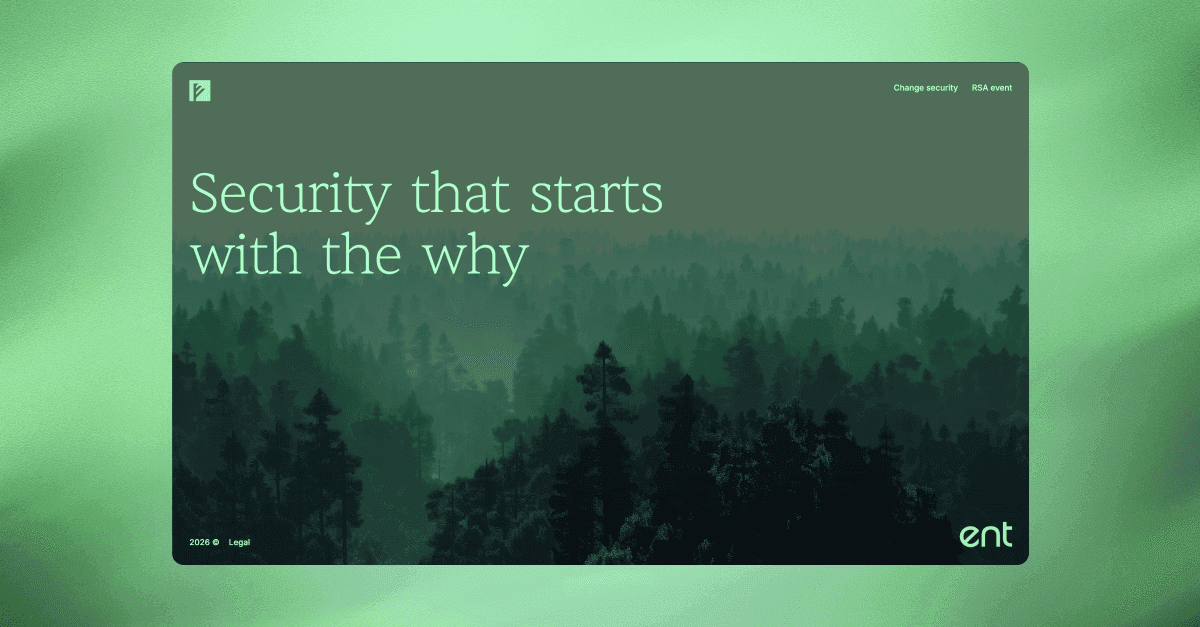
Source: SiliconANGLE
For most of the past decade, the security industry quietly abandoned prevention as breaches became inevitable. Money flowed into detecting and cleaning up incidents after they occurred. Ent Security argues that AI has fundamentally changed this calculus, making it possible to stop attacks before they materialize.
How Small AI Models Enable Proactive Threat Prevention
The industry's pivot to detection had practical roots. Traditional prevention required understanding threats in real time at the moment of decision, but heavy processing lived in the cloud. The round trip from device to cloud and back proved too slow, forcing tools like endpoint detection and response (EDR) to settle for spotting trouble after the fact
1
.Ent Security's platform leverages on-device inference to solve this latency problem. Small AI models now run locally on the endpoint, performing reasoning at the edge without requiring cloud round trips. The company claims decisions can be made in under a second, before an action completes—the critical difference between blocking an incident and documenting it
1
. Greg Clark, co-founder and managing partner at Crosspoint Capital Partners, emphasized that "the level of inference required to stop threats before they materialize must now live directly on the endpoint"1
.Workplace Security Moves Beyond Traditional EDR/XDR Tools
Ent Security positions itself between the traditional EDR market and the broader push to govern how employees and AI agents use enterprise systems
2
. The company argues that modern work doesn't happen at the layers EDR and XDR tools monitor. Instead, activity spreads across apps, browsers, chat tools, and AI assistants that people move through daily, alongside AI agents now acting on their behalf1
.The platform runs as a lightweight agent that brings AI reasoning directly to the device. It evaluates human and AI agent behavior at the moment of use, applies customer-defined policy, and acts through configurable, just-in-time interventions before incidents occur
2
. This "workspace security" control plane builds what the company calls a complete record of work, using real-time intent analysis to understand the purpose behind an action and intervene at the critical moment of decision1
.AI-Powered Attacks Drive Urgency for New Defense Models
The timing reflects mounting concerns about AI-driven cybersecurity threats. "AI is changing both how people work and how quickly attackers can act. What once took days now happens in seconds," said Elias Manousos, who serves as CEO
3
. The platform addresses scenarios like users handing remote control of their machines to outsiders or pasting sensitive data into unsanctioned AI tools—the same attack surface producing fresh incidents from AI agents leaking cloud keys to chatbots resetting passwords1
.Jon Sakoda, founding partner at Decibel, noted that "AI has been a killer app for hackers and offensive researchers, but the industry is waiting for a novel defensive solution that can keep up with the modern era of LLMs"
2
. The company believes AI compresses the time between compromise and impact, demanding that prevention become the primary security objective again3
.
Source: PYMNTS
Related Stories
Early Deployment with Global 2000 Customers Across Industries
Ent Security reports existing deployment with Global 2000 customers across hospitality, financial services, and defense sectors
1
. These organizations use the platform to flag insider risk, govern AI governance practices, and prevent data loss2
. An insider-threat lead at a public financial institution, quoted anonymously, called it "the first tool where I felt like an expert on day one"1
. This production traction, rather than mere demonstrations, justifies the exceptional $100 million seed funding size.The platform works on Windows, macOS, and Linux, with a browser extension included. Customers can choose between Ent-hosted deployment or keeping the system within their own cloud infrastructure
2
. The company plans to spend the funding on engineering and sales hiring while building out AI governance capabilities, threat prevention features, security integrations, and multimodal endpoint intelligence3
.High Stakes in a Crowded Market Against Industry Giants
Ent Security enters a market defended by CrowdStrike and Microsoft at a moment when appetite for AI security solutions runs high. The company has assembled advisers including former security chiefs at Google, Aetna, and Massachusetts Mutual Life Insurance Company, a former NSA director, and a former Microsoft executive who ran Azure cloud security
2
. The In-Q-Tel investment adds credibility, but the $100 million seed valuation sets demanding expectations.The approach faces inherent challenges. "Prevention is back" has evolved from contrarian positioning to an industry-wide pitch. A system intervening on inferred intent must maintain accuracy high enough to avoid blocking legitimate work and training staff to ignore alerts. The capability claims, including sub-second on-device inference, currently rely on company statements without independent benchmarks
1
. Whether prevention can finally outrun attacks rather than merely promise to remains the question this substantial funding aims to answer. As organizations grapple with identity fraud enabled by AI-generated credentials and deepfakes, the race between offensive and defensive AI capabilities intensifies across the cybersecurity landscape3
.References
Summarized by

Navi
[1]
Related Stories
Neo Exits Stealth With $100M to Build Security Control Layer for Agentic AI Software
20 Jul 2026•Startups
Cyata Emerges from Stealth with $8.5M Funding to Secure AI Agents in Enterprise Environments
30 Jul 2025•Technology

Onyx Security raises $40 million to secure AI agents as enterprises face new cybersecurity risks
12 Mar 2026•Technology

Recent Highlights



Recent Highlights
Today's Top Stories









Don’t drown in AI news. We cut through the noise - filtering, ranking and summarizing the most important AI news, breakthroughs and research daily. Follow topics that matter to you and stay ahead.


