Tim Sweeney Calls Steam AI Disclosure Policy 'Abhorrent' as Epic Pivots to AI-First Development


4 Sources
[1]
Steam Week in Review: AI disclosures enter the discourse again, as Epic CEO calls them 'just as partisan as mandatory political essays'
All the interesting Steam facts for the week ending October 25. Valve's mandatory AI disclosures are once again at the centre of the discourse, mostly thanks to Epic Games CEO Tim Sweeney, who has long been vocally against them. The debate has been reheated in the same month Epic Games proudly
[2]
Epic Games CEO Tim Sweeney can't stop going after Steam, calls its AI disclosure policy 'abhorrent'
Sweeney says Steam's AI labels encourage campaigns against developers, despite Valve requiring disclosure only for AI-generated content in shipped games. Epic Games CEO Tim Sweeney has again gone after Valve's AI disclosure policy on Steam, calling it "abhorrent" and a forced "political
[3]
Epic Boss Tim Sweeney Calls Steam's AI Declarations 'Political' And 'Abhorrent'
The CEO describes revealing the use of genAI slop as a forced 'political statement' The Tim Sweeney Stop Saying Stuff Challenge has been lost once again, as the Epic boss took to his X account over the weekend (thanks, IGN) to once again make clear his position that AI content disclosures on Steam
[4]
Epic Games Boss Tim Sweeney Doubles Down on Valve Criticism, Says Steam's AI Content Disclosure Is a 'Political Act'
Epic Games boss Tim Sweeney spent the weekend doubling down on his severe criticism of Valve, calling Steam's AI content disclosure a "political act." The controversial majority owner of Epic is all in on AI, having recently triggered a "huge pivot" of the company to retool it for "maximum AI
Share
Copy Link
Epic Games CEO Tim Sweeney intensified his criticism of Valve's Steam AI disclosure requirements, calling them 'abhorrent' and equating mandatory AI content declarations to forced political statements. The controversy erupted as Epic announced its own pivot to AI-first development for upcoming projects.
Epic Games CEO Escalates Attack on Steam's AI Transparency Requirements
Tim Sweeney, Epic Games CEO, launched a weekend-long social media offensive against Valve's Steam AI disclosure policy, calling it "abhorrent" and a forced "political statement."
1
2
The criticism intensified after AI creator Matt Workman posted that "the premise of an AI Generated Content Disclosure is ABSURD in 2026." Sweeney responded by claiming Valve is "forcing developers to write a political statement to be used against them by the hate mob they're helping organize."3

Source: PC Gamer
The Epic Games CEO went further, stating these AI disclosures are "just as partisan as mandatory political essays or forcing developers to list their voting history to drive cancel campaigns and public struggle sessions."
4
Sweeney argued there's "a real economic cost to Valve's foray into forced political disclosures," claiming that beyond Steam's 30% revenue cut, the platform is "taking a potentially even larger fraction of developers' revenue and livelihood by undermining their business with these AI hate campaigns."1
Understanding Valve's AI Content Disclosure Policy
Steam's AI disclosure policy requires developers to reveal AI use in content that ships with games and is consumed by players, including artwork, sound, narrative, and localization.
2
The policy explicitly excludes "efficiency gains" from AI tools, and Valve has reportedly relaxed requirements this year by dropping the mandate to mention AI used for code.2
These disclosures appear at the bottom of store pages in small text, alongside content warnings.3
Valve implemented this requirement due to uncertainty around the "legally murky" technology in game development. The company stated: "Today's changes are the result of us improving our understanding of the landscape and risks in this space, as well as talking to game developers using AI, and those building AI tools."
1
Valve committed to revisiting this decision as the legal picture develops and their understanding evolves.Epic's AI-First Strategy Creates Conflict of Interest
The timing of Sweeney's criticism coincides with Epic's aggressive push into AI in game development. This month, Epic Games announced a "huge pivot" to "maximum AI acceleration," with reports indicating the shift covers a forthcoming Disney shooter combining Star Wars and Marvel properties.
1
2
The company also launched a vibe-coded version of its Epic Games Store, claiming it runs faster than Steam, and announced an Unreal Engine vibe coding contest.1
Sweeney's stance appears contradictory given that Epic's own Fab tech requires AI use disclosures.
3
When confronted about this inconsistency, Sweeney struggled to explain the difference. David Goldfarb, founder of Metal Hellsinger developer The Outsiders, challenged Sweeney's position: "Customers have a right to know what they're buying. They still bought Arc Raiders, they will definitely buy games they want to buy, AI use or no."4
Related Stories

Scale and Market Context Behind the Controversy
The volume difference between platforms provides crucial context for understanding Valve's approach. In 2024, Steam released 18,433 games compared to Epic Games Store's 1,100 games.
1
Given Steam's massive scale and the "legally murky" environment surrounding generative AI, the disclosure requirement becomes more defensible as a risk management strategy for consumer transparency.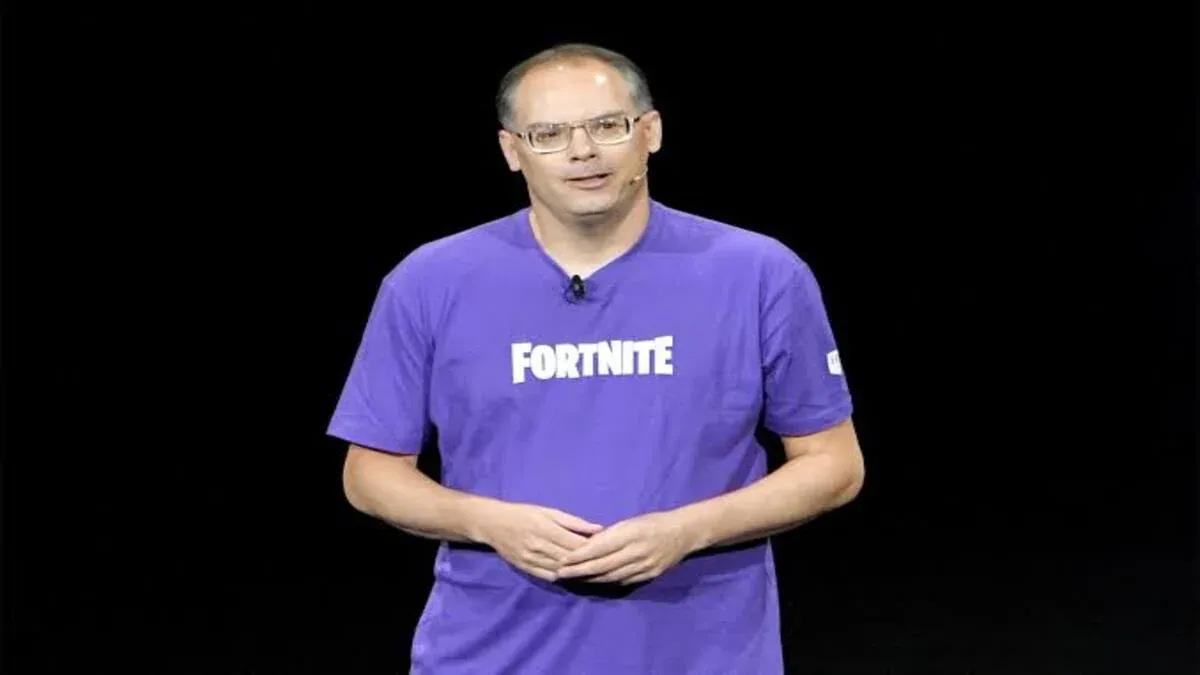
Source: TweakTown
Meanwhile, Steam continues dominating the gaming industry. Earlier this month, Steam broke its all-time concurrent user record again, with 43.5 million people logged in simultaneously.
2
4
The Epic Games Store, despite offering developer-friendly terms like taking no cut until a game sells $1 million and then only 12% compared to Valve's 30%, has failed to meaningfully challenge Steam's dominance.3
What This Means for Developers and Consumers
The debate highlights growing tensions around AI ethics and consumer transparency in the gaming industry. Sweeney claims developers face economic consequences from mandatory disclosures, yet the requirement provides consumers information to make informed purchasing decisions about AI-generated content. Watch how other platforms respond to this controversy and whether Valve adjusts its policy as AI in game development becomes more prevalent. The outcome could shape industry standards for AI transparency across digital storefronts, affecting how millions of gamers interact with AI-assisted games. As corporate politics intersect with technological advancement, expect continued friction between platforms prioritizing different stakeholder interests.
References
Summarized by

Navi
[2]
Related Stories
Tim Sweeney calls Valve's Steam AI disclosures irresponsible as Unreal Engine doubles down on AI
25 Jun 2026•Technology

Epic CEO Tim Sweeney Calls for Dropping AI Labels on Game Stores as Technology Becomes Ubiquitous
27 Nov 2025•Technology

Gaming Industry Divides Over AI: Indie Developers Push Back as Major Studios Embrace Generative Technology
19 Nov 2025•Entertainment and Society

Recent Highlights


Recent Highlights
Today's Top Stories









Don’t drown in AI news. We cut through the noise - filtering, ranking and summarizing the most important AI news, breakthroughs and research daily. Follow topics that matter to you and stay ahead.


