10 Sources
[1]
Epic Games details how it's embracing generative AI in Unreal Engine - Engadget
Just over half of game developers think gen AI is bad for the industry, according to a report published earlier this year. During The State of Unreal keynote at Unreal Fest on Wednesday, Epic Games revealed just how it's embracing generative AI in Unreal Engine (UE). Along with offering the first details on Unreal Engine 6 (UE6), the company discussed new features for Unreal Engine 5.8, which it also released on Wednesday. As part of the latest update, Epic is offering an experimental Model Context Protocol (MCP) plugin that will allow developers to hook gen AI models such as Claude and Gemini into Unreal Engine. It's looking to make the MCP an integral part of UE6. Marcus Wassmer, the head of Epic's development team, wrote in a blog post that the gen AI models can act as "creativity and productivity multipliers so that teams can focus their efforts on the essential creative and technical tasks of development rather than time on time-consuming manual tasks." The blog post went on to state that, "our goal for UE6 is to greatly reduce the tedious work in authoring content to leave more time for creative exploration, and increase the amount of iterations a team can make to polish their content. UE6 will ship with tools and workflows where you can choose to bring your own favorite models, battletested against internal development and in UEFN [Unreal Engine for Fortnite]." Epic gave a demonstration of Claude Code connecting to UE, then pulling objects from an asset library and placing them in a virtual living room. Developers can still move the objects around manually in the UE editor. The company also showed how a developer might use Claude Code in UE to build a city that can be automatically adjusted as assets like parks are added. Along with modifying assets, gen AI models can adjust factors like lighting and match atmospheric conditions to real-world examples. In a video showing off Unreal Engine 5.8, Epic suggested that developers could use the likes of Claude to "automate asset creation, testing and optimization. The plugin can access core UE systems such as blueprints, assets, levels, materials, meshes and many more." It shouldn't be too much of a surprise that Epic is going all in on gen AI in UE6. Back in November, CEO Tim Sweeney suggested that a "made with AI" tag may be "relevant to art exhibits for authorship disclosure, and to digital content licensing marketplaces where buyers need to understand the rights situation. It makes no sense for game stores, where AI will be involved in nearly all future production." In January, the Game Developers Conference published its 2026 State of the Game Industry report, which was based on a survey of more than 2,300 game industry workers. Of those, 36 percent said they were using gen AI tools as part of their job. Most of those using such tools were doing so for research and brainstorming (81 percent) but also for tasks like prototyping (35 percent). However, 52 percent of respondents said they thought gen AI was bad for the industry. That figure was up from 30 percent in the 2025 edition of the survey and 18 percent in 2024. Only seven percent said it was having a positive impact. Elsewhere at Unreal Fest, it emerged that Epic is merging Unreal Engine 5 and UEFN into a single platform in UE6. One other thing that the company is testing is the ability to pull Fortnite skins into other UE6 games, and to let developers move their skins in the other direction. The company aims to release UE6 in early access in late 2027, with a full release lined up for around 12-18 months later. Epic had some news to share about collaborations as well. Those creating Fortnite experiences using UEFN will soon be able to make games based on The Simpsons, just as they can currently do with Star Wars IP. The company also revealed that more than 30 gaming collaborations are lined up for Fortnite this year, including Sonic Racing: CrossWorlds, Vampire Survivors, Control Resonant and Phantom Blade Zero. However, Vampire Survivors developer Poncle appears to have concerns about Epic's embrace of gen AI. "Following today's news about gen AI usage by Epic to create all sort [sic] of game assets, including Fortnite characters, we're currently 'reviewing' our collaboration with Fortnite," Poncle stated on Reddit. "We'll let you know if anything moves forward."
[2]
Unreal Engine 6 AI: Epic builds in Claude and Gemini
The next Unreal Engine will let studios plug in Claude, Gemini or any model they like to do the 'tedious work' of building games. More than half of developers think that is a bad idea. Epic will let studios plug Claude, Gemini, or any model they like into the next Unreal Engine to do the 'tedious work' of building games. More than half of developers think that is a bad idea. Epic Games has laid out its plans for Unreal Engine 6, and generative AI sits right at the centre of them. At its State of Unreal keynote at Unreal Fest in Chicago on Wednesday, the Fortnite maker said UE6 will fold in integrations for models such as Anthropic's Claude and Google's Gemini, pitching them as 'creativity and productivity multipliers' for game studios. The idea is to hand the grunt work of game-making to a model, so teams can spend more time on creative decisions. It is the same logic that took Claude into design tools at Canva, now pointed at the software that builds games. What Epic is actually shipping UE6 rests on three pillars, according to Marcus Wassmer, the executive who leads Epic's development team. The first is a new gameplay programming model called Verse, a language Epic says should feel familiar to anyone who has used Python or C#. The second is making game content and code portable across different games and engines through open standards. The third is AI. Epic is exposing the engine through a Model Context Protocol (MCP) layer, the open standard that lets large language models connect to other software. That means studios can mix and match models rather than being locked into one. "UE6 will ship with tools and workflows where you can choose to bring your own favorite models," Wassmer wrote. A first version is already here. Unreal Engine 5.8, released on the same day, ships an experimental MCP plugin that connects any LLM to core engine systems, including blueprints, assets, levels, materials, and meshes. In a demo, Epic showed Claude Code pulling objects from an asset library to furnish a virtual apartment, then adjusting the lighting in a city scene to match a real-world reference photo. Developers can still move everything by hand afterwards. The real shift is who the engine depends on The obvious story is that AI has arrived in Unreal Engine. The more important one is that Epic is turning third-party models into a standing part of how games get made, inside the toolset a large slice of the industry runs on, from Fortnite to countless studios that license the engine. UE6 itself is a way off. Epic is targeting an early access release at the end of 2027, with a full launch 12 to 18 months after that. The new engine also unifies Epic's two development streams, the standalone UE5 and Unreal Editor for Fortnite, into a single product. One early proof point: Epic plans to let players carry their Fortnite outfits into other games built on UE6, and let developers build skins that work inside Fortnite. Half of developers think this is a mistake Epic is pushing AI into its engine at a moment when much of the industry is wary of it. In the Game Developers Conference's 2026 State of the Game Industry survey of more than 2,300 workers, 52 per cent said they thought generative AI was having a negative effect on the industry. That is up from 30 per cent in 2025 and 18 per cent in 2024. Just 7 per cent saw a positive impact. The unease is already showing. Poncle, the studio behind Vampire Survivors, said it was 'reviewing' its Fortnite collaboration following the gen-AI news. Epic, meanwhile, is cutting costs. It laid off more than 1,000 staff in March, as Fortnite engagement has softened against rivals like Roblox. Chief executive Tim Sweeney has made his stance clear. Last November he argued that a 'made with AI' tag "makes no sense for game stores, where AI will be involved in nearly all future production." With UE6, Epic is building that assumption directly into the tools. Whether the studios that depend on Unreal follow it there is the open question.
[3]
Unreal Engine's big new idea is letting gen-AI LLMs plug directly into it and talk to it
Epic Games has revealed a new tool for Unreal Engine 5.8 which allows generative AI large language models (LLMs) to plug into and communicate with the engine directly, using its tools while being directed by text prompts. This tool, called the Unreal MCP plugin, was revealed during the State of Unreal broadcast today, presented by senior director of Epic Games' Research & Development department, Michael Lentine. It is available to use right now by Unreal Engine developers. The first example we saw showed Unreal Engine running on one half of the screen with a Claude chat box on the right of the screen. A user then gave Claude instructions, allowing the LLM to generate and alter furniture in an empty room.. But Lentine was keen to stress during the presentation that you, the developer, will be in control. "Models are good at broad iterations," Lentine said, "You're good at knowing exactly what you want.". The presentation then moved to show the creation of a cityscape, built with a combination of manual work and AI generation. In a later example, which showed lighting being decided upon for this city, the user asked the LLM to make "overcast" skies. The model got this wrong, which was highlighted by Lentine. The presentation then showed the user's ability to correct this manually using the LLM chat box. Finally, the presentation showed a smaller scene where a hazard would occur as a player gets close in a city street environment. Lentine describes this as a scene that would "normally mean days of back-and-forth between multiple disciplines", before showing how this new tool could rectify the issue relatively quickly. "What we've shown here today would take months to build by hand, but with the MCP server and Unreal, our artists were able to make all of this in days," Lentine said. "When you lower the technical friction, you can iterate more and make better games." While this is a presentation, and not necessarily reflective of how the tool will actually work in the hands of developers, it does appear to be a method of blurring the lines between AI-generation in game development and hand-built projects. This reveal comes at a time where the lines are already plenty blurred. While pushback against generative AI use in game development remains fierce, many developers continue to use it to aid in development of modern titles. Only recently, Sega had to address the tech's use in the upcoming Crazy Taxi World Tour, describing it as a "support tool for developers".
[4]
Epic unveils Unreal Engine 6 with built-in generative AI integration
Just over half of game developers believe generative AI is detrimental to the industry, according to a report published earlier this year. During The State of Unreal keynote at Unreal Fest, Epic Games detailed its approach to generative AI in Unreal Engine (UE) and announced the release of Unreal Engine 5.8, which includes an experimental Model Context Protocol (MCP) plugin. This plugin will enable developers to integrate generative AI models such as Claude and Gemini into Unreal Engine and is expected to be a core component of Unreal Engine 6 (UE6). Marcus Wassmer, head of Epic's development team, stated that generative AI models can enhance creativity and productivity by reducing time spent on manual tasks. He mentioned in a blog post, "our goal for UE6 is to greatly reduce the tedious work in authoring content to leave more time for creative exploration." UE6 will allow developers to choose and implement their preferred models tested against internal development and Unreal Engine for Fortnite (UEFN). Epic demonstrated the integration of Claude Code with Unreal Engine during the keynote. This functionality allows the pulling of objects from an asset library into a virtual environment, while developers can still adjust object placements manually within the UE editor. A demonstration showcased how a developer might use Claude Code to build a city that adapts as new assets, such as parks, are added. The system can also adjust lighting and atmospheric conditions based on real-world examples. The MCP plugin is designed to automate asset creation, testing, and optimization by accessing core Unreal Engine systems such as blueprints, assets, levels, materials, and meshes. Tim Sweeney, Epic's CEO, indicated that a "made with AI" tag could become relevant for art exhibits and digital content licensing in future game productions. According to the Game Developers Conference's 2026 State of the Game Industry report, 36% of over 2,300 surveyed game industry workers reported using generative AI tools at work, with 52% expressing that it has a negative impact on the industry. This figure has increased from 30% in the 2025 report and 18% in 2024, while only 7% reported a positive effect. At Unreal Fest, Epic announced plans to merge Unreal Engine 5 and UEFN into a single platform in UE6. It is also testing the capability to transfer Fortnite skins to other UE6 games and vice versa. UE6 is slated for early access in late 2027, with a full release expected 12 to 18 months later. Epic also confirmed several upcoming collaborations, including the ability to create Fortnite experiences based on The Simpsons and over 30 gaming collaborations planned for the year, such as Sonic Racing: CrossWorlds and Vampire Survivors. However, Poncle, the developer of Vampire Survivors, expressed concerns regarding Epic's use of generative AI for asset creation, stating that they are currently reviewing their collaboration with Fortnite.
[5]
Epic Games pulls back the curtain on Unreal Engine 6, revealing exactly what everyone expected
Epic Games has recently wrapped up its State of Unreal 2026 livestream, where it pulled back the curtain on the upcoming Unreal Engine 6. Unreal Engine 6 was first teased during a recent Rocket League Champion Series, and in that announcement, Epic Games stated that Rocket League would be the first title to adopt the new version of Unreal Engine, which is quite a considerable jump, as Rocket League was built on Unreal Engine 3. Epic explained that it plans to merge Unreal Engine 5 and the Fortnite Unreal Editor to create Unreal Engine 6, and that this update will include integrating popular AI models, such as Anthropic's Claude and Google's Gemini. "Our goal for UE6 is to greatly reduce the tedious work in authoring content to leave more time for creative exploration, and increase the amount of iterations a team can make to polish their content. UE6 will ship with tools and workflows where you can choose to bring your own favorite models, battle-tested against internal development and in UEFN," said Epic Games in a statement to VideoGamesChronicle The idea behind integrating these AI models is to multiply developers' creativity, as Epic believes teams will now be able to "focus their efforts on the essential creative and technical tasks of development rather than time on time-consuming manual tasks". Epic even went on to provide examples of how developers can increase their output by offloading trivial tasks to AI models, stating that AI models can handle "setup of levels, character rigs, particle systems, skinning bone weights, as well as adjusting lighting". Unreal Engine 6 debuting with AI integration isn't surprising at all, and in fact, I would have been more shocked if Epic Games didn't include support for AI models, especially considering the explosion in popularity of specific AI models such as Anthropic's Claude Code.
[6]
The Next Version Of Unreal Engine Is Going To Be Filled With GenAI Tools
After teasing it last month, Epic has announced that the next version of Unreal Engine will continue the company's publicly derided efforts to shove AI-powered tools and features into more of its offerings. On June 17, Epic posted a long message from engine development lead Marcus Wassmer about Unreal Engine 6, the next version of the company's popular game development engine. Previous versions of it have powered games like Gears of War, Ark, Batman: Arkham Asylum, and, of course, Epic's own Fortnite. With Unreal Engine 6, Epic is unifying Unreal Engine 5 and its Fortnite editor, which is powered by Unreal, into one singular, advanced engine that will also be filled to the brim with AI shit. "For UE6, we see LLMs, generative AI models, and tools like Claude and Codex playing a central role in helping you build content faster while maintaining the creative control you need," said Wassmer in his blog post on the Unreal website. "A big part of our effort is going into exposing a broad set of engine capabilities through the MCP protocol, so that developers can mix and match the best leading-edge models and build custom integrations of all sorts on an open Unreal Engine 6 MCP foundation. We are also improving the Epic Developer Assistant (EDA) as an optional turnkey solution, available to all by default." "Our goal for UE6 is to greatly reduce the tedious work in authoring content to leave more time for creative exploration, and increase the number of iterations a team can make to polish their content. UE6 will ship with tools and workflows where you can choose to bring your own favorite models, battletested against internal development and in UEFN." Epic recently teased that Rocket League will be updated to run on Unreal Engine 6, the first real confirmation from the company that the engine was coming. In today's blog post, Wassmer confirmed a late 2027 release date for UE6. Wassmer claims that internally at Epic, the company has been doing a lot of investigation into using AI to generate code and confirmed that recently, Epic "opened up pretty broad usage for code generation and AI analysis across our backend, engine, and game development engineering teams." That sounds like Fortnite and possibly games like Rocket League are now using AI-generated code in some capacity. Toward the end of the blog post, seemingly in a bid to assure people that Epic doesn't want all of these AI tools to replace people and lead to further layoffs in the industry, Wassmer concludes by saying: "UE6 is going to change a lot about how games are made. It will not change the thing that matters most, which is that the people in this industry -- the game developers, the filmmakers, our Unreal Engine family -- are the ones who make anything actually happen." Of course, it's hard not to look at Unreal Engine 6 adding even more ways to streamline game development using tools that regularly hallucinate, steal, and get stuff wrong as anything other than a way to make teams more efficient, which in CEO speak means fewer people doing more work for about the same amount of money. I'm not convinced adding more genAI into Unreal Engine will do anything but lead to more layoffs. And the artists and devs who remain will get to spend hours of their day cleaning up AI's mistakes, as seen in Epic's recent Fortnite development video. The future sounds fast, messy, and terrible.
[7]
Unreal Engine 6 Comes With Claude, Gemini Models to Speed Up Game Development
Epic Games detailed the next iteration of its Unreal Engine and confirmed a major update for Unreal Engine 5 at the Unreal Fest conference on Wednesday. The Fortnite maker said that Unreal Engine 6, which was teased at Rocket League Championship Series last month, would integrate popular generative AI models like Claude and Gemini to help developers build game content faster and reduce "tedious work." The announcements came at the State of the Unreal keynote at Unreal Fest on Wednesday, where Epic formally unveiled Unreal Engine 6, detailing its key features and. The company said that UE6 would unify UE5 and Unreal Editor for Fortnite into a single product, allowing developers to build and deploy to traditional platforms, Fortnite, or their own live and potentially multi-product ecosystems. Epic detailed three key initiatives of Unreal Engine 6 at the keynote, most notable of which was the integration of Large Language Models (LLMs) like Claude, Gemini, and others. The AI models in UE6 will help developers focus on essential creative and technical tasks instead of time-consuming manual tasks, Epic said. The company said that the generative AI models will play a "central role" in helping developers build content faster while maintaining creative control and reducing the "tedious work." Additionally, UE6 will include a new gameplay framework known as Scene Graph, built on Verse, the company's next-generation programming model. Finally, UE6 will allow content and code to be portable across games and engines. This interoperability means that assets such as Fortnite cosmetics can be shared between games built on the engine. "UE6 will keep doing the things you want Unreal Engine to do. Rendering will keep getting better. Cook times will come down. Iteration loops will get tighter. Mobile is increasingly capable," Epic said in a blog post. Unreal Engine 6 is targeting Early Access release at the end of 2027, with the full release of UE6 coming 12-18 months later. Unreal Engine 5.8 Now Available At the State of Epic event, Epic Games also confirmed the release of Unreal Engine 5.8 major update, which brings a performance boost, faster in-engine character and animation creation tools, and a range of improvements that streamline game development workflows. The latest update to the engine introduces Mesh Terrain, a new 3D-mesh-based system for designing larger, more complex terrains, Epic said. Other new features in Unreal Engine 5.8 include improved virtual production, high-fidelity full-body performance capture, accelerated content creation with integrated LLM workflows, and more. Additionally, real-time rendering and lighting enhancements mean that games that rely on global illumination can run on Nintendo Switch 2 at 60 fps, Epic said. This means we're likely to see better performance from games built on Unreal Engine on the Switch 2. UE 5.8 is the last planned major Unreal Engine 5 release as Epic moves to ramp up work on UE6, the company confirmed. "We will continue to support UE5 for bug fixes and regressions and may add another official release if circumstances warrant it," Epic said.
[8]
Epic reveals AI-integrated Unreal Engine 6, will "change a lot about how games are made"
AI integration at the forefront of gaming's biggest engine might raise more than a few eyebrows, but Epic promises that human creations will still be at the heart of UE's games. After a brief tease showing Rocket League running using the engine, we now have a more official reveal of Unreal Engine 6. Capturing the AI-centric zeitgeist, the new iteration of Epic Games' Unreal Engine will be integrated with AI at a core level, as the company hopes to remove a lot of the "tedious work" we see with games. "For UE6, we see LLMs, generative AI models, and tools like Claude and Codex playing a central role in helping you build content faster while maintaining the creative control you need...Our goal for UE6 is to greatly reduce the tedious work in authoring content to leave more time for creative exploration, and increase the amount of iterations a team can make to polish their content. UE6 will ship with tools and workflows where you can choose to bring your own favourite models, battletested against internal development and in UEFN," Epic explains in a post announcing Unreal Engine 6. For anyone concerned that having AI models and LLMs integrated into the core of Unreal Engine 6 is going to take away the human touch in gaming, Epic writes that while this new Unreal Engine will change a lot about game creation, it won't change who makes our games. "UE6 is going to change a lot about how games are made. It will not change the thing that matters most, which is that the people in this industry -- the game developers, the filmmakers, our Unreal Engine family -- are the ones who make anything actually happen," Epic writes. For now, there's still a lot of work to do over on Epic's side. There are no plans to release Unreal Engine 6 until late 2027, when it'll be put out in Early Access. From there, it's got another 12-18 months of work before it'll get a wider release. A lot can change between now and then.
[9]
Epic Games Integrates Claude and Gemini into Unreal Engine 6, but Insists the Editor Is Still in Developers' Hands
During the State of Unreal 2026 presentation, streamed live from Chicago's Unreal Fest, Epic Games announced the launch of Unreal Engine 5.8 and also talked in depth about the upcoming Unreal Engine 6, first teased last month during the Rocket League Championship Series 2026 in Paris. Founder, CEO, and majority shareholder Tim Sweeney took the stage to explain that UE6 is about evolving how games are shipped and operated, not just improving rendering or world-building: The vision is that if you build things once in Unreal Engine 6, then you can have a game you can ship everywhere, including the console stores, PC stores, mobile stores, and ship live with the Fortnite ecosystem or any other UE6 game built by any other developer. So, UE6 is the unification of UE5 and Unreal Editor for Fortnite into a single engine, but that's just the tip of the iceberg. The new engine is powered by Verse, the new programming language designed for massive persistent worlds where global state and transactional concurrency are handled by the runtime. Verse's transactional system can roll back and resimulate work, and Epic wants to scale this into a distributed system across multiple servers. That means developers could write game logic in a simpler, single-machine style while the engine handles distribution behind the scenes. Scene Graph is Epic's new gameplay framework for UE6, built from scratch on Verse. It is meant to be a modern, high-level structure for creating games and experiences more easily, while also making interoperable components reusable across different games. In other words, it is not just a replacement layer for old gameplay code; it is part of the engine's new foundation. Another key theme during the presentation was portability. Epic says UE6 will push beyond basic extensibility into open specifications for interoperability, including support for formats like glTF and USD where they fit. Fortnite cosmetics will be the first major proof point, with the ability to use Fortnite outfits in other games and build compatible outfits for Fortnite itself. The idea is to create shared value for players and a shared economy for "smart assets" that can work across games. However, arguably the most talked-about segment will be the one dedicated to integrating LLMs into Unreal Engine 6. Using an MCP (Model Context Protocol) plugin, Epic exposes a broad set of engine capabilities to the model of choice, whether that is Claude, Gemini, or a custom model. This is an optional workflow layer inside Unreal that lets a model help build content while the developers stay in control. The model is not replacing the editor; it operates through it, with Unreal still serving as the place where everything remains editable. Developers start with a prompt or task, and the model then uses MCP to inspect the scene and act on it. In the demo, Epic showed how to add furniture to a room, extend that into a city, place roads and buildings, and then iterate on lighting, materials, and effects. Semantic search helps retrieve relevant assets from the asset library, so the model can find a sofa, lamp, chair, or city asset that matches the developer's request. Creators can then jump in and adjust any part manually, which is the whole point: broad automation from the model, precise control from the developer. On the UE6 blog post, Epic wrote: Thus, for UE6, we see LLMs, generative AI models, and tools like Claude and Codex playing a central role in helping you build content faster while maintaining the creative control you need. Our goal for UE6 is to greatly reduce the tedious work in authoring content to leave more time for creative exploration, and increase the amount of iterations a team can make to polish their content. The AI side is meant to plug into content creation, not sit beside it as a separate tool. For game teams, that means the model can help with level assembly, character setup, code assistance, crash analysis, and test generation. For film and media teams, it can also eventually drive image and video workflows: build a styleframe, restyle a viewport, generate video from a shot, or use scene data to guide image models. The same foundation supports all of that because MCP gives the model access to Unreal's scene, assets, and workflows. LLMs aren't great at thinking spatially, but Epic has already accounted for that by providing over 80 foundational Procedural Content Generation building blocks, a library of examples, and Skills that encode specific Unreal workflows, giving the model a safe, reusable way to assemble the result. Critically, everything remains under the developers' control, so it's up to them how much help they want or need from LLMs. By the way, while Epic talked a lot about using LLMs with UE6, the MCP server, the PCG Primitive Plugin, and the Skills they developed have actually shipped today as part of 5.8. Epic also stressed that they do not want a hard break from UE5. UE5 and UEFN will merge into one editor, and current projects should have a manageable path forward. Epic says Actors and Blueprints will remain in early UE6 versions, with conversion tools provided later once the new framework is mature enough. The target is UE6 Early Access at the end of 2027, followed by the full release 12 to 18 months later, so between late 2028 and, more likely, 2029. Meanwhile, Epic does not currently plan to release an Unreal Engine 5.9, but they said they are open to doing so if the need arises. Follow Wccftech on Google to get more of our news coverage in your feeds.
[10]
Epic is rebuilding Unreal Engine from the ground up: Here's everything that's changing with UE6
Unreal Engine has been the backbone of Fortnite, Borderlands, Black Myth: Wukong and many other games so whenever Epic announces an update for it, it is usually something worth taking a look at. Today Epic spoke not just about the latest update to UE5 but also had an entire post focusing on the direction they are taking for UE6 and I think it would be fair to say that they are mixing things up with this one for sure. Also read: Not just design: Marvell's Navin Bishnoi on next chapter of Indian semicon and AI datacentre story UE6 is not going to be just an incremental upgrade - it is the merging of two engines that have been running parallely for years. UE5 and Unreal Editor for Fortnite (UEFN), which Epic has been battle-testing inside one of the most-played games on the planet, are being brought together into a single unified product. If you have been following UEFN at all, you already have a preview of where UE6 is headed. The biggest shift is in how games are actually programmed. Epic is ditching the existing C++ Actor framework as the primary programming model and replacing it with something called Scene Graph, built entirely on a new language called Verse. Before you panic, Verse is designed to feel familiar to anyone who has worked with Python or C#, but it does something that no mainstream game engine language really does today: every function runs as an atomic transaction. What that means in practice is that game logic can be rolled back and resimulated automatically when something goes wrong, which becomes incredibly powerful when you start scaling up to massive multiplayer worlds. Epic also wants to eventually distribute Verse code across multiple servers automatically, so a developer could write their game as if it runs on a single machine while the engine handles the server-side complexity in the background. Save states, which have traditionally required separate database infrastructure, would become as simple as declaring a global variable. Also read: AI is beating human doctors in two key areas, and it's a good thing On top of the programming overhaul, Epic is pushing hard on content portability. The goal is for assets, logic and even in-game economies to work across different games and engines using open standards. Fortnite cosmetics are the first test case, with Epic planning to let players use their entitled Fortnite outfits in third-party games and vice versa. It sounds like a Fortnite feature but Epic is framing it as a proof of concept for a much larger idea: a shared economy of smart assets that travel with players across an interconnected ecosystem of games. The third pillar is AI integration, with Epic exposing engine capabilities through the MCP protocol so developers can plug in models like Claude or Codex directly into their workflow. The targets are the tedious parts of game development: rigging, skinning, lighting setup, level population -- the stuff that eats time without necessarily requiring a lot of creative judgment. UE6 Early Access is targeted for the end of 2027. Actors and Blueprints will still be present in early versions to ease the transition, but make no mistake, Epic is not just updating the engine. They are rethinking what a game engine is supposed to be.
Share
Copy Link
Epic Games unveiled its vision for Unreal Engine 6 at Unreal Fest, placing generative AI at the core with integrations for Claude and Gemini models. The company aims to automate tedious game development tasks, but faces pushback as 52% of developers view AI negatively for the industry—up from just 18% in 2024.
Epic Games has positioned generative AI as a central pillar of Unreal Engine 6, announcing during its State of Unreal keynote at Unreal Fest in Chicago that the next iteration will integrate models like Claude and Gemini AI models directly into the development workflow
1
2
. The move represents a significant shift in how one of the industry's most widely-used game engines approaches content authoring and workflow efficiency. Marcus Wassmer, head of Epic's development team, described the AI integration in game development as "creativity and productivity multipliers" designed to free teams from time-consuming manual tasks1
.
Source: Gadgets 360
The technical foundation for this shift arrives with Unreal Engine 5.8, released simultaneously with the announcement, which includes an experimental Model Context Protocol (MCP) plugin
1
. This plugin allows developers to connect large language models to core Unreal Engine systems including blueprints, assets, levels, materials, and meshes3
. The Model Context Protocol layer uses open standards, meaning studios can mix and match models rather than being locked into a single provider2
. During demonstrations, Epic showed Claude Code pulling objects from an asset library to furnish a virtual apartment, then adjusting lighting in a city scene to match real-world reference photos2
. Michael Lentine, senior director of Epic's Research & Development department, emphasized that developers remain in control, noting that "models are good at broad iterations" while developers excel at "knowing exactly what you want"3
.
Source: Engadget
Epic's vision centers on using AI to handle what Wassmer called "tedious work in authoring content to leave more time for creative exploration"
4
. The company demonstrated how developers might use these tools to build cities that automatically adjust as new assets like parks are added, with the system capable of modifying lighting and matching atmospheric conditions to real-world examples1
. Epic suggests the MCP plugin can automate asset creation, testing, and optimization across multiple systems1
. In one demonstration, Lentine showed a hazard scenario that would "normally mean days of back-and-forth between multiple disciplines" being resolved relatively quickly using the new tools3
. He claimed that "what we've shown here today would take months to build by hand, but with the MCP server and Unreal, our artists were able to make all of this in days"3
.Epic's embrace of generative AI comes at a moment when developer sentiment has shifted sharply against the technology. According to the Game Developers Conference's 2026 State of the Game Industry report surveying more than 2,300 game industry workers, 52% said they thought generative AI was having a negative effect on the industry
1
2
. That figure represents a dramatic increase from 30% in the 2025 edition and just 18% in 2024, while only 7% saw a positive impact1
. Despite this skepticism, 36% of respondents reported already using generative AI tools as part of their job, primarily for research and brainstorming (81%) and prototyping (35%)1
.Related Stories
The announcement triggered swift pushback from at least one Epic collaborator. Poncle, the studio behind Vampire Survivors, stated on Reddit that it was "reviewing" its Fortnite collaboration following the generative AI news
1
4
. The developer specifically cited concerns about Epic's use of generative AI to create game assets, including Fortnite characters1
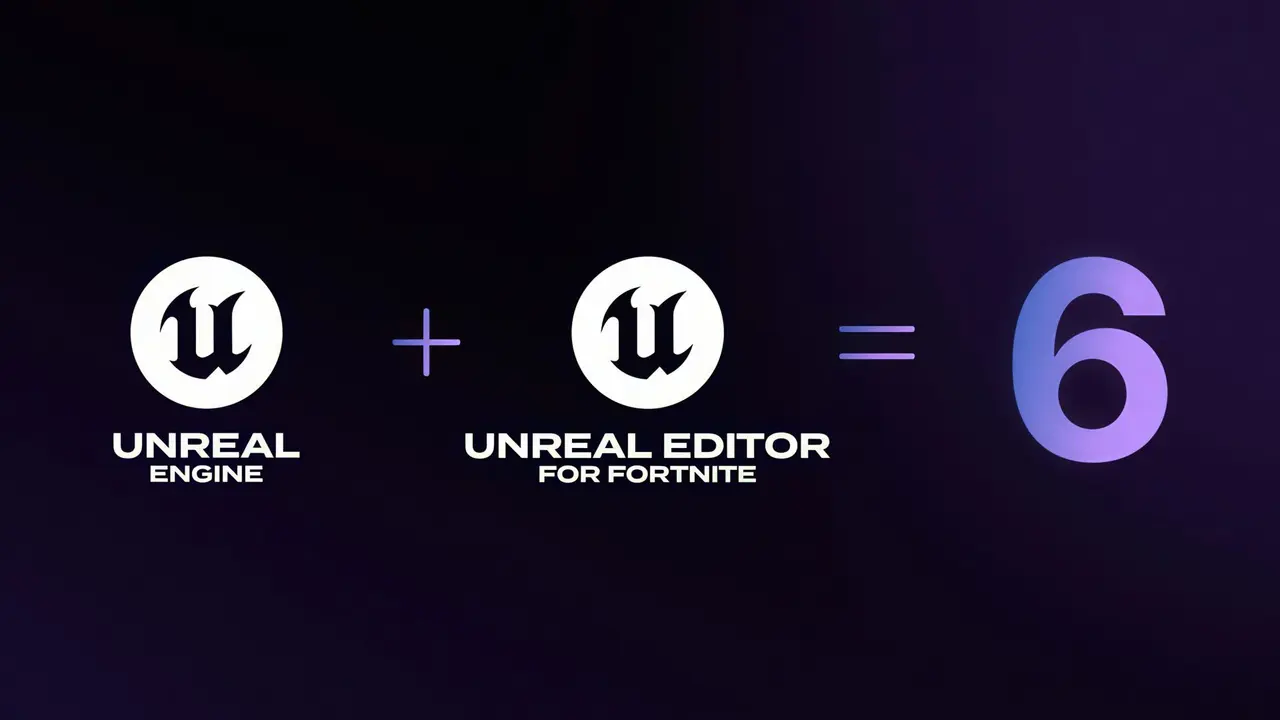
. This reaction highlights the tension between Epic's technical direction and the values of some studios working within its ecosystem.Beyond AI integration, Unreal Engine 6 will merge Unreal Engine 5 and the Unreal Editor for Fortnite (UEFN) into a single platform
1
5
. Epic is testing functionality to let players carry Fortnite skins into other UE6 games, and allow developers to build skins that work inside Fortnite1
. The company targets early access release in late 2027, with full release expected 12 to 18 months later1
4
. UE6 will also introduce Verse, a new gameplay programming model designed to feel familiar to developers who use Python or C#2
. CEO Tim Sweeney has made Epic's position clear, arguing last November that a "made with AI" tag "makes no sense for game stores, where AI will be involved in nearly all future game production"1
2
. With UE6, Epic is building that assumption directly into the tools that power a significant portion of the gaming industry.
Source: Wccftech
Summarized by
Navi
[2]
[3]
04 Jun 2025•Technology

20 Mar 2025•Technology

17 Feb 2026•Technology

1
Policy and Regulation

2
Business and Economy

3
Policy and Regulation