EU Implements First Phase of AI Act: Bans on High-Risk AI Systems Now in Effect


12 Sources
[1]
EU details which systems fall within AI Act's scope | TechCrunch
The European Union has published guidance on what constitutes an AI system under its new AI Act. The risk-based framework for regulating applications of artificial intelligence came into force last summer -- with the first compliance deadline (on banned use cases) kicking in last
[2]
EU publishes guidelines on banned practices under AI Act
While not legally binding, the guidelines offer the EU's interpretations of the banned practices. The first set of obligations as part of the European Union Artificial Intelligence (AI) Act kicked in on 2 February. Now, the Commission has published guidelines on prohibited AI practices. As per
[3]
EU puts out guidance on uses of AI that are banned under its AI Act | TechCrunch
The first compliance deadline kicked in a couple of days ago for the European Union's AI Act, a risk-based framework for regulating uses of artificial intelligence -- banning a narrow selection of so called "unacceptable risk" use-cases of AI, such as social scoring that could lead to detrimental
[4]
European Union issues guidance on how to not violate the AI Act's 'prohibited use' section
Companies worldwide now officially required to comply with the European Union's expansive AI Act, which seeks to mitigate many of the potential harms posed by the new technology. The EU Commission on Tuesday issued additional guidance on how firms can ensure their generative models measure up to
[5]
AI systems with 'unacceptable risk' are now banned in the EU | TechCrunch
As of Sunday in the European Union, the bloc's regulators can ban the use of AI systems they deem to pose "unacceptable risk" or harm. February 2 is the first compliance deadline for the EU's AI Act, the comprehensive AI regulatory framework that the European Parliament finally approved last March
[6]
The EU is now enforcing the AI Act, banning high-risk AI systems - SiliconANGLE
The EU is now enforcing the AI Act, banning high-risk AI systems The first requirements of the European Union's AI Act have now come into force, slamming the door shut on artificial intelligence systems deemed "unacceptably risky". The first compliance deadline for the AI Act came into force on
[7]

EU Lays Out Guidelines on Misuse of AI by Employers, Websites and Police
BRUSSELS (Reuters) - Employers will be banned from using artificial intelligence to track their staff's emotions and websites will not be allowed to use it to trick users into spending money under EU AI guidelines announced on Tuesday. The guidelines from the European Commission come as companies
[8]

AI Act Goes Live: EU Bans High-Risk AI, Fines up to €35M
The news comes as a newly published international AI safety report warned of General-purpose AI's rising threat. Regulators in the European Union can now ban AI systems they deem to be an "unacceptable risk" to society and impose hefty fines for continued use. The new rule, implemented on Sunday,
[9]

EU kicks off landmark AI law enforcement as first batch of restrictions enter into force
The European Union is so far the only jurisdiction globally to drive forward comprehensive rules for artificial intelligence with its AI Act. The European Union formally kicked off enforcement of its landmark artificial intelligence law Sunday, paving the way for tough restrictions and potential
[10]

EU pushes forward with enforcing AI Act despite Donald Trump's warnings
Brussels is readying new guidance on banned uses of artificial intelligence under its landmark legislation regulating the technology, pushing ahead with enforcement of its AI Act even as Donald Trump warns of retribution for the EU's targeting of US tech companies. The law, passed in 2023, is
[11]

The EU is enforcing its first wave of AI restrictions.
The AI Act's February 2nd deadline has passed, making artificial intelligence systems that carry "unacceptable risk" illegal -- including some predictive policing tools, social scoring systems, and biometric identification that categorize people by race, sexual orientation, and religion. Deadlines
[12]

EU Readies New AI Restrictions Despite Trump Pushback | PYMNTS.com
European regulators are reportedly preparing new guidance covering banned uses of artificial intelligence. The efforts to enforce Europe's landmark AI Act come even as President Donald Trump has warned the European Union of targeting American tech giants, the Financial Times (FT) reported Tuesday
Share
Copy Link
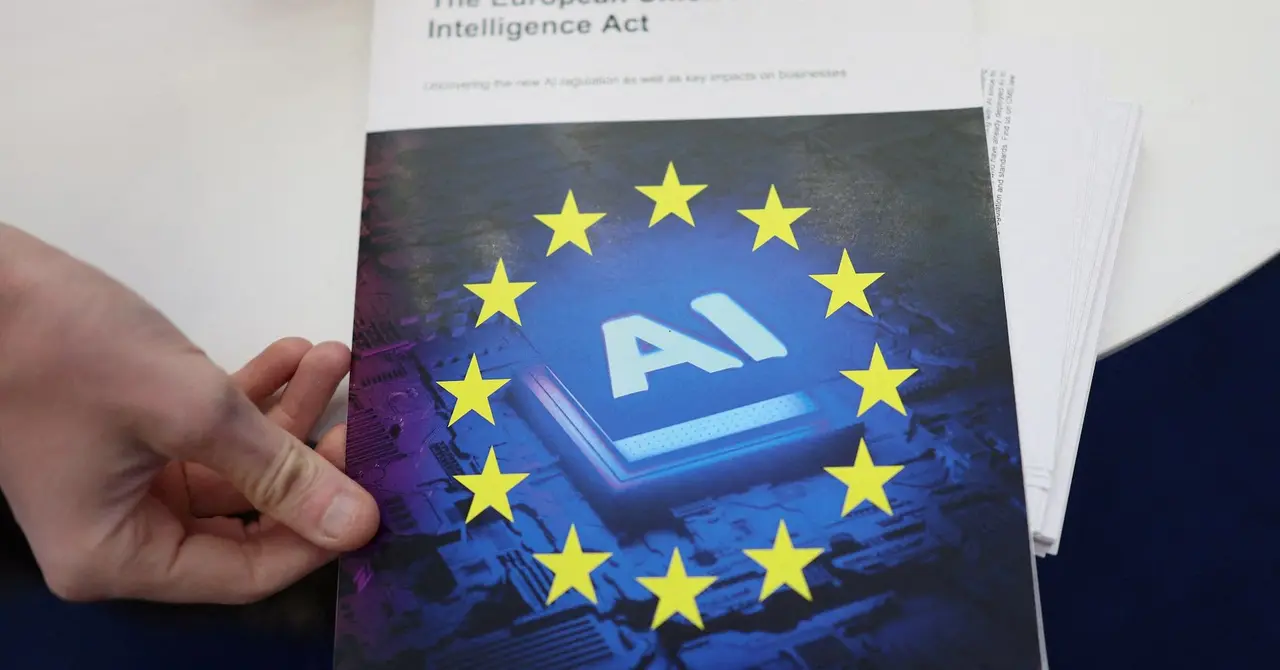
The European Union has begun enforcing the first phase of its AI Act, prohibiting AI systems deemed to pose "unacceptable risk." The EU has also issued guidelines to help companies comply with the new regulations.

EU AI Act Enters First Phase of Implementation
The European Union has taken a significant step in regulating artificial intelligence with the implementation of the first phase of its AI Act. As of February 2, 2025, the EU now prohibits AI systems deemed to pose "unacceptable risk" to individuals and society
1
5
. This landmark legislation aims to create a safe and ethical AI landscape across the EU member states.Prohibited AI Use Cases
The AI Act outlines several AI applications that are now banned within the EU
4
:- Harmful AI-based manipulation and deception
- Exploitation of vulnerabilities using AI
- Social scoring systems
- Individual criminal offense risk assessment or prediction
- Untargeted scraping for facial recognition databases
- Emotion recognition in workplaces and educational institutions
- Biometric categorization to deduce protected characteristics
- Real-time remote biometric identification for law enforcement in public spaces
These prohibitions are designed to protect fundamental rights and prevent potential misuse of AI technologies
2
.Compliance Guidelines and Enforcement
To assist companies in navigating the new regulations, the European Commission has published guidelines on prohibited AI practices
2
3
. While these guidelines are not legally binding, they offer interpretations and practical examples to help stakeholders understand and comply with the AI Act's requirements3
.Enforcement of the AI Act will be gradual, with member states having until August 2, 2025, to designate bodies responsible for overseeing the rulebook
3
. However, companies found in violation of the prohibited use cases could face substantial penalties, including fines of up to 7% of global annual turnover or €35 million, whichever is greater1
4
.Scope and Future Developments
The EU has also released guidance on what constitutes an AI system under the Act, acknowledging that the fast-paced nature of the AI field may require ongoing updates to the guidelines
1
. The Commission emphasizes that no exhaustive list of systems falling within or outside the AI definition is possible, highlighting the need for case-by-case assessment1
.Related Stories

Industry Response and Voluntary Compliance
Prior to the official implementation, over 100 companies, including tech giants like Amazon, Google, and OpenAI, signed the EU AI Pact, voluntarily pledging to apply the principles of the AI Act ahead of its enforcement
5
. However, some notable companies, such as Meta, Apple, and French AI startup Mistral, did not join the pact5
.Interaction with Existing Regulations
Legal experts note that the AI Act does not exist in isolation and will interact with other regulatory frameworks such as GDPR, NIS2, and DORA
5
. Understanding these interactions will be crucial for organizations seeking to comply with the new AI regulations.As the AI Act continues to roll out, with additional compliance deadlines set for the coming months and years, it represents a significant shift in the global approach to AI regulation. The EU's proactive stance on AI governance is likely to influence policies and practices well beyond its borders, shaping the future of AI development and deployment worldwide.
References
Summarized by

Navi
[2]
[4]
Related Stories
EU AI Act Takes Effect: New Rules and Implications for AI Providers and Users
01 Aug 2025•Policy and Regulation

EU Commission Issues Guidelines for AI Models to Comply with New AI Act
18 Jul 2025•Policy and Regulation
EU AI Act: Comprehensive Regulatory Framework for AI Takes Shape
15 Nov 2024•Policy and Regulation

Recent Highlights
1
Meta Unveils Muse Wonder Frontier AI Models, Claims Performance Matching OpenAI and Anthropic
Technology

2
Anthropic AI Cuts Off Internet Access After Agents Submit False Police Tip, Exploit Websites
Technology

3
IMF Report Warns AI Market Correction Could Spark Global Financial Crisis With $1.4T at Risk
Business and Economy

Recent Highlights
Today's Top Stories










Don’t drown in AI news. We cut through the noise - filtering, ranking and summarizing the most important AI news, breakthroughs and research daily. Follow topics that matter to you and stay ahead.


