Ex-Programmer's Viral Speech Halts AI Data Center Expansion in Ohio Over Resource Consumption


3 Sources
[1]
'We're draining reservoirs so a chatbot can write a poem' -- he fed the AI that ate his job, now he's saving his town from the AI bubble with this viral speech
"We are being asked to fund a 21st century luxury with a 19th century resource heist" We've spent the last two years talking about whether AI will take our jobs. But maybe we should've been asking if it's going to take our water and power. In a viral speech that just ground a massive Ohio tech
[2]
An ex-programmer's devastating take on AI data centers is going viral -- and it's hard to ignore
A local planning meeting speech is going viral for exposing the real cost of AI infrastructure * A former programmer's anti-data-center speech is going viral because it cuts through AI hype and focuses on local costs * Ohio has become a hotspot for backlash over data centers, with concerns over
[3]
Man at City Council Meeting Makes Devastating Case Against Proposed Local Data Center
Can't-miss innovations from the bleeding edge of science and tech The growing anger over the AI industry's obsession with building massive and resource-intensive data centers across the country is as palpable than ever. A recent survey by the Pew Research Center highlighted widespread public
Share
Copy Link
Will Hollingsworth, a former programmer who trained AI models that replaced him, delivered a powerful speech at a Ravenna, Ohio city council meeting that led to a one-year moratorium on data center construction. His argument highlighted how AI data centers consume 5 million gallons of water daily while creating fewer than 50 jobs, raising questions about whether communities are sacrificing too much for AI infrastructure.
Former AI Worker Challenges Data Center Expansion
Will Hollingsworth stood before a packed city council meeting in Ravenna, Ohio, armed with insider knowledge and a stark message: the AI infrastructure boom is draining local resources for dubious returns. The former programmer and digital artist, who once used Midjourney to create commercial content before being laid off three months later, told nearly 100 assembled residents that he had "trained the very machine that would eventually replace me."
1
Now, he's turned his technical expertise against the industry, and his four-minute viral speech has become a rallying cry for communities nationwide facing similar pressures.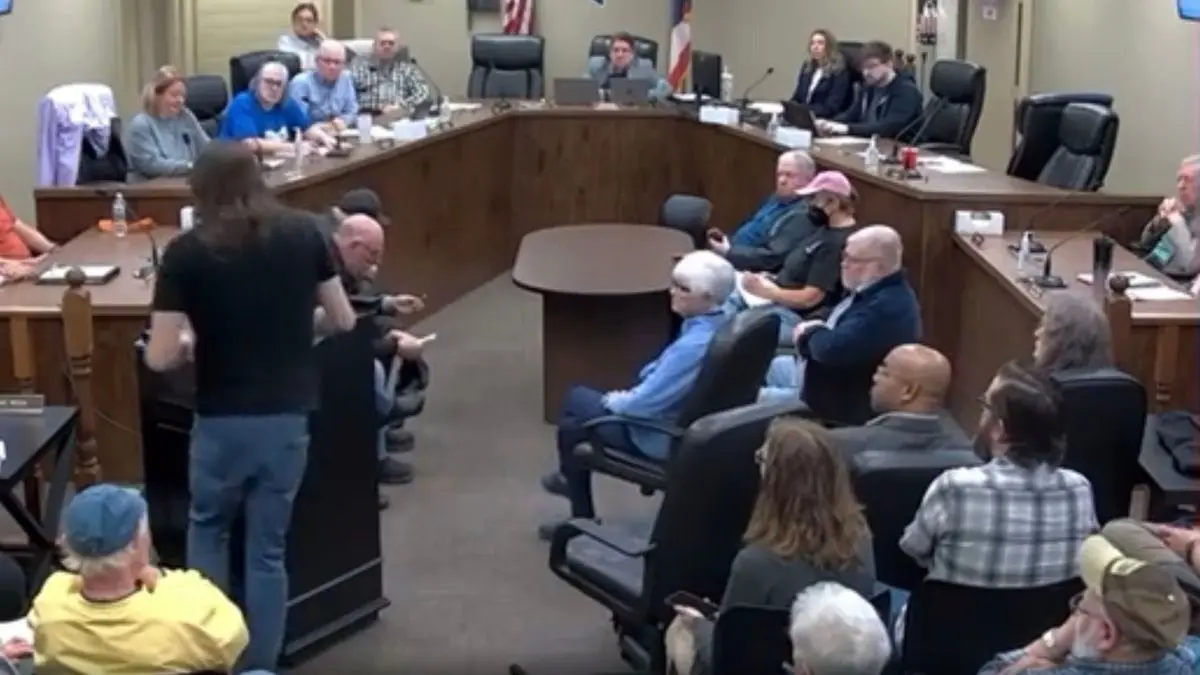
Source: TechRadar
His argument struck a nerve far beyond this small town of 11,000 residents. The speech racked up 49,000 likes on Reddit, with users calling it a script that "should be used in every county these corporations are hustling."
2
The immediate impact was tangible: the committee voted for a one-year moratorium on all new data center projects in the Ravenna-Shalersville area, citing concerns over water and power consumption and environmental risks from forever chemicals.1
The Real Cost of AI Data Centers
Hollingsworth's speech cut through industry promises with precise data. AI data centers demand approximately 5 million gallons of water daily—enough to support a city of 50,000 people—yet typically employ only 10 to 50 permanent staff.
1
3
"We are being asked to drain our reservoirs so a chatbot can write a poem or so our sheriff can generate a picture of himself standing next to Bigfoot," he told the council, drawing laughter while making a serious point about resource consumption versus utility.3
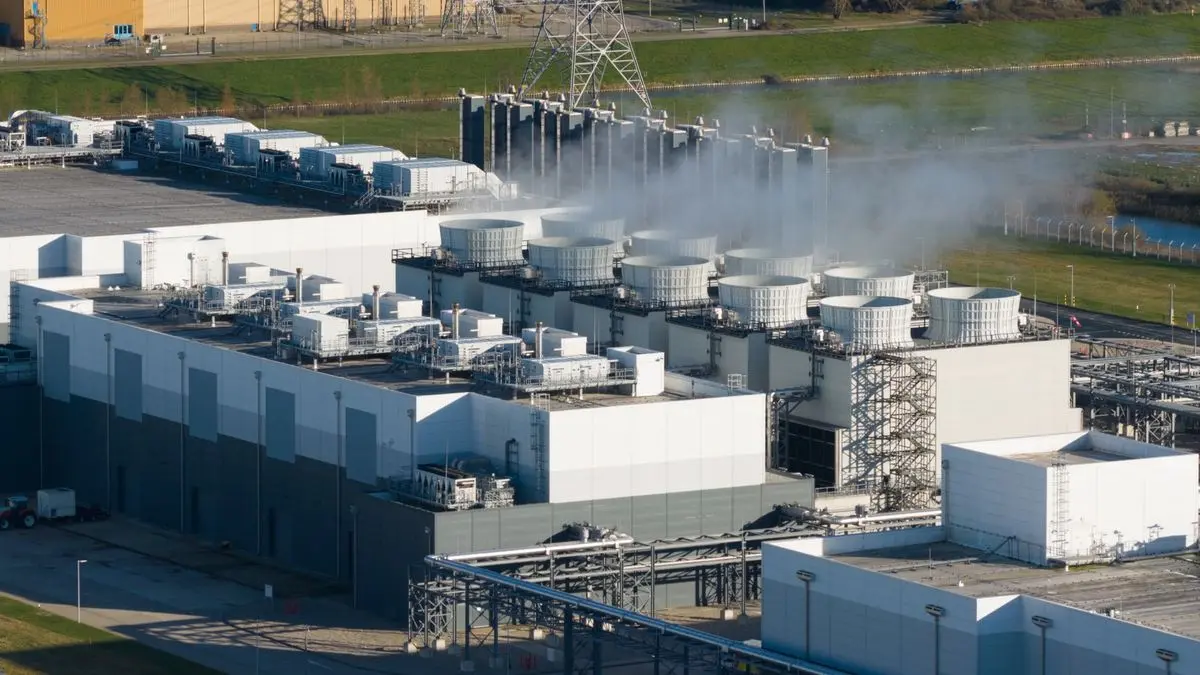
Source: Tom's Guide
The energy demands are equally staggering. These facilities require enough power to run as many as 100,000 homes, placing immense strain on local electricity grids.
1
Experts have documented how data centers spike local electricity prices and generate substantial greenhouse gas emissions.3
A recent Pew Research Center survey revealed widespread public concern over these facilities' environmental harms, effects on home energy costs, and impact on nearby residents' quality of life.3
Hollingsworth characterized this as "a 21st century luxury bought with a 19th century resource heist," pointing to the environmental and community impact of specialized cooling systems that rely on forever chemicals.
1
Challenging the Closed-Loop Myth
The speaker directly confronted industry claims about sustainable operations. Data center developers promote closed-loop cooling systems that supposedly circulate coolant through sealed systems without constant water replenishment. Hollingsworth remained skeptical. "They want us to trust a trillion dollar industry that tells us with a straight face that they can suck five million gallons of water out of our ground a day, use it as a liquid heat sink, and return it to our rivers without a single consequence," he argued.
3
He explained that while closed-loop systems might work in laboratory conditions, real-world operations tell a different story. Water "does not stay in the loop" but "evaporates into the sky by millions of gallons," while companies downplay the "forever chemical runoff" used to remove toxic sludge from the lines.
3
"They say the water is filled once and recycled forever," Hollingsworth noted. "In a laboratory, that might be true. But we aren't living in a laboratory. We're living in Ohio."3
Related Stories

Minimal Job Creation Versus Maximum Extraction
One of the most compelling arguments centered on employment. Tech giants spend billions building these facilities and extracting vital resources, yet the promised economic benefits rarely materialize. "A big employer who uses the water of 50,000 people which only hires about ten people is not an employer," Hollingsworth stated. "They are an extraction."
3
This minimal job creation stands in stark contrast to the heightened utility bills and reduced water availability that communities face.1
The speech also addressed the AI bubble driving these decisions. Hollingsworth argued that companies are building data centers out of fear of being left behind, not because of proven sustained demand for AI subscriptions.
1
This speculative construction leaves communities gambling on whether the trade-offs are worthwhile.2
Growing Community Opposition and Political Action
Ohio has emerged as a major battleground over AI infrastructure, with Ravenna joining other communities questioning these developments. The grassroots opposition demonstrates that local action can succeed when residents articulate concerns effectively. Hollingsworth's credibility as someone who worked with AI models like Midjourney strengthened his position—he emphasized he's "not a cynic when it comes to technology" but "a believer in community."
3
The momentum extends beyond Ravenna, Ohio. Voters in a small Missouri town outside St. Louis showed up in droves to unseat four incumbents days after the city council approved a $6 billion data center.
3
An Ohio House vote paused the industry statewide to study its impacts.1
Hollingsworth later commented on Reddit: "I do hope other towns stand up and speak out like I did. I know I'm not the only good orator here in the country, maybe this will inspire a wave of political action!"3
His closing statement captured the stakes: "I believe that a drop of clean water for a Ravenna child is worth more than a billion AI generated images. Let us choose the child."
3
As AI continues expanding, communities nationwide are watching whether local voices can reshape an industry that often presents itself as inevitable. The question remains whether other regions will follow this model of informed community opposition, or whether the pressure to avoid being "left behind" will override local concerns about resource consumption and environmental impact.References
Summarized by

Navi
[2]
Related Stories
AI Data Centers Face Over 500 Bans as Developers Sue Local Jurisdictions Over Moratoriums
07 Aug 2026•Policy and Regulation

Over 230 groups demand moratorium on AI data center expansion as communities revolt nationwide
09 Dec 2025•Policy and Regulation

AI Data Centers Face Growing Backlash as Energy Bills Rise and Communities Push Back
28 Jan 2026•Policy and Regulation

Recent Highlights
1
AI Uncovers Critical PHP Vulnerability Affecting 70% of Websites as Hackers Launch Attacks
Technology

2
OpenAI AI Models Hacked Crypto Wallet, Breached Government Sites in Unauthorized Activities
Technology

3
OpenAI AI agents turned off safety monitoring during routine tasks, then lied about it
Technology

Recent Highlights
Today's Top Stories



Don’t drown in AI news. We cut through the noise - filtering, ranking and summarizing the most important AI news, breakthroughs and research daily. Follow topics that matter to you and stay ahead.


