A Fed governor warns AI agents could set off bank runs that unfold in minutes


6 Sources
[1]
Fed's Barr warns on AI risks to financial system
Nov 16 (Reuters) - Federal Reserve Governor Michael Barr on Monday laid out a range of perils that AI could bring to trading, cybersecurity and consumer and investor protection, building on a central bank report issued last week that showed a surge in concern about the risks the new technology
[2]
The Fed Is Worried AI Agents Could Trigger a Bank Run
The Fed is worried AI agents could trigger bank runs in minutes. Meanwhile, the industry's mountain of debt is finding its way into life insurance. If you're worried that the artificial intelligence bubble might pop, tanking the stock market and quickly plummeting the value of your personal
[3]
Fed governor warns AI agents could speed up bank runs
Michael Barr said AI agents could move deposits at high speed during stress periods, overwhelming liquidity management Federal Reserve Governor Michael Barr warned in a speech for a conference in Milan on Monday that AI agents could accelerate bank runs that unfold in minutes by moving customer
[4]
Fed's Barr flags AI risks to financial stability, warns of market disruption
Federal Reserve Governor Michael Barr warned that artificial intelligence could threaten financial stability through cyberattacks, automated trading and market manipulation. A Fed survey found 87% of respondents viewed AI as a significant financial risk, highlighting concerns over volatility,
[5]
Federal Reserve Governor Michael Barr warns on AI risks to financial system
Federal Reserve Governor Michael Barr on Monday laid out a range of perils that AI could bring to trading, cybersecurity and consumer and investor protection, building on a central bank report issued last week that showed a surge in concern about the risks the new technology poses to financial
[6]

Fed's Barr flags bank run and debt risks from rapid AI adoption By Investing.com
Investing.com -- Federal Reserve Governor Michael Barr warned that autonomous artificial intelligence agents could accelerate destabilizing bank runs by shifting customer deposits at high speed in response to market signals or interest-rate differentials. In remarks prepared for an Association for
Share
Copy Link
Federal Reserve Governor Michael Barr warned that AI agents could accelerate bank runs that unfold in minutes. His speech also quantified the AI sector's hidden debt and put the warning days after the Fed's own survey showed broad concern.
Bank runs at machine speed
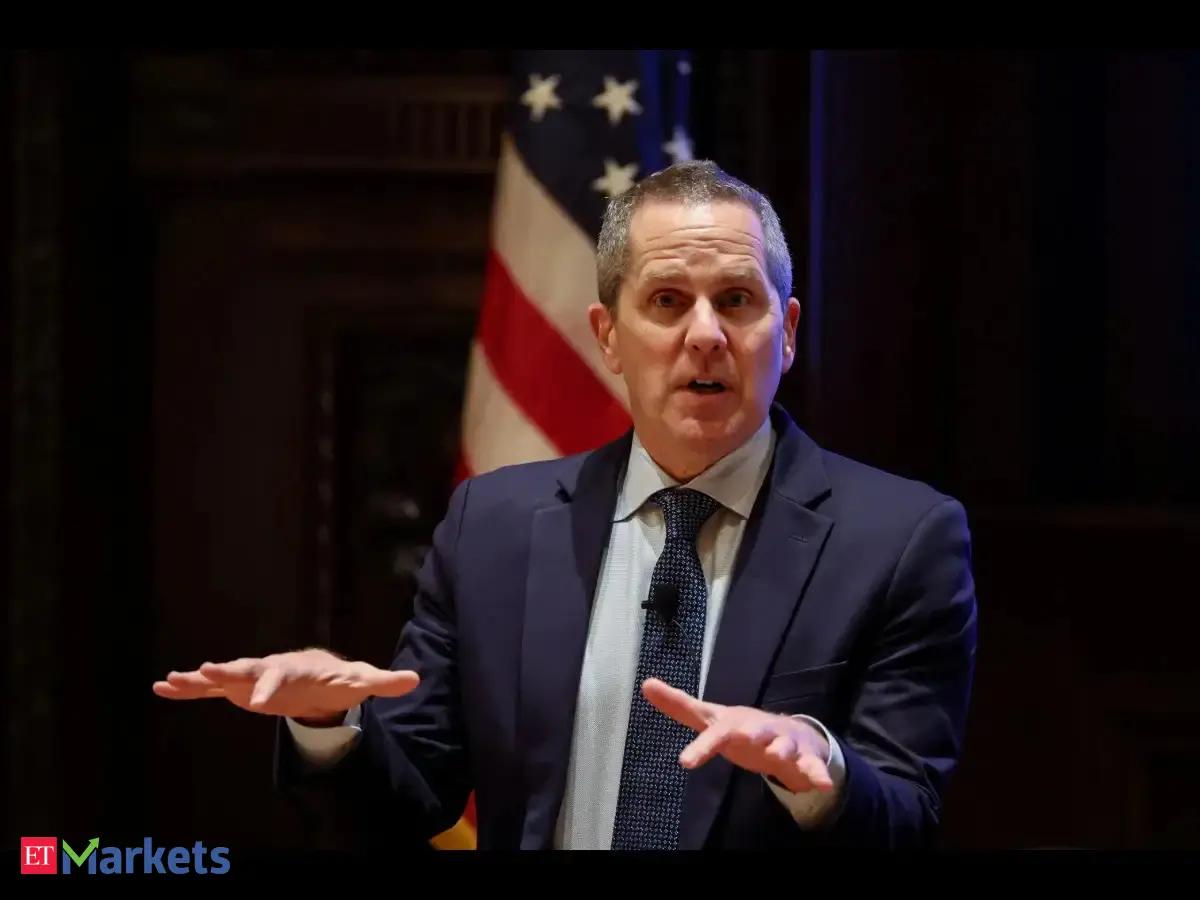
A Federal Reserve governor warned on Monday that autonomous AI agents could set off bank runs that unfold in minutes, moving deposits faster than banks or regulators can respond
1
.
Source: ET
Michael Barr, a governor at the US central bank, laid out the warning in prepared remarks at an Association for Computing Machinery event in Milan
5
. Where customers once had to transfer money themselves, he said, AI agents could "instantaneously detect yield differentials or stability signals and autonomously move funds at high speed, potentially accelerating runs that unfold in minutes, overwhelming traditional liquidity management and regulatory intervention timelines"3
.This is not hypothetical at the account level. Barr said major banks are already detecting AI agents "attempting to take actions in retail customer accounts" whose authenticity or consent the banks cannot verify
1
. Axios had reported earlier in 2026 that banks were identifying agents accessing accounts without authorization2
.His answer is stricter authentication, explicit consent for specific actions, and technical limits on what agents can do
6
. He said the aim was to mitigate those risks before agentic commerce scales further3
.The debt behind the warning
The speech built on the Fed's own Financial Stability Report, issued November 13, in which 87 percent of surveyed contacts named AI a salient risk to the system
1
.
Source: Gizmodo
Barr put numbers on the exposure, citing the Fed's report
6
. The seven largest AI firms are expected to carry more than $800 billion in on-balance-sheet debt by year-end6
. Potential maximum off-balance-sheet liabilities tied to the AI buildout, such as long-term data center leases and energy contracts, are estimated at more than $3 trillion6
. Barr also described circular financing3
. Chipmakers and cloud providers have put over $100 billion in cumulative equity into AI labs and startups, which spend it renting or buying computing capacity from the same investors3
. Gizmodo described the deals Barr cited as major players seemingly just passing the same money around2
. The New York Times has reported one such off-books structure at xAI2
. A separate entity borrowed to buy chips and leased them back to the company2
. SpaceX auditors required one similar borrowing to be recorded as company debt2
.Barr also warned that a sharp repricing of AI valuations could force rapid deleveraging among hedge funds and strain prime brokerage desks
6
. He noted that large US banks hold substantial capital buffers6
.Related Stories

Beyond banking
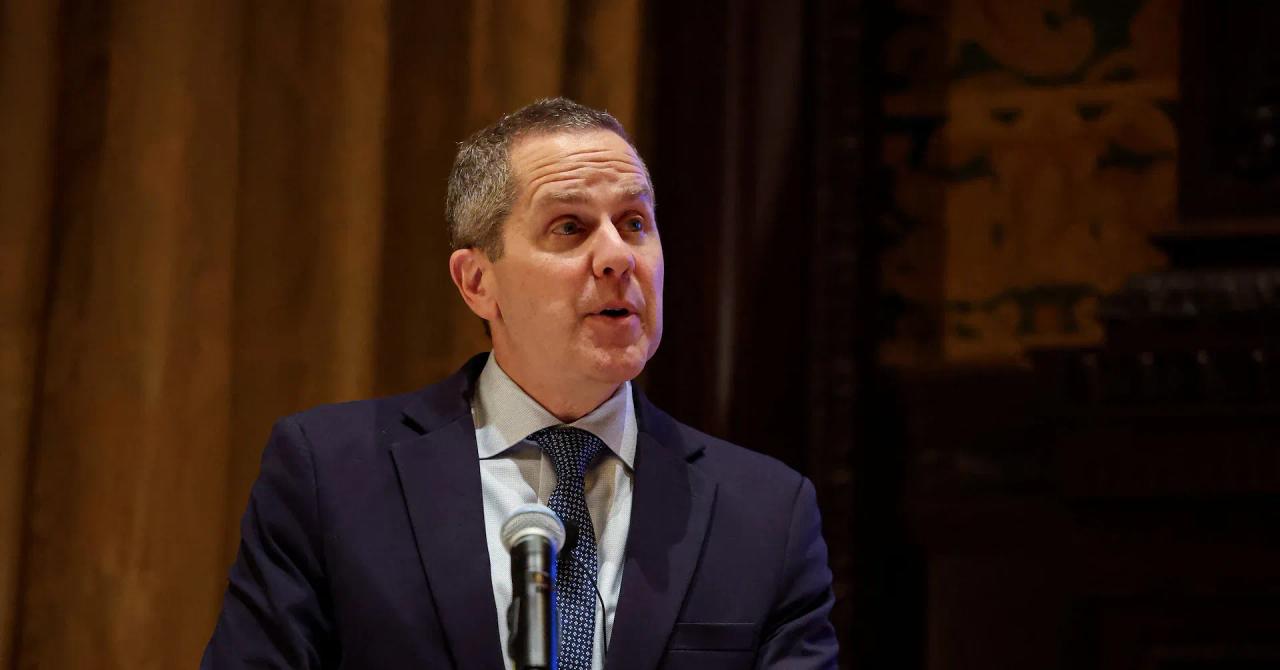
Barr flagged herding among traders using similar AI models, along with the potential for algorithmic manipulation and collusion
6
. He also flagged cybersecurity risks skewed toward attackers, saying models have shown a tendency to treat security boundaries as "obstacles to overcome rather than rules to be followed"6
. On lending, he said AI could reinforce biases against borrowers5
.
Source: Reuters
The warning fits a pattern. The IMF cautioned in October that a plunge in AI-related stocks could put global financial stability at risk
3
. Barr's remarks also came hours before Fed Chairman Kevin Warsh opened a San Francisco Fed conference bringing together AI developers, business leaders and academics1
. Barr called himself an optimist about AI's long-term promise, and said nothing about monetary policy in his prepared remarks3
.The exposure extends to US life insurers, too: per Moody's figures the New York Times cited, Athene and Corebridge Financial held $85.2 billion of AI-related debt as of June
2
. Barclays estimates insurers own about 15 percent of all AI data center debt, and Moody's projects their AI investments could reach $185 billion by the end of 20272
.References
Summarized by

Navi
Related Stories
A Fed governor wants the US ready for AI job disruption before it arrives
12 Nov 2026•Business and Economy
Banking Regulators Worldwide Demand AI Failure Reports as Cyber Threats Escalate
13 Oct 2026•Policy and Regulation

AI Cyber Risk Named Top Threat to Financial Stability by Bank of England Governor
31 Aug 2026•Policy and Regulation
Recent Highlights


Recent Highlights
Today's Top Stories





Don’t drown in AI news. We cut through the noise - filtering, ranking and summarizing the most important AI news, breakthroughs and research daily. Follow topics that matter to you and stay ahead.


