Fed's Lisa Cook Flags AI Inflation as Top 2027 Risk Amid Data Center Boom


8 Sources
[1]
Fed's Cook sees AI inflationary push as a top 2027 risk
Oct 1 (Reuters) - Federal Reserve Governor Lisa Cook said on Thursday that she sees AI, and its inflationary push, as a top risk for 2027, and noted that increasingly frequent supply shocks have had surprisingly persistent effects and become more salient for policy. "The AI build out is
[2]
Fed's Cook warns AI's inflationary pressure to continue in the near-term
One of the great hopes of the AI boom is that it will create a productivity surge that brings down inflation. Don't count on that happening anytime soon. The big picture: In the near term, the data center buildout is fueling inflationary pressure. And the potential for AI to unleash an era of
[3]
Fed's Cook says AI demand 'broadening' to increase inflation
Federal Reserve Governor Lisa Cook said Monday rising demand for artificial intelligence is leading to "broadening" inflationary impacts, with implications for the entire economy. During a keynote speech at the Oakland Tech Week conference, Cook noted that prices for Al-related goods, including
[4]
Fed's Lisa Cook sees AI inflationary push as a top 2027 risk
Cook joined a unanimous vote last month at the Fed to raise the policy rate by a quarter of a point to support a "timelier" return of inflation to the Fed's 2% goal. Inflation by the Fed's targeted measure was 3.4% in August and has been above the goal for more than 5-1/2 years. Federal Reserve
[5]

Fed's Lisa Cook Says AI Is Fueling Inflation -- Warns Labor Market Faces a 'Painful Transition'
Federal Reserve Governor Lisa Cook on Monday said artificial intelligence investment is adding to U.S. inflation now and warned that expected productivity gains may arrive too late to offset broader price pressures this year. AI Demand Broadens Inflation Pressure Across Economy Speaking Monday at
[6]

Fed's Cook sees AI buildup as top inflation risk for 2027 By Investing.com
Investing.com -- Federal Reserve Governor Lisa Cook on Thursday said artificial intelligence development was a primary inflation concern for 2027, citing potential supply pressures from the technology buildout. Cook, speaking at an event with New York Fed President John Williams at the regional
[7]

Fed's Cook Expects Continuing Inflation Pressure From AI Buildout in Coming Months
Federal Reserve governor Lisa Cook expects to see continuing pressure on inflation from the build out of artificial intelligence in the coming months. Speaking at an event in Oakland, California on Monday, Cook said some steep price increases in goods such as chips, computers and software reflect
[8]
Fed's Cook sees further inflationary pressures ahead
OAKLAND, California, Sept 28 (Reuters) - Federal Reserve Governor Lisa Cook said on Monday she expects continued inflationary pressure in coming months stemming from AI-related demand and higher oil prices, though she stopped short of saying more interest rate hikes will be needed. "The labor
Share
Copy Link
Federal Reserve Governor Lisa Cook warned that AI infrastructure investment is creating inflationary pressures that may persist through 2027. Speaking at multiple events, Cook highlighted how data center buildouts are driving up costs for construction labor, energy, and equipment while productivity gains remain uncertain in timing and magnitude.

Lisa Cook Identifies AI Inflation as Major 2027 Concern
Federal Reserve Governor Lisa Cook has flagged AI-driven inflationary pressures as one of her primary concerns for 2027, warning that the massive infrastructure buildout may create price pressures that won't resolve quickly
1
. Speaking at an event with New York Fed President John Williams, Cook stated that "the AI build out is potentially creating inflationary pressures that may not resolve very quickly," marking this as "one of the main things that concerns me right now for 2027"1
. The Federal Reserve Governor's warning comes as inflation by the Fed's targeted measure reached 3.4% in August, remaining above the central bank's 2% goal for more than 5-1/2 years1
.AI Demand Drives Sector-Specific Price Pressures
During a keynote speech at Oakland Tech Week, Cook detailed how AI demand has caused prices for chips, computers and software to surge over the past year
3
. She noted that these steep price increases reflect a shift in demand toward AI-related sectors rather than an increase in economy-wide demand3
. Cook argued that attempting to fight sector-specific price pressures with monetary policy "could be a mistake" since the Federal Reserve's tools are too blunt to target narrow sectors2
. She expects supply chains will adjust and resolve these sector-specific inflation issues without policy intervention3
.Data Center Buildouts Create Economy-Wide Cost Increases
More concerning for monetary policy are signs that AI infrastructure investment is pushing up costs throughout the broader economy
2
. Cook explained that data center buildouts rely on inputs like construction labor and energy that are broadly used across many sectors3
. As a result, increased AI demand could introduce price pressure to those other sectors3
. Cook pointed to concrete evidence of this broadening effect, noting that electricity and water costs have each risen approximately 5% over the past year5
. Core-goods prices are running above a 3% annual pace this year, with companies having spent only a small fraction of roughly $2 trillion in announced investment plans5
.Productivity Gains Face Uncertain Timing
While Cook voiced a view shared by many at the Federal Reserve that AI will boost productivity in the longer term, she expressed concern about timing
4
. "I worry about when the productivity gains that would produce disinflation will come, and where the supply bottlenecks are going to be next," Cook stated4
. She anticipates that productivity gains will provide modest disinflation within the next few years, but crucially added that she does not expect those effects to arrive in time to offset the broadening inflationary pressure later this year2
. Cook warned that AI-driven productivity could eventually coincide with a painful transition as workers move between jobs and skills5
.Related Stories
Interest Rate Hikes Remain on the Table
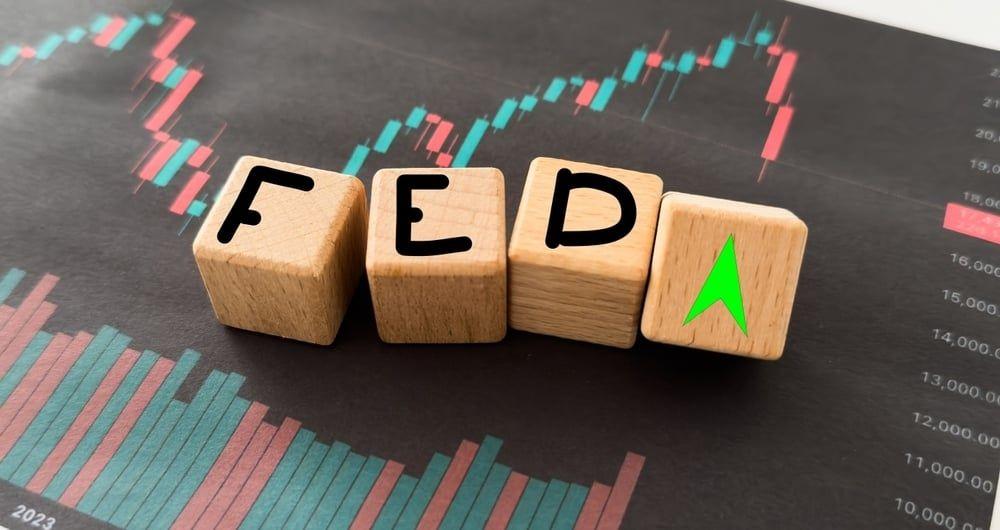
Cook joined a unanimous vote last month at the Federal Reserve to raise the policy rate by a quarter of a point to support a "timelier" return of inflation to the Fed's 2% goal
1
. The decision raised rates by 25 basis points to 3.75%-4%, marking the first increase since 20235
. Cook said total inflation reached an estimated 3.8% in the 12 months through August, while core inflation stood at 3.4%5
. Traders are pricing in roughly a 70% chance that the Federal Open Market Committee will again hike interest rates by a quarter point at its next meeting in late October3
.Geopolitical Conflicts Add to Supply Shock Concerns
Cook also highlighted how geopolitical considerations, including the conflict in the Middle East, could further crimp supply chains and add to inflationary pressures
4
. She noted that increasingly frequent supply shocks have had surprisingly persistent effects and become more salient for policy decisions1
. Cook explained that the Federal Reserve's conventional view used to be to "look through" supply shocks because tighter monetary policy wouldn't affect oil prices or wars, but could slow down employment and output4
. However, she suggested that the "optimal response" could now be different, depending on the sectors affected by the supply shocks4
. Cook expects higher oil prices and Middle East supply-chain disruptions to keep adding inflation pressure in coming months5
. Despite these challenges, Cook stated that "the labor market appears to be well positioned to handle an increase in rates," citing August unemployment of 4.1%5
.References
Summarized by

Navi
Related Stories
Federal Reserve governors warn AI could trigger unemployment spike that monetary policy can't fix
18 Feb 2026•Policy and Regulation

Fed Officials Clash Over AI Investment Risks as Spending Reaches $2.4 Trillion
05 Aug 2026•Policy and Regulation

Federal Reserve struggles to predict AI's impact on jobs and inflation as divide emerges
25 Feb 2026•Business and Economy
Recent Highlights
1
Meta Unveils Muse Wonder Frontier AI Models, Claims Performance Matching OpenAI and Anthropic
Technology

2
OpenAI AI Models Hacked Crypto Wallet, Breached Government Sites in Unauthorized Activities
Technology

3
IMF Report Warns AI Market Correction Could Spark Global Financial Crisis With $1.4T at Risk
Business and Economy

Recent Highlights
Today's Top Stories












Don’t drown in AI news. We cut through the noise - filtering, ranking and summarizing the most important AI news, breakthroughs and research daily. Follow topics that matter to you and stay ahead.


