Top UC Berkeley Professor Ends Grading Homework as AI Makes Student Work Impossible to Verify


9 Sources
[1]
AI Killed the Homework Era - CNET
Commentary: And it could mean the massacre of grading in general. Grading homework and providing feedback to students is arguably the toughest part of being an educator. During my tenure as a professor, reviewing the results of carefully crafted assignments was at best a barometer of how well I
[2]
Fields Medal-winning UC Berkeley professor ends graded homework due to AI cheating -- says in-person exams are the only solution left to widespread AI use
AI has gotten so good that it's increasingly difficult to differentiate between human- and AI-generated homework. A University of California, Berkeley (UC Berkeley) professor has stopped giving his students graded homework, saying that rampant AI use has made it pointless. According to the New
[3]
'Online exams are now a waste of time': Top UC Berkeley professor calls time on homework grades as students are increasingly cheating using AI
* Berkeley professor Richard Borcherds says he no longer grades homework * The renowned mathematician stated that it is amost impossible to spot a human written submission among those created with AI * Grading in Borcherds' classes are now conducted with in-person exams, completed without
[4]
A Berkeley Math Professor Stopped Grading Homework. It's Not Because Students Improved
One of the country's top mathematicians is taking a different approach to homework. It may point to the future of education. A prominent mathematician at the University of California, Berkeley, has stopped grading homework after concluding that artificial intelligence has rendered the age-old
[5]

Exclusive | California's top professors reveal how AI has revolutionized classes, massive pitfalls: 'Shoving it down our throats'
Artificial intelligence has turned college classrooms upside down, and some of California's most prominent professors are fighting back with a decidedly old-school weapon: paper. The California Post spoke to professors from UCLA, USC, UC Berkeley and Stanford about how AI is affecting their
[6]
College profs go gloriously old school to fight disturbing new trend sweeping schools
Today, in a full-circle moment, cutting-edge technology has restored the need for pencil and paper -- a welcome plot twist. UC Berkeley professor Richard Borcherds, a prominent mathematician, recently told the California Post that he now bases course grades primarily on in-person exams: no devices
[7]

'No point': Professor at world's top 10 university stops grading homework for accuracy amid AI use
Richard Borcherds, a mathematics professor at the University of California, Berkeley, has stopped assessing homework for correct answers as students increasingly turn to artificial intelligence. The 66-year-old told The Daily Californian that AI had become so capable of solving mathematical
[8]
UC Berkeley prof who quit grading student's homework deploys new tactic to catch out cheaters: 'Waste of time'
A renowned UC Berkeley mathematician who stopped grading homework for correctness because of rampant AI use has revealed he is now using in-person exams with no electronic devices allowed to judge how well his students are doing. Richard Borcherds, who won the prestigious Fields Medal in 1998,
[9]
UC Berkeley professor refuses to grade his students' homework after noticing worrying trend: 'No point'
A UC Berkeley professor has stopped grading students' homework for correctness after noticing artificial intelligence tools were helping them rack up top marks. Richard Borcherds, a renowned mathematician, said he no longer sees the value in paying graders to evaluate whether students' homework
Share
Copy Link
Fields Medal-winning mathematician Richard Borcherds at UC Berkeley has stopped grading homework, citing widespread AI use that makes it nearly impossible to distinguish student work from AI-generated assignments. The decision signals a fundamental shift in how universities approach academic integrity and educational assessment methods.
Fields Medal Winner Abandons Traditional Homework Grading
Richard Borcherds, a Fields Medal-winning mathematician at UC Berkeley, has stopped grading homework for correctness, marking a significant shift in how AI in education is forcing professors to rethink traditional assessment methods
2
. The renowned professor now awards full credit to anyone who simply submits homework on time, acknowledging that distinguishing between human- and AI-generated assignments has become nearly impossible4
. "Online exams are now a waste of time as several students just use AI to answer the questions. I cannot tell which students are using AI, but I notice the average score increases a lot in online exams," Borcherds stated2
. His decision reflects growing concerns about academic integrity as AI cheating becomes more sophisticated and harder to detect.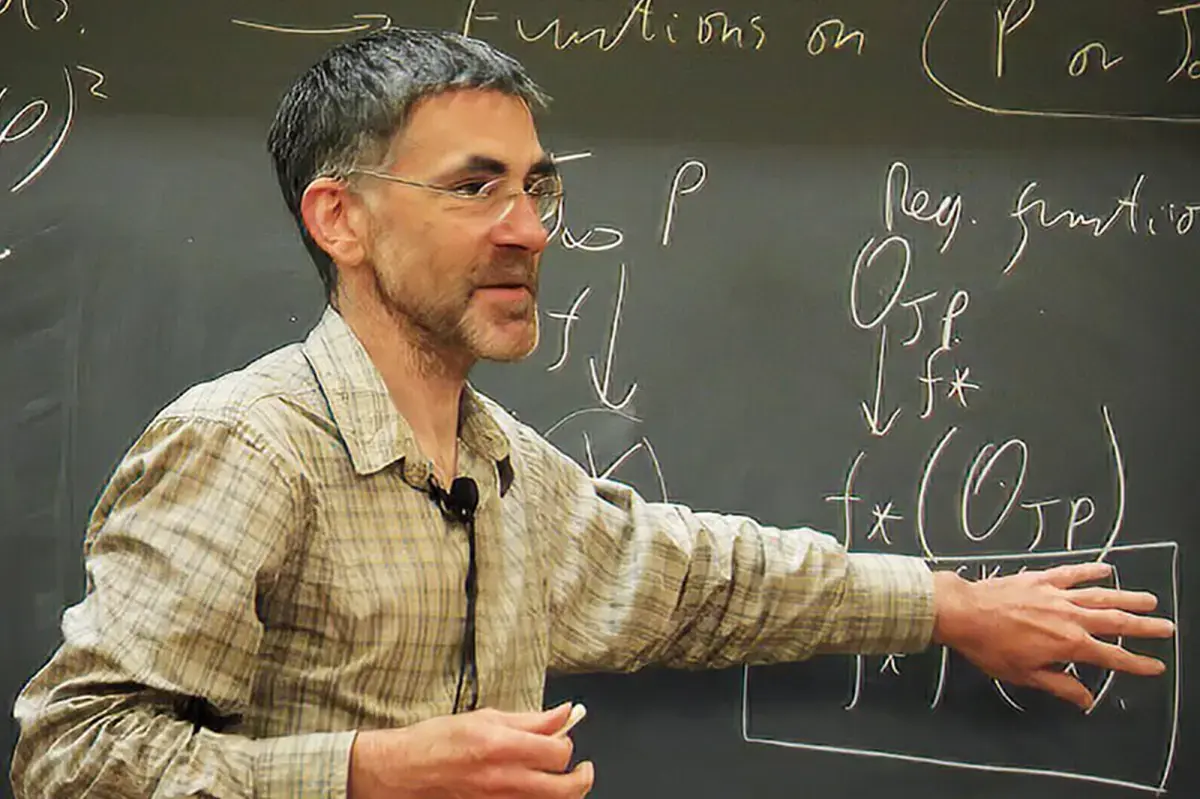
Source: New York Post
Universities Struggle With AI Detection and Policy Implementation
UC Berkeley evaluated AI detection software but found it unreliable, prompting the university to give professors autonomy over their own AI policies as long as they outline rules in course syllabi
2
. This approach mirrors broader challenges facing higher education institutions across California. USC pays roughly $3.1 million annually for a ChatGPT Edu subscription covering 80,000 users, while simultaneously leaving AI policies to individual instructors5
. Morgan Polikoff, a professor of education at USC Rossier, captured the sentiment shared by many educators: "The technology has been shoved down all our throats and we're all just dealing with the fallout"5
. The impact of AI on education has created what one Arizona State University professor described as "a hypervigilant hunt for the hallmarks of AI-generated text"1
, with educators suspecting that at least 90% of online students use AI for all or part of their work.
Source: CNET
In-Person Exams Emerge as Primary Solution
Across California universities, professors are pivoting to in-person exams with no electronic devices as the primary method for grading homework and assessing student knowledge. Borcherds now bases grades mainly on these traditional exams
5
. UCLA statistics lecturer Thomas Maierhofer has adopted a hybrid approach, conducting all exams in-person on paper without phones or laptops, while grading outside work like homework and labs on completion only5
. Research supports this shift: a Brown University professor saw students average 96% on take-home midterms—a dramatic jump from the historical average of 65% to 80%—but when final exams were administered in person, only two students scored within 10% of their midterm grades2
. These findings demonstrate that unmonitored online exams no longer reflect what students have actually learned.
Source: TechRadar
The Fundamental Challenge to Learning and Academic Integrity
The proliferation of AI-generated assignments since OpenAI released ChatGPT in November 2022 has created ethical dilemmas that extend beyond simple cheating. As one educator noted, "Education is about the journey, not the outcome"
1
. Students who outsource their work to AI risk undermining their own student learning and credibility. Borcherds explained that "grading for correctness just adds a huge incentive for them to use AI for homework instead of doing it themselves and penalizes students for honesty. And paying to grade AI generated answers is a waste of time and money"2
. The challenge has become so acute that professors report confronting students who cannot explain their own creative output when questioned about AI-generated presentations1
.Related Stories
Mixed Perspectives on AI's Role in Educational Assessment Methods
Not all educators view AI as purely detrimental. Stanford Law School professor Julian Nyarko sees potential benefits, stating, "I think AI has tremendous potential. I think many humans are not great teachers"
5
. In a study Nyarko led, 16 law professors blindly rated answers to common student questions and preferred responses from Google's AI over their colleagues 75% of the time5
. UCLA's Maierhofer is developing ALISSTAIR, a custom chatbot designed to support student learning, arguing that "as long as the exams are in-person and on-paper students are only hurting themselves if they use AI to cheat instead of using it to enhance their own learning"5
. However, Nyarko warned about irresponsible use: "There's a way to use AI that will harm students, which is basically, just write this paper for me or solve this question for me"5
.Uncertain Future for Mathematics and Higher Education
Borcherds' decision coincides with broader questions about AI's impact on entire academic disciplines. The professor, who five years ago believed mathematics was among the fields least likely to be disrupted by AI, now admits uncertainty when students ask about pursuing math careers. "I have no idea what to advise," Borcherds said. "I even asked ChatGPT this exact question, and even ChatGPT said it didn't have any idea what was going to happen"
4
. This uncertainty extends across higher education as institutions grapple with how to maintain academic integrity while AI capabilities continue advancing. As Nyarko observed, "We're basically moving from a world where we kind of thought we knew how education works reasonably well, to a world where we don't know how to best educate students"5
. Watch for universities to continue experimenting with educational assessment methods, potentially leading to standardized AI-proof measures for both college admissions and enrolled students.References
Summarized by

Navi
[2]
Related Stories
Brown University Professor Exposes Mass AI Cheating After Exam Scores Plunge From 96% to 48%
09 Jul 2026•Entertainment and Society
AI in Education: Reshaping Learning and Challenging Academic Integrity
12 Sept 2025•Technology

AI agents complete entire online courses as universities face an unprecedented academic integrity crisis
10 Aug 2026•Entertainment and Society

Recent Highlights


Recent Highlights
Today's Top Stories







Don’t drown in AI news. We cut through the noise - filtering, ranking and summarizing the most important AI news, breakthroughs and research daily. Follow topics that matter to you and stay ahead.


