10 Sources
[1]
Firefox's AI Window Gets New Features Meant to Help You Stay on Task and Organized - CNET
Zach began writing for CNET in November, 2021 after writing for a broadcast news station in his hometown, Cincinnati, for five years.... Read full bio Firefox's AI-integrated Smart Window is getting a few new features meant to help people pick up their work right where they left off. The features, announced Tuesday, should make it easier to find answers, organize tabs together and see what you were working on earlier. To make answers more readily available in Smart Window, Firefox is partnering with the AI company Exa as a search provider. This lets Smart Window pull current information from around the internet and it provides citations for that information. So you shouldn't need to jump around in tabs looking for citations. Firefox told CNET in a video call that a critical part of its doing business with Exa is that the company shares a lot of Firefox's privacy principles, like a zero data retention policy. "That is a red line for us to make sure [Smart Window is] as private as possible," Ajit Varma, the head of Firefox, said. Smart Window can also let you group tabs together so you can keep your research organized. So if you're researching running shoes, for example, you can create a group that is all shoe-related tabs. Firefox told CNET that if you give Smart Window permission, it will use the content of the webpages to figure out related themes and group webpages accordingly. You can also manually add or remove tabs from groups. In addition, Smart Window can easily show you the tabs you recently viewed. That way, if you're clearing out tabs and accidentally close one that's relevant to what you're working on, you can ask the browser to show you the tabs you were looking at. What makes this different from a standard browser history log is that it shows you a snapshot of the webpage itself, as opposed to a URL and webpage name. So if you remember what the webpage looks like, you should be able to find it. It's important to note that Smart Window is not a replacement for the Firefox browser. According to Mozilla, Smart Window is an optional window type within Firefox. "Smart Window is completely optional and opt-in," Mozilla writes in the Smart Window privacy notice. "It builds on the classic Firefox experience (classic window) by using AI to enhance your browsing experience." For more on Firefox, here's what to know about other AI features in the browser and what Mozilla's CEO told CNET about its AI features.
[2]
If you use AI, Firefox is the browser to beat right now - here's why
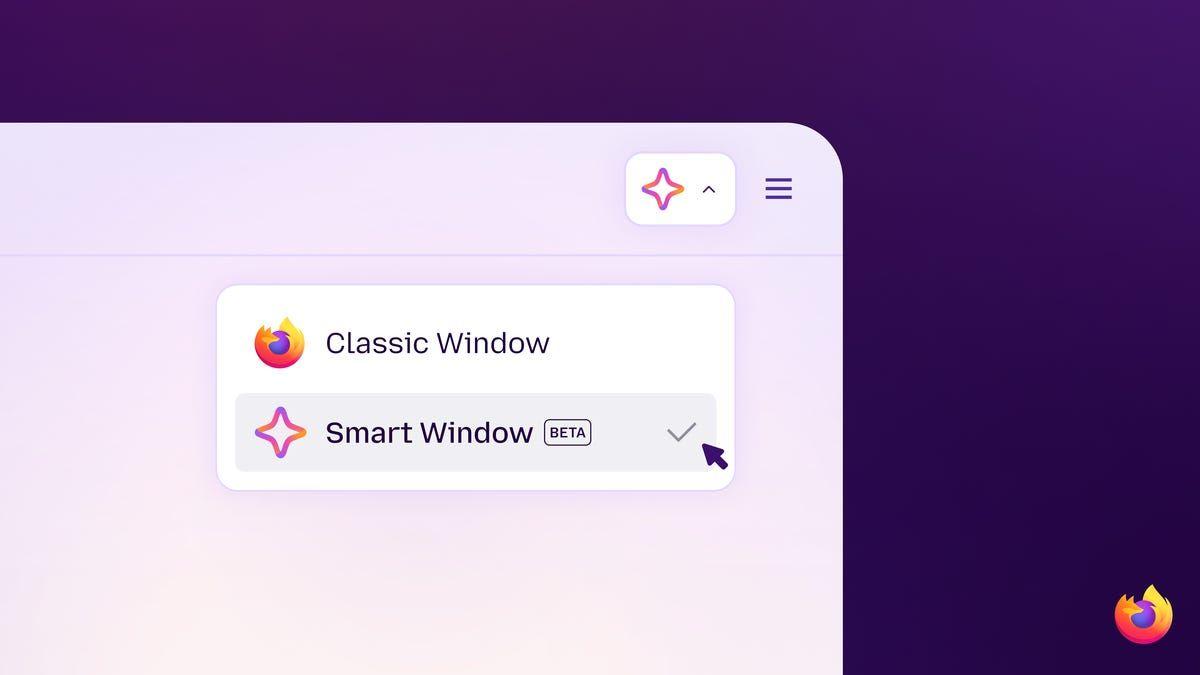
Follow ZDNET: Add us as a preferred source on Google. ZDNET key takeaways * Mozilla has released Smart Window beta. * This AI tool is powerful, flexible, and free. * You can test it on MacOS and Windows. For most of the past decade, Firefox has been given the short shrift within the world of browsers. However, in the last couple of years, the browser has started to win back the favor it once had. Although I've been on and off again with Firefox, I'm starting to lean back towards 'on,' thanks to some new additions (such as vertical tabs). I also just realized that the beta version of Firefox (sadly, only on MacOS and Windows so far) has finally added the free Smart Window feature that Mozilla has been teasing us with for some time. The version of Firefox I'm using is 153 on MacOS Tahoe. I've checked Firefox Nightly on Linux, and the feature hasn't appeared yet. I've checked versions 153, Beta, and Nightly (on both Ubuntu and Fedora) and have yet to see the feature (even though I've seen others reporting that it works on Linux). To that end, I had to test Smart Window on MacOS. Also: I quit ChatGPT for a free, private, and local AI called Ollama - here's why Right out of the gate, I'll say this: if you use AI, do yourself a favor and leave your default browser for Firefox, because you won't find a smoother, easier option in Microsoft Edge, Chrome, or Safari. Yeah, Smart Window is that good. Why is Smart Window better? At first blush, the best thing about Smart Window is its flexibility. Consider these points: * You can easily enable or disable the feature. * You can set it as your default start page if you like. * You can easily switch between three different models (Fast, Flexible, Personal). * Smart Window doesn't slow Firefox down. * It includes Memories, which are saved pieces of information that help the AI assistant remember things you've shared during past conversations. * You can easily enable/disable Memories on a per-chat basis. Also: Linus Torvalds puts his foot down, tells anti-AI programmers to 'fork it' Given that Smart Window is still in beta, not only is the feature list impressive, but how well it runs has me questioning the beta tag. Using Smart Window When you install Firefox 153 or later, or your current instance is upgraded, you're prompted to select the model you want to use. Instead of Smart Window presenting you with model names, you get three categories: * Fast - Google gemini-3.1-flash-lite * Flexible - Alibaba qwen3-235b-a22b-instruct-2507-maas * Personal - OpenAI gpt-oss-120b I opted for Flexible as my default, but you can also change the model on a per-chat basis. In the next window of the setup wizard, you can choose what Smart Window learns from (Chats in Smart Window and/or browsing across Firefox). After that step, you can set Firefox to always open in Smart Window. That's it for the wizard. Also: 75% of developers I surveyed prefer Claude Code - here's why they choose it over Codex You'll then be presented with the Firefox browser. If you didn't set the browser to open automatically to Smart Window, you can open the tool by clicking the Firefox icon near the upper-right corner and selecting Smart Window (beta). Smart Window opens to reveal a fairly straightforward chat area where you can begin interacting with the tool. Features of Smart Window You'll notice a drop-down menu near the bottom-right corner of the chat box. Here you can switch between the three different models on the fly. At the bottom left of the chat box, there's a + icon to start a new chat and a tiny computer icon to its right, which is where you can enable or disable the Memories function on a chat-by-chat basis. If you don't want Smart Window to use collected memories, you can disable it for the current chat. Otherwise, leave the feature enabled. Also: I've tested so many desktop AI tools, but Hermes with Ollama is my new favorite - here's why Other features found in Smart Window include context-aware assistance (uses open tabs and browsing history to help provide answers and summaries), tab management (helps you group or close multiple tabs based on topics or preferences), search integration (retrieves up-to-date information using your default search engine), and privacy-aware design (operates locally when possible). Smart Window could tip the scales I only use AI for research, but when I do, I prefer to use it locally. The downside of that approach is that local AI can sometimes give out-of-date answers or can bring my system to a crawl (especially with more complex research). With Firefox Smart Window, I get the best of both worlds. Also: The 6 AI-free Linux distros I recommend most - and why they're likely to stay that way Does that mean this feature could tip the scales and bring me back to Firefox? My answer is simple: if you combine Smart Window with the recent additions to Firefox, plus the usual attention to security, the answer becomes clear. Yes, I am starting to lean back towards making Firefox my default browser. Currently, the only thing preventing me from doing so is the lack of a Workspaces feature. Thanks to Opera and Vivaldi, I've grown to depend on Workspaces to keep my tabs better organized. You can bet that the second Firefox includes Workspaces (and not by way of one of the poorly designed extensions), I'll be bouncing right back to Mozilla's browser like Tigger. Give Firefox's Smart Window a try and see if it doesn't lure you back to one of the best open-source web browsers on the market.
[3]
Firefox's Smart Window promises a better AI browser
Starting today, AI chats in Firefox's Smart Window AI browsing mode can pull from current web info and show source links in chat responses through a partnership with Exa. Smart Window can also now automatically suggest tab groups and show visual previews of pages you previously visited when you search your browsing history using natural language. I saw a live demo that showed how the Smart Window AI could sort through selected links in your browsing history to pull up "running shoes I looked at last week," and pop up images pulled from the sites browsed previously. The suggested groups of tabs can also find and close duplicates, making it easier to keep track of what's important. Instead of mostly having the AI present new results from searches and browsing, it's sorting through what you've already seen and adding citations for results it pulls up from Exa. In a blog post announcing the update, it says that this can help you check answers or find your place again, especially if you remember what was on a page even if you don't specifically remember which page you were looking at before. I'll need to try it to find out how useful that actually is, but Mozilla says that beta users said it helped them maintain their train of thought better. Future updates will add Chrome-like surfacing of recent browsing journeys, and AI-powered autofill for online forms. Smart Window is still an opt-in beta feature, and Mozilla's head of Firefox, Ajit Varma, said in an interview with The Verge that there isn't a "precise date" yet for when it will leave beta. It was initially announced last year as "AI Window," a browsing mode in Firefox with AI features like searching through your open tabs or browser history using natural language. Since then, Mozilla added a new AI Controls section to Firefox's settings where users can turn off all of the browser's AI features or pick and choose which ones to leave on. Varma said Mozilla is trying to take an "agnostic" approach to AI in Firefox, offering AI features like Smart Window for those who want them without forcing everyone to use those features. "They didn't create a browser for you to go to Wikipedia more; they created a browser for you to generate more LLM and chat queries. Whereas for us, we are just looking at more just browser experience, user experience." Users can choose which AI model they want to use in Smart Window, including Google's Gemini 3.1 Flash Lite, OpenAI's oss-gpt-120b, Alibaba's Qwen3-235B-A22B-Instruct-2507, or their own local AI models. "We're looking at making sure that there is a possibility for digital sovereignty, so you can choose local AIs and AI from companies that are maybe based in your region that have different views than maybe some of the big tech companies," Varma said. Firefox AI senior staff product manager Steve Truong said the models users can choose from "are all done under a zero-data-retention contract. So, when we work with the third parties either providing inference or API calls, we ensure that they are operating on the user prompt in memory and then not storing anything to train their models, to support advertising, or to generally allow for human review." He added, "We also ourselves do not retain user chats in our servers without user permission to do things like model training -- we're not making models -- and certainly not for human review and for advertising." "We want to make sure it's easy for people to get [Firefox] into the state that they want, but we also don't want to be prescriptive to say there's only our way of doing things or only one way to do things. But it's really recognizing that we're a neutral party on the internet and we want to cater to everybody," Varma said. This "user-first, user-centric" approach involves adding new features and making changes based on user feedback -- for instance, Truong said Mozilla added the top navigation bar in Smart Window after users asked for it.
[4]
Firefox Just Proved AI Browser Features Don't Have to Suck (or Spy on You)
Firefox has embraced AI more slowly than other browser giants, such as Google Chrome and Microsoft Edge, which quickly went all in on AI, from agents to omnipresent assistants. However, the situation is changing, as the latest Firefox update brings a new type of Smart Window browser tabs, AI-powered tab grouping, and visual previews of your browsing history. After meeting with the company about these features and trying them out for myself, I'm a big fan of Firefox's vision for AI browsers. Here's what you need to know. What Firefox's New AI Upgrade Does -- and How to Get It As mentioned, Firefox is gaining an AI-powered system for grouping similar tabs, Smart Window tabs that allow you to directly prompt your AI model of choice, and visual previews of your browsing history to help you pick up where you left off. Mozilla also announced a partnership with Exa to help power the Smart Window feature. As of this writing, these new features are available only in English to users in Canada and the US. Somewhat confusingly, you can't access them by simply updating your browser or enabling them in the settings. After you update your browser, you must go through Smart Window's onboarding process here. Smart Window: An AI Assistant That Stays Out of Your Way The experience with Smart Window in Firefox is about the same as with an AI chatbot or any other AI web browser that lets you prompt an assistant directly. You can ask questions, change models, and share tabs with it, all of which work as expected. For example, I asked Smart Window in Fast mode for the top restaurants in my area, and it gave me a reasonable list, along with articles I could read for further recommendations. Then, when I shared one of those articles back to Smart Window as a tab, it had no trouble understanding the page and picking out the restaurant recommendations. Just keep in mind that the quality of responses depends on the model you use. If you're using Fast mode, which runs on Gemini 3.1 Flash Lite, you shouldn't expect the deepest answers. Smart Window doesn't support the newest, most advanced models by default, but it performs just fine for casual queries. The latest AI models often don't offer dramatic improvements for simple tasks, after all. Tab Grouping: Simple, Effective, and Surprisingly Useful The Tab Grouping feature also works as advertised. During testing, I ran another Google search for restaurants in my area and opened several tabs. Then, when I clicked Firefox's Organize Tabs button, it quickly sorted all my restaurant-related tabs into a group. The feature also gives tab groups a name: In my case, it was the name of the town in which the restaurants were located. Microsoft Edge's similar Organize Tabs function works just as effectively, for comparison. Visual History Previews: A Smarter Way to Track Down Old Tabs Firefox's visual previews work reliably, but the results ultimately depend on what pages you visit and if there's a preview attached to the site in question. The AI component here isn't the previews themselves; rather, it's finding the relevant entries in your history and highlighting them for you. When I opened Smart Window and asked Firefox to show me the restaurants I had looked at earlier, it displayed tiles with images of the sites I had visited. However, sometimes you get a tile with an image that's just a Google logo or something similar, depending on what you ask for and your browsing history. Why Mozilla's "User-First" Philosophy Beat Chrome's Bloat None of these features is exciting enough to convince a Chrome loyalist or heavy Edge user to switch to Firefox, but I'm far more excited about how they play into Mozilla's larger vision for AI in Firefox. Whereas Google and Microsoft shove their AI tools into just about every product and service possible, Firefox still lets you opt in to its AI features or easily block all related features and pop-ups. Meanwhile, if I want to remove the Gemini button in Gmail, I have to look up a guide on how to do that. You can also disable individual features in Firefox, too. For example, if you like the idea of the Smart Window but aren't interested in tab groups, you can stick with just the former. When I spoke with Ajit Varma, head of Firefox, about these features, he acknowledged that "some people are really leaned into AI, and some people are more skeptical." Mozilla's approach is to "create something that is easy for the people who really want to experiment with new things and easy to turn off for those who don't." User choice extends to model availability, too. By default, Firefox supports Exa, Gemini, GPT, and Qwen, but you can connect other models, too, including local ones. According to Mozilla, building not a closed AI stack but an open AI ecosystem aligns with the company's belief that "the web is strongest when it encourages technology competition and variety." Beyond user choice, privacy is another core focus for AI in Firefox. Accordingly, Mozilla doesn't keep your chats, sell your data, or train its models with your data. It processes only a limited amount of technical information. Where possible, Firefox relies on local models, such as for tab grouping, that don't require a server. Smart Window tabs also store memories on your local machine, and you retain control over what they remember. During my conversation with Varma, what struck me most was how in tune Mozilla seems to be with what users want. Varma followed the rise of AI agents in web browsers aimed at automating the browsing experience, but his takeaway from talking to users was that "a lot of people don't necessarily want an agent to do everything. They actually want to look at the restaurants they might want to book. They actually want to, you know, potentially read documents." Considering my unimpressive experiences with AI agents and OpenAI shutting down its agent-focused Atlas browser after less than a year, this all tracks with my experience. In my experience, when Google adds a new Gemini feature to Chrome or its search engine, it's usually something I put up with rather than something I actually want (to say nothing of Google's obsession with vacuuming up every byte of my data). Meanwhile, Mozilla is taking the time to introduce features that you might actually want, giving you a choice, and protecting your data. This is a vision for AI browser features that I can support. The Verdict: Firefox Proves AI Can Be Helpful Without Being Intrusive I'm not a huge fan of AI features in web browsers, since I can get most of what I want out by clicking a bookmark and loading up a chatbot's website. That said, I can genuinely imagine using common-sense features like easily grouping tabs or sorting through my history more quickly. More importantly, Mozilla's approach to adding AI features to Firefox makes me much more willing to try them than the ones in Chrome.
[5]
Firefox Smart Window adds AI web search, automatic tab groups, and more
Mozilla today announced new features to Firefox's AI-powered Smart Window, which remains in beta. Here are the details. Firefox's Smart Window gets new features A few months ago, when Mozilla first announced Smart Window, it described the feature as "a separate, optional window in Firefox where you can interact with an AI assistant of your choice while you browse," adding that it offered "things like summarizing, comparing tabs, organizing info, or asking questions, all without leaving your flow." Since then, the company has been incorporating user feedback, and today announced a new set of features designed to "help people finish what they start online." Starting today, Firefox's Smart Window will suggest groups for related tabs, which should help in those situations where researching a topic or planning an event can quickly get out of hand. One particularly useful addition is automatic duplicate detection, which lets users spot and close duplicate tabs with a click. Smart Window now benefits from a new partnership between Mozilla and Exa, which was also announced today. Exa is an AI-focused search and web retrieval company, and its integration with Smart Window will allow it to "retrieve current web information and show the sources behind its response without taking you to a separate search results page," says Mozilla. Finally, Smart Window lets users input natural-language prompts such as "running shows I looked at last week," and it promises to "show visual previews of pages in your browsing history, making it easier to spot the page you're looking for among similar results without opening each one to figure out which is which." In its press release, Mozilla also announced what's next for Smart Window: Soon, Smart Window will be able to surface recent browsing journeys and pull together related tabs and history, giving you a starting point when you return to something you were working on. We're also working on ways for Smart Window to use relevant information to help fill out online forms, so you don't have to re-enter the same details again and again. You'll stay in control of what Smart Window can access, including which tabs you choose to share with it. Smart Window is currently available in English as a beta for Firefox users in the U.S. and Canada. To learn more about it, follow this link. Worth checking out on Amazon
[6]
Mozilla Tests an AI 'Smart Window' in Firefox -- But Only If You Opt In
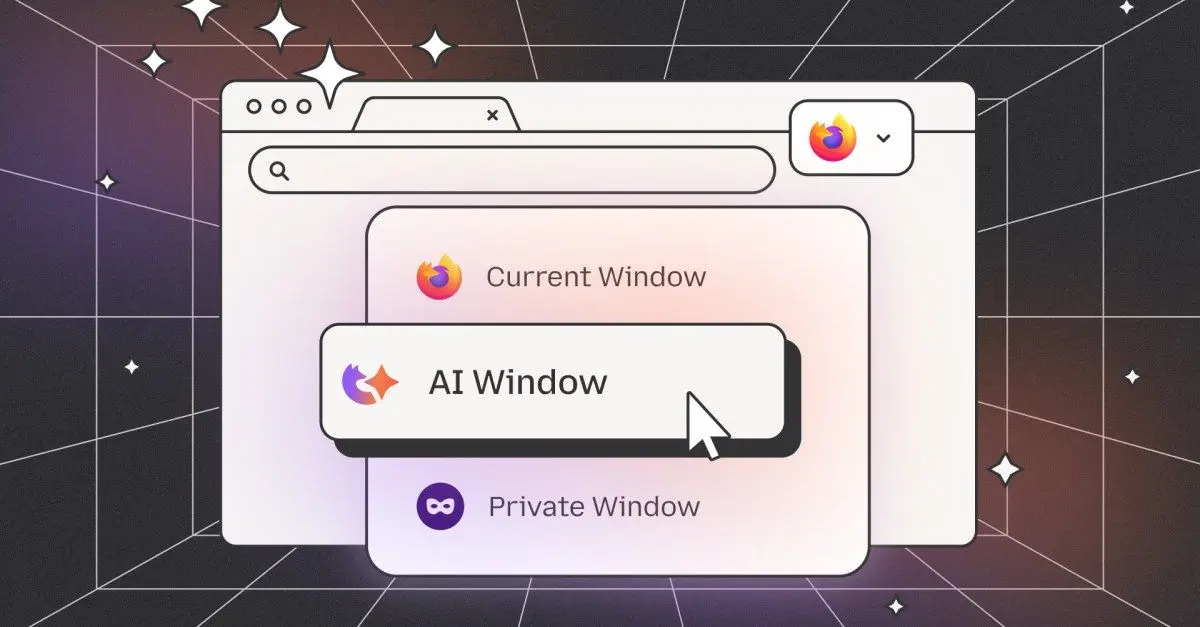
It extends Mozilla's existing sidebar chatbot and leans on "user choice" as the pitch against browsers built by AI companies. Mozilla is testing a new "Smart Window" in Firefox -- a separate, optional window where you can chat with an AI assistant of your choice while you browse. The company is inviting users onto a waitlist to try it first. The window sits alongside Firefox's Classic and Private modes. You decide when, how, or whether to use AI at all, and you can switch it off if it's not for you. Mozilla's own announcement frames it as "user-controlled," built so you're never locked into one ecosystem or forced into an AI experience. The project is early, and Mozilla says it's building in the open and wants feedback from the first testers. Mozilla's pitch draws a line with browsers made by AI companies, which it says force a hard choice: use AI all the time or not at all. Firefox, the argument goes, is the independent option that keeps you in control. "In Firefox, you'll never be locked into one ecosystem or have AI forced into your browsing experience. You decide when, how or whether to use it at all," Mozilla says. The Smart Window extends features Mozilla already ships, like the AI chatbot in the sidebar on desktop and Shake to Summarize on iOS. Browser AI has become a privacy battleground, and the open-source code behind these tools is what lets outside researchers verify their claims. Brave pushed its own LEO assistant built with Anthropic as a privacy-first alternative, but other companies are building products that sacrifice privacy for convenience. Perplexity Comet, Microsoft Edge, and Opera Neon are among the biggest AI-centric browsers. OpenAI killed its own Atlas browser to focus on the development of a more generalistic app. Google tried enhancing its browser with AI, silently downloading a model that runs locally. Mozilla is also trying to appeal to a broader user base while keeping its privacy-first roots intact: offer the assistant, but make the off-switch the draw. It ties back to the Project Nova redesign that gave Firefox a single control to disable every AI feature at once. Mozilla says AI should be "open, accessible, and driven by choice". The Smart Window waitlist is open at firefox.com/ai, and the feature stays off unless a user turns it on.
[7]
Firefox Is Rolling Out Three New Features for 'Smart Window'
Eventually, Mozilla wants Firefox to remember what you do in the browser. If you like to be on the cutting edge, you might know about Firefox's "Smart Window" feature -- formerly "AI Window." If not, here's an intro: Smart Window is Firefox's take on an AI web browsing assistant. You can use the chat feature to ask general questions (like you would with ChatGPT, Gemini, or Claude) or send queries about the pages you're looking at. The feature lives in Firefox's menu bar: You can engage it whenever you want -- with three models to choose from -- and shut it off just the same. Since Firefox's whole schtick is privacy-first, it emphasizes how none of your interactions with AI Window are used to train Mozilla's models, and your data is never sold to third parties -- similar to DuckDuckGo's approach to AI. But Mozilla says that it changed Smart Window throughout its initial beta testing period. While the feature is still in beta, the company is now announcing more updates coming down the pike. New features coming to Firefox's Smart Window On Tuesday morning, the company officially revealed three new Smart Window features that beta testers can now take advantage of. First, Mozilla announced a new way to browse the internet for answers without actually leaving your current window. The experience comes through a partnership with Exa, and lets you look up web info with sources without leaving for a new search results page. I suppose it's a new take on using two windows in split-screen -- though I usually don't find it hard to do a quick search in a new tab and close it when I'm done. Second, Smart Window now supports automatic tab groups. If your Firefox window has multiple tabs, Smart Window can suggest groups for tabs that are similar to one another. This is something other browsers like Chrome have implemented for some time now, but a first for Firefox, which previously only offered manual tab groups. Finally, Smart Window will be able to show you "visual previews" of the pages in your browsing history. The idea is to make it easier to spot the pages you're looking for in your digital past, rather than hunt through various text-based URLs. Mozilla wants Smart Window to remember what you do in Firefox Mozilla wants Smart Window to be more than Firefox with a chatbot. Following user feedback, the company is working on features that would keep tabs on what you do in Firefox, in the name of making it easier to pick up where you left off last. The idea is, rather than thinking through what you were looking up earlier in the day, or trying to remember the sites you were browsing last night, you can ask Smart Window to help you get back to it. In that way, it's similar to features like ChatGPT's Computer History, which tracks your general computer usage so you can ask the bot questions about what you did on your Mac. Mozilla says that in the near future, you'll be able to pull up "recent browsing journeys" from Smart Window, pulling from your tabs and history, so you can effectively return to a previous browsing session. While browsing history has been a standard for decades, how many of us really want our browsers keeping a dedicated log of everything we do each session? I think I'd rather think for a few moments about what I was doing last -- or at the very least write down notes to myself -- rather than let Firefox track my every move. In addition, the company is working on adding an AI form-filler, similar to tools advertised by Google at I/O. This is the type of AI feature I imagine more people will be open to: I'd rather Firefox to be better at filling out forms on my behalf, than "remember" what I did Monday night. But maybe I'd rather keep its AI away from both: All of Firefox's AI features are optional Like all of Firefox's AI features, Smart Window is entirely optional. Not only can you toggle it on or off at any time, but you can also completely disable it, as well as all other AI features. While even Firefox has jumped on the AI bandwagon, it's helpful to offer easy ways to block these new additions for users who want a traditional, simple web browsing experience.
[8]
Firefox updates Smart Window: A new in-browser AI assistant that can keep up with you
Firefox updates Smart Window: A new in-browser AI assistant that can keep up with you Mozilla Corp. rolled out updates today to its popular Firefox browser, updating an artificial intelligence assistant called Smart Window, currently in beta, that lets users check answers, summarize open tabs, and retrace search history. Smart Window is the evolution of an earlier concept introduced by the company last November, called AI Window, which explored how privacy-first AI could integrate with the browsing experience. The company has been building and testing Smart Window with the community for the past few months and is adding new features that allow users to check answers without losing their place while exploring topics, doing research and hopping between tabs to figure out what they've been doing. "The browser already has much of the context around what you're trying to do -- the research in your tabs, the pages you've visited, the things you've found along the way," said Head of Firefox Ajit Varma. "With Smart Window, we're exploring how to make more of that context useful while keeping you in control." Picking up where you left off We've all been there: We're looking to purchase a new computer, peripheral, or other component but we don't know exactly which one is best, and there are a multitude of options. Things get worse when there are a lot of different brands, options and build opinions. Eventually, there's a single browser open with at least a dozen or more tabs open. You walk away for lunch, and you come back to a mess of different shops open with various components open, review sites that you've forgotten, the sites you thought felt authoritative, which store had the best prices - or even the best deals. Sometimes you simply give up, try to pick something that looks good and click buy. What if you closed a few tabs along the way, or you remember seeing some product reviews from months ago that you want to find again - but you just don't remember the right keywords to find them again? Searching Google isn't always easy. Smart Window makes it easy. It's aware of your current tab context: your search for components, all the review sites you have open, the fact that you looked into this research subject three months ago, all safely and privately within your own browser. Google said it has partnered with Exa Labs Inc., an AI search company, to rapidly build relevant search results without taking you to a new tab. It will also quickly show you relevant tabs when you're asking questions, providing you with everything you need in the chat to understand where you were and to pick up from what you were doing - after all, lunch shouldn't break your concentration. Google said Smart Window is still evolving. Soon, the feature will be able to learn from recent browsing journeys and pull together related browser tabs and history to give users a better foundation to return to what they were working on. This way, it will simply display options for questions when it's opened, so users don't have to type the same thing over and over. Smart Window will remain in beta mode for the time being while the company continues to improve it. It is available in English for users in the United States and Canada.
[9]
Mozilla is bringing AI to Firefox -- but only if you want it
A new feature called Smart Window adds AI chat, web search, and browsing-based 'memories' to Firefox while giving users the option to keep AI turned off entirely. Artificial intelligence is coming to Mozilla Firefox -- but only for users who want it. Through a deal with AI search provider Exa, Mozilla announced on Tuesday what it calls Smart Window, browser windows and tabs augmented with AI chat interfaces that can answer questions and help users with content on open tabs and material from the broader internet. Perhaps most critically for many users, and in line with Mozilla's ongoing approach to AI, the feature will only be shown to those who opt in, and users will be able to opt out at any time or temporarily toggle the feature off. Though that likely won't satisfy all of Mozilla's critics, some of whom are ardently opposed to generative AI and others who discourage Mozilla from investing in anything but core browser technology, the Firefox maker appears intent on catering to both AI aficionados and those who want nothing to do with large-language models. "With Firefox, we are really focused on building the best browser," says Ajit Varma, head of Firefox at Mozilla. "Some people definitely want AI, some people don't, and so, what we're looking at is really choice." The feature is currently rolling out to users who opt in in the U.S. and Canada. For those who do opt in, Smart Window can answer questions similar to those people might ask other AI chat tools like ChatGPT or Claude. The interactions take place within a panel that sits alongside ordinary browser content. But unlike third-party chatbots, the Smart Window AI can answer questions specifically about open tabs and based on "memories" derived from users' browsing histories. Questions relying on internet content are powered by Exa's search engine, which the company says uses custom AI models and databases, along with ongoing crawls of more than 500 billion web addresses, to deliver relevant material. When a user asks a question that calls for information from the web, the AI model generates a search query and sends it to Exa through its API, then uses Exa's response to formulate an answer, similar to the tool-calling approach used by other AI systems. Mozilla and Exa say neither retains the information sent as part of those searches. Exa, which announced in May it had raised a $250 million funding round led by Andreessen Horowitz at a $2.2 billion valuation, also powers search for software companies including Cursor, Cognition, and HubSpot. "We train everything in house. We crawl everything in house," says Exa cofounder and CEO Will Bryk. "And then a query comes in, and we rapidly search over all those documents that provide the highest quality."
[10]
Mozilla introduces Smart Window with AI features and Exa search integration
Mozilla added three new AI features to Firefox's opt-in Smart Window on August 18. These features include web search from a startup called Exa, automatic tab grouping, and visual history previews. The beta is currently available only in English for users in the U.S. and Canada. Smart Window operates as a separate window in Firefox, alongside the browser's Classic and Private modes, allowing users to interact with an AI assistant while browsing. Users have the option to select the AI model they prefer and can completely disable the feature if desired. Earlier this year, Firefox introduced a one-click AI kill switch, ensuring that users are not locked into any particular ecosystem or forced to use AI in their browsing experience. Smart Window functions based on the context provided by the user, such as open tabs and relevant browsing history. These permissions are managed through the AI Controls panel in Firefox, which also features a switch to disable Smart Window. The integration with Exa allows Smart Window to access live web information, displaying sources for answers directly without needing a separate results page. Additionally, Smart Window organizes related tabs and identifies duplicates, enabling users to close them with a single click. The visual history preview feature allows users to retrieve specific pages from their browsing history by typing in natural-language prompts, such as "running shoes I looked at last week." This makes it easier for users to find the right page without opening multiple tabs. Ajit Varma, Head of Firefox, stated, "The browser already has much of the context around what you're trying to do. With Smart Window, we're exploring how to make more of that context useful while keeping you in control." Smart Window evolved from the early concept called "AI Window," introduced last November. Mozilla spent several months testing the functionality and gathering user feedback. The assistant was primarily utilized for tasks like search and navigation. Future plans include enhancing features that highlight recent browsing history and assist in completing online forms, both of which will adhere to the same permission model. As of now, there are several AI-focused browsers in the market, including Perplexity's Comet, Microsoft's Edge powered by Copilot, and Opera Neon. OpenAI has shifted focus from its Atlas browser to a larger application, while Brave has developed its LEO assistant as a privacy-first alternative. Google holds a significant share of the global browser market, controlling over 63% according to Cloudflare data, and has integrated its Gemini models into Chrome for desktop users in the U.S. Mark Surman, president of the Mozilla Foundation, has emphasized the commitment to allowing users to choose which AI model to integrate with Firefox.
Share
Copy Link
Mozilla announced major updates to Firefox Smart Window, introducing AI-powered tab grouping, Exa search integration with zero data retention, and visual browsing history previews. The opt-in AI browsing mode lets users choose between Gemini, OpenAI, and local models while maintaining Firefox's user-first philosophy and privacy standards.
Mozilla announced significant updates to Firefox Smart Window, its opt-in AI browsing mode, introducing AI-powered tab grouping, enhanced search capabilities through a partnership with AI search provider Exa, and visual previews of browsing history
1
3
. The features, currently available in English to users in the US and Canada, represent Mozilla's approach to building AI browser features that prioritize user choice and privacy over forced integration4
.

Source: PC Magazine
Ajit Varma, head of Firefox, emphasized that Smart Window operates under strict privacy standards. "That is a red line for us to make sure [Smart Window is] as private as possible," Varma told CNET
1
. The partnership with Exa ensures zero data retention policy compliance, meaning user prompts are processed in memory without storage for model training, advertising, or human review3
.Firefox Smart Window now automatically suggests groups for related tabs, addressing the common problem of research sprawl across dozens of open pages
5
. When users grant permission, Smart Window analyzes webpage content to identify related themes and group tabs accordingly. Users researching running shoes, for example, can let the system create a dedicated group for all shoe-related tabs, or manually adjust groupings as needed1
.The AI-powered tab grouping includes automatic duplicate tab detection, allowing users to spot and close duplicate tabs with a single click
5
. During testing, the feature quickly sorted restaurant-related tabs into organized groups with contextually relevant names based on location4
. Microsoft Edge offers similar functionality, but Mozilla's implementation stands out for its optional nature and privacy-focused design.The partnership between Mozilla and Exa transforms how Firefox Smart Window retrieves information. Rather than forcing users to jump between tabs searching for citations, Smart Window now pulls current information from across the internet and provides direct source links in chat responses
1
3
. This AI-enhanced tab history capability delivers answers without redirecting users to separate search results pages, maintaining workflow continuity.Mozilla selected Exa specifically because the company shares Firefox's privacy principles, particularly around zero data retention
1
. According to Firefox AI senior staff product manager Steve Truong, all third-party providers operate under zero-data-retention contracts, processing user prompts in memory without storing data for model training, advertising, or human review3
.Firefox Smart Window introduces natural language searches of browsing history paired with visual previews, making it easier to relocate previously viewed content
3
. Users can input prompts like "running shoes I looked at last week" and receive visual previews of relevant pages from their browsing history, eliminating the need to click through multiple URLs to find the right page5
.

Source: ZDNet
This differs fundamentally from standard browser history logs, which display only URLs and page titles. The visual previews show actual snapshots of webpages, helping users identify content based on visual memory rather than text descriptions
1
. Mozilla reports that beta users found this feature helped them maintain their train of thought more effectively3
.Mozilla's approach to AI browser features contrasts sharply with competitors. While Google Chrome and Microsoft Edge integrate AI tools across nearly every product and service, Firefox maintains opt-in AI tools that users can enable, disable, or configure individually
4
. Firefox added a dedicated AI Controls section to browser settings where users can turn off all AI features or selectively enable specific capabilities.
Source: CNET
Varma explained Mozilla's user-first philosophy: "Some people are really leaned into AI, and some people are more skeptical. Create something that is easy for the people who really want to experiment with new things and easy to turn off for those who don't"
4
. This privacy-focused alternative extends to model selection, with users choosing between Gemini 3.1 Flash Lite, OpenAI's oss-gpt-120b, Alibaba's Qwen3-235B-A22B-Instruct-2507, or their own local AI models2
3
.Related Stories
Firefox Smart Window supports digital sovereignty by allowing users to choose local models or AI from region-specific companies with different values than major tech corporations
3
. The system categorizes models into three types: Fast (Gemini 3.1 Flash Lite), Flexible (Alibaba Qwen), and Personal (OpenAI)2
. Users can switch between models on a per-chat basis depending on their needs.The onboarding process lets users select which model to use and what Smart Window learns from—either chats within Smart Window, browsing across Firefox, or both
2
. A Memories function can be enabled or disabled per chat, giving users granular control over how the AI assistant remembers shared information2
.Mozilla announced upcoming features for Firefox Smart Window, including the ability to surface recent browsing journeys and pull together related tabs and history to provide starting points when returning to previous work
5
. The company is developing form autofill capabilities that use relevant information to complete online forms automatically, reducing repetitive data entry while keeping users in control of what Smart Window can access5
.Varma noted there isn't a "precise date" for when Smart Window will exit beta, indicating Mozilla is taking a measured approach based on user feedback
3
. The company added features like the top navigation bar in Smart Window directly in response to user requests, demonstrating its commitment to user-centric development3
. Access to Smart Window beta requires completing an onboarding process rather than simply updating the browser, with availability currently limited to English-speaking users in the US and Canada4
5
.Summarized by
Navi
[3]
13 Nov 2025•Technology

02 Feb 2026•Technology

12 Jun 2026•Technology

1
Technology

2
Policy and Regulation

3
Technology