Forensic fingerprints tie six Chinese AI models to restricted Nvidia chips


4 Sources
[1]
Export-banned Nvidia chips are behind China's most powerful AI models -- uh oh, Jensen!
The leading open-weight models developed by Chinese companies were trained on Nvidia chips that the US government restricted from shipping to its largest geopolitical rival, a new research effort claims. The apparently widespread access to Blackwell GPUs among Chinese frontier labs shows the
[2]
Forensic analysis links Chinese AI models to restricted Nvidia chips
A forensic analysis published on Nov. 12 found that six AI models from DeepSeek, Moonshot AI, MiniMax and Ant Group were initialized on Nvidia Blackwell chips subject to U.S. export controls for China. Will DePue, a former OpenAI researcher, published the analysis through Unemployment Labs after
[3]
DeepSeek And Moonshot AI Models Appear To Carry Hidden NVIDIA Blackwell Fingerprints In Their Starting Weights, Pointing To Training Clusters Of 3,000 To 4,500 GPUs
With chip tensions between the US and China experiencing another surge following former NVIDIA CEO Jensen Huang's abrupt departure from the firm, forensic analysis conducted by Uemployment Labs suggests that several Chinese AI models might have relied on thousands of NVIDIA's latest Blackwell AI
[4]
Chinese AI labs are training models on Nvidia's Blackwell despite export controls, says ex-OpenAI engineer
Forensic report finds Blackwell's fingerprint in DeepSeek, Moonshot AI, MiniMax and Ant Group models US export controls are not stopping AI labs in China from using restricted Nvidia chips, according to a report from a former OpenAI engineer. Will DePue, who left the AI giant earlier this year to
Share
Copy Link
Six Chinese AI models carry the fingerprints of export-banned Nvidia Blackwell chips, a forensic analysis finds. The news lands as Nvidia faces a leadership exit and mounting scrutiny in Washington.
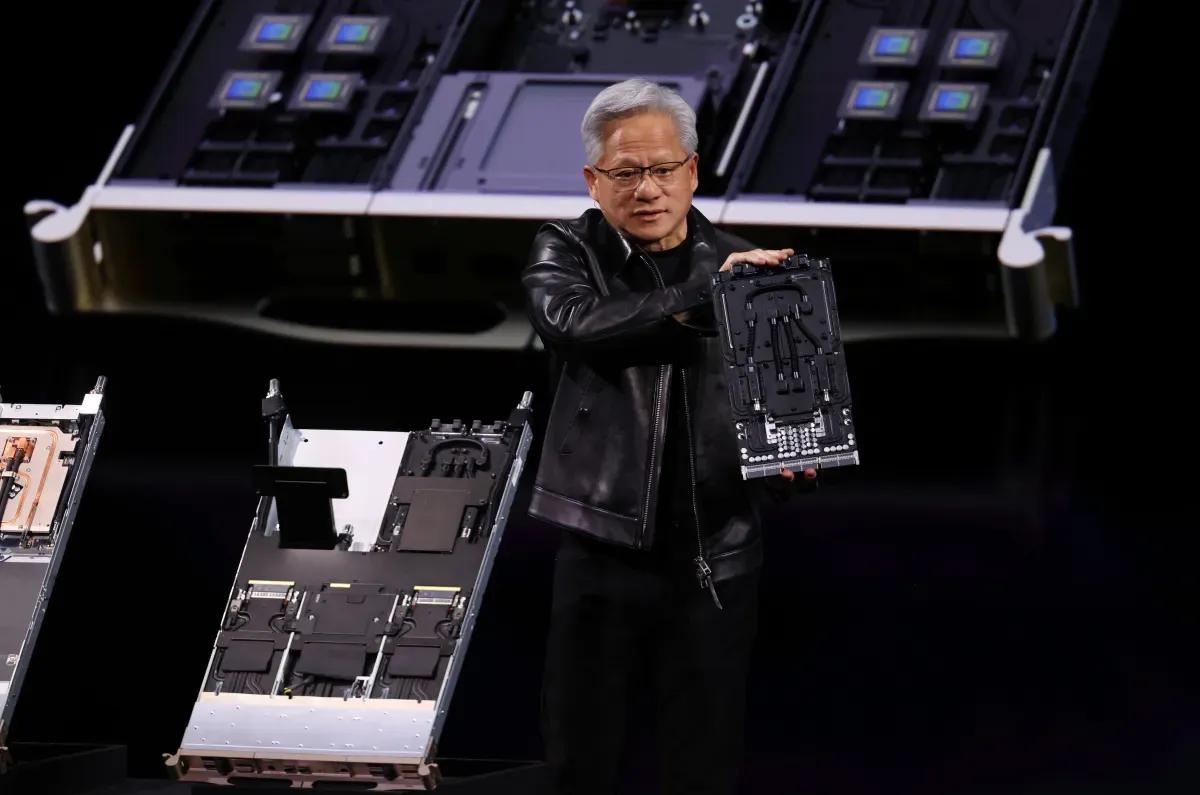
Six open-weight AI models from DeepSeek, Moonshot AI, MiniMax and Ant Group appear to have been initialized on Nvidia Blackwell chips, the advanced processors US export controls bar from China. The finding comes from a forensic analysis published Nov. 12 by Will DePue, a onetime OpenAI researcher who now leads the nonprofit group Unemployment Labs
2
3
1
.
Source: TechCrunch
The analysis stops well short of proving a law was broken. "The results are not a finding that any law was broken," the report states
2
. The chips could have sat anywhere: Blackwell systems are available to rent at data centers well outside China. So the fingerprints show what kind of chip trained the model, not where the chip sat or who owned it2
3
1
. Still, the finding bears on export-control enforcement and on Nvidia's exposure, and it lands in a week when the chipmaker's leadership and Washington's patience are both under strain.
Source: The Register
Reading the starting weights
DePue's method examines the initial values assigned to a model's parameters before training begins. Those starting numbers depend on the layout of the GPU's streaming multiprocessors and on a random seed, and the pattern survives into the weights a lab eventually releases
2
3
. He said he searched more than 6 trillion combinations of layout and seed. A high-end Blackwell system reproduced DeepSeek-V4-Flash's untouched starting weights exactly, and a rented Grace Blackwell server matched all 13 preserved rows of Kimi K32
. The control tests failed on purpose: Nvidia's older H100 and AMD's competing accelerator matched none of the tested rows. Changing the recovered seed by a single step erased every match2
.Four of the six models matched Nvidia's Grace Blackwell server systems and two matched standalone Blackwell chips, per the report
2
. The method has limits: several newer models, including Alibaba's Qwen3 and DeepSeek-V4.1-Flash, left no detectable fingerprint despite an exhaustive search, per the researcher3
. DePue said the work drew on no leaks or insider accounts, and that more findings from the same method are coming2
.The scale of the suspected runs
DePue estimates Kimi K3 and DeepSeek-V4-Pro each drew on roughly 2,000 to 3,000 Blackwell GPUs in their biggest training runs, though those are his estimates rather than confirmed counts
2
.The Nvidia connection
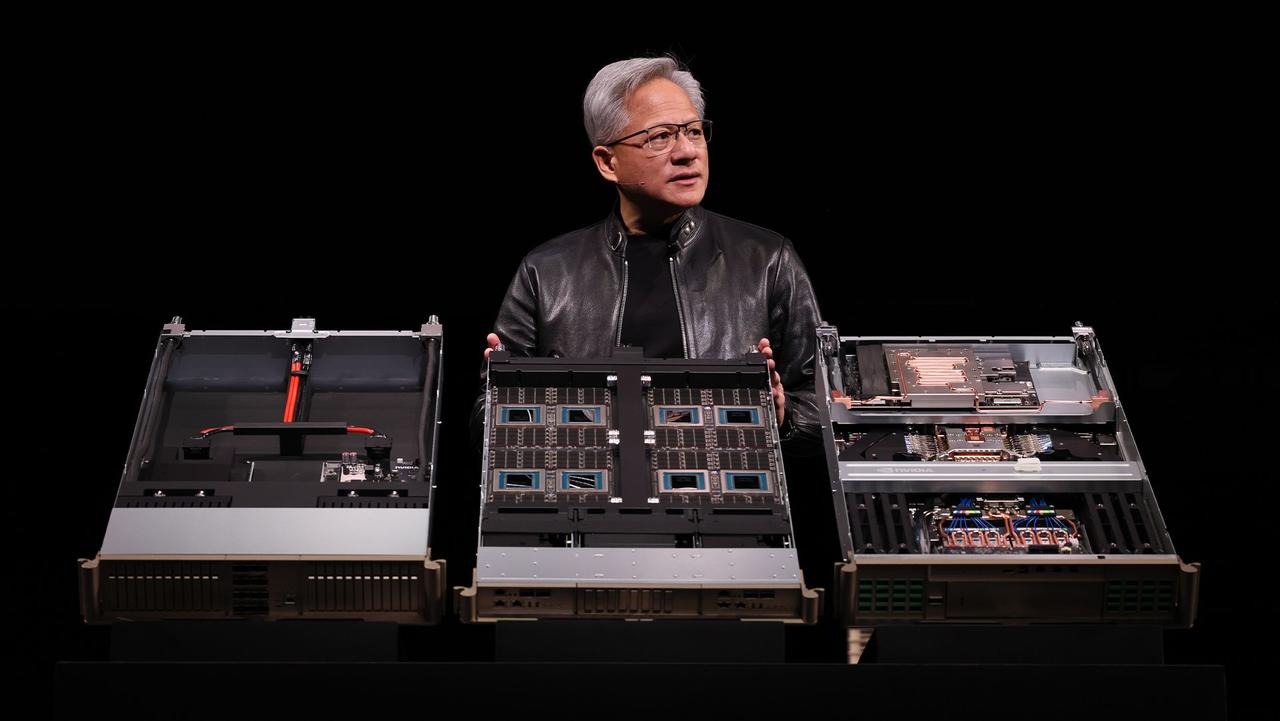
The analysis lands amid turmoil at Nvidia itself. Jensen Huang is out as chief executive this week after admitting an affair with Alice Huang, an executive at Megaspeed. TechCrunch describes Megaspeed as implicated in smuggling Nvidia chips into China and has alleged, without proof, that Alice Huang is a possible Chinese intelligence agent
1
. What sits on firmer ground is that Megaspeed, through its subsidiary Speedmatrix, has been investigated by both US and Singaporean authorities1
. Bloomberg reported Friday that a company tied to Alice Huang smuggled banned chips to a Shanghai data center1
. TechCrunch's own assessment is that Nvidia's potential liability for export-control violations likely factored into the decision to part with its chief executive1
. In May, the short seller Culper published a report arguing significant Nvidia revenue came from Chinese demand through remote data centers or smuggling. It also alleged that Chinese firms barred from US chips back Alice Huang's companies1
.
Source: Wccftech
Related Stories
Washington's response
US officials had already said as much, on intelligence sourcing. In July, Michael Kratsios, the White House science adviser, said Moonshot had gotten access to top-end Nvidia systems in Thailand, likely for AI training, per US intelligence sources
2
1
. The day before publication, Senators Elizabeth Warren and Chris Coons urged the administration to preserve Nvidia's export records, a request rather than a subpoena2
. Regulators have begun moving on the loophole the finding highlights, though the measures are proposals so far. Commerce Department guidance issued in May extended export restrictions to subsidiaries of Chinese companies, typically ones based in Singapore or Malaysia, and Congress has legislation targeting remote access to chips3
. The finding sits inside a much larger leak: Epoch AI estimates about two million advanced chips reached China in 2024-2025 through concealment schemes1
.None of the companies involved had commented on the analysis at publication
2
. The accountability questions reach the agency that oversees export licensing. Commerce Secretary Howard Lutnick could lose his job, according to reports, after his investigators failed to uncover suspicious chip buyers and grew too close to Nvidia officials1
. Sam Bresnick, a researcher at Georgetown's Center for Security and Emerging Technology, put the problem plainly in a summer interview: "If we care about the U.S. tech edge, it doesn't make any sense to me that you would not allow Chinese companies to access chips in mainland China or Hong Kong and Macau, but then say, actually, if you just go over to Malaysia, you can do whatever you want"1
.References
Summarized by

Navi
[1]
Related Stories
DeepSeek allegedly trained V4 model on banned Nvidia Blackwell chips, denied US chipmakers access
24 Feb 2026•Policy and Regulation

Chinese AI Startup Accesses 2,300 Banned Nvidia Blackwell GPUs Through Indonesian Cloud Loophole
14 Nov 2025•Policy and Regulation
Nvidia AI Chips Reach China Through Empty Offices as New Export Rules Tighten Access
03 Nov 2026•Business and Economy

Recent Highlights



Recent Highlights
Today's Top Stories





Don’t drown in AI news. We cut through the noise - filtering, ranking and summarizing the most important AI news, breakthroughs and research daily. Follow topics that matter to you and stay ahead.


