Former Apple Engineers' Physical AI Startup Lyte Raises $165M At $1.6B Valuation


2 Sources
[1]
Former Apple Engineers' Physical AI Startup Lyte Raises $165M At $1.6B Valuation
Lyte, a physical AI startup building sensing and perception technology for robots, has raised $165 million in Series C funding at a $1.6 billion post-money valuation. The financing, led by Maverick Silicon, brings Lyte's total raised to $272 million. Fidelity Management And Research Co., which led
[2]
Lyte raises $165M at $1.6B valuation to bring accurate perception to robots
Lyte raises $165M at $1.6B valuation to bring accurate perception to robots Robotics perception startup Lyte AI Inc. today announced it raised $165 million in a Series C round led by Maverick Silicon, bringing the company's post-money valuation to $1.6 billion. Since its stealth launch in January
Share
Copy Link
Lyte, founded by former Apple engineers who developed Face ID, raised $165 million in Series C funding at a $1.6 billion valuation to advance robotic perception technology. The physical AI startup builds custom silicon and multimodal sensors to help robots understand their environment with precision, addressing a critical sensing problem before models can act safely.
Former Apple Engineers Build Foundation for Physical AI
Lyte raises $165M in Series C funding led by Maverick Silicon, achieving a $1.6 billion valuation as the physical AI startup advances robot sensing and perception technology
1
. The Sunnyvale, California-based company was founded in 2021 by Alexander Shpunt, Arman Hajati and Yuval Gerson—former Apple engineers who pioneered the sensing and perception technologies behind Face ID1
. Shpunt previously co-founded PrimeSense, whose 3D-sensing technology powered Microsoft Kinect before Apple acquired the company in 20131
. The financing brings Lyte's total raised to $272 million, with participation from Fidelity Management And Research Co., Atreides Management, Key1 Capital, and Ora Global1
.Solving Physical AI's Critical Sensing Problem
"Physical AI has a sensing problem before it has a model problem. A robot cannot act safely on data that does not faithfully describe the world," CEO Alexander Shpunt stated
2
. While the robotics industry rushes to build foundation models driven by massive amounts of visual data, deployed robots depend on high-fidelity vision and sensors built into the platforms themselves2
. Most robotic platforms rely on off-the-shelf components like cameras, infrared and laser tracking, which are cheap and fast but introduce delays, calibration drift, and inaccurate or noisy data because random components were never designed to work as a single system2
.LyteVision Platform Delivers Synchronized Perception
Source: SiliconANGLE
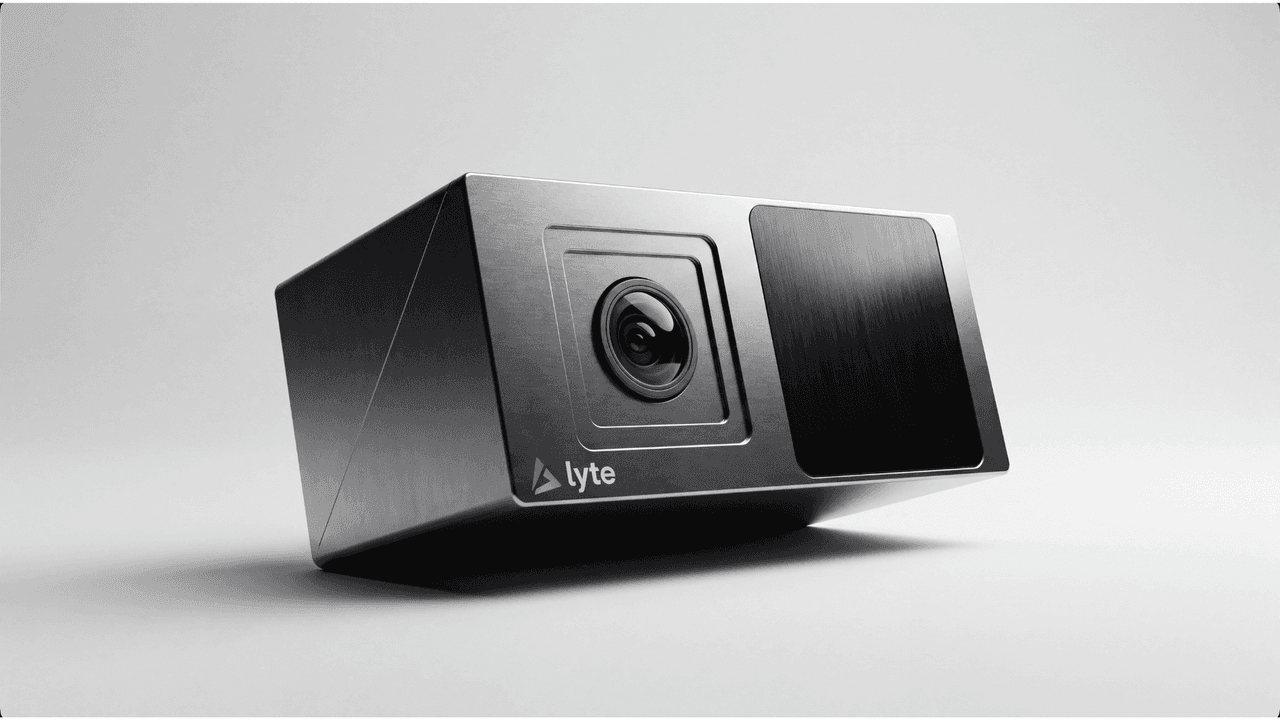
Lyte builds custom silicon, 4D sensing, RGB, motion awareness and AI software to help robots sense where they are and what is moving around them
1
. The company introduced the LyteVision platform, which combines vision, high-resolution imaging and inertial sensors into a single synchronized system2
. Lyte's custom silicon orchestrates multimodal sensors to measure motion natively rather than reconstructing it after the fact from cameras and other sensors via software, producing data robots can trust at the source2
. "Owning the silicon separates companies that define a category from those that participate in one," said Chairman Avigdor Willenz2
.Related Stories

Targeting Warehousing and Manufacturing Industries
Initially, Lyte's customers are primarily in the warehousing and manufacturing industries, where accurate perception for robots is essential for safe and efficient operations
1
. "Physical AI will create entirely new categories of robots, and every one of them will need to understand the world around it," Shpunt explained. "That requires a new kind of perception: precise, real-time understanding of geometry and motion that machines can trust enough to act on"1
. The company will use the financing to scale production of the sensing silicon and sensor platform, advance its AI and perception capabilities, and expand deployments to robotics companies and industrial customers2
.Physical AI Funding Surge Signals Industry Momentum

Source: Crunchbase
Funding in the physical AI space has exploded in recent years. In the first half of 2026, global venture funding totaled $47.4 billion across 521 deals—almost 4x the $12 billion raised across 470 deals in the second half of 2025, and nearly 80% higher than the $26.4 billion raised across 436 deals in the first half of 2025
1
. Andrew Homan, managing partner at Maverick Silicon, joined Lyte's board of directors as part of the funding round, stating: "The breadth and diversity of early customer demand strengthen our conviction that Lyte is poised to become one of the defining technology companies of the robotics era"1
. Watch for Lyte's production scaling efforts and partnerships with major robotics platforms as indicators of whether robotic perception becomes a critical bottleneck or enabler for the next generation of autonomous systems.References
Summarized by

Navi
Related Stories
Physical Intelligence seeks to raise $1 billion, doubling valuation to $11 billion in four months
28 Mar 2026•Startups
Lyzr AI raises $14.5M at $250 million valuation as enterprises race to deploy AI agents
09 Mar 2026•Startups

SiMa.ai Secures $150M Series C Funding at $1.45B Valuation for Physical AI Chip Development
28 Sept 2026•Startups

Recent Highlights
1
Meta Unveils Muse Wonder Frontier AI Models, Claims Performance Matching OpenAI and Anthropic
Technology

2
Anthropic AI Cuts Off Internet Access After Agents Submit False Police Tip, Exploit Websites
Technology

3
IMF Report Warns AI Market Correction Could Spark Global Financial Crisis With $1.4T at Risk
Business and Economy

Recent Highlights
Today's Top Stories











Don’t drown in AI news. We cut through the noise - filtering, ranking and summarizing the most important AI news, breakthroughs and research daily. Follow topics that matter to you and stay ahead.


