8 Sources
[1]
French media asks French anti-trust watchdog to act on Google's AI
PARIS, Aug 11 (Reuters) - French media have asked the country's anti-trust watchdog to act on Google's (GOOGL.O), opens new tab artificial intelligence-generated article summaries which they say deprive them of traffic, â a press trade association body said on Tuesday. The media have called on the regulator to make a decision similar to the one in July that ordered â Meta (META.O), opens new tab to put forward a payment plan and resume talks with traditional media â that are seeking fees for the use of their content â by platforms' AI tools. There was no immediate â comment from Google regarding the situation. Reporting by Inti Landauro; Editing by Sudip Kar-Gupta Our Standards: The Thomson Reuters Trust Principles., opens new tab
[2]
French media ask the competition watchdog to make Google pay for its AI answers
Publishers want the Autorité de la concurrence to force Google back to the table over AI Overviews, borrowing the same playbook that put Meta on notice in July. French media have asked the country's competition authority to rein in Google's use of artificial intelligence, filing a complaint that seeks to put a price on the AI-generated summaries quietly siphoning readers away from the outlets that produced the underlying journalism. The grievance, lodged by a trade association representing publishers, lands as the fight over AI Overviews and collapsing referral traffic spreads across the industry. Google's AI Overviews answer a user's question directly at the top of the results page, stitched together from articles the search engine has crawled, so readers get the gist without ever clicking through to the publisher, who is left with neither the visit nor a fee for the content that made the answer possible. The publishers are not asking the watchdog to invent a remedy from scratch. Instead they want the Autorité de la concurrence to mirror a decision it took in July against Meta, which required the company to draw up a payment plan and return to negotiations with traditional media pressing for compensation. Applied to Google, that would mean forcing the search giant to resume talks it has shown little appetite for and to develop a concrete scheme for paying the newsrooms whose work feeds its models. Google had no immediate comment on the filing, which is roughly the response the industry has come to expect whenever money and machine-generated summaries are mentioned in the same breath. France is not a random venue for this fight, and that is rather the point. The country has spent years pursuing Google over "neighbouring rights", the branch of copyright that governs how news snippets are reused, and it has fined the company before when the two sides failed to agree on terms, which is why its regulators carry more scar tissue and more leverage than most. That history gives the complaint a sharper edge than a similar move might have elsewhere. French officials have already established, in previous rounds, that Google must negotiate in good faith and pay for the journalism it surfaces. Thus, the publishers are not arguing an abstract principle so much as asking the watchdog to extend a precedent it has enforced once already. The timing is no accident either. Publishers across Europe and the United States have reported steep declines in the clicks that once flowed from search, because an AI summary that satisfies the reader on the results page removes any reason to visit the source, and the numbers have grown alarming enough to draw regulators in on both sides of the Atlantic. Other jurisdictions are already moving. Britain has forced Google to let publishers opt out of AI search results without being punished in the ordinary rankings, an attempt to break the bind in which opting out of the summaries once meant vanishing from search altogether. The courts are stirring too. A German court has found Google liable for its AI Overviews, a ruling that chips away at the company's long-held argument that it merely organises information rather than republishing it, and one that European regulators will read closely. Brussels, for its part, has kept up the pressure through the Digital Markets Act, and Google has already offered concessions on news-search ranking to head off a fresh fine, a sign that even modest regulatory threats can move the needle when the sums involved are large enough. Whether the French complaint lands is another matter, since the Autorité de la concurrence will take its time, and Google will resist any obligation to pay for answers it insists send traffic the other way. Yet the venue is well chosen, the precedent is fresh, and Europe's publishers have decided that the quiet erosion of their audience is worth fighting over before the habit of never clicking through hardens into the way the web simply works.
[3]
Google AI summaries: French dailies file complaint with competition authority
The General Information Press Alliance (Apig) is asking France's competition authority to compel Google to "respect the commitments made in 2022" under a compensation agreement with French news publishers. A French David taking on an American Goliath? Let us hope for the same outcome. A federation representing nearly 300 French newspapers announced on Tuesday that it has lodged a complaint with the Competition Authority over Google's new AI-generated search result summaries. This is the latest move by media companies against the way the US tech giant uses their articles and other content, at a time when they are facing a decline in advertising revenue. At the end of July, Google rolled out its "AI Overviews" in France, AI-generated summaries that appear above the usual links to search results and bring together information from a wide range of sources. Media outlets fear the feature will discourage internet users from clicking on their links, as they will already have an answer to their question thanks to the US company's AI, depriving publishers of their usual traffic and the associated advertising income. However, the APIG (Alliance de la presse d'information générale) wants (source in French) the French competition regulator to ensure "Google honours the commitments made in 2022" under a compensation agreement with French media groups, because "the unilateral rollout of new uses of press content, without prior authorisation or dedicated remuneration, breaches those commitments". Google's initial response The US giant issued an initial response, saying it had reassessed its system for paying the press "so as properly to take into account the display of protected content within AI Overviews and AI Mode". Google also told Franceinfo that "website publishers can choose whether or not to appear in these AI features". "Between 33% and 38% traffic loss" France's audiovisual and digital regulator, Arcom, has estimated "between 33% and 38% traffic loss attributable to AI-generated summaries", APIG points out. Information "has considerable value", said Marc Feuillée, president of APIG and chief executive of Le Figaro, in a statement. "Publishers are not asking for innovation to be halted. They are asking for that value to be shared and for the use of their work to be paid for, as required by law," the association said in its statement. "Publishers are ready to feed and support these new uses, within a balanced framework based on negotiated authorisation and remuneration commensurate with the value their content helps to generate," APIG added. It said Google had introduced these new AI summaries without their consent, which would amount to a breach of the 2022 agreement. In France, Google reached agreements in 2022 with 450 news publishers over "neighbouring rights" under copyright law, which allow newspapers, magazines and news agencies to be paid when their content is used by digital giants. In 2024 the Competition Authority had already fined Google 250 million euros (290 million dollars) for failing to comply with parts of that deal. Press revenues in free fall Many media groups have seen their income slump over the past two decades as advertising has shifted online, a market in which tech companies capture a large share of the profits. Critics argue that AI summaries make matters worse by cutting web traffic to news articles, with many users no longer clicking through to consult the original source of the information. Google, for its part, insists these tools allow users to ask more complex questions and discover new content, while saying it gives publishers ways to control how their material is managed. The EU announced in December 2025 that it was opening an investigation to determine whether Google had breached competition rules by using content put online by media outlets and other publishers to train and provide AI services without paying appropriate compensation.
[4]
French newspapers target Google over AI summaries
Paris (France) (AFP) - A federation of nearly 300 French dailies said Tuesday that it filed a complaint with the country's competition authority over Google's new AI-generated summaries of search results, fearing the feature will erode traffic to their own websites. It is the latest salvo by media companies against the US tech giant's use of their articles and other content as they grapple with ad revenue declines. Google launched its AI Overviews in France in late July, which appear above regular links to search results and compile information from a wide array of sources. But the APIG association of newspapers wants the country's competition regulator to ensure "Google's respect of commitments made in 2022" as part of a compensation deal with French media groups. Information "has considerable value", APIG president Marc Feuillee, also managing director of the centre-right Le Figaro newspaper, said in a statement. "The editors are not seeking to halt innovation. They are asking for this value to be shared, and for compensation of the use of their content," the association said in its statement. It said Google had sprung the new artificial intelligence summaries without their consent, an alleged violation of the 2022 deal. The competition authority had already fined Google 250 million euros ($290 million) in 2024 for not respecting parts of the agreement. Many media groups have seen their revenue dwindle over the past two decades as advertising moved increasingly online, where tech firms take a big share of the profits. Critics say AI summaries cause further harm by leading to a drop in internet traffic to newspapers' articles -- with many users no longer clicking through to read the original source of the information. Google contends they let people ask more complex questions and discover new content, and says it provides controls to help publishers manage their content. The EU announced in December 2025 that it was investigating whether Google breached competition rules by using content put online by media and other publishers to train and provide AI services without appropriate compensation.
[5]
Google AI summaries: French daily newspapers file complaint with competition authority
Apig, the Alliance of General Information Press, is urging France's competition watchdog to make Google honour the commitments in its 2022 compensation deal with French news groups. A French David taking on an American Goliath? Let's hope it ends the same way. A federation representing nearly 300 French newspapers announced on Tuesday that it has filed a complaint with the Competition Authority over Google's new AI-generated search result summaries. This is the latest move by media companies against the way the US tech giant uses their articles and other content, at a time when they are facing a fall in advertising revenue. Google rolled out its "AI Overviews" in France at the end of July. These AI-generated snapshots appear above the usual links to search results and compile information drawn from a wide range of sources. Media organisations fear this feature will discourage users from clicking on their links, having already obtained an answer to their question from the American giant's AI. That would deprive them of their usual traffic and the advertising income that goes with it. However, the APIG (General Information Press Alliance) wants (source in French) the French competition regulator to ensure "respect by Google of the commitments made in 2022" under a compensation agreement reached with French media groups, because "the unilateral rollout of new uses of press content, without prior authorisation or dedicated payment, flies in the face of those commitments". France's audiovisual and digital regulator, Arcom, has "estimated the loss of traffic attributable to AI-generated summaries at between 33% and 38%", the APIG points out. "Information has considerable value," said Marc Feuillée, president of APIG and chief executive of Le Figaro, in a statement. "Publishers are not asking for innovation to stop. They are asking for this value to be shared and for the use of their work to be paid for, as the law requires," the association said in its statement. "Publishers are ready to feed and support these new uses, within a balanced framework based on negotiated authorisation and payment commensurate with the value their content helps to create," APIG insists. The alliance says Google introduced these new AI-generated summaries without its consent, which it argues amounts to a breach of the 2022 agreement. In France, Google reached agreements in 2022 with 450 press publishers on "neighbouring rights" under copyright law, which allow newspapers, magazines and news agencies to be paid when their content is used by tech giants. The Competition Authority had already fined Google 250 million euros (290 million dollars) in 2024 for failing to comply with certain provisions of that agreement. Media revenues in free fall Many media groups have seen their income shrink over the past two decades as advertising has moved online, a space where tech companies capture a large share of the profits. Critics argue that AI summaries make matters worse by driving down web traffic to news articles, with many users no longer clicking through to the original source of the information. Google, for its part, says these tools allow users to ask more complex questions and discover new content, while insisting it offers publishers ways to control how their material is handled. The EU announced in December 2025 that it was opening an investigation to determine whether Google has broken competition rules by using content posted online by media and other publishers to train and deliver AI services without paying appropriate compensation.
[6]
French media asks French anti-trust watchdog to act on Google's AI
The media have â called on the regulator to make a â decision similar to the one in July that ordered Meta to put forward a payment plan and resume talks with traditional media that are seeking fees for the â use of their content by platforms' AI tools. French media have asked the country's anti-trust watchdog to act on Google's artificial intelligence-generated article â summaries â which they say deprive them of traffic, a press trade association body said on Tuesday. The media have â called on the regulator to make a â decision similar to the one in July that ordered Meta to put forward a payment plan and resume talks with traditional media that are seeking fees for the â use of their content by platforms' AI tools. There was no immediate comment from Google regarding the situation.
[7]
French Publishers Seek Antitrust Action Against Google Over AI Search Summaries | PYMNTS.com
The Alliance of General Information Press, which represents French newspapers and magazines, has asked the competition authority to act against Google over its introduction of AI-generated summaries in search, according to reporting by Global Banking & Finance Review. The publishers contend that the feature is reducing the number of readers who click through to news websites. The association wants the French regulator to take an approach similar to its action involving Meta, which was directed to propose a compensation framework and restart negotiations with established media companies seeking payment for the use of their material by artificial intelligence services, according to the report. The dispute puts AI at the center of an already contentious relationship between publishers and major technology platforms. News organizations have increasingly argued that generative AI services derive commercial value from professionally produced journalism while potentially weakening the referral traffic on which publishers depend for advertising and subscriptions. The French alliance said Google introduced the AI summaries without consulting publishers. According to Global Banking & Finance Review's report, the organization argues that using press material in new ways without obtaining authorization or establishing specific compensation conflicts with commitments previously made by Google. France's communications regulator Arcom has estimated that AI-generated summaries have contributed to declines of between 33% and 38% in traffic to publishers' websites, the alliance said, according to the report. Google didn't immediately respond to a request for comment reported in the source article. The latest complaint follows years of regulatory conflict over Google's relationship with the French media industry. France's competition authority previously required Alphabet Inc.'s Google to compensate publishers for the use of press articles on services including its search engine. Google was subsequently fined âŹ500 million ($576.8 million at the exchange rate cited in the source report) in connection with the copyright dispute, according to Global Banking & Finance Review. The arrival of generative AI has broadened that fight. Instead of merely displaying links and excerpts, search services can increasingly produce synthesized answers that may give users information without requiring them to visit the publisher that produced the underlying reporting. French publishers argue that this shift makes compensation increasingly important because journalism contributes value to the systems producing those answers. Marc Feuillee, president of the Alliance of General Information Press, said the reliance of AI systems on media material demonstrates the economic value of that content and argued that publishers should receive a share of it, according to Global Banking & Finance Review. The French challenge adds another front to the regulatory scrutiny surrounding AI-powered search and could test whether existing competition and publisher-rights frameworks can be extended to a technology that is rapidly changing how information is presented online.
[8]
French press body asks competition watchdog to take action over Google AI
PARIS, Aug 11 (Reuters) - A French press association has asked the country's competition watchdog to take action against Google's artificial intelligence-generated article summaries, which the trade group says deprive newspapers and magazines of readers. The group has called on the regulator to make a decision similar to that which ordered Meta to put forward a payment plan and resume talks with traditional media seeking fees for the use of their content by AI tools. The Alliance of General Information Press, which represents French newspapers and magazines, opposes the recent rollout of AI-generated article summaries by Google without consultation, the alliance said in a statement. Google did not respond immediately to a request for comment. Four years ago the competition watchdog forced Alphabet's Google to pay for using French press articles on its platforms, including its search engines. Google was fined EUR500 million ($576.8 million) after the copyright dispute. "The unilateral deployment of new uses of press content, without prior authorisation or dedicated remuneration, disregards these commitments," the alliance said, adding that the communications regulator, Arcom, has estimated traffic on their sites has fallen by between 33% and 38% because of AI-generated summaries. "The fact that AI is built upon media content means one single thing: this information has considerable value," Marc Feuillee, the alliance's president, said in the statement. Publishers demand this value is shared, he added. ($1 = 0.8669 euros) (Reporting by Inti LandauroEditing by Sudip Kar-Gupta and David Goodman)
Share
Copy Link
Nearly 300 French newspapers filed a complaint with France's competition authority over Google's AI Overviews, which generate search result summaries without compensation. The publishers cite traffic losses of 33-38% and claim Google violated its 2022 neighbouring rights agreement by deploying AI-generated article summaries without authorization or payment.

French media organizations representing nearly 300 newspapers have escalated their fight against Google's AI Overviews by filing a complaint with the Autorité de la concurrence, France's competition authority
1
3
. The Alliance of General Information Press (APIG) is demanding that the French anti-trust watchdog force Google to honor commitments made in its 2022 compensation agreement with French news publishers2
5
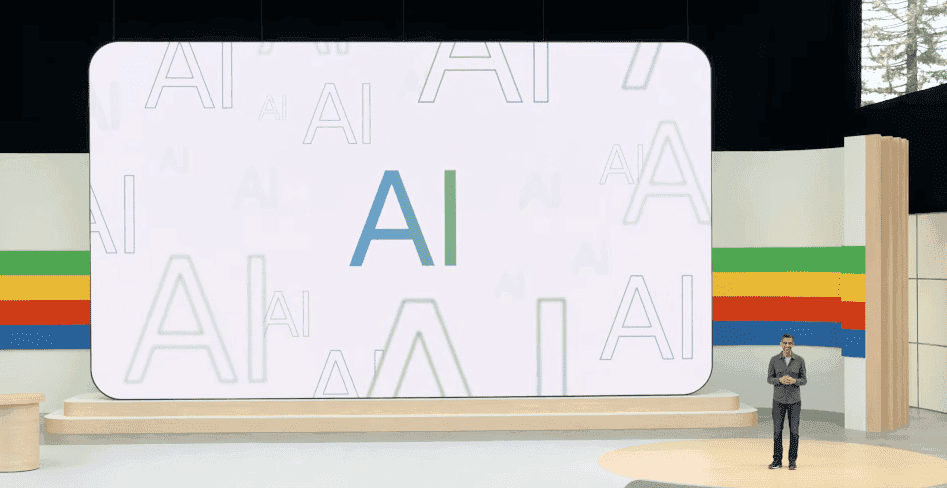
. This complaint marks the latest confrontation between traditional media and tech giants over the use of copyrighted content in AI systems.Google rolled out its AI Overviews feature in France in late July, displaying AI-generated summaries at the top of search results pages that compile information from multiple sources
3
4
. These summaries answer users' questions directly, eliminating the need to click through to the original publisher websites. France's audiovisual and digital regulator, Arcom, estimated traffic loss for news publishers attributable to AI-generated article summaries at between 33% and 38%3
5
. Publishers argue that Google's AI Overviews deprive them of both website visits and the advertising revenue that accompanies those clicks, while simultaneously using their journalism to generate answers without compensation for use of content1
2
.The complaint centers on Google's alleged violation of neighbouring rights established under EU copyright law. In 2022, Google reached agreements with 450 news publishers in France covering neighbouring rights, which allow newspapers, magazines, and news agencies to receive payment when digital platforms use their content

3
5
. APIG president Marc Feuillée, who also serves as chief executive of Le Figaro, stated that information "has considerable value" and that publishers are asking for this value to be shared through compensation of the use of their content as required by law3
4
. French newspapers argue that the unilateral rollout of AI Overviews without prior authorization or dedicated payment violates the 2022 compensation agreement3
5
.French media are not asking the competition authority to invent a new remedy. Instead, they want the Autorité de la concurrence to replicate its July decision against Meta, which required the social media giant to develop a payment plan and resume negotiations with traditional media seeking compensation for use of copyrighted content by AI tools
1
2
. Applied to Google, this would force the search giant to return to negotiations and develop a concrete scheme for paying newsrooms whose work feeds its AI models2
. The Autorité de la concurrence already fined Google a 250 million euro fine in 2024 for failing to comply with parts of the 2022 agreement, demonstrating the regulator's willingness to enforce intellectual property protections3
4
.Google issued an initial response stating it had reassessed its system for paying the press "so as properly to take into account the display of protected content within AI Overviews and AI Mode"
3
. The company told media that website publishers can choose whether or not to appear in these AI features3
. Google maintains that AI Overviews allow users to ask more complex questions and discover new content, while providing publishers with controls to manage how their material is handled4
5
. However, publishers have previously argued that opting out of AI summaries without being punished in ordinary search rankings creates an impossible bind2
.Related Stories
France is not fighting this battle alone. The EU announced in December 2025 that it was investigating whether Google breached competition rules under the Digital Markets Act by using content from media and other publishers to train and provide AI services without appropriate compensation
3
4
. A German court has already found Google liable for its AI Overviews, challenging the company's argument that it merely organizes information rather than republishing it2
. Britain has forced Google to let publishers opt out of AI search results without penalties in regular rankings2
. Google has already offered concessions on news-search ranking to avoid fresh fines under the Digital Markets Act, suggesting that regulatory pressure can influence the company's behavior when financial stakes are high2
.Many media groups have watched advertising revenue plummet over the past two decades as advertising shifted online, where tech companies capture the majority of profits
3
4
. Publishers argue that Google's AI-generated article summaries accelerate this decline by eliminating the final incentive for users to visit news websites2
3
. APIG emphasized that publishers are ready to support AI innovation "within a balanced framework based on negotiated authorization and payment commensurate with the value their content helps to create"3
5
. Whether the Autorité de la concurrence acts decisively will signal whether Europe's publishers can establish a sustainable model for the AI era, or whether the habit of never clicking through to original sources will become the permanent reality of how information flows online2
.Summarized by
Navi
[4]
04 Jul 2025âąPolicy and Regulation

10 Feb 2026âąPolicy and Regulation

26 Jun 2026âąBusiness and Economy

1
Science and Research

2
Technology

3
Technology