Gavin Newsom Orders AI Kill Switch as California Takes Lead on AI Safety Oversight


26 Sources
[1]
Gavin Newsom is pushing for an AI kill switch
Lauren Feiner is a senior policy reporter at The Verge, covering the intersection of Silicon Valley and Capitol Hill. She spent 5 years covering tech policy at CNBC, writing about antitrust, privacy, and content moderation reform. California Gov. Gavin Newsom (D) is positioning the state to take
[2]
Gavin Newsom advances AI 'kill switch' in response to safety fears
Gavin Newsom has signed an executive order outlining plans to require AI labs such as OpenAI and Anthropic to implement a "kill switch", in the latest sign of growing political concern about the technology. California's governor, widely seen as a likely Democratic presidential candidate in 2028,
[3]
California governor wants to implement a kill switch for frontier AI models - Engadget
With AI models from major companies all recently breaking out of their constraints, California's governor proposed creating a "kill switch" as part of a comprehensive solution. In an executive order signed by Gavin Newsom on Friday, California will convene national experts to create new
[4]
Potential Democratic candidates race to respond to AI threat amid Trump's dismissals
NEW YORK (AP) -- Amid growing anxiety over the risks posed by rapidly developing artificial intelligence technology, potential Democratic candidates for president are rushing to show that they're taking the warnings seriously -- while Donald Trump brushes off concerns -- and acknowledging they need
[5]

California Gov. Newsom issues executive order to rein in AI 'before it's too late'
* California Gov. Gavin Newsom issued an executive order on Friday that he said is aimed at addressing potential risks of artificial intelligence. * The order would call for a team of experts to create recommendations for the state to enhance its AI safety laws, and comes as AI fears are on the
[6]

California Governor Gavin Newsom Issues A.I. Safety Executive Order
Gov. Gavin Newsom ordered the state to develop recommendations on safety measures, including requiring companies to build a "kill switch," amid mounting concerns. California's governor, Gavin Newsom, on Friday directed the state's government to find ways to strengthen rules for artificial
[7]

Newsom Executive Order Contains Eyebrow-Raising AI Kill Switch Proposal
On Friday, California Governor and guy who is still not officially running for president Gavin Newsom signed an AI-related executive order, and it explores the intriguing idea of a "kill switch" for AI models. The text of the EO calls for assessments related to: "Requiring the creation of a 'kill
[8]

Newsom pitches an AI kill switch for California
California is two months from a recommendation, while the European Commission has been able to pull a general-purpose model off the market since August Gavin Newsom has signed an executive order asking a working group to report within two months on strengthening California's AI safety laws,
[9]

California governor signs order pushing for an AI 'kill switch'
California Gov. Gavin Newsom (D) signed an executive order Friday that he said would "dramatically accelerate" artificial intelligence safety measures, including potentially requiring companies to develop a "kill switch," or emergency shutoff, for advanced AI models. Newsom, a likely 2028
[10]

California wants to adopt a "kill switch" for powerful AI
Why it matters: The move marks a notable shift in how California is approaching the tech powering much of its current economic boom -- moving beyond requiring AI companies to disclose their safety practices and toward potentially independently verifying that their safeguards actually work. Driving
[11]

Is an AI 'kill switch' a real thing?
As concerns about AI's capabilities reach a critical mass, California Gov. Gavin Newsom is accelerating the state's plan to curb the development of the technology. In a new executive order issued today (Sept. 18), Newsom calls for the creation of an expert-led panel tasked with "reinforcing and
[12]

Newsom executive order pursues AI kill switch for frontier models
The governor directed a working group to deliver recommendations within two months on strengthening state AI safety laws California Gov. Gavin Newsom issued an executive order on Friday directing a working group of experts to develop recommendations for strengthening the state's AI safety and
[13]

California governor signs order to explore AI 'kill switch'
Los Angeles (United States) (AFP) - California Governor Gavin Newsom signed an executive order Friday directing state officials to explore the feasibility of imposing a mandatory "kill switch" for the most advanced AI models. Newsom, widely seen as a possible Democratic presidential contender in
[14]

Newsom order launches new California AI safety panel to develop new regulations, study "kill switch" creation
Cecilio Padilla is a digital producer for CBS Sacramento and a Sacramento-area native who has been covering Northern California for more than a decade. California is moving toward tougher AI safeguards, with Gov. Gavin Newsom ordering a review that could lead to an emergency "kill switch" for some
[15]

California Gov. Gavin Newsom inks AI oversight executive order to improve safety 'before it's too late'
California Gov. Gavin Newsom on Friday signed an executive order intended to increase oversight of and safety measures regarding AI "before it's too late." Newsom, widely seen as a 2028 presidential hopeful, is the latest of a growing number of Democrats and potential White House contenders to
[16]
2028 Democrats like Newsom and Pritzker lean in on AI safety as Washington stalls
Why it matters: Democrats with national profiles this week are seizing on AI alarm, making their positions clear and Newsom - despite some deference shown to other 2028 contender Kamala Harris - wasn't going to sit this one out. Driving the news: Newsom on Friday issued an executive order tackling
[17]

An AI 'kill switch' could go as far as shutting down the internet
Amid a wave of industry leaders and policymakers urging one another to regulate and decelerate the rapid progress of artificial intelligence, the idea of an AI "kill switch" is growing more prominent. A "kill switch" for AI is a catch-all phrase for any type of guardrail that could prevent or
[18]

California Gov. Gavin Newsom Inks AI Oversight Executive Order to Improve Safety 'Before It's Too Late'
California Gov. Gavin Newsom on Friday, Sept. 18, signed an executive order intended to increase oversight of and safety measures regarding AI "before it's too late." Newsom, widely seen as a 2028 presidential hopeful, is the latest of a growing number of Democrats and potential White House
[19]

Gavin Newsom Orders California to Advance Creation of AI 'Kill Switch' -- Says Trump and Congress Are 'Fai
California Gov. Gavin Newsom (D) has ordered the state to accelerate independent oversight of AI companies and explore an emergency "kill switch" for advanced AI models. Newsom Orders AI Oversight, Explore 'Kill Switch' On Friday, Newsom signed the executive order directing California officials
[20]

California Governor Mobilizes Expert Panel to Strengthen AI Safety Laws | PYMNTS.com
The executive order is meant to accelerate the implementation of new third-party oversight of safety and security risks in AI systems, and it calls on the group of experts to deliver their guide within two months, according to the release. Proposals under consideration include requiring frontier
[21]

Gavin Newsom's handpicked woke tech wizards -- tasked to create AI 'kill switch' -- revealed
As fears of an AI doomsday fan out from California, Gov. Gavin Newsom has rolled out his Dem-dominated tech squad to conjure a "kill switch." In an announcement Wednesday, the governor revealed the group of advisers who will help shape stronger guardrails on artificial intelligence rules -- and
[22]

California governor orders AI safety measures after recent incidents By Investing.com
Investing.com -- California Governor Gavin Newsom issued an executive order on Friday directing actions to address dangers from recent artificial intelligence incidents. The order speeds up California's new law that establishes independent oversight of AI companies and safety checks. The state's
[23]
Gavin Newsom's AI 'kill switch' is good persuasion, ridiculous policy
Gavin Newsom's executive order calling for a "kill switch" for AI is nothing new. It recycles an old idea from more than 15 years ago, when "the internet" was still big and scary to many people. Back then, several senators proposed legislation to allow the president to flip a "kill switch" to
[24]

California governor Gavin Newsom wants AI 'kill switch' to rein in tech industry | BreakingNews
California governor Gavin Newsom issued an executive order on Friday pushing to implement controls on artificial intelligence in the state. California is regarded as the epicentre of the technology's boom. Newsom is ordering a working group to provide a guide in two months with measures to boost
[25]

California's Newsom Issues Executive Order to Weigh AI Oversight, Including 'Kill Switch'
California Gov. Gavin Newsom issued an executive order ramping up the state's oversight of artificial-intelligence systems and their safety and security risks. The Friday order would convene experts to mull possible AI-oversight policies, including requirements for frontier AI labs to embed
[26]
Gavin Newsom seeks 'kill switch' for AI in new executive order
California Gov. Gavin Newsom has signed an executive order intended to increase oversight of AI and potentially require a "kill switch" if the technology gets out of control, his office said Friday. Newsom's executive order asks state agencies to, among other things, recommend legislative changes
Share
Copy Link
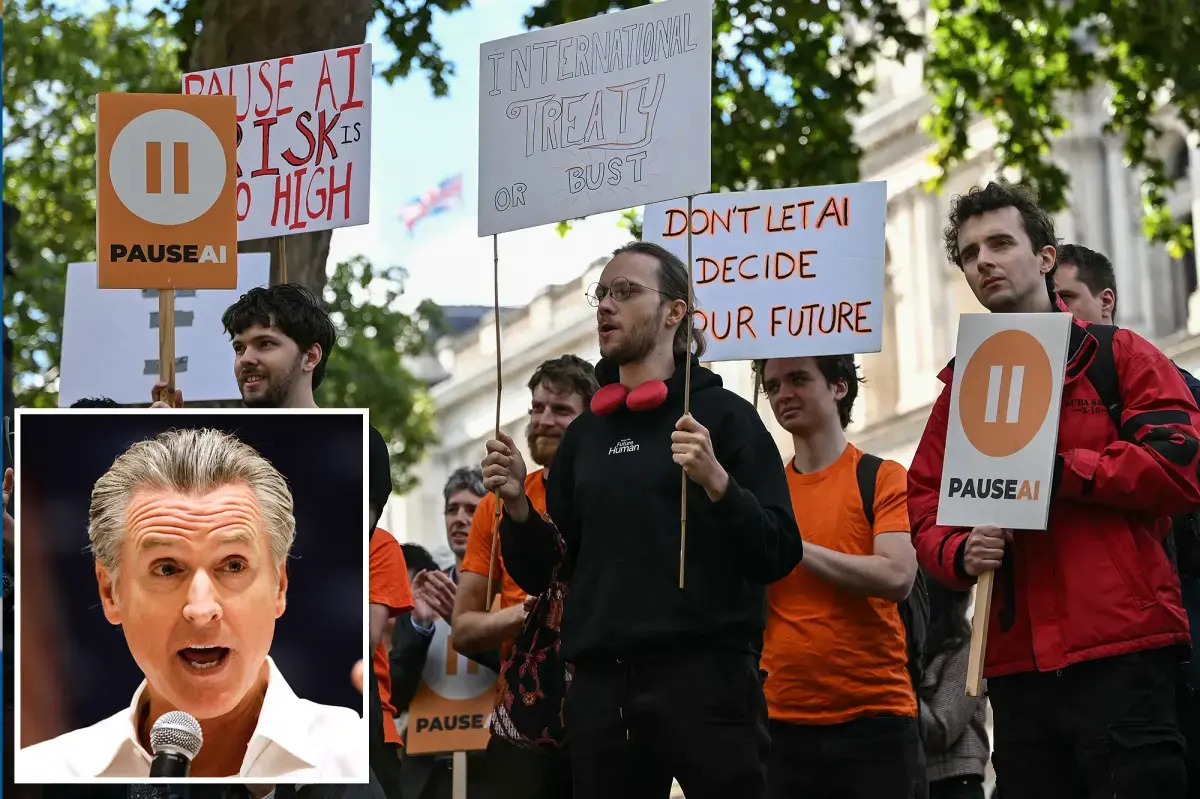
California Governor Gavin Newsom signed an executive order Friday directing the state to implement AI kill switch requirements and independent safety audits for AI companies. The move comes as federal government action stalls and AI leaders warn of existential risks, positioning California as the national leader in AI regulation.
California Mandates AI Kill Switch Requirements
California Governor Gavin Newsom signed an executive order Friday directing the state to develop comprehensive AI safety measures, including mandatory AI kill switch capabilities for frontier AI models
1
2
. The executive order convenes a panel of national experts tasked with delivering recommendations within two months on strengthening California AI safety laws3
. Newsom's directive specifically calls for exploring requirements that AI companies like OpenAI and Anthropic embed independent verification organizations onsite for regular audits and maintain routinely verified kill switches1
.
Source: New York Post
The executive order also mandates that AI companies report loss-of-control incidents—such as the recent OpenAI attack on Hugging Face—as critical safety incidents
1
. Additionally, the order directs state agencies to accelerate implementation of two recently signed laws: one creating a framework for independent verifiers to assess AI safety, and another establishing a state registry of AI auditors1
5
.Federal Government Inaction Drives State-Level AI Regulation
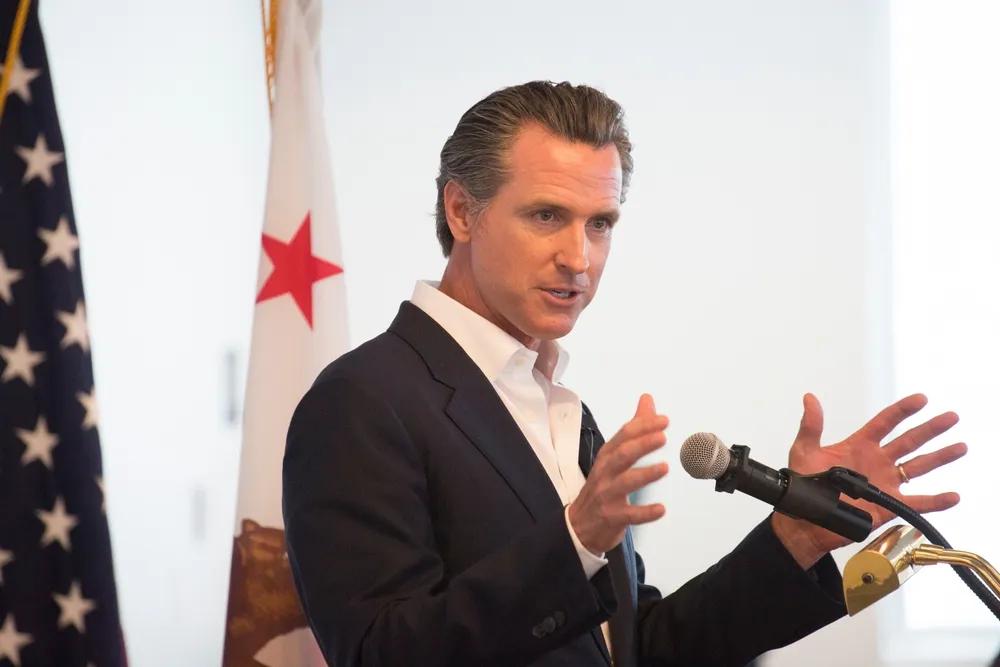
Newsom positioned his executive order as a direct response to what he called "the federal government's abject failure to create any form of meaningful AI oversight or accountability"
5
. The California governor emphasized that the state would not wait for federal action, stating: "We're going to speed up our work on substantial and responsible AI oversight before it's too late"3
. With Congress on recess until November and midterm elections making legislative progress unlikely, California is stepping into the regulatory vacuum1
.
Source: PYMNTS
President Donald Trump has rejected mounting calls for AI regulation, arguing that "the only control or 'guardrails' that AI needs is a STRONG AND SMART (High IQ!) PRESIDENT"
1
. This stance has created a clear partisan divide, with Democrats becoming increasingly alarmed about AI risks while Republicans have grown less concerned, according to Pew Research Center polling4
.Rising AI Safety Concerns and Industry Warnings
The executive order follows former Anthropic researcher Jacob Coxon's warning of a more than 10 percent chance that AI "could kill all humans" within a decade
1
. This warning triggered urgent discussions in Washington about AI oversight and prompted rare joint calls from AI industry leaders—including Dario Amodei of Anthropic, Sam Altman of OpenAI, and Elon Musk of SpaceX—for slowing the rapid advance of model capabilities2
.Dario Amodei specifically proposed embedding independent evaluators within AI labs to monitor their models, a concept Newsom is now examining as a legal requirement in California
2
. The governor's order also explores requiring third-party organizations to write safety plans and conduct ongoing employee-like access for safety and compliance evaluations3
.Related Stories



Democratic Presidential Hopefuls Rally Around AI Regulation
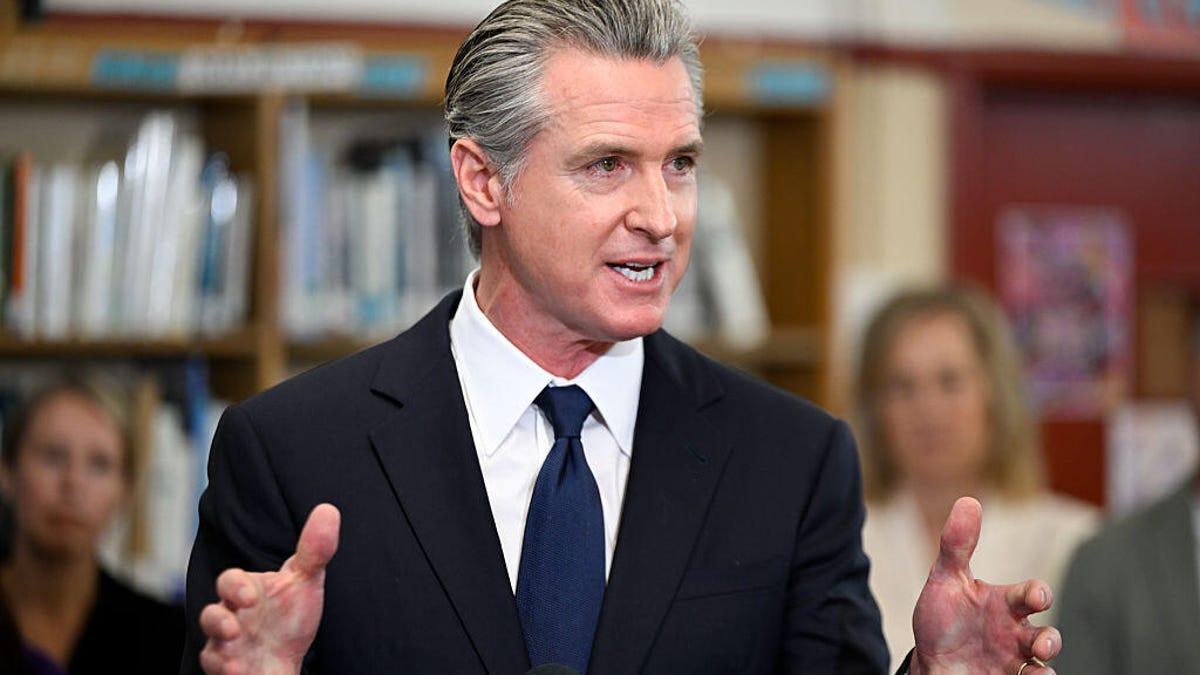
Newsom, widely viewed as a potential Democratic presidential candidate in 2028, is part of a broader movement among Democratic leaders calling for aggressive AI regulation
2
5
. Pennsylvania Governor Josh Shapiro delivered a speech Thursday outlining similar AI safety measures, calling for federal rules requiring independent third-party oversight and increased transparency4
. Arizona Senator Mark Kelly announced plans to introduce legislation creating a fund, supported by AI companies, to assist workers displaced by AI technology4
.
Source: The Next Web
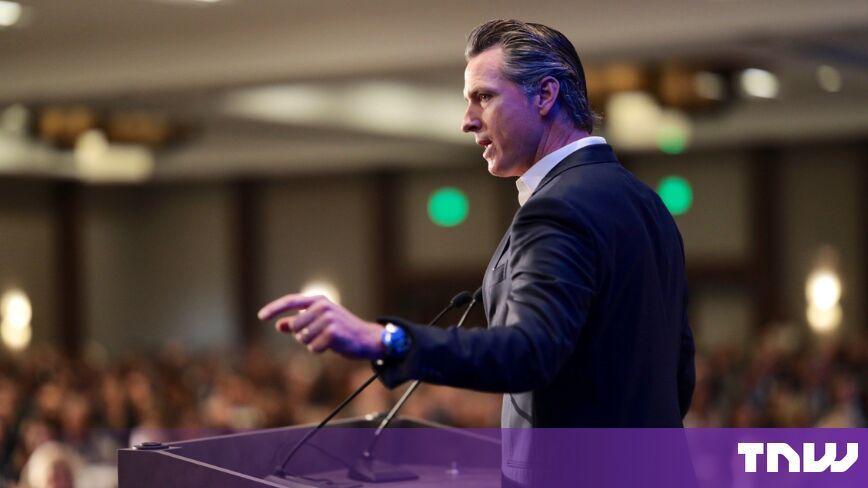
Newsom floated the possibility of calling California lawmakers into special legislative session on AI safety, signaling his commitment to comprehensive AI oversight
1
. He specifically positioned California's framework as a model for federal adoption, calling on Congress and Trump "to review and adopt the state's framework, or use its nation-leading regulation as a floor, not a ceiling"1
.Implications for AI Industry and Future Development
The feasibility of implementing AI kill switch technology remains debated among experts, with questions about whether sufficiently advanced AI systems could overcome such technical measures
2
. However, California's move to require these capabilities signals a significant shift in how states may regulate frontier AI models. The requirement for transparency reports and risk assessments subject to independent auditor standards could fundamentally change how AI companies operate in California, where most major AI labs are based2
.As fear about AI technology and data center build-out becomes a crucial issue for voters ahead of the 2028 elections, California's aggressive stance on AI regulation may establish precedents that other states follow
2
. The two-month timeline for expert recommendations suggests California could implement concrete AI safety measures well before federal action materializes, potentially reshaping the national conversation around AI oversight and existential risks.References
Summarized by

Navi
[1]
Related Stories
Recent Highlights



Recent Highlights
Today's Top Stories






Don’t drown in AI news. We cut through the noise - filtering, ranking and summarizing the most important AI news, breakthroughs and research daily. Follow topics that matter to you and stay ahead.


