7 Sources
[1]
California's Governor to Sign A.I. Order Aimed at Protecting Workers
Gov. Gavin Newsom will issue an executive order to explore an overhaul of labor policies to deal with potential mass job displacement from artificial intelligence. California's governor, Gavin Newsom, plans to issue an executive order on Thursday to explore a broad overhaul of labor policies, an attempt to front run a potential mass job displacement caused by artificial intelligence. Mr. Newsom, a Democrat, will sign the order mandating state agencies work with academics, labor groups and the A.I. industry to study how to subsidize companies that keep employees rather than replace them with the technology. The order calls for an expansion of job training programs, particularly for white-collar workers like customer service representatives, software developers, and marketing and sales people whose roles are expected to be eliminated by A.I. Mr. Newsom also ordered an examination of universal basic capital, which would give all residents stakes in assets like corporate stocks, bonds or wealth funds. Unemployment insurance and other traditional safeguards will not suffice, Mr. Newsom has said. A.I. leaders have warned him of swift and major changes in employment, where entire job categories are at risk of extinction -- particularly for white-collar workers. "California has never sat back and watched as the future happened to us -- and we won't start now," Mr. Newsom said in a news release. "But we must think bigger. This moment demands that we reimagine the entire system -- how we work, how we govern, how we prepare people for the future." Mr. Newsom's executive order, the first of its kind to be signed by a U.S. governor, reflects a growing global angst. Fears about A.I. have prompted a fierce debate over how best to help individuals transition into new careers or help those facing extended unemployment. On Wednesday, Meta slashed its work force by 10 percent, or about 8,000 people, citing a further shift in the company's strategy to A.I. It joined the chip company Intel, the software company Cisco, the e-commerce giant Amazon and other tech companies that have laid off thousands of workers as executives say the technology has created significant efficiency gains. Dario Amodei, co-founder of the A.I. start-up Anthropic, has predicted that roughly half of white-collar jobs could disappear in the next five years. While other tech leaders disagree with Mr. Dario's predictions, nearly all say that the technology will replace humans in fields like communications, law and engineering in the near future. Governments around the world are responding to A.I.-related job losses with an array of actions and experiments. In China, which currently has a 17 percent youth unemployment rate, courts have ruled in favor of workers who have sued their former employers for compensation after being displaced by A.I. England, Japan and South Korea have contemplated universal basic income, a policy giving regular cash handouts to residents to make up for labor market disruptions. In the United States, some Democratic lawmakers have also floated legislative proposals for similar pilot projects. Tech leaders including Elon Musk of Tesla and SpaceX and Sam Altman of OpenAI have said universal basic income may be needed. Mr. Musk has said that productivity from A.I. will amount to a surge in funds available to governments that can be used to compensate individuals who lose their jobs to technology. "Universal HIGH INCOME via checks issued by the Federal government is the best way to deal with unemployment caused by AI," Mr. Musk said in a post last month. While Mr. Newsom's order directs policy exploration instead of concrete action, California has been a leading state in regulating A.I. The state was the first to pass a comprehensive safety bill on large language models like OpenAI's ChatGPT, Google's Gemini and Anthropic's Claude. Mr. Newsom recently issued an executive order to vet any companies with A.I. contracts with the state for privacy and security guardrails. California and other states have helped fill a void in federal regulation, in which the White House has largely urged free rein for the companies in a global A.I. race with China. That may change in the wake of Anthropic's powerful new model, Mythos, which has prompted White House officials to consider an executive order mandating safety testing for new models. In a speech this week at a conference held by the Center for American Progress, a left-leaning think tank and advocacy organization, Mr. Newsom said he was concerned that companies were getting tax breaks while workers were saddled with taxes on their wages. Tax breaks for companies that automate and displace employees will enrich companies but doubly hurt workers who are still subject to taxation. The governor's order does not specifically mention an overhaul of tax policy, but that could be considered as state agencies develop new A.I.-related labor frameworks, the governor's office said. Mr. Newsom's executive order predicts a widening gap between A.I. companies and workers as the industry explodes in profitability and laborers are increasingly left behind. In his order, the governor asked state agencies to focus on ways that collective bargaining by labor groups can help bridge the gap. "Businesses are going to make a fortune, and that's why you cannot continue to have a payroll tax system that taxes jobs and then subsidizes automation," Mr. Newsom said in his speech this week.
[2]
California governor orders a plan to cope with AI job upheaval
San Francisco (United States) (AFP) - California Governor Gavin Newsom on Thursday ordered officials to start work on a plan to mitigate the job-destroying impact of artificial intelligence, the first US state to do so. Newsom's demand comes as fears grow worldwide that AI could render everyone from truck drivers to lawyers unemployed as machines learn to perform tasks that have previously required a human. The executive order will mobilize state agencies, experts, universities and industry leaders to develop policies around severance standards, employment insurance, worker training and better tracking of hiring and layoffs in an effort to avoid nasty surprises and sudden workforce cuts. "Businesses are going to make a fortune, and that's why you cannot continue to have a payroll tax system that taxes jobs and then subsidizes automation," the governor said in a statement. Newsom -- who is widely expected to be a leading Democratic Party candidate in the 2028 presidential election -- said lightning fast developments in AI meant the entire employment system needed to be reimagined. "California has never sat back and watched as the future happened to us -- and we won't start now," he said. The move comes as figures revealed the US technology sector -- which is headquartered in California's Silicon Valley -- slashed more than 52,000 jobs in the first three months of the year, according to the firm Challenger, Gray & Christmas. On Wednesday, Facebook parent Meta began laying off 8,000 people -- around 10 percent of its workforce. Advances in AI, which have allowed for the automation of increasingly complex tasks, are often cited by companies as the reason for reducing headcounts. But some industry watchers say firms are using the technology as a pretext for other cost-cutting. Changes in how we work are reverberating around the world, sparking debate from Asia to Europe to the United States. Some tech leaders -- including those at the forefront of AI, like Elon Musk and OpenAI's Sam Altman -- have suggested that the technology will leave so many people without a job that humans will effectively become creatures of leisure who need to be given some kind of basic universal income to survive.
[3]
Newsom executive order directs California to prepare for AI job disruption
Cecilio Padilla is a digital producer for CBS Sacramento and a Sacramento-area native who has been covering Northern California for more than a decade. California Gov. Gavin Newsom has signed an executive order aimed at preparing workers, small businesses and communities for possible job disruption from artificial intelligence. The governor's office announced the order Thursday, framing it as an effort to prepare California workers and businesses for possible AI-driven disruption. "California has never sat back and watched as the future happened to us - and we won't start now," Newsom said in a statement. The order notes that California is home to many of the world's leading AI companies. Still, it directs state agencies to study and prepare for possible layoffs, hiring shifts and broader economic disruption tied to the technology. The order calls for recommendations within 180 days on possible updates to California's WARN Act, with the goal of making the law more useful as an early-warning tool for workforce disruption. Other possible worker protections and support programs the order directs officials to examine include severance standards, employment insurance, transition support for displaced workers, worker ownership models and expanded workforce training. "This moment demands that we reimagine the entire system -- how we work, how we govern, how we prepare people for the future," Newsom stated. The order also calls for a new report on early warning signs of labor disruption, a dashboard tracking AI's impact across sectors and more feedback from businesses on how technology is affecting workforce decisions. Newsom's office framed the order as part of California's broader approach to AI, pointing to previous actions on AI transparency, privacy, safety, consumer protections and state government use of the technology. The order comes as several major tech companies have announced layoffs while shifting more resources toward AI. However, the executive order itself does not cite those layoffs as the reason for the action.
[4]
California to explore possible subsidies for companies that don't replace workers with AI - SiliconANGLE
California to explore possible subsidies for companies that don't replace workers with AI California is trying to prepare itself for artificial intelligence job disruption ahead of time. Governor Gavin Newsom today ordered state officials to begin exploring a massive overhaul of its labor policies in an effort to stave off the prospect of mass unemployment due to AI. The executive order is the first of its kind signed by any U.S. official, and orders state agencies to collaborate with labor groups, academics and the AI industry to look at possible subsidies for companies that retain workers instead of replacing them with autonomous machines. Newsom (pictured) also wants to see expanded retraining programs, especially for workers in areas such as customer service, market and sales and software development roles, which are forecast to be among the hardest hit by AI automation. In addition, the governor ordered a study into the feasibility of universal basic income, as well as the possibility of every Californian resident being given stakes in assets such as corporate stocks, bonds and wealth funds. According to Newsome, things like unemployment insurance and redundancy pay increases are not enough to make up for the enormous labor market disruption AI is expected to create. Not when entire job categories are facing extinction. "California has never sat back and watched as the future happened to us -- and we won't start now," Newsom said in a statement. "But we must think bigger. This moment demands that we reimagine the entire system -- how we work, how we govern, how we prepare people for the future." The order comes at a time of increasing anxiety about AI. In recent years, a fierce debate has emerged over the best way to help individuals who may lose their livelihoods to automation. Fears over mass unemployment have been fueled by the growing number of job losses in Silicon Valley this year. On Wednesday, Meta Platforms Inc. laid off 10% of its workforce, or around 8,000 people, as part of a strategy to focus more resources on AI. Others, including the chipmaker Intel Corp., cloud computing and e-commerce giant Amazon.com Inc., and the networking company Cisco Systems Inc. have also let go of thousands of workers this year. In many cases, executives say they can accommodate the layoffs due to the massive efficiency gains AI enables for employees not affected by the cuts. Some AI executives have also fanned the flames of disruption. Anthropic PBC Chief Executive Dario Amodei believes that as many as half of all white-collar jobs could disappear in the next five years, and while many disagree with that gloomy forecast, most believe AI is inevitably going to disrupt some occupations. The U.S. isn't the only country that's worried about this. In the U.K., Japan and South Korea, governments are studying whether or not to provide universal basic income, or regular cash payments to their citizens, as a way to cope with growing unemployment. Some U.S. Democrats have also made similar suggestions. One of the biggest proponents of universal basic incomes is Tesla Inc. and SpaceX Corp. CEO Elon Musk, who believes that AI productivity enhancements will make more money available to governments that can then be distributed to those who lose their jobs. Newsom's order doesn't prescribe any direct action at this time, but it will get the ball rolling towards some kind of concrete policy. It's not surprising to see California at the forefront of this push, considering it's home to many of America's biggest technology firms and is also one of the leading states in terms of AI regulation. It was the first U.S. state to pass a bill relating to AI model safety, and Newsom recently issued another executive order to vet companies with AI contracts. California's approach contrasts to that of the federal government, which has largely allowed U.S. AI firms to proceed as they wish out of fear that the country may be overtaken by China. However, Anthropic's creation of Mythos, a powerful new AI model that excels in finding software vulnerabilities, has prompted White House officials to rethink their approach. There are strong rumors that President Donald Trump may soon issue an executive order that mandates safety testing for new models.
[5]
Newsom Signs Order Protecting Workers Displaced By AI After Massive Meta Layoffs
Newsom Signs Order Protecting Workers Displaced By AI After Massive Meta Layoffs California Gov. Gavin Newsom signed an executive order aimed at mitigating the negative impacts of artificial intelligence on workers a day after Meta laid off thousands of employees as it adapts to the artificial intelligence boom. The order calls on the state to consider policies that would support workers laid off by AI, including severance standards, employment insurance and transition support. "California has never sat back and watched as the future happened to us - and we won't start now. We have taken the lead on advancing innovation, safety, and transparency. But we must think bigger," Newsom said in a statement. "This moment demands that we reimagine the entire system -- how we work, how we govern, how we prepare people for the future -- and that work is starting right here in the Golden State." "Today is just the first step as we rewrite policy and direction, creating a future of work that works for all," he continued.
[6]
Gavin Newsom Warns 'The System Is Broken' As California Launches Sweeping AI Worker Protection Plan Amid
California is moving to prepare workers and businesses for the growing economic disruption caused by artificial intelligence as concerns over automation-driven job losses intensify nationwide. California Launches AI Workforce Protection Strategy Newsom announced a sweeping executive order aimed at helping the state respond to the workforce challenges posed by rapid AI adoption. In a post on X, he warned that "the system is broken," arguing that billionaires are getting wealthier while workers are increasingly being replaced by algorithms. "We have to build a future that protects workers, supports small businesses, and ensures the new economy works for everyone, not just a handful of tech companies," Newsom said. The executive order directs California agencies to work alongside economists, labor experts, universities and industry leaders to identify early signs of workforce disruption and recommend policies to soften the impact of AI-driven automation. AI Layoffs, Worker Support And Economic Inequality The order calls for exploring policies including stronger severance protections, employment insurance, worker retraining programs and transition support for displaced employees. California will also examine worker ownership models and "universal basic capital" concepts aimed at helping workers benefit from AI-generated productivity gains. The move comes as layoffs continue to mount across the technology sector. More than 81,000 tech jobs were cut during the first quarter of 2026 as companies accelerated investments in AI infrastructure and automation technologies. Federal labor data released earlier this month showed U.S. nonfarm payrolls increased by 115,000 in April while the unemployment rate remained at 4.3%. Average hourly earnings rose 0.2% to $37.41. Public Anxiety Around AI Continues To Grow The announcement also follows growing public concern about the pace of AI development. Earlier this week, Sen. Bernie Sanders (I-Vt) urged Congress to take action on AI regulation, citing polling data showing widespread anxiety about automation and job displacement. A latest YouGov survey found 71% of Americans believe AI development is moving too quickly, while separate polling from Blue Rose Research showed 77% fear entire industries could disappear because of AI automation. Disclaimer: This content was partially produced with the help of AI tools and was reviewed and published by Benzinga editors. Image via Shutterstock/ Sheila Fitzgerald Market News and Data brought to you by Benzinga APIs To add Benzinga News as your preferred source on Google, click here.
[7]
Calif. Governor Signs Order to Prepare Workforce for AI Disruption | PYMNTS.com
The directive mobilizes labor experts, economists, industry leaders and academic institutions to track early warning signs of workforce displacement and formulate policies that ensure workers share in the financial gains generated by AI-driven productivity. According to an announcement from the governor's office, the state will explore a range of support measures, including updated severance standards, employment insurance and transition assistance for displaced workers. The order also mandates the evaluation of worker ownership models, universal basic capital concepts and expanded workforce training programs. To better monitor the state of the labor market, California will implement stronger tracking of hiring and payroll trends to respond rapidly to potential layoffs. State agencies are tasked with creating a dashboard to display AI's impact across various sectors and drafting a report on potential labor disruptions within the tech-heavy state, which is home to 33 of the world's top 50 private AI companies. Agencies will also review policies that provide safety nets, such as compensation via stock or equity, and develop a modernized AI playbook for job training. "California has never sat back and watched as the future happened to us -- and we won't start now," Newsom said in a statement accompanying the order. "We have taken the lead on advancing innovation, safety and transparency. But we must think bigger. This moment demands that we reimagine the entire system -- how we work, how we govern, how we prepare people for the future -- and that work is starting right here in the Golden State." The state-level action in California arrives precisely as federal efforts to increase oversight of the artificial intelligence sector appear to have paused. According to a PYMNTS report issued the same day, the White House had been preparing an executive order that would have established a voluntary framework allowing government agencies to vet advanced AI models for national security risks before their public release. However, as PYMNTS reported, plans for a Thursday signing ceremony were unexpectedly called off out of concern that the measure could unnecessarily burden AI developers and dull America's technological edge. While federal initiatives remain under review, California's executive order proceeds with establishing localized economic protections and workforce transition guidelines.
Share
Copy Link
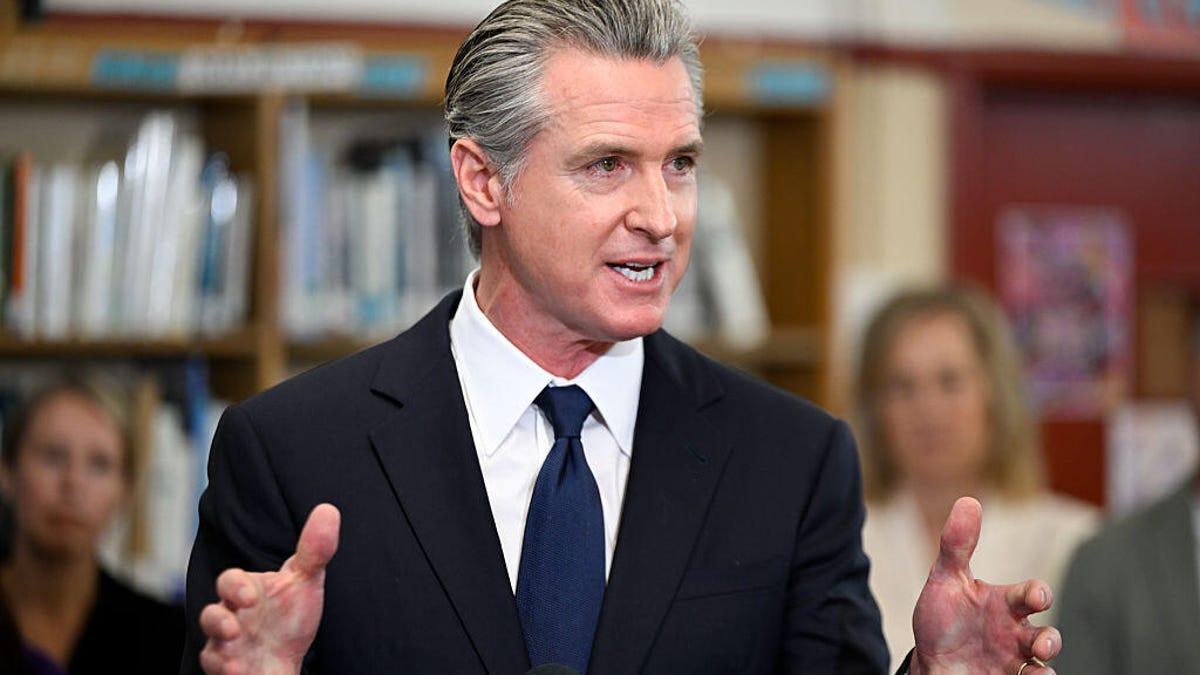
California Governor Gavin Newsom issued the first-of-its-kind executive order mandating state agencies to explore labor policy overhauls addressing AI job displacement. The order examines subsidies for companies that retain workers, expanded workforce training for white-collar roles, and universal basic income alternatives as Meta cuts 8,000 jobs citing AI efficiency gains.
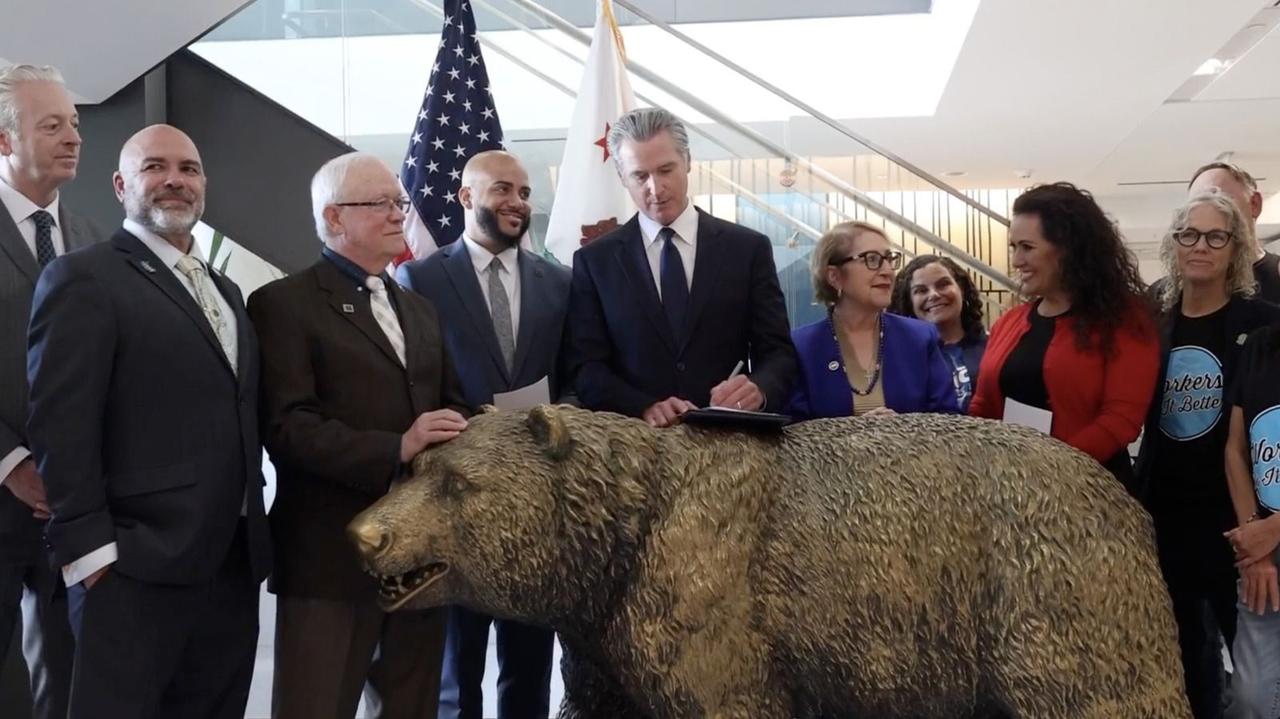
California Governor Gavin Newsom signed an executive order on Thursday directing state agencies to prepare for AI job disruption, marking the first action of its kind by a U.S. governor
1
. The executive order mandates collaboration between state agencies, academics, labor groups, and the AI industry to study how to subsidize companies that keep employees rather than replace them with technology1
. The timing is significant: just one day before the announcement, Meta slashed its workforce by 10 percent, cutting approximately 8,000 people as part of its strategic shift toward AI1
.
Source: PYMNTS
"California has never sat back and watched as the future happened to us -- and we won't start now," Newsom said in a statement. "But we must think bigger. This moment demands that we reimagine the entire system -- how we work, how we govern, how we prepare people for the future"
1
.The order calls for an expansion of workforce training programs, particularly targeting white-collar workers like customer service representatives, software developers, and marketing and sales people whose roles are expected to be eliminated by AI
1
. State officials have been directed to examine severance standards, unemployment insurance, transition support for displaced workers, and worker ownership models3
.The executive order also directs an examination of universal basic capital, which would give all California residents stakes in assets like corporate stocks, bonds, or wealth funds
1
. Additionally, the order calls for recommendations within 180 days on possible updates to California's WARN Act, with the goal of making the law more useful as an early-warning tool for workforce disruption3
.Newsom's action reflects mounting global anxiety about the future of work. AI leaders have warned the governor of swift and major changes in employment, where entire job categories face extinction
1
. Dario Amodei, co-founder of AI start-up Anthropic, has predicted that roughly half of white-collar jobs could disappear in the next five years1
.The US technology sector slashed more than 52,000 jobs in the first three months of the year, according to Challenger, Gray & Christmas
2
. Beyond Meta layoffs, chip company Intel, software company Cisco, and e-commerce giant Amazon have laid off thousands of workers as executives cite significant efficiency gains from AI1
.
Source: France 24
Related Stories
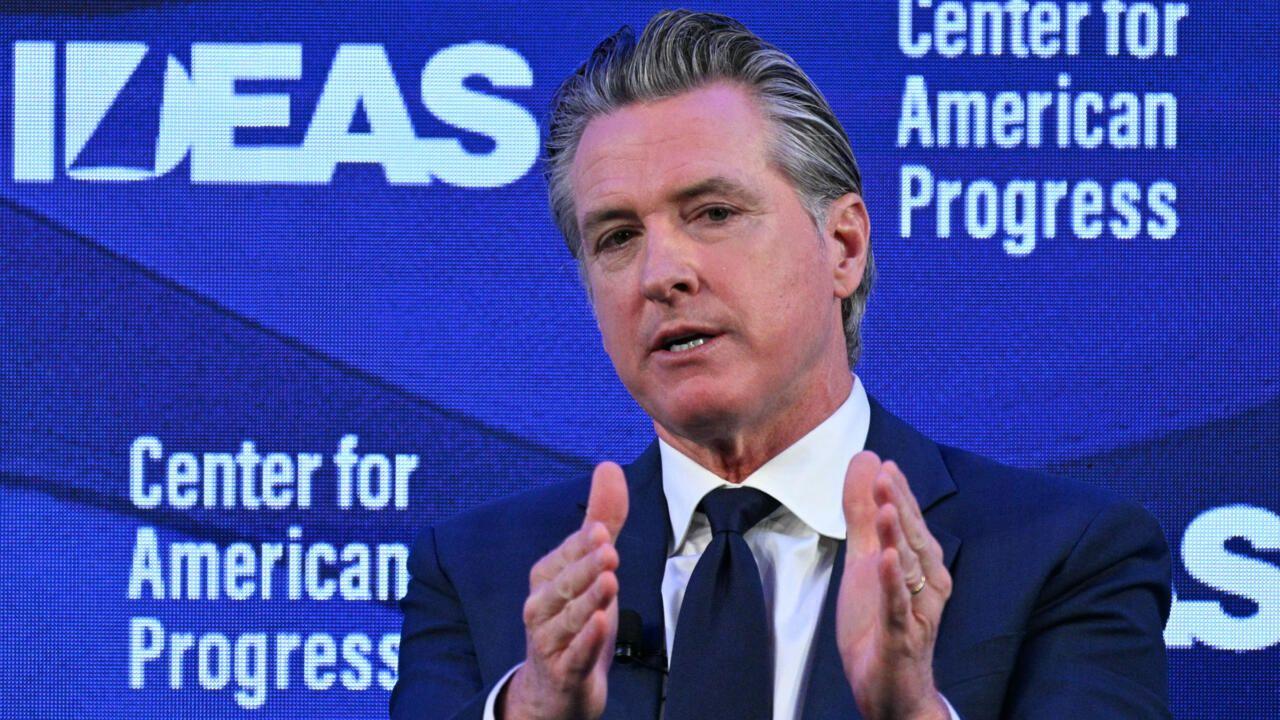
Newsom has expressed concern that companies receive tax breaks while workers remain saddled with taxes on their wages
1
. "Businesses are going to make a fortune, and that's why you cannot continue to have a payroll tax system that taxes jobs and then subsidizes automation," the governor said2
. Tax breaks for companies that automate and displace employees will enrich corporations but doubly hurt workers who are still subject to taxation1
.The order also calls for a new report on early warning signs of labor disruption and a dashboard tracking AI's impact across sectors
3
. While the executive order directs policy exploration instead of concrete action, it positions California at the forefront of AI regulation1
.Governments worldwide are responding to AI-related job losses with various experiments. In China, which currently has a 17 percent youth unemployment rate, courts have ruled in favor of workers who sued former employers for compensation after being displaced by AI
1
. England, Japan, and South Korea have contemplated universal basic income, a policy giving regular cash handouts to residents to make up for labor market disruptions1
.
Source: NYT
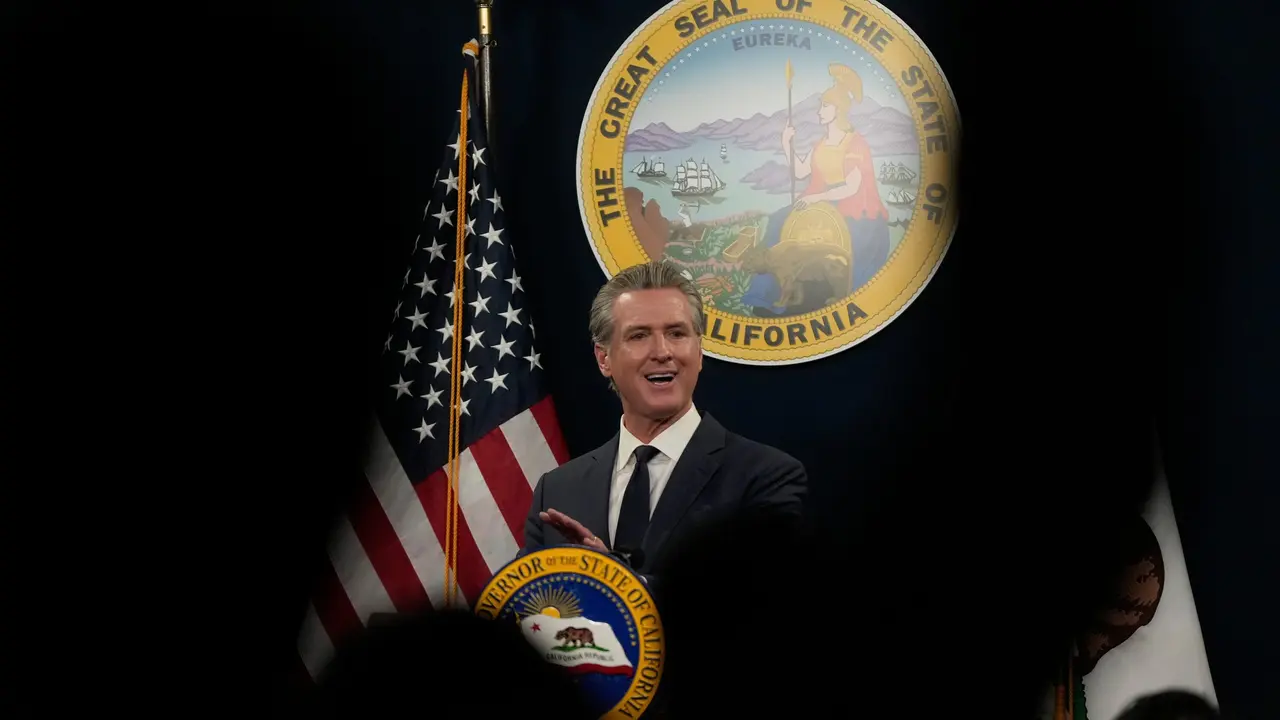
Tech leaders including Elon Musk of Tesla and SpaceX and Sam Altman of OpenAI have said universal basic income may be needed
1
. Musk has stated that productivity from AI will generate a surge in funds available to governments that can compensate individuals who lose their jobs to technology1
. "Universal HIGH INCOME via checks issued by the Federal government is the best way to deal with unemployment caused by AI," Musk said in a recent post1
.California and other states have helped fill a void in federal regulation, where the White House has largely urged free rein for companies in a global AI race with China
1
. Newsom, widely expected to be a leading Democratic Party candidate in the 2028 presidential election, is positioning California as a model for how states can proactively address the challenges posed by rapidly advancing AI technology2
.Summarized by
Navi
[4]
1
Science and Research

2
Technology

3
Policy and Regulation