California Bans AI-Only Firings as Newsom Signs No Robo Bosses Act to Protect Workers


17 Sources
[1]
California's new law bans companies from relying on AI to fire workers - Engadget
California has enacted new legislation to protect workers from AI-powered layoffs and surveillance, governor Gavin Newsom announced. The new laws are mostly aimed at companies using AI to initiate job cuts or monitor employees, not about harnessing the tech to replace workers. However, it's some of
[2]
California Gov. Gavin Newsom signs laws to protect workers from AI risks
SACRAMENTO, Calif. (AP) -- California Gov. Gavin Newsom signed laws Wednesday aimed at protecting workers from the threats of artificial intelligence, including potential job losses and workplace surveillance. The laws ban employers from using the technology to predict a worker's emotional state
[3]
California Gov. Gavin Newsom bans AI 'robo bosses' in landmark state law, reversing his earlier veto
* California Governor Gavin Newsom signed a landmark AI regulation banning Golden State employers from relying solely on artificial intelligence to fire or discipline workers. * The "No Robo Bosses Act" prevents businesses around the state from exclusively using "automated decision-making systems"
[4]
California bans AI-only firings with its No Robo Bosses Act
Newsom signed the No Robo Bosses Act among 13 AI bills, a day after saying what he heard at Trump's AI lunch was 'bullsht'. He also vetoed a smart glasses privacy bill. In California, an AI system will no longer be able to fire or discipline a worker on its own. Governor Gavin Newsom signed the No
[5]

Gavin Newsom Signs Bill Banning 'Robo Bosses' as Part of California Crackdown on AI
A day after President Donald Trump had lunch with some of the nation's top AI executives, California Gov. Gavin Newsom signed a slate of bills Wednesday aimed at putting new guardrails on the technology. Chief among them was the "No Robo Bosses Act of 2026," a first-in-the-nation law that bars
[6]

California bans employers from using AI to fire employees
California law argues AI isn't a substitute for HR. Credit: Bloomberg / Contributor / Bloomberg via Getty Images Employers in the Golden State can't offload the hard parts of running a business to AI, according to a new state law. Signed by California Governor Gavin Newsom last week, SB 947 sets
[7]

California's new laws target workers' biggest fear of AI taking their jobs
The state, which is home to many AI companies, is one of the first to roll out workplace regulations targeting the technology California's laws aimed at protecting workers from the impacts of artificial intelligence could pave the way for broader workplace safeguards across the US as calls for
[8]

California Governor Gavin Newsom signs 'No Robo Bosses Act' -- so an AI can no longer fire you on its own
* 'No Robo Bosses Act' signed in California, comes into force in July 2027 * Humans can't just approve an automated decision, they must bring evidence * Governor Gavin Newsom criticized Trump administration for a lack of federal leadership California Governor Gavin Newsom has signed a major
[9]

California No Robo Bosses Act bans AI-only worker firings
California Gov. Gavin Newsom signed legislation Wednesday barring employers from relying solely on artificial intelligence when deciding to fire or discipline workers, making California the first state in the nation to enact such a restriction. The law, SB 947 -- known as the No Robo Bosses Act of
[10]

Newsom signs laws protecting California workers from AI risks
California Gov. Gavin Newsom signed laws Wednesday aimed at protecting workers from the threats of artificial intelligence, including potential job losses and workplace surveillance. The laws ban employers from using the technology to predict a worker's emotional state by using their biometric
[11]
Gavin Newsom signs laws to protect California workers from AI threat
Democratic governor sharply critical of Donald Trump for not passing comprehensive federal AI regulations Governor Gavin Newsom signed laws Wednesday aimed at protecting California workers from the threats of artificial intelligence , including potential job losses and workplace surveillance. The
[12]

California Gov. Gavin Newsom signs laws to protect workers from AI risks
SACRAMENTO, Calif. (AP) -- California Gov. Gavin Newsom signed laws Wednesday aimed at protecting workers from the threats of artificial intelligence, including potential job losses and workplace surveillance. He also signed an executive order to require state agencies to continue to refer to the
[13]

California Gov. Gavin Newsom Signs Laws to Protect Workers From AI Risks
SACRAMENTO, Calif. (AP) -- California Gov. Gavin Newsom signed laws Wednesday aimed at protecting workers from the threats of artificial intelligence, including potential job losses and workplace surveillance. He also signed an executive order to require state agencies to continue to refer to the
[14]

Gavin Newsom Mocks 'Golden Age of Super Intelligence,' Calls President's 'Let It Rip' Approach to AI 'Rec
Gov. Gavin Newsom (D-Calif.) criticized President Donald Trump's approach to artificial intelligence, warning that limited federal oversight could leave the rapidly evolving technology without sufficient safeguards. Newsom Slams Trump's AI Approach On Wednesday, Newsom made the remarks in a post
[15]

AI Can't Fire You in California Without a Human | PYMNTS.com
SB 947 is one of three new California laws that limit how much authority companies can hand to artificial intelligence. AB 1979, signed the same day, keeps licensed clinicians in charge when healthcare providers use AI. AB 1159 bars education technology companies from training AI on student data.
[16]

California Bans AI 'Robo Bosses' from Firing Workers
California enacted a new law requiring human oversight when employers use artificial intelligence or automated decision systems to make certain disciplinary and termination decisions. Governor Gavin Newsom signed Senate Bill 947, known as the 'No Robo Bosses Act', on September 30, 2026. The
[17]

California Gov. Gavin Newsom signs laws to protect workers from AI risks
SACRAMENTO, Calif. -- California Gov. Gavin Newsom signed laws Wednesday aimed at protecting workers from the threats of artificial intelligence, including potential job losses and workplace surveillance. The laws ban employers from using the technology to predict a worker's emotional state by
Share
Copy Link
California enacted landmark legislation prohibiting employers from relying solely on AI to fire or discipline workers. Governor Gavin Newsom signed the No Robo Bosses Act alongside 12 other AI bills, requiring human oversight in automated decision systems and positioning the state as a leader in AI regulation amid federal inaction.
California Passes First-in-Nation AI Workplace Protection Law
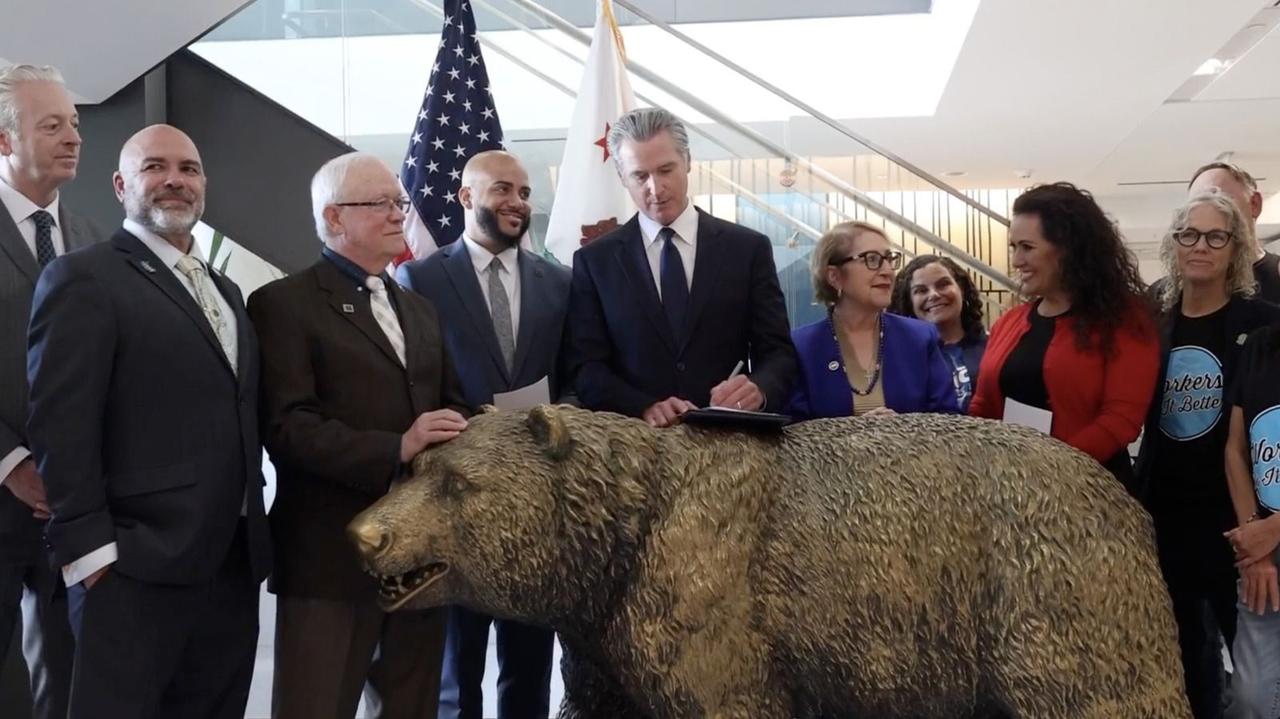
California Governor Gavin Newsom signed the No Robo Bosses Act into law on Wednesday, establishing the nation's first legislation that bans employers from relying solely on artificial intelligence to fire or discipline workers
1
3
. The California AI law, formally known as SB 947, prevents businesses from exclusively using automated decision systems in matters of employee termination and disciplinary actions3
. This landmark legislation comes as one in four managers reportedly use AI to help decide which employees to cut "often or all the time," according to human resources site HR Dive1
.
Source: Engadget
Human Oversight Requirements and Worker Protections
Under the new law, employers that rely primarily on AI output to make termination or disciplinary decisions must have a human reviewer corroborate those decisions using additional information, such as managerial evaluations, peer reviews, and personnel files
3
. Simply rubber-stamping an AI recommendation is insufficient—the human review must be substantive4
. Affected employees must receive written notice that AI was primarily used in their termination or disciplinary decision, a description of the employee data used by the system, and a human point of contact who can further explain the decision3
. The legislation takes effect on July 1, 20274
.Comprehensive AI Regulation Package Addresses Multiple Workplace Concerns
Gavin Newsom signed 13 AI bills total on Wednesday, creating a comprehensive framework to protect workers from AI
4
5
. The legislation addresses workplace surveillance, prohibiting employers from using AI to predict a worker's emotional state through biometric data collection2
. AB 1331 specifically bans monitoring staff in bathrooms with audio, video or AI tools4
. The new laws also require employers to send written notices to workers if AI is responsible for mass layoffs2
, and prohibit lawyers from fully handing over core legal work like drafting briefs to AI1
.Labor Advocacy Drives Legislative Action
State Senator Jerry McNerney, who authored the No Robo Bosses Act, emphasized the need for AI-driven disciplinary actions to remain under human control. "No worker should ever be fired or disciplined by a machine, AI or not. Artificial intelligence systems have the potential to boost productivity, but they've also made errors and misjudgments and exhibited AI bias," McNerney told CNBC
3
. Labor advocacy played a central role in pushing for AI regulation, with Lorena Gonzalez, president of the California Federation of Labor Unions, AFL-CIO and lead sponsor of the act, stating: "When working people organize, we get results. Workers across California have demanded that our state lead the way in regulating AI in our workplaces"3
.Meta Lawsuit Highlights Real-World AI Bias Concerns
The California AI law may have been motivated in part by Meta employee complaints that the company used biased AI tools that "disproportionately selected" people who took medical leave as candidates to be laid off
1
. Meta is currently facing a lawsuit filed in July in which former employees allege AI-assisted systems were used to rank and select workers for layoffs, disproportionately affecting employees who had taken medical or family leave3
. Meta has denied the allegations3
. These real-world cases demonstrate why protect workers from AI measures have become increasingly urgent.
Source: CBS
Widespread Adoption of Algorithmic Management in US Workplaces
The U.S. is leading the way globally in adoption of automated management software and systems, according to survey results from the OECD published late last year
3
. The survey found that algorithmic management software is being widely adopted across countries, but nowhere as widely as in the U.S., where 90% of managers say their firms have adopted at least one tool to instruct, monitor or evaluate workers3
. Walmart and Amazon workers are increasingly concerned that HR decisions are being automated, according to a May survey released by nonprofit United for Respect3
.Related Stories
Newsom Criticizes Trump Administration's AI Self-Regulation Approach
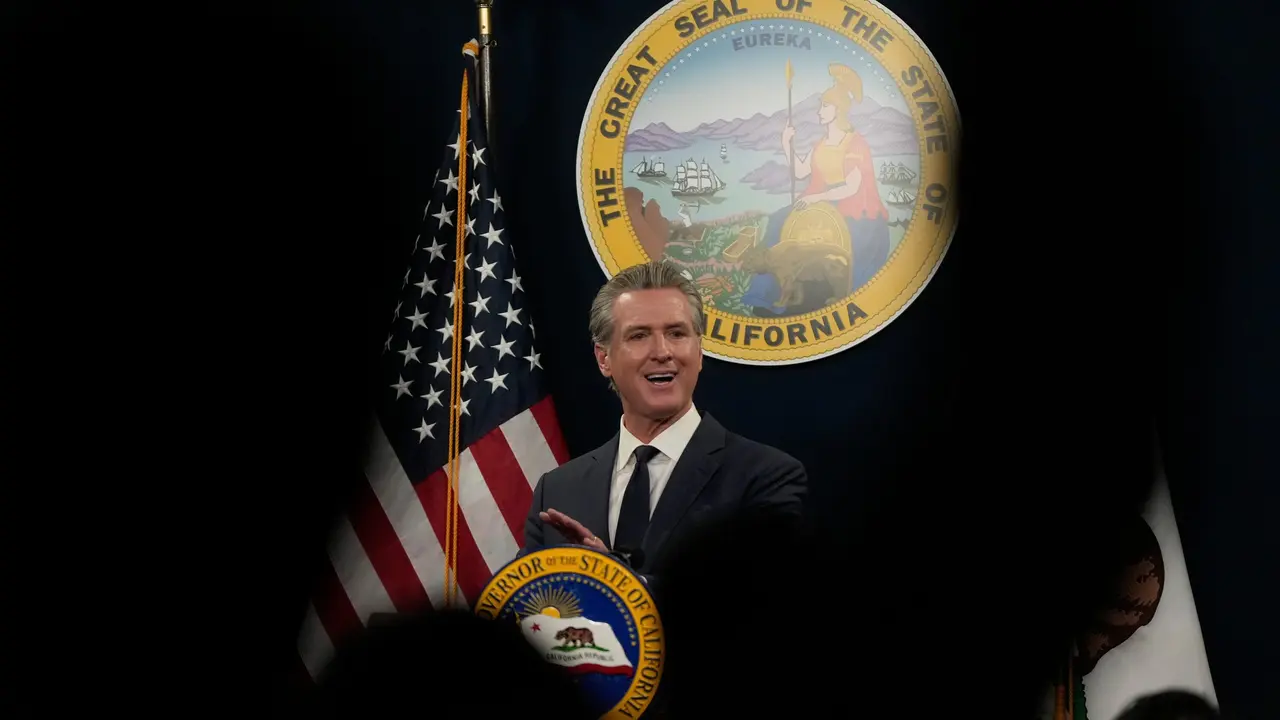
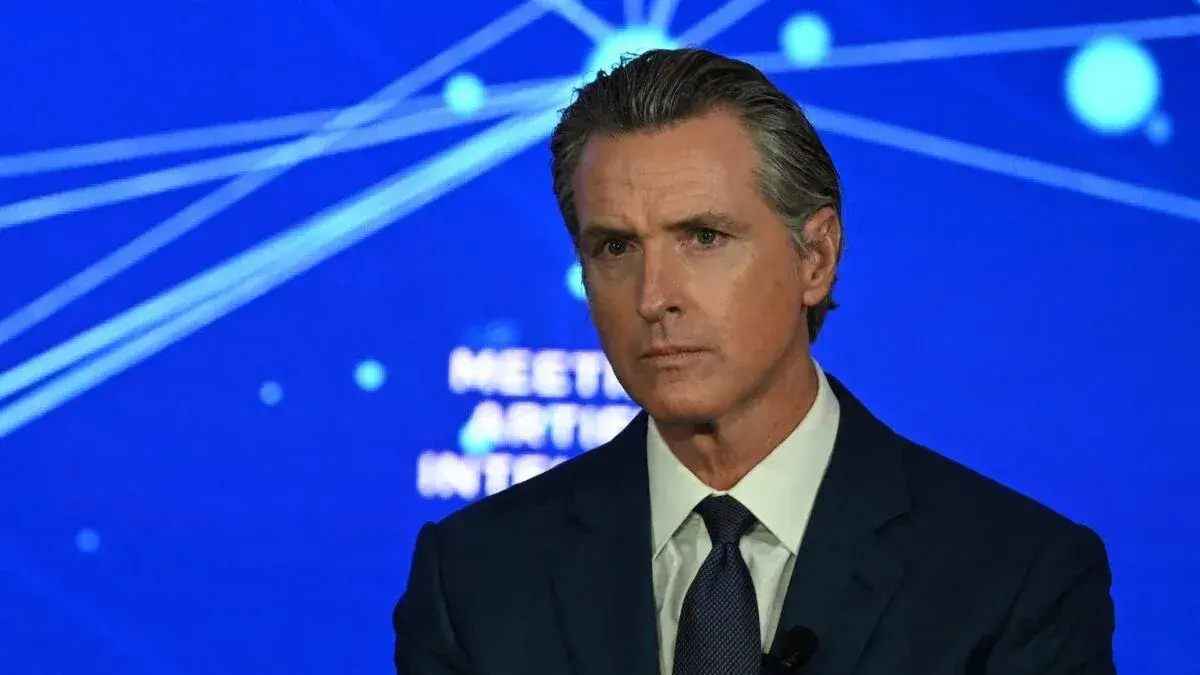
Gavin Newsom sharply criticized the Trump administration's approach to AI governance, calling recent statements about industry self-regulation "bullsh*t"
1
5
. The governor's comments came one day after the White House AI meeting where President Donald Trump hosted tech executives including Elon Musk, Jeff Bezos, Mark Zuckerberg, and others5
. At that lunch, executives from Google, Meta, Anthropic, OpenAI, xAI, and Nvidia signed a voluntary agreement outlining limited AI safety standards that Trump called "morally binding" but which have no legal enforcement mechanism5
. "We have to do a lot more in the absence of federal leadership," Newsom said, leaving the door open for calling lawmakers back for a special session to further tackle the issue2
.
Source: Gizmodo
Executive Order Rejects "Super Intelligence" Terminology
Newsom also signed an executive order requiring California state agencies to continue referring to the technology as "artificial intelligence" rather than "super intelligence" as Trump recently mandated for federal employees
1
5
. This executive order represents a direct rebuke of Trump's attempt to rebrand the technology5
. Newsom is positioning California as a leader in AI regulation, likening AI technology to the airline industry in terms of potential dangers to the public1
.Enforcement and Future Implications for AI Governance
The state labor commissioner, the attorney general and local prosecutors can enforce the No Robo Bosses Act
4
. McNerney's office called it the first such law in the US4
. This legislation marks a turning point in how states approach AI regulation in the workplace, establishing a model that other states may follow. Watch for increased scrutiny of automated decision systems across industries, potential legal challenges from employers arguing the law is too restrictive, and whether federal inaction continues to drive state-level innovation in AI governance. As a potential 2028 presidential candidate, Newsom's aggressive stance on AI regulation may signal how Democratic leadership would approach the technology at the federal level.References
Summarized by

Navi
[3]
[4]
Related Stories
California Bans Fully Automated AI Firings With No Robo Bosses Act
08 Oct 2026•Policy and Regulation
California Enacts Landmark AI Transparency Law, Balancing Innovation and Safety
26 Sept 2025•Policy and Regulation

California Leads the Way in AI Regulation with Comprehensive New Laws
24 Oct 2025•Policy and Regulation
Recent Highlights



Recent Highlights
Today's Top Stories








Don’t drown in AI news. We cut through the noise - filtering, ranking and summarizing the most important AI news, breakthroughs and research daily. Follow topics that matter to you and stay ahead.


