6 Sources
[1]
Chief of communications intel agency says Russia is relentlessly targeting UK
LONDON (AP) -- Britain and its allies risk losing a conflict in cyberspace against adversaries such as Russia unless citizens, corporations and governments treat cybersecurity with much greater urgency, a U.K. spy chief is warning. Anne Keast-Butler, director of the communications intelligence agency GCHQ, will warn Wednesday that Moscow is "relentlessly targeting critical infrastructure, democratic processes, supply chains and public trust" in Britain and Europe. In a speech at a World War II code breaking center near London, she will accuse Russia of stealing technology and plotting sabotage and assassination attempts. Keast-Butler plans to say that rapid advances in artificial intelligence mean that "the ground beneath our feet is shifting" and there is a "narrowing window for the U.K. and allies to stay ahead" of countries such as China, a science and technology "superpower." She plans to argue there must be an effort "from boardrooms to living rooms" to make cybersecurity "10 times more urgent," according to extracts released in advance by GCHQ, short for Government Communications Headquarters. It is the latest in a string of warnings from Western spies and intelligence experts that Russia is stepping up hostile activity in a "gray zone" that falls just below the threshold of war. In recent months, authorities in countries including Sweden, Poland, Denmark and Norway have alleged that hackers linked to Russia targeted their critical infrastructure, including power plants and dams. The head of the U.K.'s National Cyber Security Centre, Richard Horne, warned last month that hostile states including Russia, China and Iran are behind the most serious cyberattacks the country faces. He said such attacks could increase dramatically if Britain becomes involved in an international conflict. Keast-Butler plans to stress the importance of international partnerships as U.S. President Donald Trump's "America First" foreign policy and disregard for longtime allies strains the relationship between London and Washington. Pointedly, she is delivering the annual GCHQ director's lecture speech at Bletchley Park, a manor house 45 miles (72 kilometers) northwest of London where hundreds of mathematicians, cryptographers, crossword puzzlers, chess masters and other experts worked to crack Nazi Germany's supposedly unbreakable secret codes. Their work both shortened the war and hastened the birth of modern computing.
[2]
Russia 'relentlessly targeting' critical infrastructure, democracy - GCHQ
The UK is at a "moment of consequence" as Russia is "relentlessly targeting" critical infrastructure, the UK's largest spy agency will warn. GCHQ Director Anne Keast-Butler will set out threats facing the UK and the measures she believes need to be taken to confront them when she makes her inaugural public speech on Wednesday. In excerpts from her address, Keast-Butler singles out Russia for "targeting critical infrastructure, democratic processes, supply chains and public trust". Russia has been blamed for a string of espionage plots on British soil and, more recently, waging an undeclared 'hybrid war' against the UK and other Nato countries. The Kremlin has denied the allegations. Keast-Butler says GCHQ is working tirelessly to fend off cyber attacks and counter what she calls "reckless sabotage and assassination attempts". She adds that: "In the face of such aggression and chaos, GCHQ is working tirelessly with intelligence and Defence partners to degrade and reduce the Russian threat." The Kremlin, which denies responsibility, has been blamed for the murder of former KGB officer Alexander Litvinenko using radioactive Polonium slipped into his tea in a London hotel in 2006. It was also blamed for the attempted assassination of a former Russian military intelligence officer, Sergei Skripal, in Salisbury in 2018, using the lethal nerve agent Novichok smeared onto his front door handle. More recently, since Russia's full-scale invasion of Ukraine in 2022 and the UK's ongoing support for Ukraine, Moscow has been accused of waging a "hybrid war" against Western countries. In her speech, the GCHQ boss is expected to say: "As we remain steadfast in our support for Ukraine, Putin is going backwards on the battlefield." Hundreds of so-called Russian "shadow fleet" vessels have also entered UK waters since the prime minister threatened to intercept them earlier this year, a BBC Verify analysis suggested. China, she will say, is now a science and tech superpower with sophisticated capabilities "across their intelligence, cyber and military agencies". When it comes to global advances in AI and technology, she says, there is a narrowing window for the UK and its allies to stay ahead. She characterises it as "the ground beneath our feet" shifting. She sees collaboration with the tech industry, academia and even the public as key to staying abreast of advances in cyber security. GCHQ spends much of its time combating organised criminal networks bent on targeting vulnerable British firms with phishing attacks and ransomware. Adopting the phrase "from boardrooms to living rooms", Keast-Butler urges everyone to look to their own cyber security "At home that means taking important action now to switch passwords for passkeys, and for wider society, it means hard-wiring security into new technologies, protecting supply chains and making cyber security 10 times more urgent," she will say. The address is due to be delivered from Bletchley Park, the agency's original wartime home. GCHQ - short for Government Communications Headquarters - is the largest of the UK's three spy agencies, the others being the Security Service (MI5) and the Secret Intelligence Service (MI6). Based in Cheltenham and housed in a huge, circular building known as the Doughnut, GCHQ focuses on cyber security and signals intelligence. With its focus on cutting-edge technology, it consumes the lion's share of the national intelligence budget.
[3]
Russia is targeting UK's infrastructure and democracy, GCHQ head to say
Anne Keast-Butler will also warn of narrowing window to stay ahead of China in 'new era of radical uncertainty' Russia is relentlessly targeting Britain's infrastructure and democracy while there is only a narrowing technological window to stay ahead of a fast-developing China, the head of the spy agency GCHQ will warn in a lecture on Wednesday. Anne Keast-Butler, giving an inaugural annual lecture, will say that the UK is caught in a "new era of radical uncertainty" and that "the risk of miscalculation" is as high as she has ever seen it as hacker attacks from the two states continue. The spy chief will particularly emphasise the wide-ranging threats posed by Russia, saying that Moscow is "relentlessly targeting critical infrastructure, democratic processes, supply chains and public trust" in the UK. This requires GCHQ, which specialises in electronic intelligence, to fend off cyber-attacks and counter "reckless sabotage and assassination attempts" in its efforts to protect the UK and support western allies and Ukraine. During the Ukraine war, Russia has also targeted the UK and other allies with sabotage and disruption campaigns, she will say. In one instance, firebombs were placed in DHL parcels, with one catching light in Leipzig, Germany and a second at a warehouse in Birmingham, having travelled from the continent by plane. The language around China is notably more muted, despite several espionage scandals over the past year, reflecting broader government efforts to maintain a positive trade and economic relationship after a visit by the prime minister, Keir Starmer, in January. "China is now a science and tech superpower - with sophisticated capabilities across their intelligence, cyber and military agencies," Keast-Butler will say, and its growing development of artificial intelligence means there is a "narrowing window for the UK and allies to stay ahead". Britain has to deal with four major cybersecurity incidents a week, with China, Russia and Iran behind most the serious attacks, according to figures issued last month by Richard Horne, the chief executive of the National Cyber Security Centre, an arm of Cheltenham-based GCHQ. The scale of hostile activity online has led other spy chiefs, including the newly appointed head of the foreign intelligence agency, MI6, Blaise Metreweli, to warn that the UK is caught in "a space between peace and war". Information and technology were becoming increasingly weaponised by Russia and others, she said in December. Britain faces a "moment of consequence" where it is seeing increasingly brazen behaviour from adversaries, Keast-Butler is expected to say on Wednesday, in a talk to be given at Bletchley Park, the second world war home of GCHQ, which then specialised in breaking codes used by the German military. In an attempt to demonstrate GCHQ's ability to plan before a major crisis, the spy chief referenced correspondence from its first director, Alastair Denniston, in the months leading up to the war breaking out. He discreetly sought a commitment from the University of Cambridge's Newnham College to recruit "in an emergency ... six students proficient in modern languages" in January 1939, eight months before Adolf Hitler invaded Poland. Earlier, on Tuesday, Britain targeted Russia-linked cryptocurrency platforms, banks and financial networks that it said were used to bypass sanctions. It froze their assets and barred UK firms from processing payments and having banking relationships. The measures targeted "shadow financial systems" said to underpin Russia's war economy, including the Kremlin-backed A7 network. This, the UK said, had been used to route funds, finance procurement and exploit foreign banking systems to evade restrictions placed on Russian money after the invasion of Ukraine. Crypto exchanges and entities operating Russia-focused platforms were also targeted by the UK sanctions, including a Kyrgyz bank and firms registered in jurisdictions including Georgia and the United Arab Emirates, alongside individuals tied to the network. Yvette Cooper, the foreign secretary, said: "We will continue to act fast and decisively, alongside our allies, to expose, disrupt and dismantle these networks, and ensure those enabling Russia's aggression face consequences."
[4]
Britain Faces 'Moment of Consequence' as Threats From Adversaries Mount, Spy Chief Says
LONDON, May 27 (Reuters) - Britain is at a "moment of consequence" amid increasingly brazen behaviour from adversaries and a narrowing window to stay ahead in the race to harness technology along with its allies, a British spy chief will say on Wednesday. Delivering the first annual lecture for her GCHQ organisation, Anne Keast-Butler will warn that the world is in a "new era of radical uncertainty, contested geopolitics and rapidly changing technology," her office said. "The risk of miscalculation is as high as I've ever seen it," she will say, according to extracts of her speech. GCHQ, whose role includes eavesdropping on communications and providing national cybersecurity, is one of the three arms of British intelligence, which have for years been warning about the threats posed by Russia and China. Last month, the head of the National Cyber Security Centre, which is part of GCHQ, warned that Britain should brace for a rise in cyberattacks linked to hostile states. In her speech at Bletchley Park, the secret home of Britain's codebreakers in World War Two, Keast-Butler will say Russia is "scaling up its daily hybrid activity against the UK and Europe" and "relentlessly targeting critical infrastructure, democratic processes, supply chains and public trust." She will also highlight her agency's role in "disrupting Russia's efforts to smuggle Western tech, fending off cyber attacks, and countering reckless sabotage and assassination attempts," according to the speech extracts. With the speed of technological change, such as the advancements in artificial intelligence, the "ground beneath our feet is shifting" and Britain and its allies face a challenge to stay ahead of the competition, not least from China, she will add. (Reporting by Michael HoldenEditing by Tomasz Janowski)
[5]
West is between peace and war, as AI races ahead: UK cyberspying chief
Britain's top cyber spy, Anne Keast-Butler, warns that artificial intelligence is being used in new ways that threaten national security. She states that the nation is in a space between peace and war. Russia is actively targeting critical infrastructure and democratic processes. Allies must urgently increase cybersecurity efforts to stay ahead of evolving threats. Artificial intelligence is "an unstoppable force" that is being weaponised in ways that fall just short of traditional warfare, Britain's cyberspying chief warned Wednesday. Anne Keast-Butler, director of the communications intelligence agency GCHQ, said Britain and its allies are in "a space between peace and war" and risk losing a conflict in cyberspace against Russia and other adversaries unless they treat cybersecurity with much greater urgency. "I've spent three decades working in National Security. And the risk of miscalculation is as high as I've ever seen it," Keast-Butler said in a speech at a World War II code breaking center near London. She said that "tech companies are releasing AI-driven innovations at a remarkable pace, with untold consequences, as algorithms are weaponized often just below the threshold of traditional warfare. "AI is an unstoppable force with great opportunity," she added. "But it is also a force with risks." Keast-Butler singled out Russia as a threat, accusing Moscow of "relentlessly targeting critical infrastructure, democratic processes, supply chains and public trust" in Britain and Europe, as well as stealing technology and plotting sabotage and assassination attempts. "Russia is scaling up its daily hybrid activity against the U.K. and Europe, stretching from the seabed to cyberspace," she told an audience of computing experts, diplomats, journalists and senior officials. "One area in sharp focus for us is protecting the data and energy flowing through the critical cables and pipelines in and around British waters," she added. "We do this by exposing Russia's intent, motive and underwater capabilities." Keast-Butler said rapid advances in artificial intelligence mean that "the ground beneath our feet is shifting" and there is a "narrowing window for the U.K. and allies to stay ahead" of countries such as China, a science and technology "superpower." She argued that there must be an effort "from boardrooms to living rooms" to make cybersecurity "10 times more urgent." GCHQ, short for Government Communications Headquarters, is the U.K.'s electronic and cyberintelligence agency. It works alongside the domestic security service MI5 and the foreign intelligence agency, MI6. The speech is the latest in a string of warnings from Western spies and intelligence experts that Russia is stepping up hostile activity in a "gray zone" that falls just below the threshold of war. In recent months, authorities in countries including Sweden, Poland, Denmark and Norway have alleged that hackers linked to Russia targeted their critical infrastructure, including power plants and dams. The head of the U.K.'s National Cyber Security Centre, Richard Horne, warned last month that hostile states including Russia, China and Iran are behind the most serious cyberattacks the country faces. He said such attacks could increase dramatically if Britain becomes involved in an international conflict. Keast-Butler also stressed the importance of international partnerships as U.S. President Donald Trump's "America First" foreign policy and disregard for longtime allies strains the relationship between London and Washington. She said the U.K.-U.S. intelligence partnership is "fundamental for the security of both our nations." She delivered the first annual GCHQ director's lecture speech at the agency's World War II headquarters of Bletchley Park, a manor house 45 miles (72 kilometers) northwest of London where hundreds of mathematicians, cryptographers, crossword puzzlers, chess masters and other experts worked to crack Nazi Germany's supposedly unbreakable secret codes. Their work both shortened the war and hastened the birth of modern computing.
[6]
Britain faces 'moment of consequence' as threats from adversaries mount, spy chief says
LONDON, May 27 (Reuters) - Britain is at a "moment of consequence" amid increasingly brazen behaviour from adversaries and a narrowing window to stay ahead in the race to harness technology along with its allies, a British spy chief will say on Wednesday. Delivering the first annual lecture for her GCHQ organisation, Anne Keast-Butler will warn that the world is in a "new era of radical uncertainty, contested geopolitics and rapidly changing technology," her office said. "The risk of miscalculation is as high as I've ever seen it," she will say, according to extracts of her speech. GCHQ, whose role includes eavesdropping on communications and providing national cybersecurity, is one of the three arms of British intelligence, which have for years been warning about the threats posed by Russia and China. Last month, the head of the National Cyber Security Centre, which is part of GCHQ, warned that Britain should brace for a rise in cyberattacks linked to hostile states. In her speech at Bletchley Park, the secret home of Britain's codebreakers in World War Two, Keast-Butler will say Russia is "scaling up its daily hybrid activity against the UK and Europe" and "relentlessly targeting critical infrastructure, democratic processes, supply chains and public trust." She will also highlight her agency's role in "disrupting Russia's efforts to smuggle Western tech, fending off cyber attacks, and countering reckless sabotage and assassination attempts," according to the speech extracts. With the speed of technological change, such as the advancements in artificial intelligence, the "ground beneath our feet is shifting" and Britain and its allies face a challenge to stay ahead of the competition, not least from China, she will add. (Reporting by Michael HoldenEditing by Tomasz Janowski)
Share
Copy Link
Britain's top spy agency sounds the alarm on escalating cyber warfare. GCHQ director Anne Keast-Butler warns that Russia is relentlessly targeting UK critical infrastructure, democratic processes, and public trust while rapid advancements in AI create a narrowing window for Western allies to stay ahead of adversaries like China.
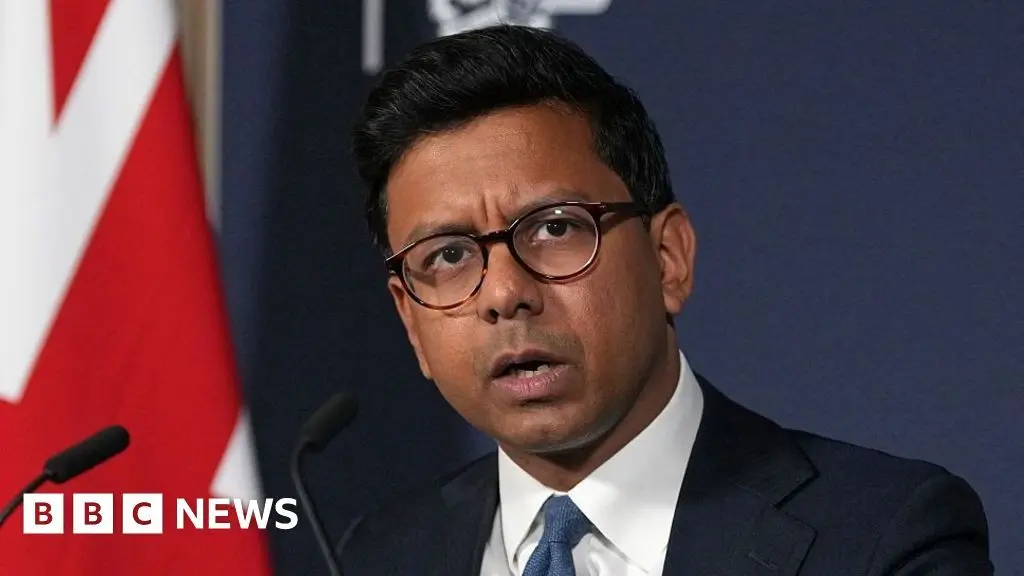
Britain faces a "moment of consequence" as Russia intensifies attacks on critical infrastructure and democratic institutions, according to Anne Keast-Butler, director of GCHQ, the UK's communications intel agency. Delivering her inaugural annual lecture at Bletchley Park on Wednesday, Keast-Butler issued one of the most urgent warnings yet about cybersecurity threats facing the nation
1
. The spy chief characterized the current environment as a "new era of radical uncertainty" where "the risk of miscalculation is as high as I can ever seen it"4
.
Source: AP
Keast-Butler singled out Russia for "relentlessly targeting critical infrastructure, democratic processes, supply chains and public trust" in Britain and Europe
2
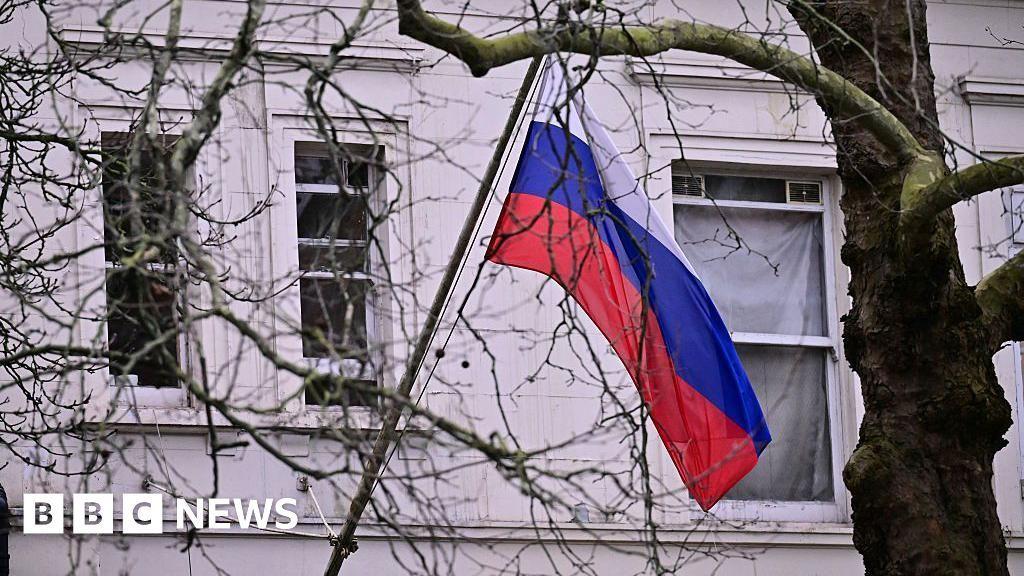
. She accused Moscow of scaling up daily hybrid activities against the UK, stretching "from the seabed to cyberspace," while GCHQ works tirelessly to fend off cyber-attacks and counter "reckless sabotage and assassination attempts"3
. The agency is particularly focused on protecting data and energy flowing through critical cables and pipelines in British waters by exposing Russia's underwater capabilities and intent5
.
Source: BBC
The warnings come amid mounting evidence of Russia targeting UK infrastructure and conducting what intelligence officials describe as a "hybrid war" against Western nations. Britain faces four major cybersecurity incidents per week, with Russia, China, and Iran behind most serious attacks, according to Richard Horne, head of the National Cyber Security Centre
3
. Since Russia's full-scale invasion of Ukraine in 2022, Moscow has been accused of waging coordinated campaigns involving sabotage, espionage, and cyber warfare. In one instance, firebombs were placed in DHL parcels, with one catching fire in Leipzig, Germany, and another at a Birmingham warehouse after traveling by plane from the continent3
.Authorities across Europe have reported similar patterns. Countries including Sweden, Poland, Denmark, and Norway have alleged that hackers linked to Russia targeted their critical infrastructure, including power plants and dams
1
. The Kremlin has consistently denied responsibility for these attacks and previous assassination attempts on British soil, including the 2006 murder of former KGB officer Alexander Litvinenko using radioactive Polonium and the 2018 Novichok poisoning of Sergei Skripal in Salisbury2
.Beyond Russia, Keast-Butler highlighted the challenge posed by China as a "science and tech superpower with sophisticated capabilities across their intelligence, cyber and military agencies"
3
. The rapid pace of advancements in AI means "the ground beneath our feet is shifting" with a "narrowing window for the UK and allies to stay ahead"1
. Keast-Butler warned that artificial intelligence is "an unstoppable force" being weaponized in ways that fall just short of traditional warfare, with tech companies releasing AI-driven innovations at a remarkable pace "with untold consequences, as algorithms are weaponized often just below the threshold of traditional warfare" .

Source: ET
The language around China was notably more muted than that directed at Russia, reflecting broader government efforts to maintain positive trade and economic relationships following Prime Minister Keir Starmer's visit to China in January
3
. However, the warning signals growing concern about the pace at which China is developing technological capabilities that could challenge Western national security.Related Stories
Keast-Butler emphasized that Britain and its allies risk losing the cyber conflict unless citizens, corporations, and governments make cybersecurity "10 times more urgent" through efforts "from boardrooms to living rooms"
2
. She urged the public to take immediate action, such as switching passwords for passkeys, while calling on wider society to hard-wire security into new technologies and protect supply chains2
. GCHQ spends much of its time combating organized criminal networks targeting vulnerable British firms with phishing attacks and ransomware, making individual and corporate cyber hygiene critical to national security2
.The spy chief also stressed the importance of international partnerships, particularly as U.S. President Donald Trump's "America First" foreign policy strains relationships between London and Washington. She described the UK-US intelligence partnership as "fundamental for the security of both our nations" . The timing and location of her speech at Bletchley Park, where World War II codebreakers cracked Nazi Germany's secret codes, carried symbolic weight about the need for collaborative intelligence efforts in facing modern threats
1
.Summarized by
Navi
[4]
1
Business and Economy

2
Technology

3
Policy and Regulation