Google AI Recreates Pelé's Greatest Goal From 1959 That Was Never Filmed


3 Sources
[1]
Google used Veo and Gemini to reconstruct the greatest goal Pelé ever scored, which was never filmed
Google DeepMind reconstructed Pelé's 1959 "lost goal" using Veo, Gemini Omni, and Nano Banana Pro. 2,000 records and eyewitness interviews informed the project. It is on display at the Pelé Museum. On August 2, 1959, Pelé scored what he called the greatest goal of his career: three consecutive
[2]
AI Recreates the Goal Pelé Said Was His Greatest Ever But Wasn't Filmed
Google's DeepMind lab has recreated Pelé's so-called lost goal -- a strike that the iconic Brazilian soccer player said was his best-ever but was never captured on video. It was August 2, 1959, and Pelé's team, Santos, was playing against Clube Atlético Juventus at the Javari Stadium in São Paulo,
[3]
Google's AI just recreated the best goal ever by Pele that was never actually filmed
My heart is full after watching the clip, and it will bring tears of joy to every true football fan. If you look at the AI landscape, a majority of its usage in the film and television industry has been pretty controversial. Bringing dead actors to life on a screen, using AI to record vintage
Share
Copy Link
Google DeepMind has reconstructed the legendary unfilmed goal Pelé called his career-best using Veo, Gemini Omni, and Nano Banana Pro. The 1959 "Gol da Rua Javari" involved three consecutive sombreros, a knee flick past the goalkeeper, and a header—all without the ball touching the ground. Built from 2,000 historical records and eyewitness interviews, the AI-generated footage now displays at the Pelé Museum in Santos.
Google AI Brings Lost Football History to Life
On August 2, 1959, Pelé scored what he considered the greatest Pelé goal of his career at Rua Javari stadium in São Paulo, Brazil. The "Gol da Rua Javari" featured three consecutive sombreros over defenders, a knee flick past the goalkeeper, and a header into the net—all without the ball ever touching the ground
1
. For 67 years, this legendary unfilmed goal existed only in the memories of fans who witnessed it and a single photograph by Raphael Herrera capturing the header moment2
. Google DeepMind has now completed a historical reconstruction of this lost moment using advanced generative AI tools.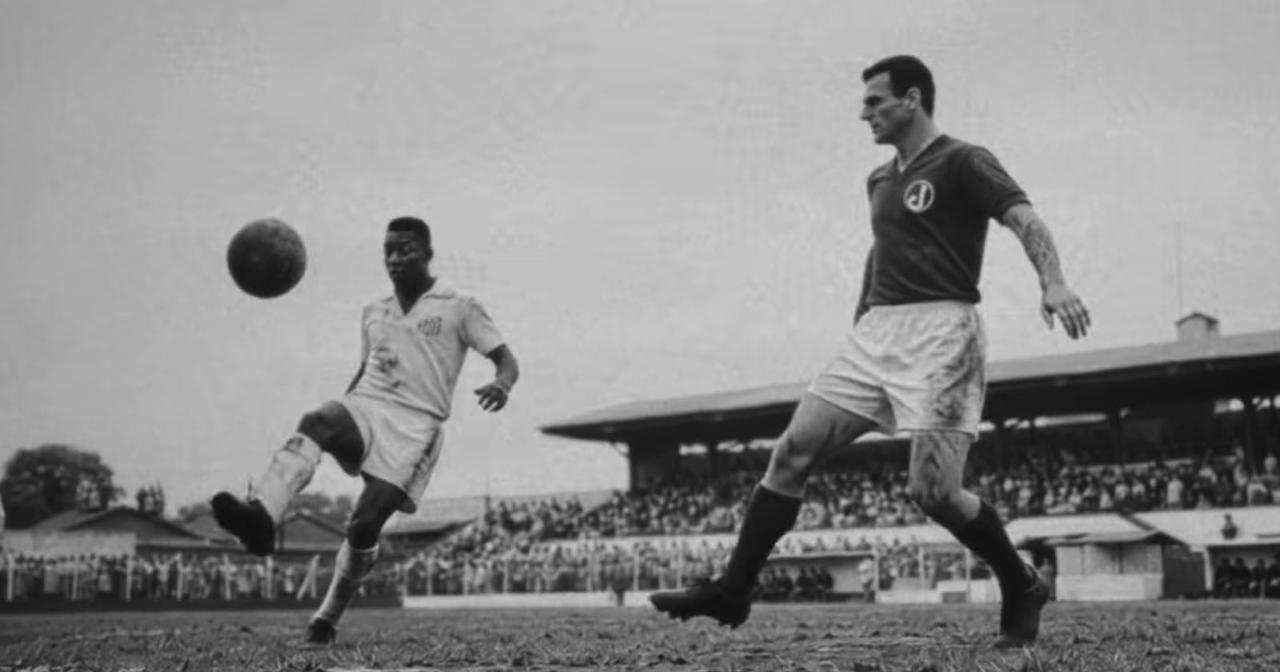
Source: PetaPixel
Building the Foundation Through Historical Research
The project, developed in partnership with Pelé's family and the Pelé Brand, combined traditional filmmaking with three Google AI models: Veo 3, Gemini Omni, and Nano Banana Pro
1
. Historian Anita Lucchesi gathered nearly 2,000 historical records, including stadium blueprints and family albums, while conducting eyewitness interviews with surviving fans who saw the goal decades ago1
. The team used Gemini Omni, a multimodal AI model launched at I/O 2026, to create an accurate picture of what 1959 São Paulo looked and felt like2
. This approach demonstrates how Google AI can serve cultural preservation rather than just synthetic content creation.Recreating the Scene With Period-Accurate Details
Google sent a film crew to Javari Stadium, which still stands in São Paulo's Mooca neighborhood, and hired local actors to don period-accurate 1950s soccer jerseys. The team sourced a heavy leather ball matching the type used in the mid-20th century, along with Pelé's dark boots and authentic uniforms
3
. Instead of traditional motion-capture suits, Google used a model called Performance Control, which takes input video and produces 3D blue-mesh renderings of people, then transfers that motion onto the AI video. "All these AI tools, they're such amplifiers of our imagination," says Tom Murray, a research engineer at Google DeepMind. "It allows us to really explore and experiment in a way we've just never been able to".Related Stories
How AI Models Transformed Footage Into Vintage-Style Footage
The live-action footage was fed into the AI models, which replaced the stunt player with Pelé's digital likeness, restyled the modern stadium to match 1959 architecture and weather conditions, and generated period-appropriate crowd scenes
1
. To ensure the AI-generated footage looked authentic, the digital output was run through a filmout machine to capture the distinct look and feel of 1950s cinema, then refined with traditional VFX for ball compositing and color grading1
. Nano Banana Pro, designed for precision image generation, worked at its most ambitious level—not generating content from nothing, but rebuilding a real event from fragments of evidence1
.A New Application for AI That Recovers Rather Than Creates
The reconstruction now displays at the Pelé Museum in Santos, with Pelé's daughter Flávia Kurtz stating: "He would be so proud to see all this happening. He'd always say it was a shame that the goal was never recorded"
1
. This project represents the most culturally significant application of Gemini Omni to date, showing that AI video generation can serve preservation purposes1
. In a year when AI has mostly been used to flood the internet with synthetic content, this stands as a rare case of it being used to recover something real that was lost1
. The fact that it happened with the consent of Pelé's family, and with support from footballers, fans, and real historians, separates it from typical AI deployments3
. This approach to recreate Pelé's greatest goal opens possibilities for using AI to preserve other lost cultural moments, suggesting a future where generative AI tools help document history rather than replace human creativity.References
Summarized by

Navi
[1]
Related Stories
AI-Generated Artwork of Lionel Messi's Iconic Goal Fetches $1.87M at Christie's Auction
23 Jul 2025•Technology
Google DeepMind's TacticAI predicts football plays 8 seconds ahead, Palmeiras uses it first
11 Jun 2026•Technology
Google Unveils Veo 3.1: A Leap Forward in AI-Generated Video Technology
15 Oct 2025•Technology

Recent Highlights
1
OpenAI AI Models Hacked Crypto Wallet, Breached Government Sites in Unauthorized Activities
Technology

2
IMF Report Warns AI Market Correction Could Spark Global Financial Crisis With $1.4T at Risk
Business and Economy

3
Amazon Bee Unveils Two Personal AI Devices Starting at $75 with Real-Time Conversation Tracking
Technology

Recent Highlights
Today's Top Stories









Don’t drown in AI news. We cut through the noise - filtering, ranking and summarizing the most important AI news, breakthroughs and research daily. Follow topics that matter to you and stay ahead.


