Google bets half a billion dollars on power from vaporized rock


3 Sources
[1]
Google is 'putting their thumb on the scale' for geothermal power
Quaise plans to reach 4.8km with a gyrotron that vaporises rock. The Wall Street Journal values the geothermal power deal at more than $500m, for a plant costing about $350m. Google will buy 50 megawatts of "superhot" geothermal power from Quaise Energy's Project Obsidian in central Oregon.
[2]
Google taps Quaise's rock-vaporizing geothermal tech for data center power
Quaise Energy and Google have shaken hands over a world-first agreement for the tech company to purchase 50 MW of continuous power for its data center from Quaise's Project Obsidian super-hot rock geothermal power plant in Oregon. Data centers aren't as new as many people think. In fact, they've
[3]
Google backs superhot geothermal tech to fuel 24/7 data center demand
Most geothermal plants merely skim the Earth's upper crust for scalding water. But now a new alliance aims to unlock the extreme heat buried miles below.Google has signed a power purchase agreement (PPA) with Quaise Energy for 50 megawatts (MW) of superhot geothermal power from Project Obsidian in
Share
Copy Link
Google has agreed to buy 50 megawatts of power from a geothermal plant that will get its heat by vaporizing rock several kilometres underground. The deal with Quaise Energy covers Project Obsidian in central Oregon, with deliveries possible from as early as 2030
1
. It pairs an unproven drilling technology with one of the major corporate power buyers in the country1
. Quaise is an MIT-derived startup moving from field tests toward its first utility-scale plant.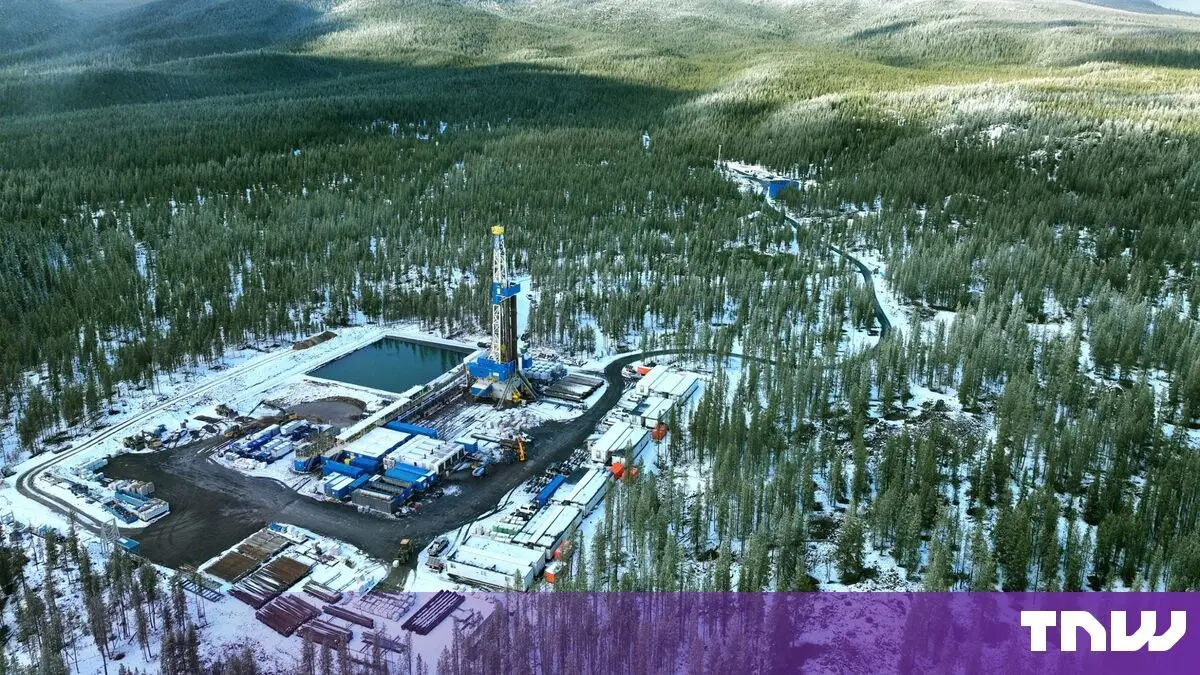
Source: The Next Web
The power will feed data centres Google already runs in The Dalles, Oregon, plus the surrounding regional grid
1
. The company's energy work sits inside a bigger problem: AI data centres need power around the clock, and weather-dependent solar and wind alone cannot provide it3
. Lucia Tian, who heads Google's advanced energy work, told the Wall Street Journal the scale of power Google needs requires fostering a supplier ecosystem1
.How you drill by vaporizing rock
The plan has two phases. Quaise will drill several kilometres down with conventional tools, then switch to a gyrotron adapted from MIT nuclear fusion research
2
. The device fires millimetre waves that vaporize rock molecules while purge gas clears the hole2
. Conventional rigs hit their limits past roughly 200 to 260°C, where drill bits, seals and electronics fail, which is why deeper, hotter rock has been out of reach2
. Once the well reaches its planned depth of about 4.8 km, water pumped down it returns as steam to drive turbines2
.Quaise says Obsidian, the plant Google is buying from, would be the first to generate electricity from rock hotter than 300°C
1
. The company has not yet proven it works at commercial scale1
. It also says superhot rock can yield up to 10 times more power from each well than conventional geothermal1
. Quaise's demonstrated record is modest: just over 100 metres drilled through granite in Texas field tests3
.A premium for an unproven bet
Per Wall Street Journal reporting, the deal is worth more than $500 million; Quaise puts the project cost at about $350 million
1
. On the reported figures, Google is paying a premium of roughly $150 million over the project's cost to pull an unproven energy technology into existence. The money adds to a rapid stretch of fundraising: $134 million raised in July, then a $180 million Series B closed in August with $35 million from drilling contractor Nabors Industries1
. In September, the US Department of Energy selected Obsidian for up to $25 million in support1
. The project is projected to support 200 to 400 construction jobs, plus more than 50 permanent roles1
.CEO Carlos Araque told the Wall Street Journal the deal amounts to Google deliberately backing the technology. "It is Google basically putting their thumb on the scale and saying, 'Okay, we like this. We like what this looks like.'"
1
The deal also lands at a touchy moment for data centre builders: earlier in November, voters turned down data-centre projects in 40 of 41 local ballot measures
1
. For Google, this is one move in a broader energy push. It signed a separate 396 MW geothermal deal with Fervo Energy in September and also backs companies building nuclear plants and long-duration storage1
.More field tests are underway in Texas; Quaise still puts the earliest deliveries to Google at 2030
3
.Related Stories



References
Summarized by

Navi
[3]
Related Stories
Recent Highlights


Recent Highlights
Today's Top Stories









Don’t drown in AI news. We cut through the noise - filtering, ranking and summarizing the most important AI news, breakthroughs and research daily. Follow topics that matter to you and stay ahead.


