Gemini Personal Intelligence Now Available in Android Auto for Personalized AI Assistance


19 Sources
[1]
Gemini's Personal Intelligence is coming to cars
Google kicked off 2026 with the addition of Personal Intelligence to Gemini, allowing its AI to pull in more of your data to formulate answers. It started as a paid feature but eventually came to all Gemini users. However, this feature wasn't available in the car until now. Google is rolling out
[2]
I tried Personal Intelligence in Android Auto - and only have one complaint - ZDNET
Gemini in your car can take you where you need to go from a single prompt. But there's a catch. * Personal Intelligence for Gemini is now in Android Auto. * It lets Gemini access information from your Google apps. * It's opt-in, and you can stop it at any time. Earlier this year, Google
[3]
Google's more personalized Gemini AI is heading to your car
Google is bringing Personal Intelligence to Gemini AI in your car. With this update, Gemini in Android Auto and cars with Google built-in can tap into your information across Google apps, including Gmail, Calendar, Maps, Photos, YouTube, and Search. As an example, Google says you can ask Gemini
[4]
Android Auto Gets Gemini Personal Intelligence: Here's How It Can Help
Personal Intelligence can help Gemini provide tailored responses instead of generic ones, and it's now available on Android Auto for users aged 18 or older. Google has begun rolling out Personal Intelligence for Gemini on Android Auto. With the update, the AI assistant can now tap into your
[5]

Gemini just got more useful in Android Auto now that flight delays and appointment addresses are a voice command away
* Gemini's Personal Intelligence lets Android Auto use information from Gmail, Calendar, Photos, and Search to give personalized driving help. * You can ask natural voice prompts in the car, like finding flights, navigating to appointments, or using photos for directions. * The rollout starts
[6]
Gemini on Android Auto can access my photos, emails, and calendar now - why I'm OK with that (mostly) - ZDNET
The latest Android Auto update lets the AI assistant tap into your Google services for context-based responses. * Google is rolling out Gemini Personal Intelligence on Android Auto starting today. * This gives the AI assistant access to your Photos, Gmail, Calendar, and more. * It's an opt-in
[7]

Android Auto's Gemini update reads your Gmail so you can keep your eyes on the road
Jon is a seasoned journalist who has written definitive coverage of consumer tech at publications like Engadget, Android Authority, and BetaKit. He's an expert on making tech accessible ranging from mobile and PCs to emerging platforms like wearables. When he's not writing, he's going on adventures
[8]

Android Auto gets a massive upgrade with Personal Intelligence
Timi is the news and deals reporter for Android Police, who has been reporting on technology since 2008. He has worked in tech retail and also the IT space, providing hardware and software support, which gives him a unique perspective on the tech that he covers. This allows him to effectively break
[9]

Gemini app expands Google Maps Personal Intelligence, replacing Deep Think
Besides coming to Android Auto this week, Personal Intelligence in the Gemini app is also expanding its Google Maps integration. Personal Intelligence uses your emails, docs, photos, videos, and more to customize Gemini responses without you having to be specific. Since launch, the "Search
[10]

Google Gemini just got a major upgrade for your car -- and it could make your daily drives a whole lot easier
A global update has improved Google's AI assistant for certain vehicle owners Having an AI assistant at your beck and call while you drive was the sort of future scenario that many didn't think was ever possible. But somehow, someway, Google turned that fantasy into a reality after launching
[11]
I muted Gemini in my car, but Magic Cue in Android Auto could soon change my mind
If you've ever wondered whether an AI feature on your phone is doing anything useful, Ben Khalesi has probably asked the same question. He has covered AI and Android for Android Police since 2023, with Pixel, Galaxy, Google's apps, and the rest of the Android ecosystem never far behind. Ben is a
[12]
Google upgrading Gemini for Android Auto with Personal Intelligence
Google is beginning to roll out Personal Intelligence for Gemini on Android Auto and Android Automotive (cars with Google built-in). Like in the Gemini app or AI Mode, Personal Intelligence taps into your Google Workspace (including Gmail and Calendar), Photos, Maps, Search, and YouTube to
[13]

Google Maps Is Getting Gemini AI In CarPlay
Drivers using iPhones will be able to ask natural-sounding questions, and Gemini will reply with relevant information. * Google is bringing its Gemini AI assistant to Maps in CarPlay. * Drivers who connect their iPhones to the car's infotainment system can ask multi-step questions while on the
[14]

Apple's CarPlay Platform Finally Gets Gemini via Google Maps
Google recently announced that it's finally bringing Gemini to to Google Maps navigation on Apple CarPlay, which brings a competent conversational assistant directly into cars equipped with Apple's smart vehicle platform. As per the Google Maps team's official post: Gemini is coming to Google Maps
[15]

Personal Intelligence Rolling Out for Gemini on Android Auto
Personal Intelligence connects information from Google apps like Workspace, Google Photos, Google Maps, YouTube, and Search. Google is rolling out Personal Intelligence for Gemini on Android Auto and cars with Google built-in. The latest update brings personalised AI assistance to compatible
[16]
Gemini AI Arrives for Cars: New Update Reads Your Emails & Photos on the Go
Google has announced that it's rolling out Personal Intelligence for Gemini on Android Auto and cars with Google built-in, which brings context-aware AI directly to dashboards everywhere. The feature lets Gemini connect with Google apps like Gmail, Calendar, Photos, Maps, and YouTube, all with
[17]

How Gemini Personal Intelligence is Transforming the Driving Experience
Gemini Personal Intelligence brings personalized AI to cars, helps drivers access travel details, find places, and manage trips through natural voice commands, with greater convenience and less phone use. Gemini Personal Intelligence uses connected Google apps to provide more relevant,
[18]
Apple CarPlay Users Can Now Access Gemini AI in Google Maps
Google is rolling out Gemini AI in Google Maps for Apple CarPlay, allowing drivers to ask conversational questions, find places along their route and report road incidents using voice commands. The update aims to make navigation more interactive and convenient. The latest update has brought
[19]
Google Brings Gemini Personal Intelligence to Android Auto for Drivers
Google is bringing Gemini Personal Intelligence to Android Auto, enabling personalized answers using connected Google apps. The feature helps drivers find flight details, restaurant recommendations, and calendar information through voice commands. Google is bringing Gemini's Personal Intelligence
Share
Copy Link
Google has rolled out Gemini Personal Intelligence to Android Auto, enabling the AI assistant for cars to access user data from Gmail, Google Calendar, and Google Photos for context-aware responses. The opt-in feature allows voice command navigation to appointments and flight updates, though data-sharing settings require careful review.
Gemini Personal Intelligence Expands to Android Auto
Google has officially rolled out Gemini Personal Intelligence to Android Auto, marking a shift in how the AI assistant for cars delivers personalized, context-aware responses to drivers
1
2
. The feature, which debuted earlier in 2026 as a paid offering before expanding to all Gemini users, now integrates with vehicles to access user data from Gmail, Google Calendar, Google Photos, YouTube, Maps, and Search3
. This update enables hands-free assistance that pulls information directly from connected apps, eliminating the need for drivers to provide detailed context while navigating.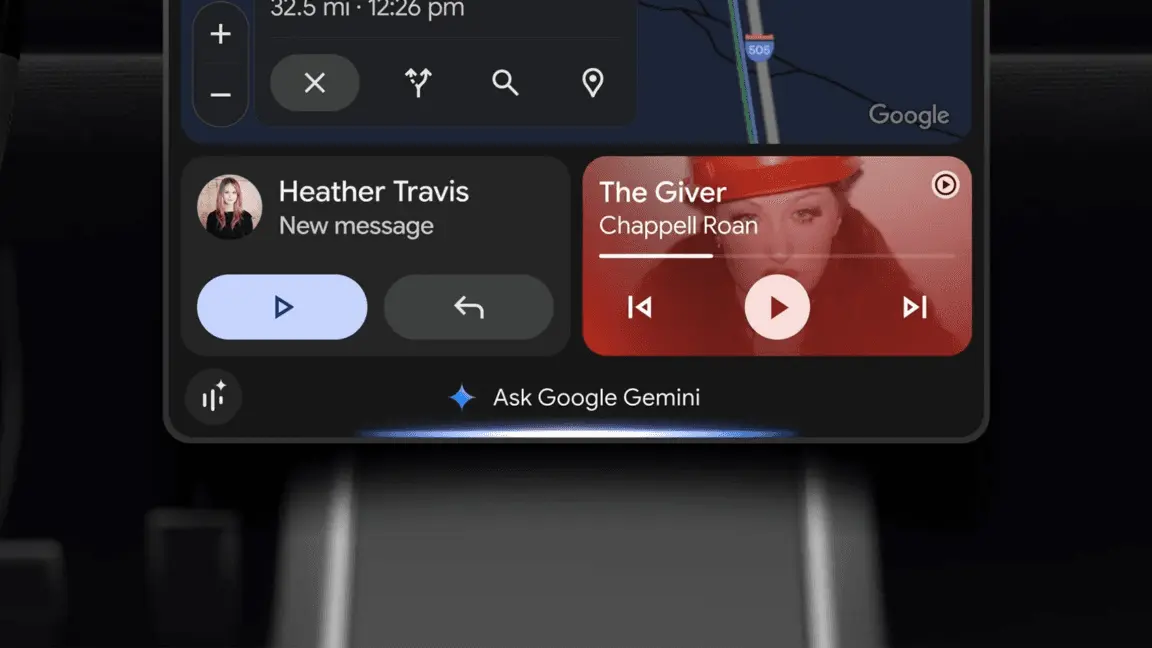
Source: Ars Technica
The rollout begins today for Android Auto users aged 18 or older with personal Google accounts, while support for vehicles with Google built-in will arrive in the coming months
4
. Google positions this as a natural fit for automotive environments, where drivers benefit from AI-driven automotive assistants that understand their schedules and preferences without requiring manual input1
.How Personalized Gemini AI Works Behind the Wheel
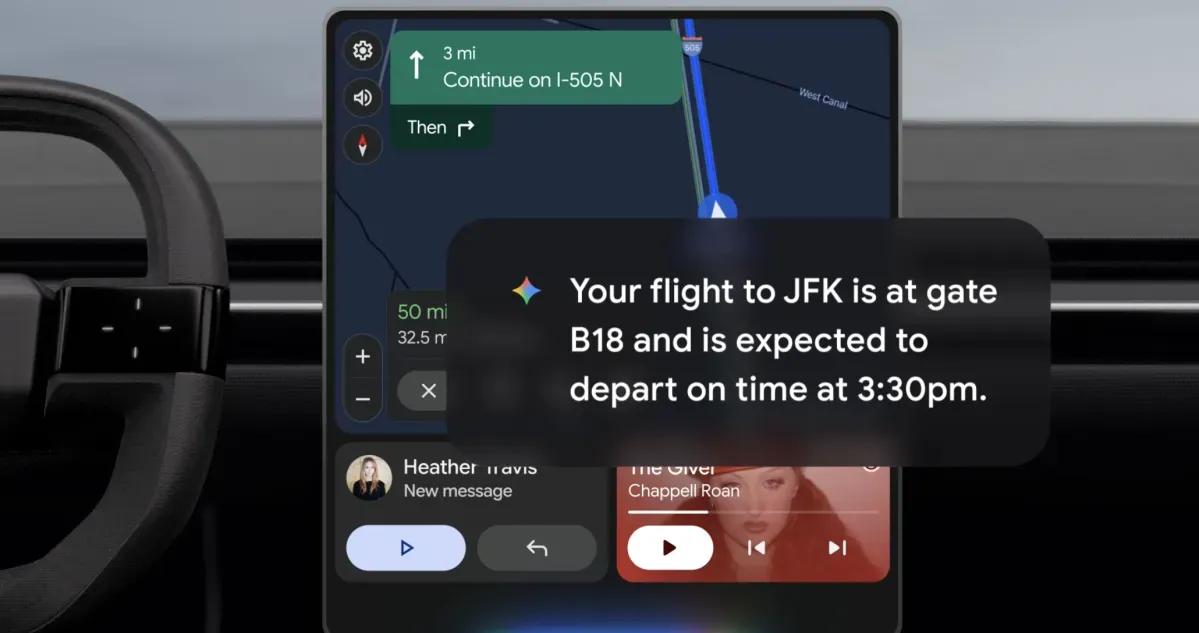
The core advantage of Gemini Personal Intelligence lies in its ability to deliver tailored responses by leveraging existing Google AI infrastructure. Instead of generic answers, the system pulls contextual details from your digital footprint. For example, drivers heading to the airport can ask about flight gate assignments and departure status through a single voice command, with Gemini retrieving confirmation details from Gmail and cross-referencing real-time flight data
4
.
Source: The Verge
Navigation becomes equally streamlined. Saying "take me to my doctor's appointment" prompts the AI assistant for cars to extract the address from Google Calendar confirmation emails and initiate navigation automatically
2
3
. The system can even parse Google Photos to identify locations, as demonstrated when users ask Gemini to "find the car wash from the photo I took last week and navigate there"5
.Real-world testing revealed both strengths and limitations. One user successfully navigated to a parking deck by asking Gemini to locate a digital parking pass, with the AI retrieving a PDF from email and initiating Maps navigation in under 10 seconds
2
. The system also demonstrated conversational continuity, remembering earlier requests about coffee shops near an appointment and routing to the closest option when prompted later2
.Opt-In Requirements and Data-Sharing Settings
Gemini Personal Intelligence remains an opt-in feature, disabled by default to address privacy concerns around access user data practices
1
4
. Users must explicitly enable the feature through the Gemini app or website by navigating to Settings > Personal Intelligence > Connected Apps, where they can selectively grant access to Workspace apps like Gmail and Google Calendar, along with Photos, Maps, YouTube, and Search2
4
.Google has acknowledged that while it doesn't use personal data to train Gemini models, it does collect inputs and outputs during AI interactions
1
. These outputs may inadvertently contain personal information even with filtering mechanisms in place, prompting the company to recommend users review their data-sharing settings before enabling the feature in vehicles where multiple passengers might interact with the infotainment system1
.
Source: 9to5Google
One notable constraint: Personal Intelligence only works with Google Workspace apps and cannot access text messages, even when using Google's Messages app
2
. The feature is currently unavailable in the European Economic Area, Switzerland, the United Kingdom, and Nigeria4
.Related Stories

Implications for AI-Driven Automotive Assistants
This rollout positions Google AI as a differentiator in the competitive landscape of AI-driven automotive assistants, where context-aware responses increasingly define user experience. By tapping into the vast data ecosystem Google already maintains, the company bypasses the cold-start problem that plagues standalone AI systems requiring manual context provision
1
.The timing coincides with Google's broader plans to redesign Android Auto with Material 3 Expressive styling, expected this fall
5
. However, user feedback suggests Gemini's integration into Android Auto has been inconsistent, with complaints about verbose responses, unreliable command handling, and compatibility issues with Google Home routines5
.For carmakers like Ford, GM, Honda, Nissan, Volvo, and Polestar that have adopted Google built-in systems, this update represents an incremental step toward more intelligent in-car experiences
3
. Yet the feature's effectiveness hinges on user willingness to grant extensive access to personal information—a trade-off that remains contentious as AI assistants become more deeply embedded in daily routines.References
Summarized by

Navi
[1]
Related Stories
Google's Gemini AI can now reason across your Gmail, Photos, and YouTube to deliver personal answers
15 Jan 2026•Technology

Gemini on Android Auto handles complex tasks and transforms the driving experience
06 Apr 2026•Technology

Google Sets March 2026 Deadline for Assistant Phase-Out as Gemini Rollout Accelerates Across Android Ecosystem
24 Nov 2025•Technology

Recent Highlights
1
Google's AI Policy Forces Schools to Accept AI Overviews or Lose Search Access Entirely
Technology

2
Jensen Huang's Affair with Suspected Chinese Spy Exposes $7 Billion AI Chip Smuggling Network
Policy and Regulation

3
Anthropic launches Fable 5.2 and Mythos 5.2 with 20% price cut and 30% faster output
Technology

Recent Highlights
Today's Top Stories





Don’t drown in AI news. We cut through the noise - filtering, ranking and summarizing the most important AI news, breakthroughs and research daily. Follow topics that matter to you and stay ahead.


