Google Cloud Revolutionizes Database Technology with AI Integration and Natural Language Querying


2 Sources
[1]
What's next for Google Cloud databases? AI inside SQL and more
Join our daily and weekly newsletters for the latest updates and exclusive content on industry-leading AI coverage. Learn More For decades, the SQL query language has been the cornerstone of database technology. But what happens when you bring SQL together with modern generative AI? That's the
[2]
Google boosts AI and agentic features across BigQuery and AlloyDB - SiliconANGLE
Google boosts AI and agentic features across BigQuery and AlloyDB Google Cloud today unveiled a series of new data analytics capabilities aimed at streamlining enterprises' use of unstructured used to train artificial intelligence models. The updates include specialized AI agents and an
Share
Copy Link
Google Cloud announces significant updates to its database offerings, including AI-powered natural language querying in SQL, enhanced vector search capabilities, and integration with the new Agentspace platform, marking a major evolution in database technology and accessibility.

Google Cloud Revolutionizes Database Technology with AI Integration
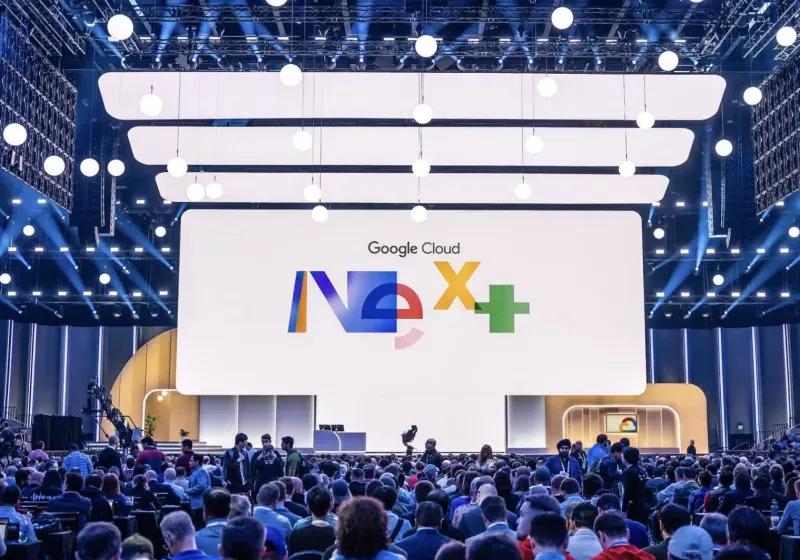
Google Cloud has unveiled a series of groundbreaking updates to its database offerings at the Google Cloud Next conference, marking a significant leap forward in the integration of artificial intelligence (AI) with traditional database technologies. These innovations aim to enhance data accessibility, improve query capabilities, and streamline database management across various platforms
1
2
.AI-Powered Natural Language Querying in SQL
One of the most transformative announcements is the introduction of an AI query engine for AlloyDB, Google's enhanced version of PostgreSQL. This new feature allows developers to use natural language expressions directly within standard SQL queries, effectively bridging the gap between structured query language and conversational AI
1
.Andi Gutmans, GM and VP of Engineering for Databases at Google Cloud, explained, "We're bringing in an AI query engine to AlloyDB. Within a SQL query, we will have operators that both can use natural language and foundation models and your traditional SQL operators. And you can bring these together."
1
This innovation is particularly significant as it builds upon SQL's original promise from 1973 to mimic English in database queries. The AI query engine enables a more intuitive and flexible approach to data querying while maintaining the structure and power of SQL
1
.Enhanced Vector Search and Agentspace Integration
Google has significantly improved AlloyDB's vector search capabilities, optimizing both performance and usability. The Scalable Nearest Neighbor (ScaNN) index now delivers up to 10x faster filtered vector search queries compared to hierarchical navigable small world (HNSW) indexes in standard PostgreSQL
1
.Furthermore, Google Cloud is connecting AlloyDB with its new Agentspace platform, creating a natural language interface that extends database access beyond technical specialists to virtually any employee in an organization. This integration maintains security while expanding access, leveraging Agentspace's ability to reason about multiple data sources
1
2
.BigQuery and Looker Enhancements
Google Cloud has also introduced specialized AI agents integrated into BigQuery and the Looker business intelligence platform. These agents address various aspects of data management, including data engineering, data science, and user experience
2
.Key features include:
- Data engineering agent capabilities for building data pipelines and maintaining data quality
- A data science agent embedded within Google's Colab notebook to automate processes like feature engineering and model selection
- A Looker conversational analytics agent for natural language querying and analysis of data
2
Related Stories
Expanding Database Compatibility and Migration Tools
Google Cloud is expanding its support for various database systems and improving migration tools. Notable updates include:
- MongoDB compatibility for Firestore
- Expanded support for Oracle Database in Google Cloud
- A new Database Migration Service supporting SQL Server-to-PostgreSQL migrations for Cloud SQL and AlloyDB
1
2
Real-time Processing and Multimodal Data Handling
Google has introduced Bigtable's continuous materialized views feature, designed for high-throughput, real-time applications. Additionally, BigQuery now supports multimodal tables, allowing for unified storage and querying of varied data types
1
2
.These comprehensive updates to Google Cloud's database offerings represent a significant step forward in making AI-powered data management more accessible and efficient for businesses of all sizes. By combining the power of natural language processing with traditional database technologies, Google is paving the way for a new era of data interaction and analysis.
References
Summarized by

Navi
Related Stories
Google Cloud Enhances Database and Analytics Tools with Generative AI Capabilities
02 Aug 2024

Google Cloud rebuilds enterprise data infrastructure for AI agents with Agentic Data Cloud
22 Apr 2026•Technology

Google Unveils AI Agents to Revolutionize Enterprise Data Management and Analysis
06 Aug 2025•Technology

Recent Highlights



Recent Highlights
Today's Top Stories






Don’t drown in AI news. We cut through the noise - filtering, ranking and summarizing the most important AI news, breakthroughs and research daily. Follow topics that matter to you and stay ahead.


