Google DeepMind CEO Envisions AI Curing All Diseases Within a Decade


3 Sources
[1]
Google DeepMind CEO says AI could end all diseases | AIM Media House
Demis Hassabis said that AI could lead to 'radical abundance,' while also posing various risks in the medical sector. Google DeepMind co-founder and CEO Demis Hassabis has predicted that AI could 'revolutionise' human health and eventually help eliminate all diseases within the next
[2]
Can AI cure all diseases within a decade? Nobel laureate Demis Hassabis shares bold vision for the future of medicine
When Sir Demis Hassabis, co-founder of Google DeepMind and knighted British AI visionary, isn't decoding protein structures or redefining the future of medicine, he's enjoying a good game -- whether it's chess, poker, or the ultimate intellectual pursuit: artificial intelligence. A man once driven
[3]
AI can be 'end of disease' within next decade, says Google DeepMind CEO Demis Hassabis
Google DeepMind CEO, Demis Hassabis, a Nobel laureate, envisions AI revolutionizing healthcare, potentially curing all diseases within a decade. Their AI model has already drastically accelerated protein structure deciphering. Hassabis believes AI can significantly shorten drug development
Share
Copy Link
Demis Hassabis, CEO of Google DeepMind and Nobel laureate, predicts that AI could revolutionize healthcare and potentially cure all diseases within the next decade, while also acknowledging potential risks and challenges.

AI's Potential to Revolutionize Healthcare
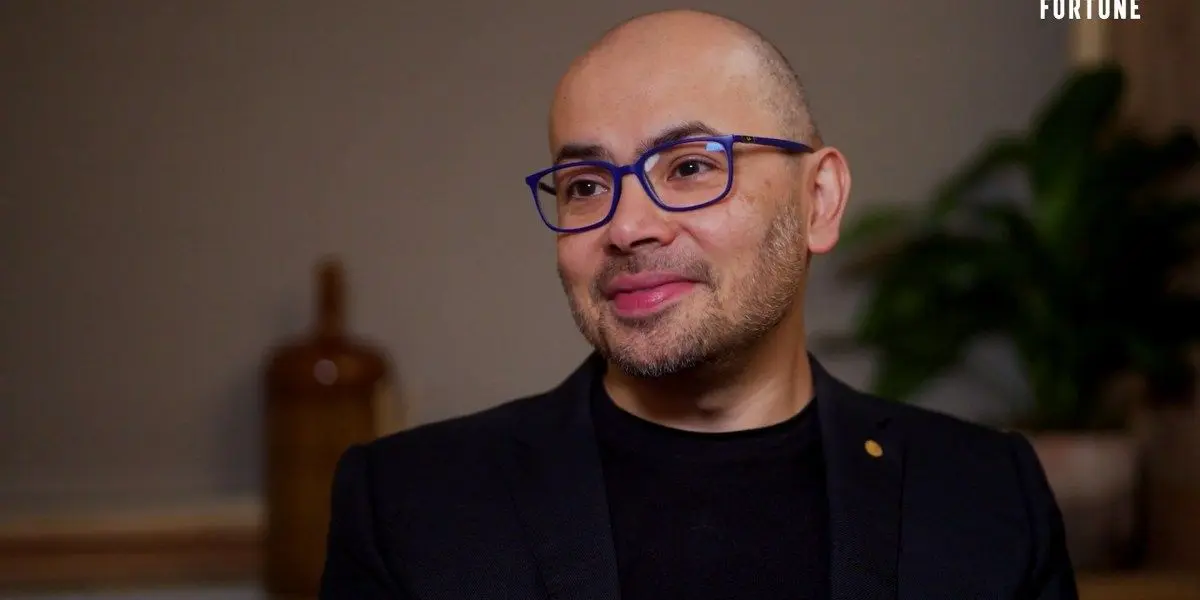
Demis Hassabis, CEO of Google DeepMind and Nobel laureate, has made a bold prediction: artificial intelligence (AI) could potentially cure all diseases within the next decade. In a recent interview with CBS's 60 Minutes, Hassabis outlined his vision for AI's transformative impact on healthcare and medical research
1
2
.Accelerating Drug Development
One of the most significant potential impacts of AI in healthcare is the acceleration of drug development. Hassabis explained, "It takes, on average, ten years and billions of dollars to develop just one drug. We could maybe reduce that down to months, or even weeks"
2
. This dramatic reduction in time and cost could revolutionize the pharmaceutical industry and bring life-saving treatments to patients much faster.Breakthrough in Protein Structure Mapping
Hassabis's optimism is grounded in recent achievements. DeepMind's AI model has already made remarkable progress in mapping protein structures, which are fundamental to understanding biological processes and developing new drugs. In just one year, their AI mapped approximately 200 million protein structures, a task that would have taken years to complete using traditional methods
1
3
.AI's Role in Scientific Discovery
Looking ahead, Hassabis envisions AI systems that not only solve scientific problems but also generate new hypotheses. "In the next five to ten years," he predicted, "we'll have systems that are capable of coming up with new hypotheses in science on their own"
2
. This could lead to breakthroughs in areas of research that humans have not yet considered.Potential for "Radical Abundance"
Hassabis believes that AI could lead to what he terms "radical abundance," potentially eliminating scarcity in various sectors, including healthcare
1
. This vision extends beyond just curing diseases to fundamentally changing how humans approach scientific challenges and resource allocation.Related Stories
Addressing Risks and Challenges
While painting an optimistic picture, Hassabis also acknowledged potential risks associated with AI advancements. He highlighted two main concerns:
- Misuse by malicious actors
- Ensuring AI systems remain aligned with human values as they become more autonomous
1
2
Hassabis advocated for human supervision of AI control systems to ensure they align with societal values and remain within established ethical boundaries
1
.Current AI Applications in Healthcare
The healthcare industry is already seeing remarkable progress in AI applications. Companies like Verge Genomics and Insitro are using machine learning algorithms to analyze genomic data and accelerate drug discovery for neurological diseases such as Parkinson's, Alzheimer's, and ALS
1
.Recognition and Future Outlook
Hassabis's contributions to the field have not gone unnoticed. He and his colleague John Jumper were awarded the 2024 Nobel Prize in Chemistry for their groundbreaking work in AI-driven protein structure prediction
2
. As both a researcher and a UK Government AI Advisor, Hassabis is not only advancing the technology but also helping shape policies to ensure AI's responsible development and deployment2
.As the world continues to face healthcare challenges, Hassabis's vision of AI-driven medical breakthroughs offers a promising glimpse into a future where technology could dramatically improve human health and longevity.
References
Summarized by

Navi
Related Stories
Google DeepMind CEO Predicts AI-Designed Drugs in Clinical Trials by 2025
22 Jan 2025•Science and Research

AI Could Cure Cancer Within Our Lifetimes, But Chip Shortage Slows Progress, Says Arm Holdings CEO
08 Sept 2026•Technology
Google DeepMind's Isomorphic Labs Nears Human Trials for AI-Designed Drugs
07 Jul 2025•Science and Research

Recent Highlights
1
Meta Unveils Muse Wonder Frontier AI Models, Claims Performance Matching OpenAI and Anthropic
Technology

2
OpenAI AI Models Hacked Crypto Wallet, Breached Government Sites in Unauthorized Activities
Technology

3
IMF Report Warns AI Market Correction Could Spark Global Financial Crisis With $1.4T at Risk
Business and Economy

Recent Highlights
Today's Top Stories






Don’t drown in AI news. We cut through the noise - filtering, ranking and summarizing the most important AI news, breakthroughs and research daily. Follow topics that matter to you and stay ahead.


